Axios AM

August 23, 2025

1 big thing — Scoop: Trump's new "Apple Store"
Joe Gebbia — a co-founder of Airbnb who was named by President Trump this week to be the first U.S. chief design officer — tells Mike that he wants to update federal websites to an "Apple Store-like experience."
- "That means it's beautifully designed," Gebbia told us, "has great user experience, and it runs on modern software" — three strikes when it comes to dealing with today's government.
Why it matters: Airbnb — which over 17 years has become a ubiquitous verb for what used to be a classified-ad section at the back of the newspaper — applied those same three principles to renting a vacation home. "There's no reason why the government can't have that, too," Gebbia said.
- And Trump is making it a legacy project.
🚪 Gebbia points out that mobile apps and websites are the "front door to the government" for most Americans. It's "an injustice that our interfaces are horribly out of date," he said. "There's no reason why our government can't be a standard for great design."
- He's determined to bring Airbnb's simplicity ethos to making government websites more usable. "I'm in the camp of: The best part is no part," he said in the interview. "The exercise of designers is: You delete unnecessary parts."
Gebbia, who turned 44 on Thursday, said "spending an hour with POTUS talking about design was probably the greatest birthday present I've ever gotten." He said he and Trump — who's stamping his showy Mar-a-Lago vibe on the White House by gilding the Oval Office, paving the Rose Garden and building a sprawling ballroom — "both care about details at a pretty intense level."
- "It's the same way a hotelier anticipates the needs of their guests," Gebbia added. "As two hospitality guys, we have a mindset for that. ... This is like hospitality design for our nation."
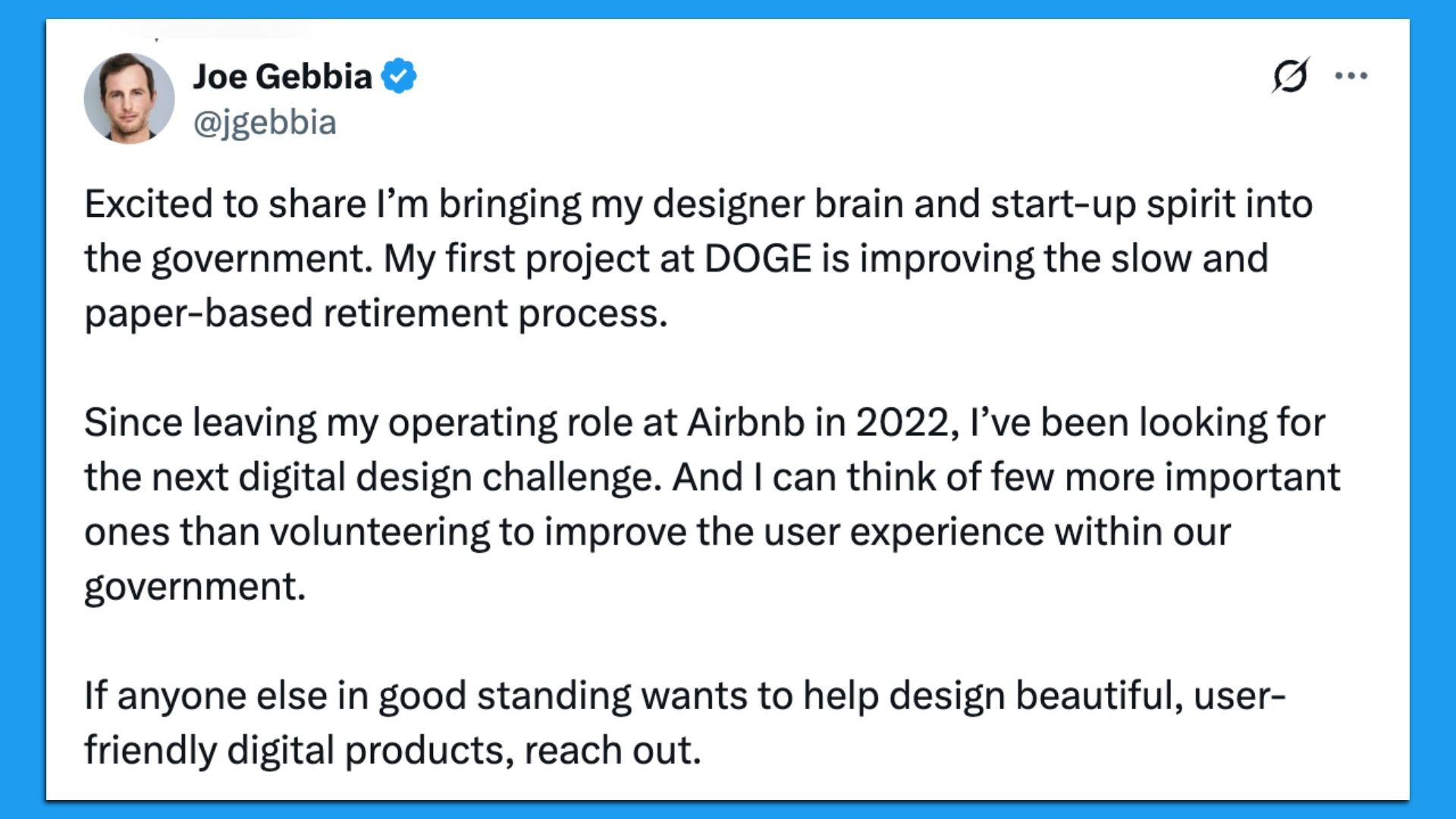
📖 The backstory: Gebbia, based in Austin, is a billionaire entrepreneur who's one of three Airbnb co-founders — he and Brian Chesky hosted the first guests in 2007. Gebbia is also on Tesla's board. But he started as an artist, including studying at the storied Rhode Island School of Design (RISD).
- He joined DOGE in February to simplify and modernize the archaic, paper-intensive process for federal retirement. (Gebbia hasn't been involved in Airbnb operations since 2022 but is on the board. His administration role is unconnected to Airbnb.)
- Gebbia told Axios he has "very successfully solved" the retirement mess, with an announcement soon. He's moving full-time into design, although he echoed his friend Elon Musk's assertion that DOGE "is a way of life, like Buddhism."
The bottom line: Heads of agencies are supposed to produce their initial design revamps by July 4, 2026 — America's 250th birthday, which Trump the showman is leaning into with grand festivities.
- Share this story ... Sneak peek at new websites: America by Design ... National Design Studio.
2. 💍 Delaying adulthood
3. 📈 Immigrant detentions soar 50%
4. 📸 Pic du jour
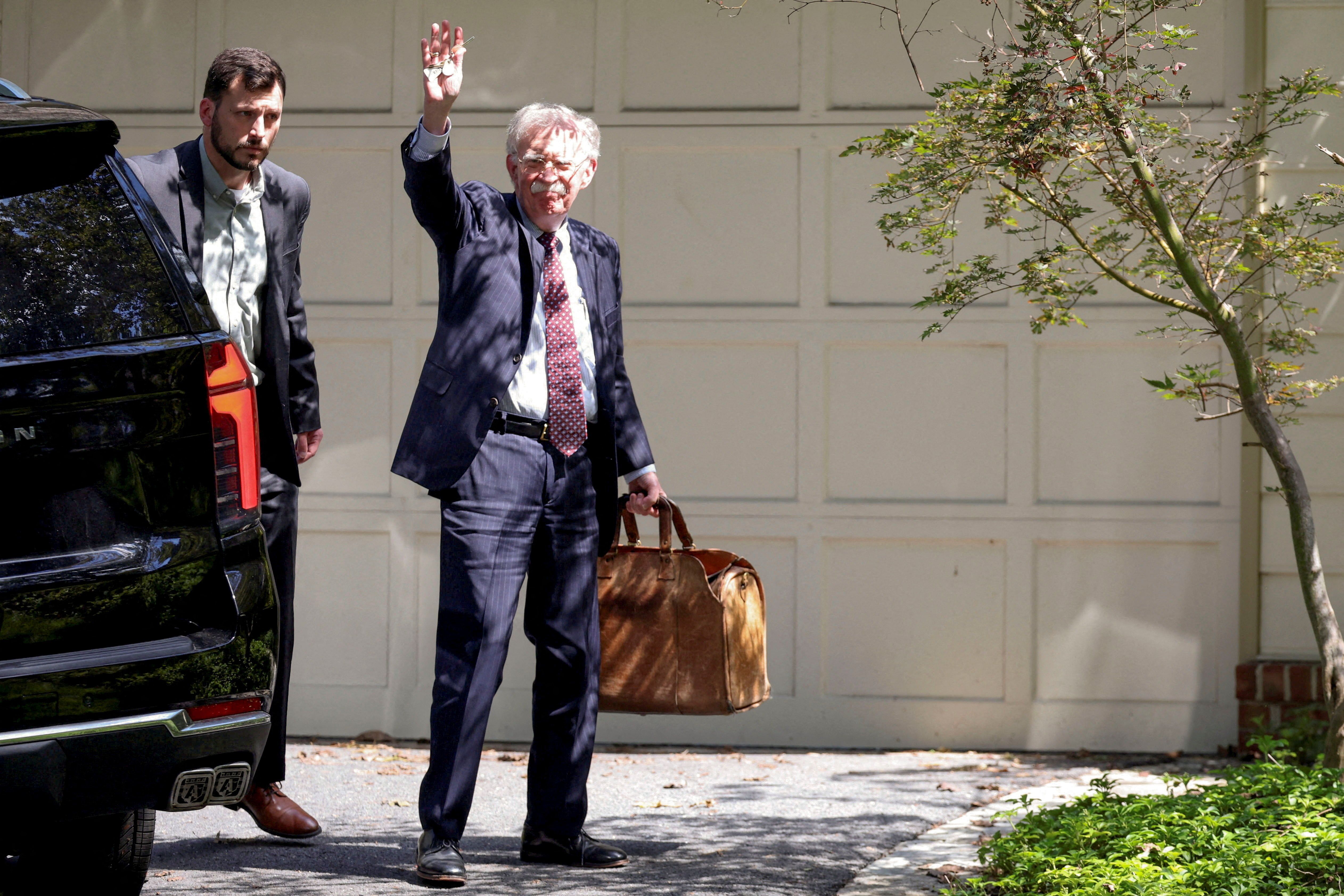
Former White House national security adviser John Bolton arrives at his house in Bethesda, Md., yesterday following its search by the FBI.
5. 💰 Trump: "They said yes"
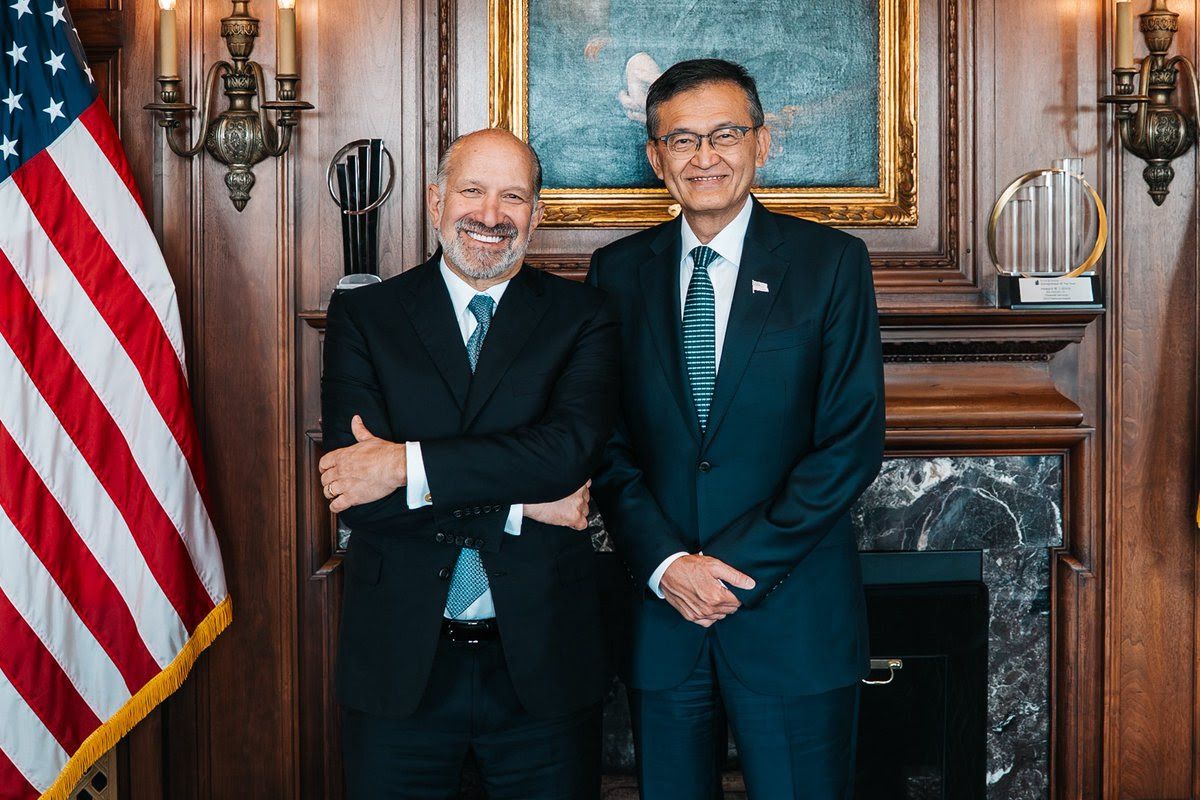
Chipmaker Intel has agreed to sell around a 10% equity stake to the U.S. government, President Trump told reporters yesterday. Intel confirmed the deal after market close.
- Why it matters: This is part of Trump's new era of pay-me capitalism, Axios' Dan Primack reports.
Trump said in the Oval Office yesterday of his Intel conversations: "I said, 'I think you should pay us 10% of the company,' and they said yes." (WSJ)
⚙️ Zoom in: The U.S. government will invest a total of $11.1 billion into Intel for a 9.9% stake.
- That includes $5.7 billion of CHIPS Act grants that had been awarded but not yet paid to the company, $2.2 billion of grants that Intel already received, plus $3.2 billion previously awarded through another program.
- The government will have no board representation with Intel, or other governance or information rights. It also agreed to vote with the company's board on most matters requiring shareholder approval.
🔭 What to watch: If the White House puts any pressure on Big Tech to utilize Intel's floundering foundry business. Trump didn't comment on that, nor was he asked, although it's something that Treasury Secretary Scott Bessent recently poured cold water on.
Go deeper ... "Corporate America's Newest Activist Investor: Donald Trump" (NYT gift link).
6. 💨 Disappearing dining rooms
7. 📚 10 hot fall books

8. 😈 1 for the road: Poké-mania
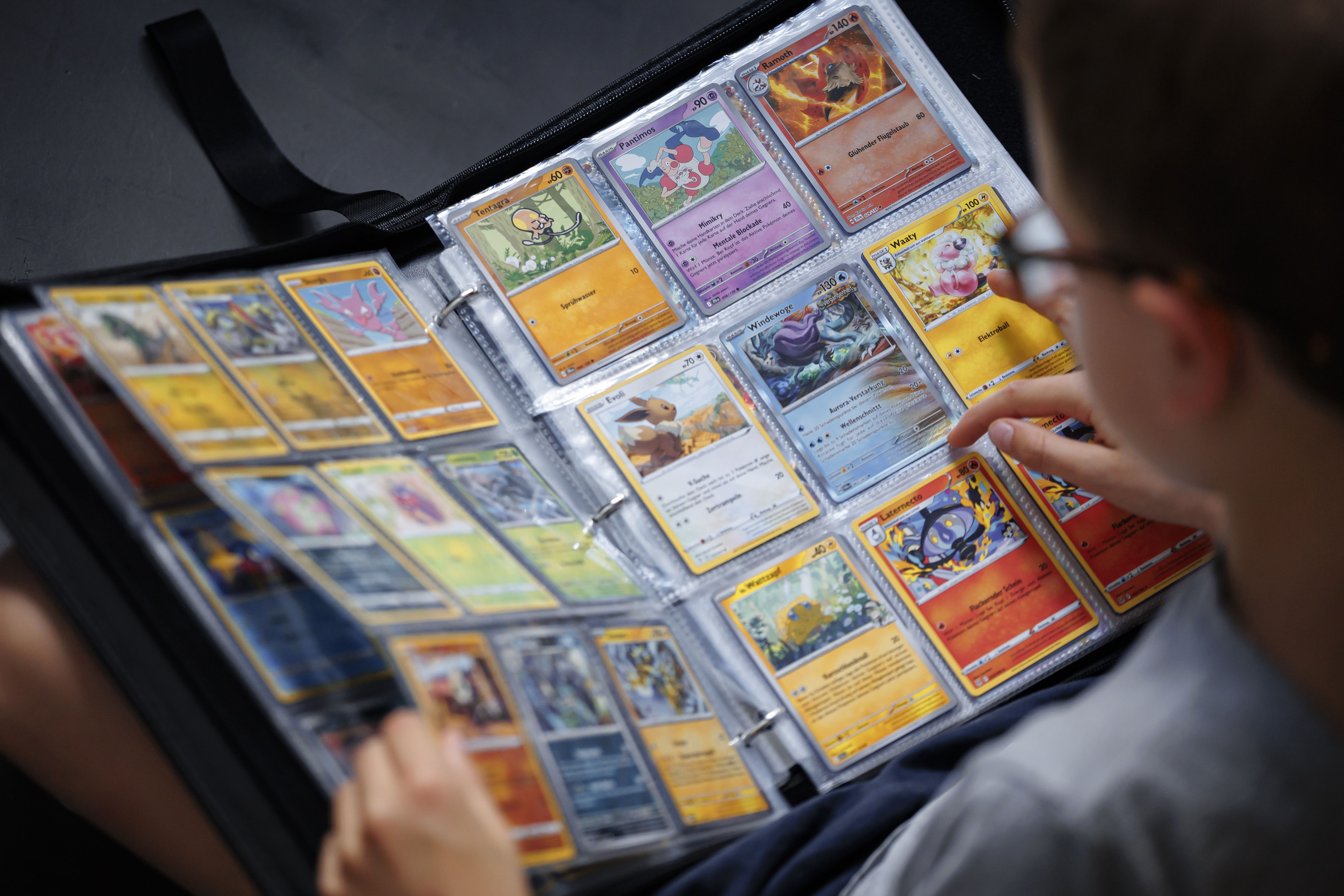
Pokémon packs and sports cards aren't just for kids and collectors anymore — they're fueling a retail boom, Axios' Kelly Tyko writes.
- Why it matters: Trading cards are billion-dollar businesses for mass retailers like Target.
📈 The big picture: Some 1 in 5 adults reported buying Pokémon cards for themselves, though only a quarter actually play the game — most are collecting or investing, per Circana.
- It's like the bobblehead boom or the recent Labubu toy craze.
Zoom in: Walmart saw trading card sales soar 200% between February 2024 and June 2025, the world's largest retailer told Axios.
- Target officials said Wednesday that trading card sales are up nearly 70% this year and on track to surpass $1 billion in 2025.
- eBay officials said in July that trading card sales have now surged for 10 straight quarters.
Axios AM