Axios AM

January 12, 2026

1 big thing: The Haves, Have-Nots, Have-Lots economy

2. 💰 Part 2: Billionaires' big year
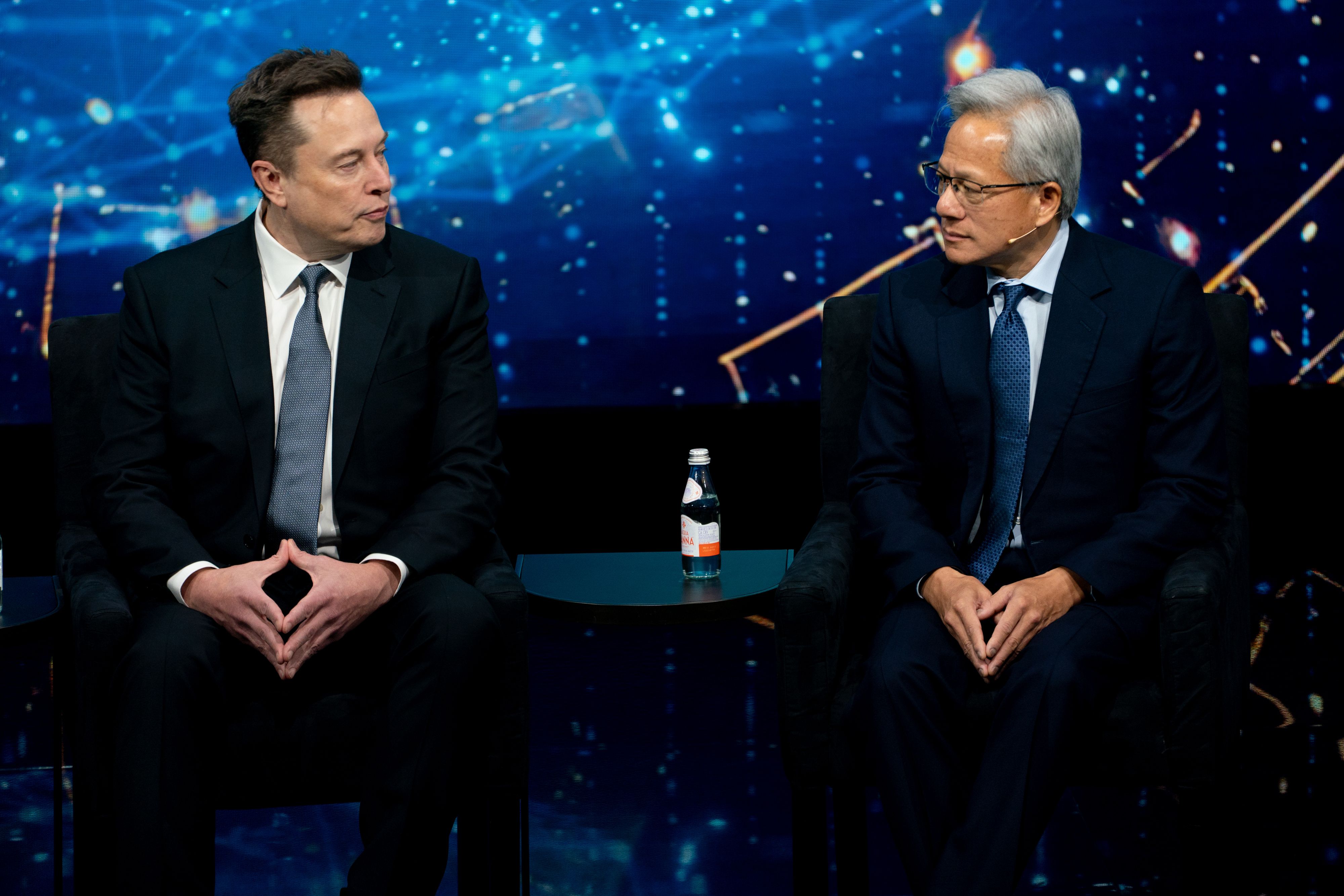
Jim and Mike continue:
🤑 The Have-Lots: Rocketing
A new AI aristocracy is upon us. The tech moguls, mega-investors and others benefiting from AI are now in a category of their own that vastly overshadows the mere haves, Jim and Mike continue.
- This group is quickly accumulating vast wealth and power, in part by growing ever closer to the federal government in what we've called the Silicon Swamp.
- So the Have-Lots are becoming ever more invested in preserving Washington's status quo, and fending off new federal and state laws and regulations.
💡 Axios chief economic correspondent Neil Irwin, co-author of our Axios Macro economics newsletter, helped us crunch the numbers, and we found that the Have-Lots are an even more stunning story than we realized. It's hard to overstate what an amazing year 2025 was for the very richest Americans, particularly those with an inside track on AI, Trump or both:
- Among the 50 richest Americans, the median 2025 increase in net worth was nearly $10 billion, based on the Bloomberg Billionaires Index. That represents a 22% median gain in a year when the S&P 500 rose 16%, and Treasury bills returned less than 4%.
- Elon Musk's rise in wealth last year, $187 billion (to $600+ billion), is roughly the same as the entire net worths of Bill Gates and Charles Koch combined (about $117 billion for Gates and $69 billion for Koch).
- It was also a great year for the Google guys. Co-founders Larry Page and Sergey Brin saw their net worth rise by $101 billion and $92 billion, respectively (to $269 billion and $250 billion), while former CEO Eric Schmidt ended the year $17 billion richer (at $53 billion).
The bottom line: The haves increasingly fear becoming Have-Nots, while the Have-Lots sock away even more.
3. 🚨 DOJ threatens Powell with indictment
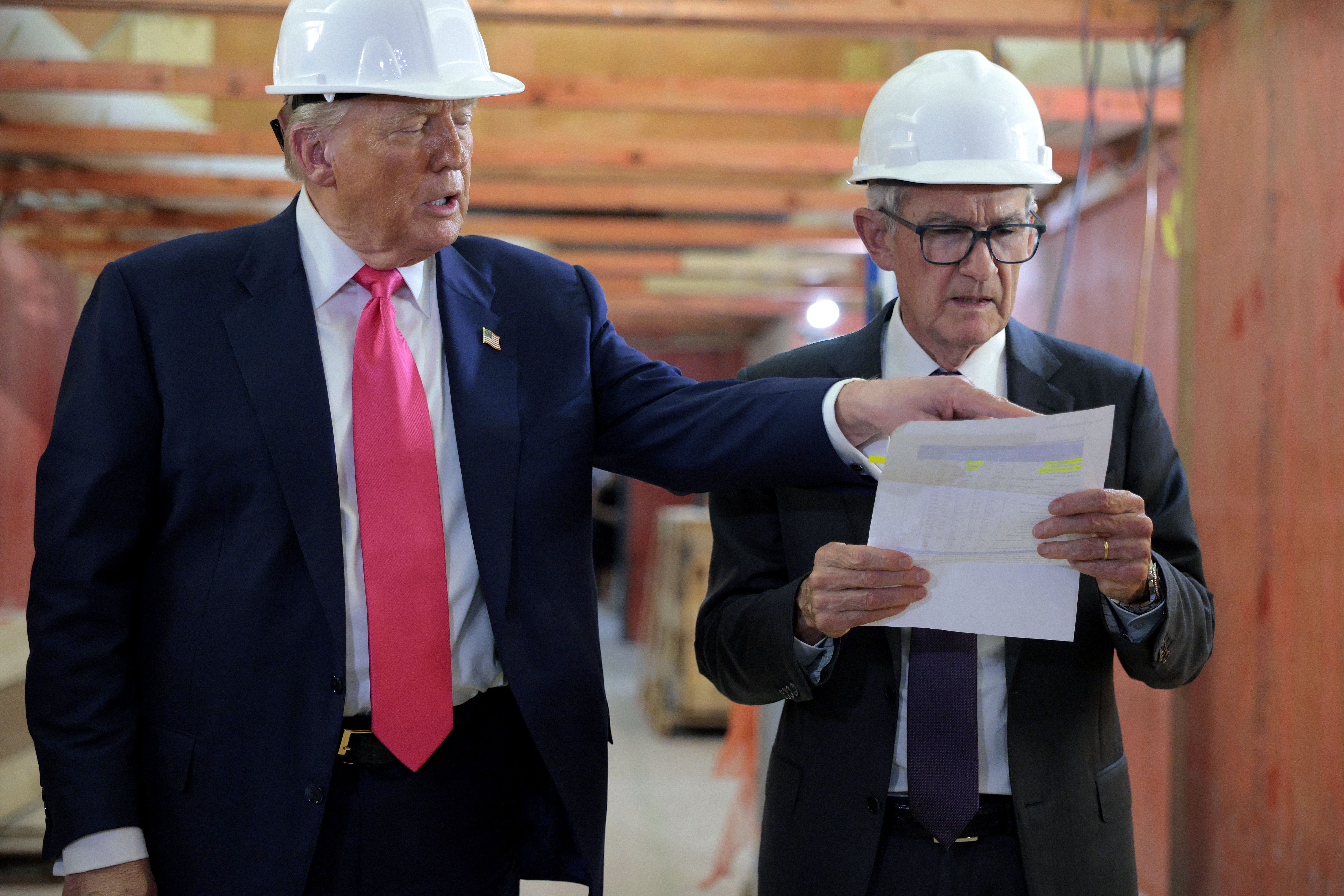
Federal prosecutors are investigating Fed Chair Jay Powell over the central bank's multibillion-dollar headquarters renovation, Axios' Neil Irwin and Courtenay Brown write.
- Why it matters: It's an extraordinary escalation of President Trump's campaign against Powell, whom he has attacked over interest rate policy. Powell's term as Fed chair ends in about four months.
Powell, in a rare and unusually blunt public statement late last night, said the investigation — which includes grand jury subpoenas — is a pretext to pressure the Fed over interest rate policy:
- "The threat of criminal charges is a consequence of the Federal Reserve setting interest rates based on our best assessment of what will serve the public, rather than following the preferences of the President."
What to watch: The investigation threatens to derail the confirmation process for Trump's next Fed chair pick and other central bank nominees. News of Powell's replacement might come as soon as this month.
- Senator Thom Tillis (R-N.C.), who's on the influential banking committee, said he'll "oppose the confirmation of any nominee for the Fed — including the upcoming Fed Chair vacancy — until this legal matter is fully resolved."
4. 👀 Noem: "Hundreds more" agents to Minnesota

Homeland Security Secretary Kristi Noem vowed to send in "hundreds" more agents to Minneapolis days after an ICE officer fatally shot a woman in the city, Axios' Avery Lotz writes.
- Noem said on Fox News' "Sunday Morning Futures" that more officers will arrive by today so ICE and Border Patrol agents can work in Minneapolis "safely."
🏛️ Rep. Ilhan Omar (D-Minn.) and two other Minnesota House members were blocked from accessing an ICE detention facility outside Minneapolis yesterday.
- Homeland Security assistant secretary Tricia McLaughlin wrote they "were notified that their visit was improper and out of compliance with existing court orders and policies, which mandate that members of Congress must notify ICE at least seven days in advance of Congressional visits."
5. 🇮🇷 500+ killed in Iran protests
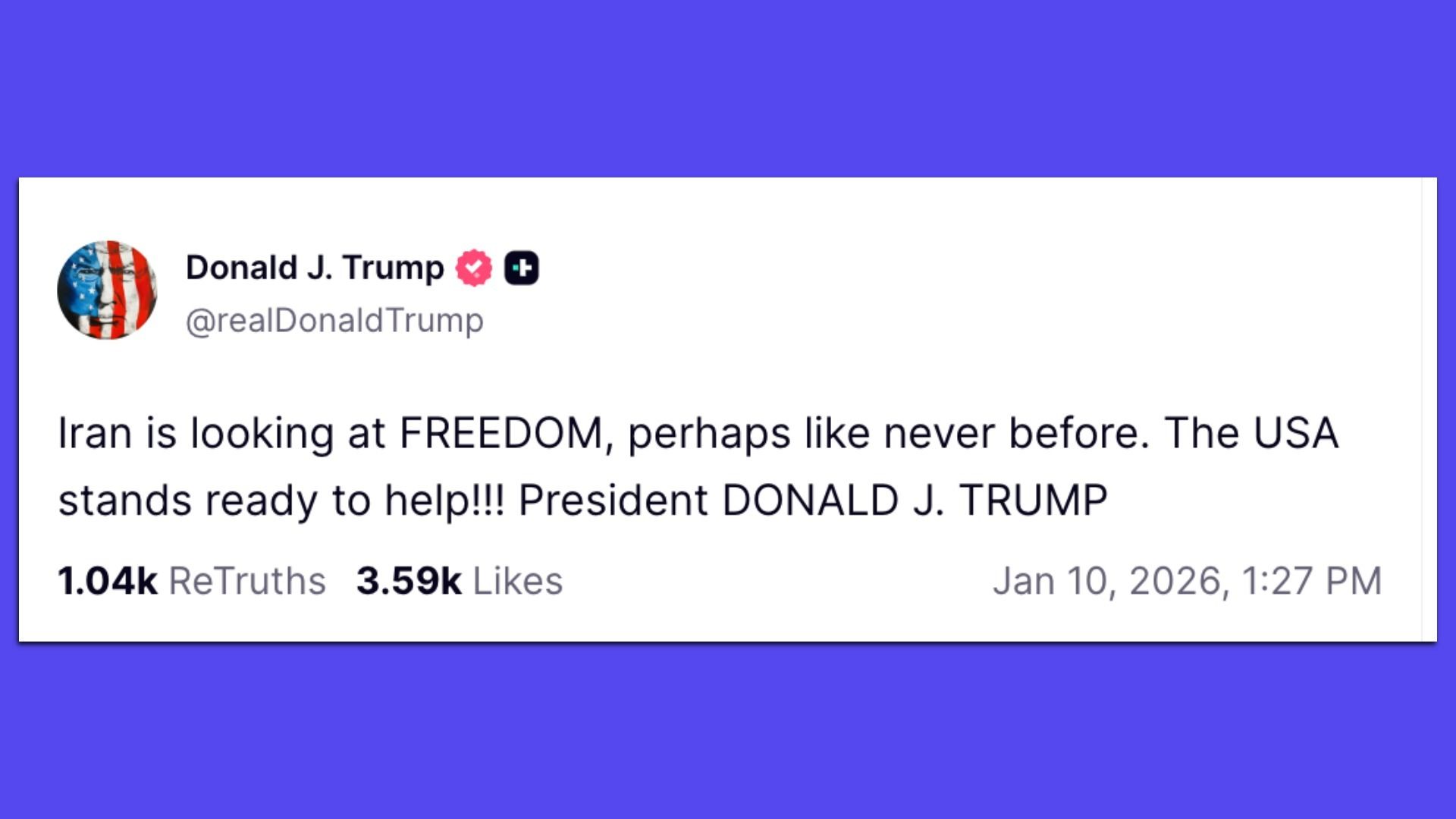
A crackdown on nationwide protests in Iran has killed at least 538 people and even more are feared dead. Tehran warned that the U.S. military and Israel would be "legitimate targets" if America uses force to protect demonstrators. (AP)
- Why it matters: Trump and his national security team are weighing potential responses, including cyberattacks and direct strikes by U.S. or Israel.

Another 10,600+ people have been detained over the two weeks of protests, said the U.S.-based Human Rights Activists News Agency, which has been accurate in previous rounds of unrest in Iran.
6. 🤖 Exclusive poll: Big Tech backlash


61% of registered voters in a survey last month said Big Tech has too much D.C. policy influence, according to a poll from Morning Consult and nonprofit advocacy group Tech Oversight Project.
- Just 13% of the 1,800 voters polled (margin of error: ±2 percentage points) said families or workers benefit most from President Trump's AI policies.
7. 🐊 "Donroe Doctrine" backstory: Rubio's roots
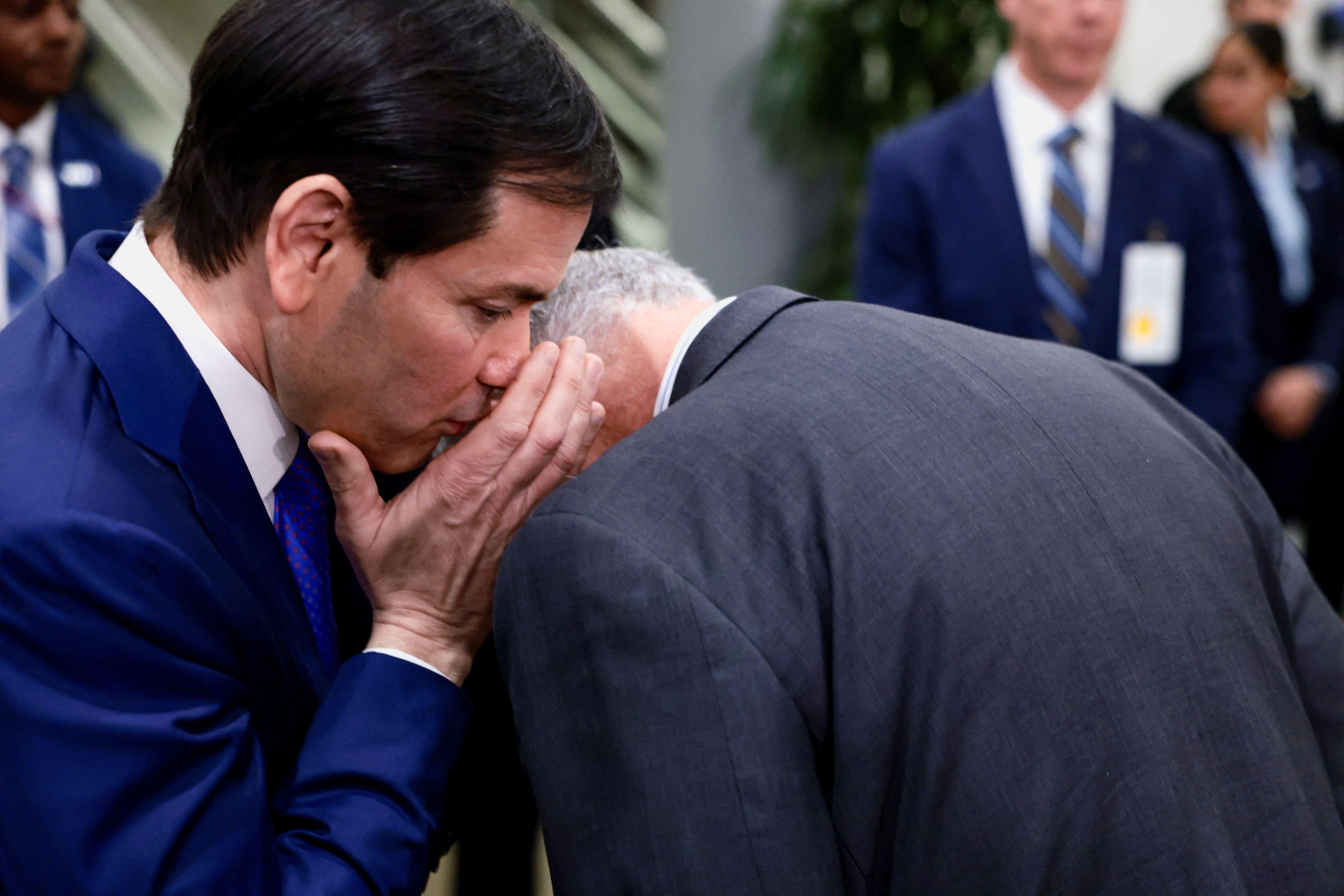
The famed Dexter Filkins profiles Secretary of State (and national security adviser) Marco Rubio in the new issue of The New Yorker, writing that for Rubio, "who grew up among Cuban immigrants in Florida, hostility toward leftist governments in Latin America was a kind of birthright."
- A former U.S. official tells Filkins that Rubio "really believed that Venezuela and Argentina and Brazil and Colombia should be great countries, and that they should be staunchly anti-Communist ... engines of a reinvigorated South America."
"Rubio has a special loathing for Nicolás Maduro, whose regime devastated Venezuela's economy and sent millions of citizens streaming out of the country," Filkins writes in the 15-pager.
- A former Florida politician who knows Rubio said: "If Rubio took down Maduro and the regime in Cuba, he'd be a hero in Miami forever."
8. 🌴 1 for the road: America's most expensive ZIP code

Axios AM