Axios AM

August 11, 2026

1 big thing: America's big crime decline


Violent crime kept falling across many of the nation's largest cities through June, with homicides down 17.2% from the first half of 2025, Axios' Russell Contreras writes from a Major Cities Chiefs Association report.
- Why it matters: The decline now spans two presidencies — falling under President Biden after the pandemic-era surge and continuing to drop under President Trump.
🧮 By the numbers: An Axios analysis of the organization's survey of 66 large U.S. communities found drops in violent crime in the first six months of 2026 compared to the same period last year.
- Homicides fell 17.2%.
- Robberies dropped 16.6%.
- Rapes declined 6.2%.
- Aggravated assaults fell 5.7%.
- Taken together, the four categories were down about 8.3%, for roughly 14,200 fewer reported violent crimes, according to the Axios review.
🔬 Zoom in: The homicide drops are striking in several cities that have struggled with high levels of violence.
- D.C. reported 46 homicides, down 43.9% from 82 in the first half of 2025.
- Homicides in Memphis fell 43.7%, from 119 to 67, and 38.3% in Houston, from 154 to 95.
- Philadelphia recorded 83 homicides, down 27.2% from 114.
Trump often takes credit for the decline and links it to his deployment of the National Guard in cities such as D.C. and Memphis.
2. 👀 Autonomy's dark side

3. 🐣 White House's AOC anxiety

When Rep. Alexandria Ocasio-Cortez (D-N.Y.) posted a video this weekend giving herself a shot in preparation to freeze her eggs, she injected issues of fertility, family and feminism into the political discourse, Axios' Marc Caputo writes.
- And some of the conservative online backlash is making Republicans, including some in the White House, a little nervous.
Why it matters: The Instagram announcement dominated social media and furthered speculation that AOC, 36, is plotting a White House run in two years.
💥 Friction point: The right was divided between conservatives who want the U.S. birthrate to increase and those critical of women delaying pregnancy.
- "She'll turn 37 in a couple months," conservative commentator Matt Walsh of The Daily Wire posted on X. "If she got pregnant now, it would technically be a geriatric pregnancy. This desire to start having children late in life is completely baffling to me."
- Alexa Henning, a MAGA consultant who recently left the State Department, replied: "Conservative men dunking on AOC for freezing her eggs is not a winning message with women voters."
Inside the room: At the White House, where President Trump has championed IVF, there's clearly a desire to embrace Henning's point of view.
- "We most certainly want to encourage more women and families to have children, period," a senior White House official said. "That's a diplomatic way of saying, 'Yes, the Matt Walsh messaging is not helpful.'"
- "This isn't really a winner for Republicans," a Trump adviser said, noting the midterm elections are less than three months away.
4. ✈️ Trump's catering-truck ruse
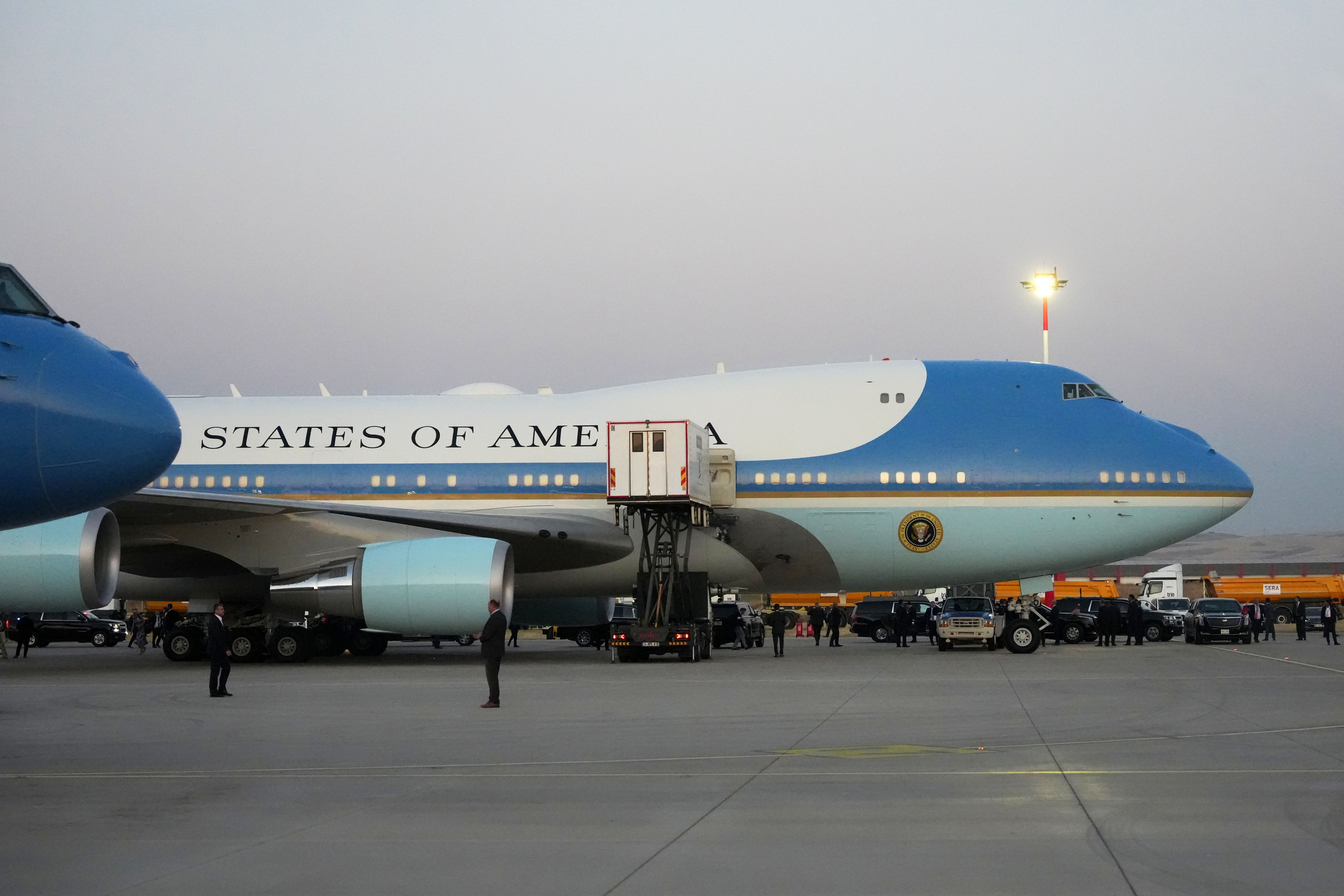
In an elaborate operation last month, President Trump secretly swapped planes on a tarmac in Turkey through a catering truck to protect against an assassination threat from Iran, The Washington Post reports:
In Ankara, Trump boarded the old Air Force One jumbo jet in view of television cameras. He was secretly shuttled minutes later to a smaller plane — an Air Force C-32A — via an airport catering truck typically used to load meals and other supplies preflight, according to the U.S. official and corroborating material reviewed by The Post. That made Air Force One a "decoy" with media and some White House staff aboard, the official said.
Trump had flown to the NATO summit in Turkey aboard the new Qatari-donated Air Force One jet.
- He was set to return on the older model because of security concerns but covertly switched to a smaller plane that more often transports the vice president or Cabinet secretaries.
- Journalists and many White House staffers aboard Air Force One believed they were flying on the same plane as the president.
🧐 The intrigue: Instead of using the Air Force One call sign, Trump's plane used the nondescript "Reach 18."
- White House communications director Steven Cheung said in a statement: "As the President has said recently, there are many enemies of America who have their sights on him, and we use every tool at our disposal to address those threats."
Keep reading (gift link).
5. 💉 Trump dives into vaccine minefield
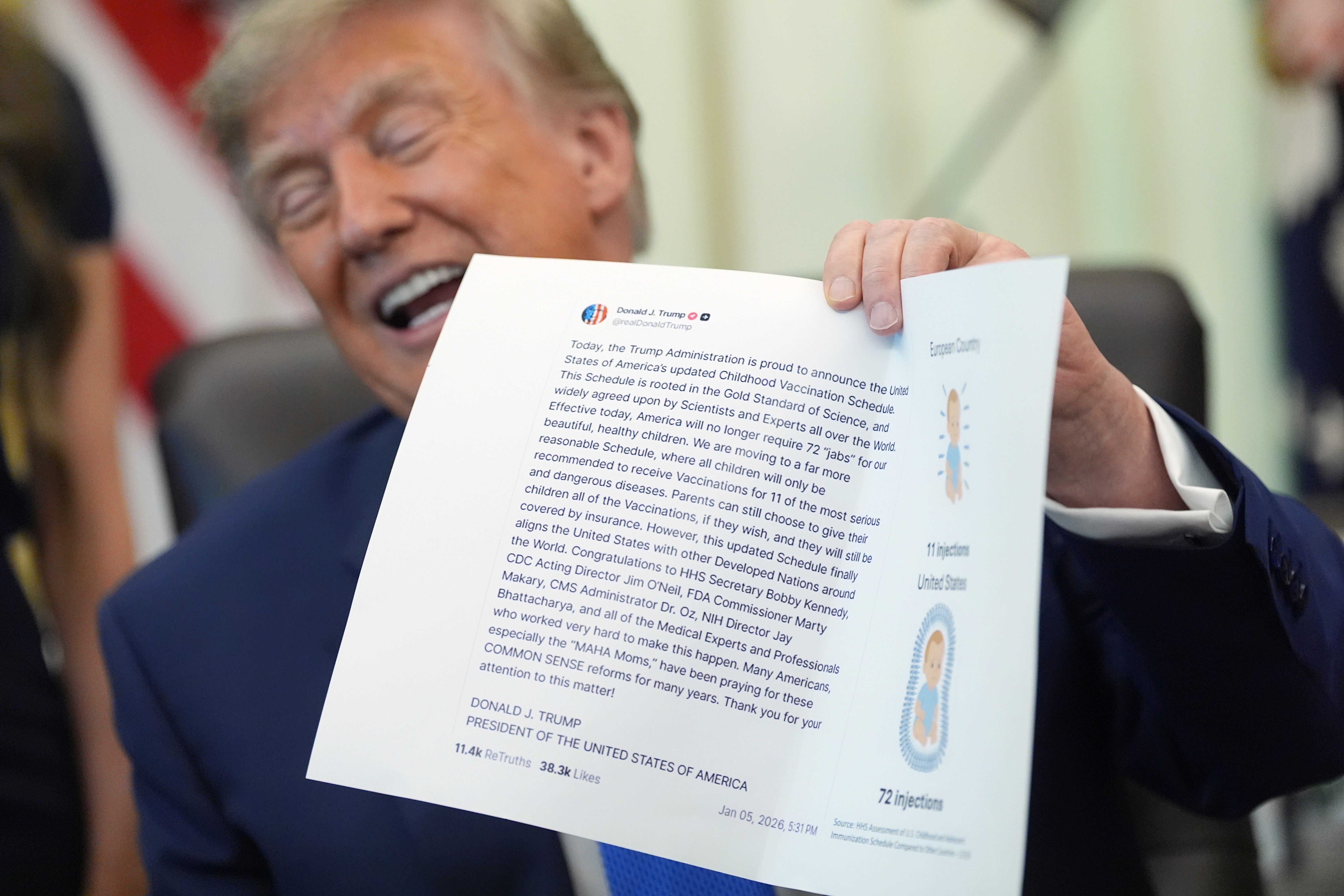
President Trump's call for a controversial overhaul of the childhood immunization schedule yesterday puts high-risk vaccine policy changes front and center as the midterm elections approach, Axios' Caitlin Owens writes.
- Why it matters: The executive order — which comes in the middle of measles and other infectious disease outbreaks — could further erode trust in vaccines and public health.
🔬 Zoom in: Trump signed an executive order calling for a slimmed-down childhood vaccine schedule and breaking the measles-mumps-rubella vaccine into three separately administered shots.
- It also advises states to review federal vaccine recommendations and update school enrollment requirements.
- At an Oval Office signing event, Trump suggested the MMR vaccine could be "quite lethal." When pressed, he acknowledged he had no evidence, adding that "some people that say it is that way."
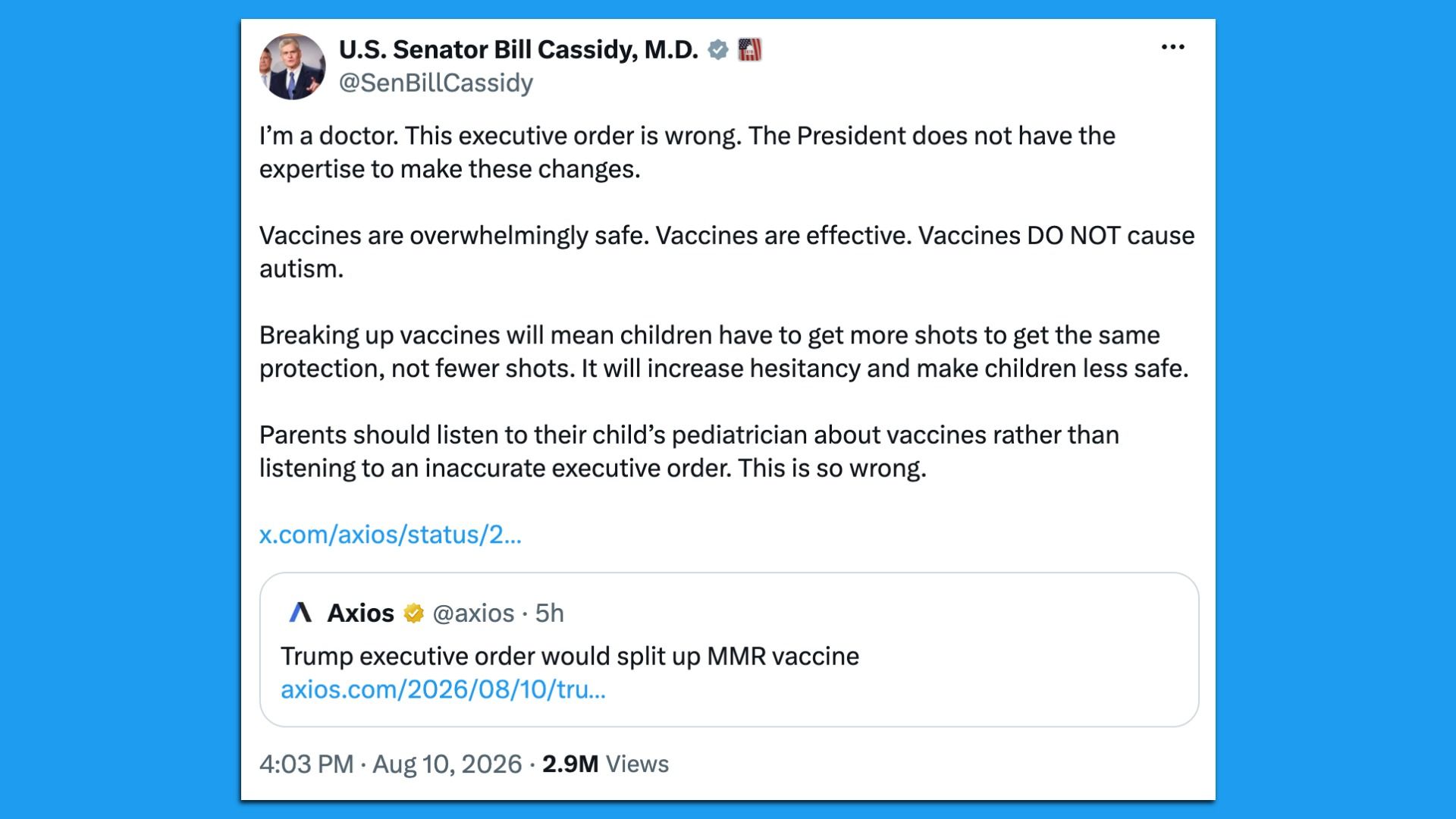
🥊 Reality check: The overwhelming majority of scientists and public health experts say the benefits of vaccines greatly outweigh the risks, and though the shots do have rare side effects, no link to autism has been found.
6. 🤖 Lingo: "Chipflation"


Memory chip prices are skyrocketing, thanks to AI demand — with no end in sight, Axios' Emily Peck writes.
- Why it matters: "Chipflation" is pushing up prices for electronics like smartphones and laptops, as well as cloud storage and hardware costs.
By the numbers: The Producer Price Index for electronic components and accessories, which measures what companies pay for semiconductor chips and other parts, has gone vertical this year — rising 27.6% in June from a year earlier.
💰 P.S. Nvidia and a group of Wall Street firms are collaborating to provide half a trillion dollars ($500 billion!) in financing to the chipmaker's customers at "attractive rates" for "the buildout of AI infrastructure over time."
7. ☢️ Scoop: U.S. brokers secret Syria deal
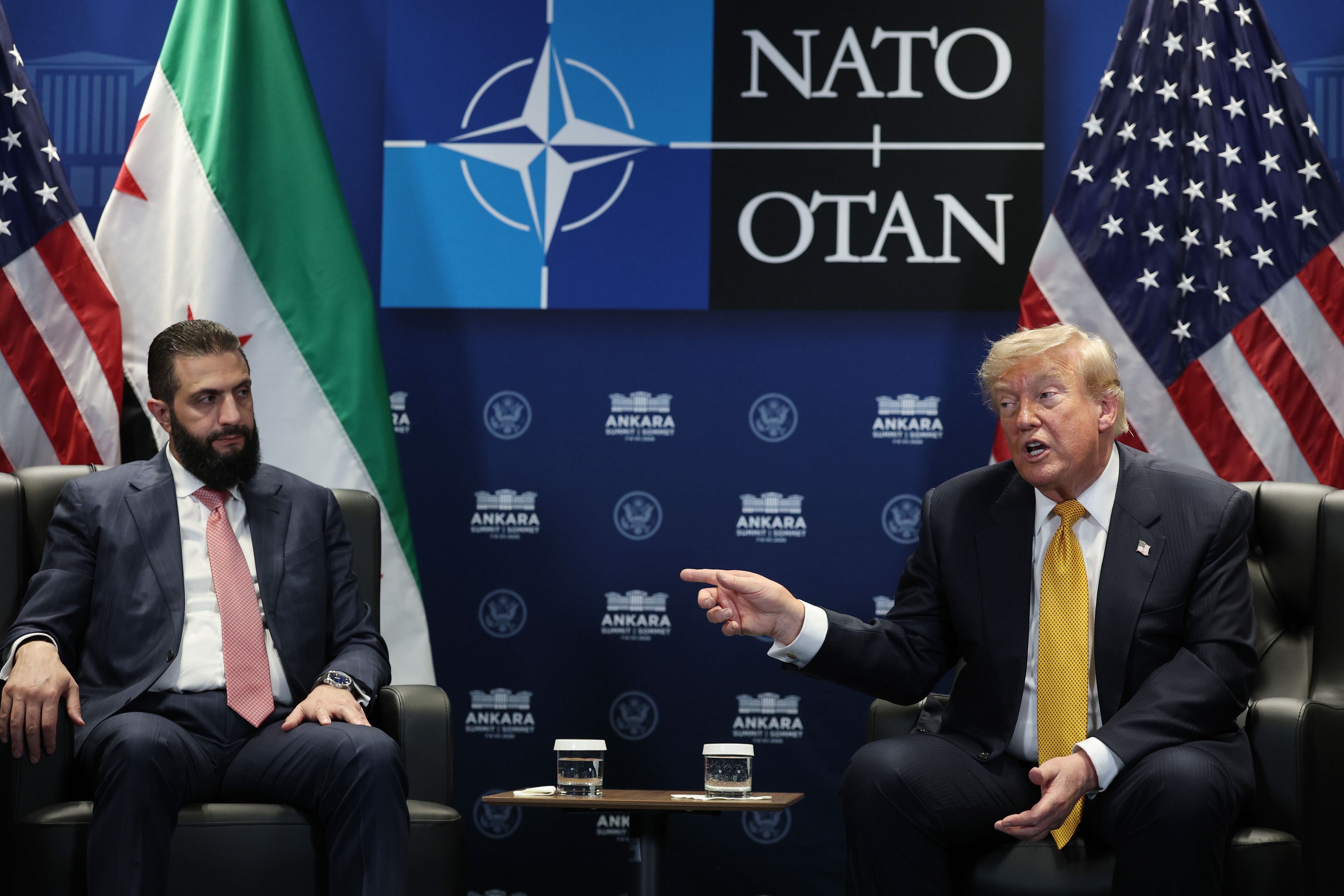
The International Atomic Energy Agency will soon remove nuclear material from a clandestine site in Syria after the Trump administration reached a deal with Syria and Israel, Israeli and U.S. officials tell Axios' Barak Ravid.
- According to two Israeli officials, the Assad regime stored nuclear material there that was part of its Al-Kibar nuclear reactor project.
- A U.S. official said the material included yellowcake, which can eventually be enriched as part of a nuclear fuel cycle.
8. 🏎️ 1 for the road: D.C.'s IndyCar architect
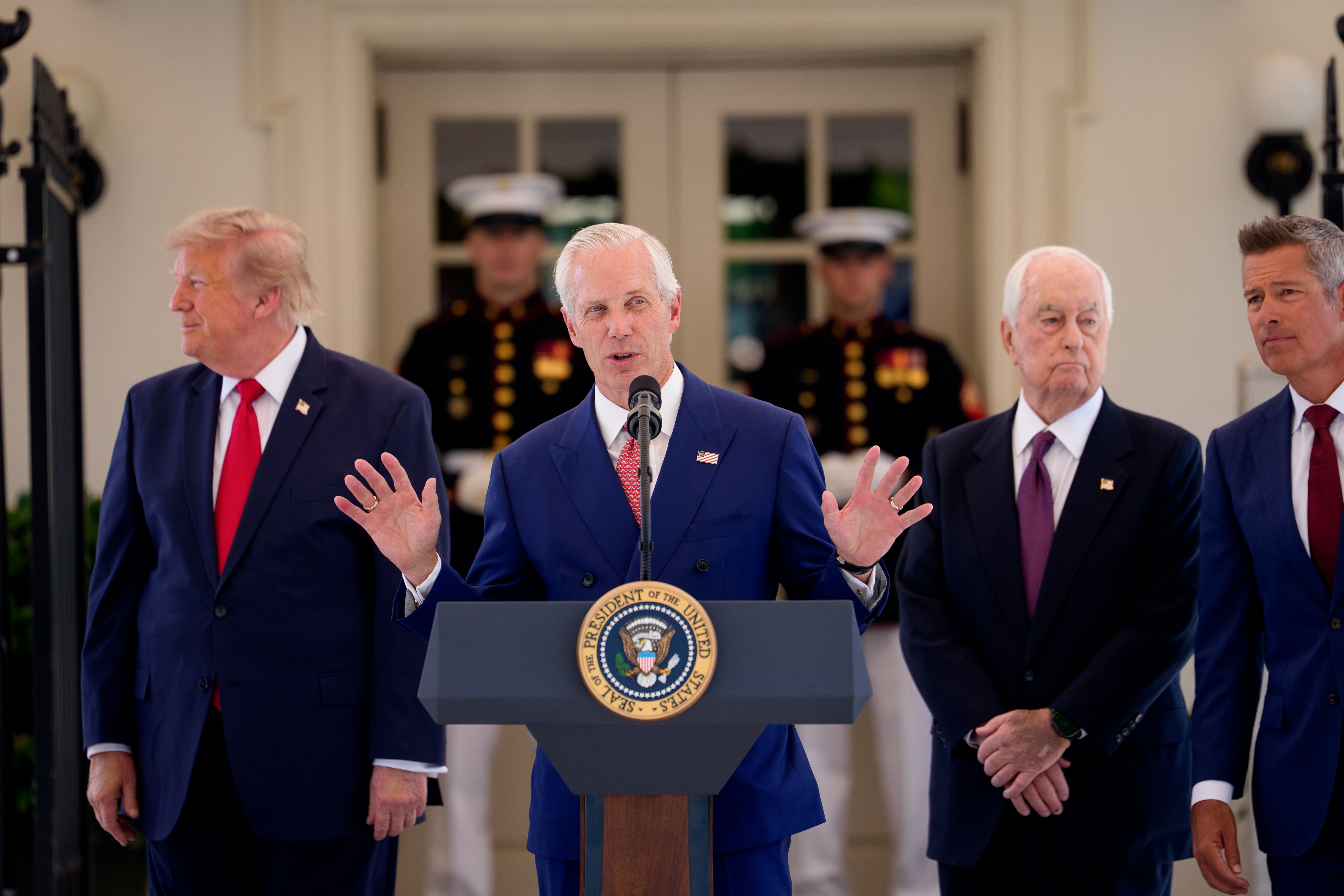
Gabe Hiatt — author of our new Axios D.C. PM newsletter — writes in his inaugural issue yesterday:
It typically takes two and a half years to stage a race through city streets. For the Freedom 250 Grand Prix on the National Mall (Aug. 22-23), race chairman Bud Denker had seven months.
- Why it matters: To bring IndyCar onto D.C. streets lined with museums and monuments, the race chairman had to become a Washington insider, navigating Congress and federal agencies.
🏁 Zoom in: Manhole covers have to be welded shut because the downforce from race cars will hoover them up.
- Denker says the weekend of racing required 1,300 pages of permits.
- The best view of the race: FTC headquarters, where spotters will be perched on the roof to radio advice to their drivers.
🟩 What we're watching: Denker says Trump could be the one waving the green flag to start the race.
- Keep reading ... Get Axios Local: Newsletters in 41 cities and counting.
Axios AM