The race to turn D.C. into an IndyCar track

Add Axios as your preferred source to
see more of our stories on Google.
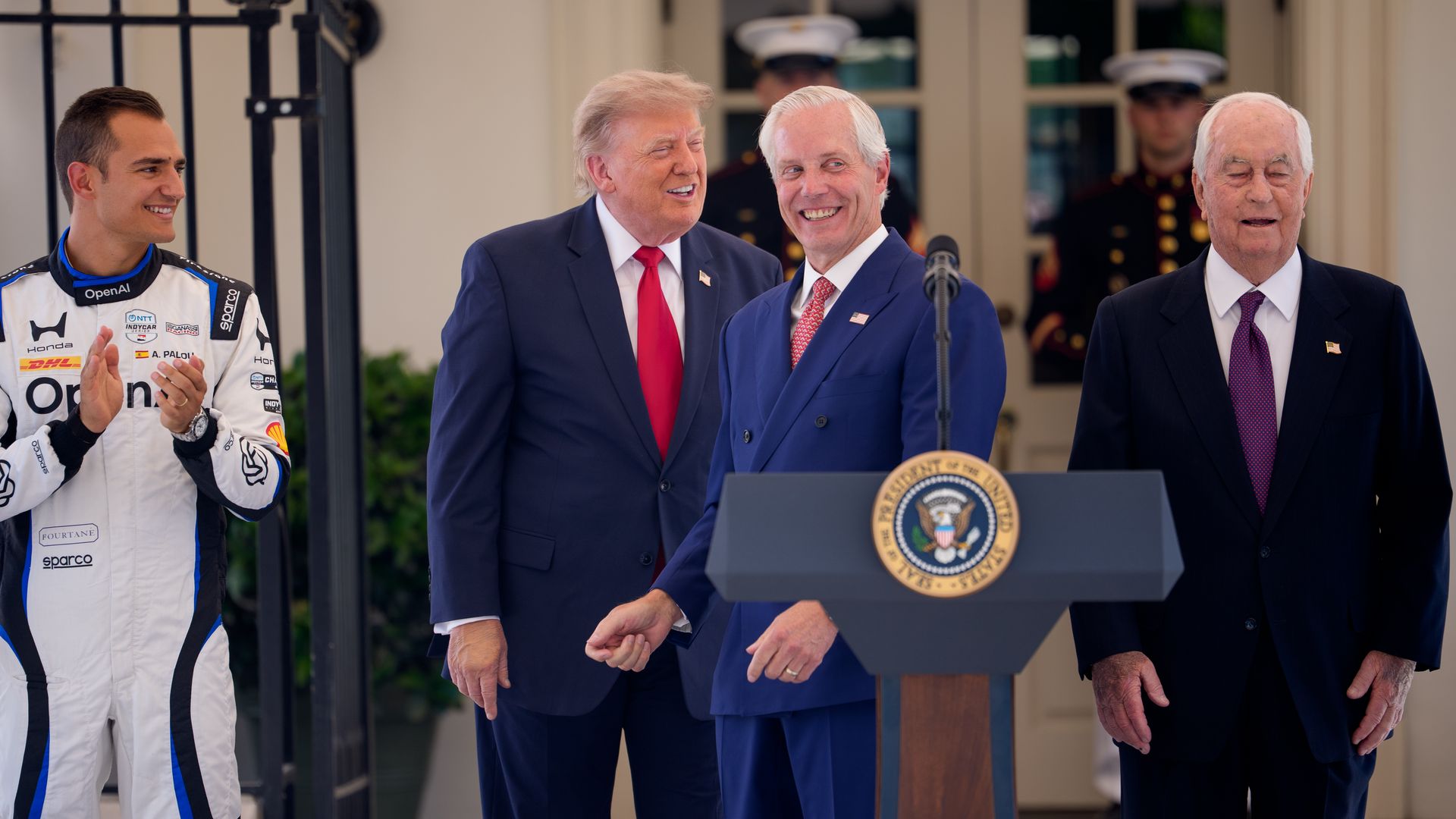
Bud Denker is the face of the Freedom 250 Grand Prix. Photo: Andrew Harnik/Getty Images
Bud Denker is like The Wolf from "Pulp Fiction," but instead of cleaning up crime scenes, he builds race tracks.
Why it matters: It typically takes two and a half years to stage a race through city streets. For the Freedom 250 Grand Prix on the National Mall, Denker had seven months.
🏎️ Behind the scenes: To bring IndyCar onto D.C. streets lined with museums and monuments, the race chairman had to become a Washington insider.
- Denker's original plan charted a race course around the Capitol building. That would've required congressional approval.
- Denker couldn't secure the votes, but Transportation Secretary Sean Duffy told him the race was still alive — if he could move the track.
- President Trump issued an executive order on Jan. 30 instructing federal agencies to make the grand prix a reality. It's set for Aug. 22-23.
🔧 Zoom in: Politics was only the beginning. Denker has to worry about every inch of the course.
🚘 Denker, whose day job is being the president of Penske Corporation, brought a red Corvette to town to get a street-level view in a low-sitting car.
🕳️ Manhole covers are his nemesis. They have to be welded shut because the downforce from race cars will hoover them up.
- Some will be covered in silicon to smooth out bumps.
- Denker says D.C.'s asphalt can withstand high temperatures — perfect for IndyCar.
- Another plus: Pennsylvania Avenue gets repaved every four years for inauguration.
📏 IndyCar needs streets that are at least 40 feet wide.
- Denker can list the width of Pennsylvania Avenue (92 feet), Independence Avenue (82 feet) and 7th Street (78 feet) off the top of his head.
- "I know every single one of the dimensions of your streets. I measured them myself," he says.
🗒️ Including federal and D.C. regulations, Denker says the weekend of racing required 1,300 pages of permits.
- Freedom 250 Grand Prix contracted with events management company Harbinger to help file them all.
- "Many places, I ask for forgiveness afterward," Denker says. "You can't ask for forgiveness here. You have to ask for permission ahead of time."
🥩 It's not only the roads. Denker also wants to avoid disruptions to businesses around the course.
- The Capital Grille will be impacted, but Denker says he's carving out a lane so guests can get in.
- Smithsonian museums and federal buildings within the viewing area will act as relief centers from summer heat or any other emergencies.
🏰 The best view of the race is from the Federal Trade Commission at the corner of 6th St. NW and Constitution Avenue.
- From the third-floor terrace, FTC chairman Andrew Ferguson and his guests will be able to see the pit lane, the paddock where cars are kept and the straightaway on Pennsylvania Avenue.
- Spotters will be perched on the roof to radio road advice to their drivers.
- The race control room will be inside the FTC hearing room.
The intrigue: Denker won't reveal who gets the best seats.
- On a map he showed to Axios, there was a "VIP" box apart from the two buildings that hold 78 luxury suites and a club area.
🟩 Trump could be the one waving the green flag to start the race, Denker says.
By the numbers: The majority of the 280,000 people attending reserved free tickets.
- But club tickets cost $5,000 per person — and suites much more.
- The Indiana Economic Development Corporation has a $250,000 contract with D.C. Grand Prix Inc. for a 40-person suite that will host Indiana Gov. Mike Braun.
- Denker expects to host some lawmakers who "probably weren't going to sign the bill" for a race.
"A few of them, I wanted to say, 'Go to Ticketmaster,'" he joked. "But they're all welcome."