Axios AM

May 22, 2024
🐫 Happy Wednesday! Smart Brevity™ count: 1,390 words ... 5 mins. Thanks to Noah Bressner for orchestrating. Copy edited by Bryan McBournie.
1 big thing: Corporate red wave

Traditionally conservative-leaning brands saw sizable gains in corporate reputation thanks to growing trust from independents and some Democrats, according to new rankings from the annual Axios/Harris Poll 100.
- Why it matters: Corporate reputations overall declined to their lowest level since before COVID. But Hobby Lobby, the Trump Organization and Fox Corp. were among the survey's top gainers, Axios' Sara Fischer and Margaret Talev write.
🎨 The big picture: Americans fatigued by inflation and cultural controversies "are more picky this year and holding companies to account," said John Gerzema, CEO of The Harris Poll.
- "There seems to be a move to the center on attitudes towards companies and their role in society."
Zoom in: Only 15 companies improved more than a half-point in their overall reputation score this year. Of those, several are rooted in conservative-leaning values (charted above).
- Businesses perceived to be quintessentially American, including Coca-Cola and PepsiCo, also saw a boost.
- On the flip side, the reputations of Chinese social media and e-commerce giants TikTok and Shein fell.
Between the lines: The data shows more Democrats and independents shifting toward right-leaning companies in terms of trust and shared values.
- The Trump Organization gained 12 points in terms of trust among independents. (But still was No. 100 overall.)
- Hobby Lobby gained eight points in terms of trust from Democrats. More independents and Democrats this year said Fox Corp. and Hobby Lobby share their values.
🔭 Zoom out: The data shows an overwhelming cynicism across respondents from all parties toward progressive corporate messaging.
- Companies perceived as being overly focused on DEI — diversity, equity and inclusion — continued to see significant reputation declines around trust.
2. 📊 America's top reputations


Only two companies — Nvidia and 3M — scored an "excellent" rating (greater than 80) in this year's Axios/Harris Poll 100, the lowest in a decade.
- Nearly two-thirds of the companies saw their reputation scores decline, Sara Fischer and Margaret Talev write.
🔢 The top three reasons given for the decline in corporate reputations:
- Not doing enough to keep prices fair from inflation (26%).
- Poor ethical behavior around pricing, wages and hiring (20%).
- Too much focus on cultural issues not key to consumers (18%).
Go deeper: Full rankings and methodology.
3. 🤖 OpenAI's trust test

Photo illustration: Aïda Amer/Axios. Photos: Kevin Dietsch and Andrew Caballero-Reynolds/AFP via Getty Images
The dispute between Scarlett Johansson and OpenAI is adding fresh heat to long-simmering questions about CEO Sam Altman's credibility, Axios' Scott Rosenberg and Ina Fried write.
- Why it matters: Altman and OpenAI, which vows to make sure AI "benefits humanity," have to persuade a skeptical world that AI can be trusted — and that will be a lot harder if they lose trust themselves.
Altman won an epic boardroom fight last fall against directors who fired him because they said he was "not consistently candid" with them.
- At the time, it was a puzzling explanation for an abrupt dismissal. But a growing chorus of critics is now saying; "Oh, this is what you were talking about."
🖼️ The big picture: Altman and OpenAI have had to do a lot of explaining and backtracking of late. But the most important matter the company continues to equivocate around is what data it has used to train its AI models.
- In a widely criticized answer during a Wall Street Journal interview in March, OpenAI CTO Mira Murati said she didn't know whether the company used YouTube videos to train its Sora video-making tool.
👓 What we're watching: OpenAI and the wider AI industry could defuse a lot of this distrust by sharing more about the training data they use.
- But transparency would backfire if they reveal huge use of copyrighted material.
Keep reading ... Get Axios AI+.
Editor's note: This story has been corrected to note that the Wall Street Journal interview with Mira Murati was in March (not "last month").
4. 📈 New investing acronym: BEGS

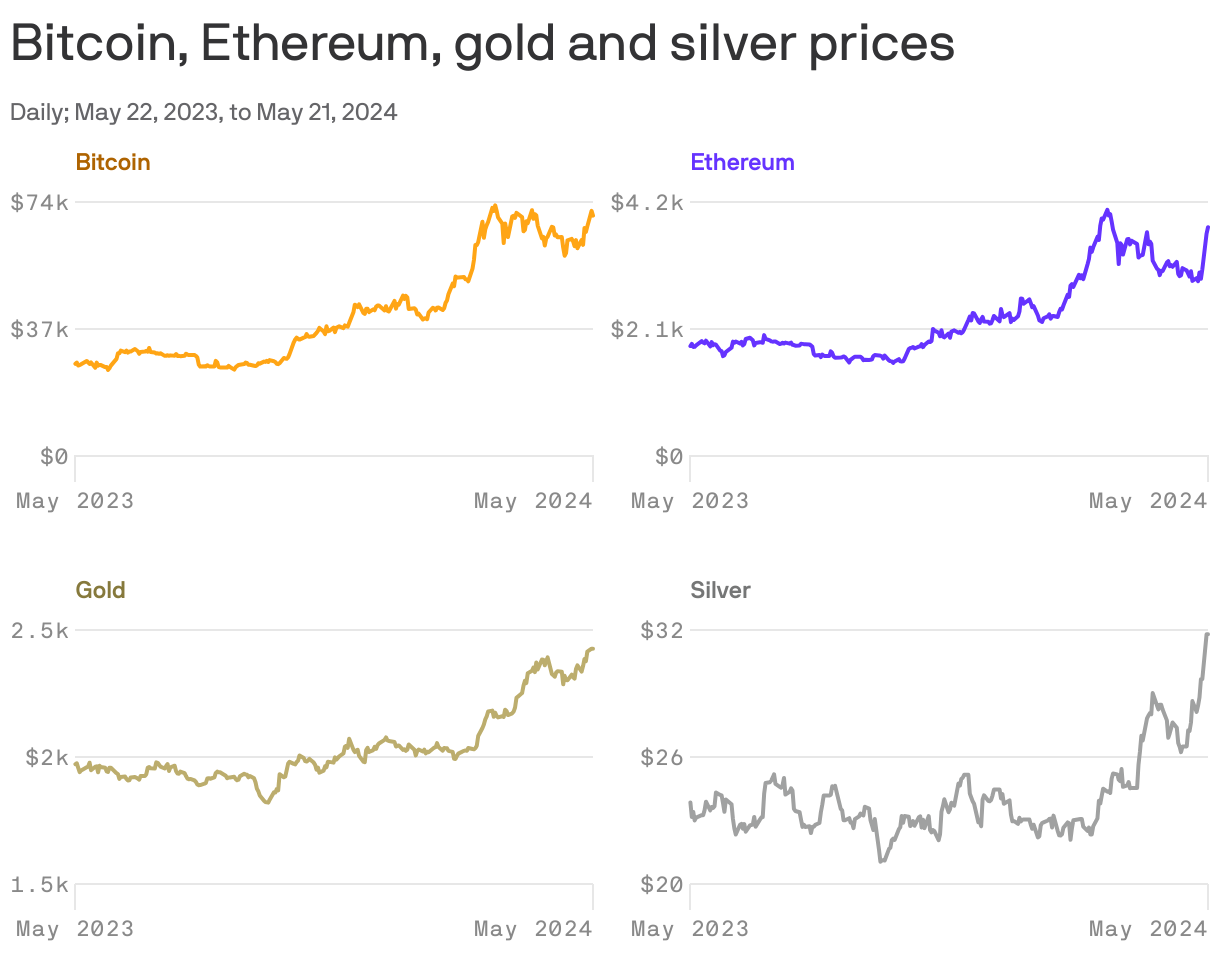
The current market looks like a goose that lays the golden BEGS, a new acronym coined this morning by Axios' Felix Salmon.
- The full range of popular investments with no associated cash flow — bitcoin, ethereum, gold, silver — is at or near all-time highs.
Flashback: The zero-cash-flow asset class used to be known as SWAG — silver, wine, art, gold.
- The collectibles market, from art to watches, looks pretty depressed at the moment. The BEGS, by contrast, are on fire.
5. 🗳️ Scoop: Dems target Trump VPs
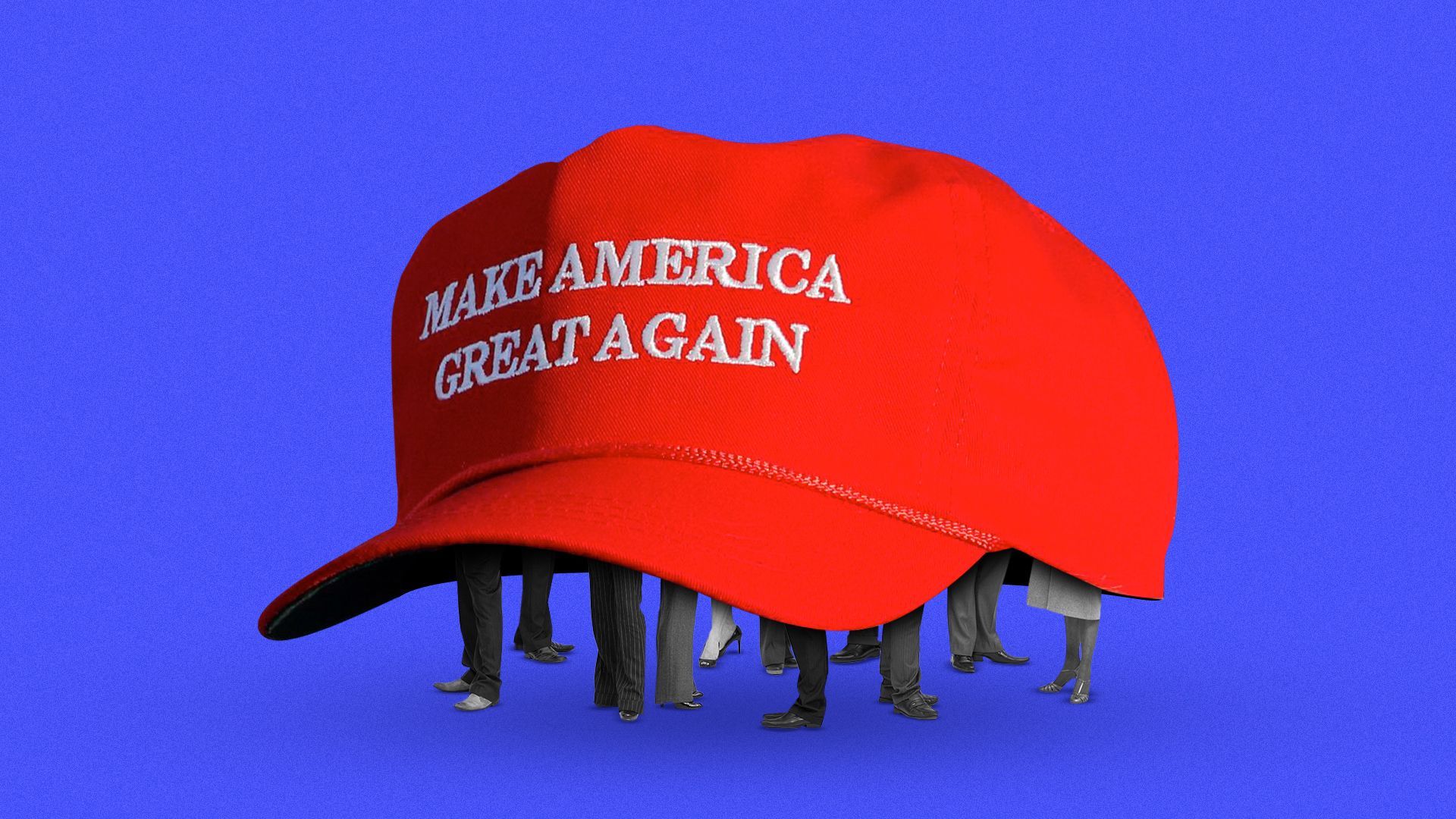
Illustration: Aïda Amer/Axios
The DNC is launching a "Trump's MAGA Veepstakes" project to paint all of former President Trump's VP contenders as extremist backers of an "ultra-MAGA" policy agenda, Axios' Sophia Cai writes.
- Why it matters: Dozens of potential veep picks are doing their best to distinguish themselves. But Democrats plan to lump them together as "all the same," DNC officials tell Axios.
The DNC plans to zoom in on four issues where they expect Trump's eventual running mate to have vulnerabilities:
- Election denial: Refusing to certify the results if they were VP.
- Abortion: Applauding Trump's role in overturning Roe v. Wade and supporting a national abortion ban.
- Health care: Supporting repeal of the Affordable Care Act.
- Working families: Tax cuts for billionaires and cuts to Social Security and Medicare.
Trump campaign spokesperson Steven Cheung told Axios: "The DNC and their media defenders will stop at nothing to gaslight the American people into believing their lies and forgetting their disastrous record."
6. 🏛️ 3 Congress scoops!

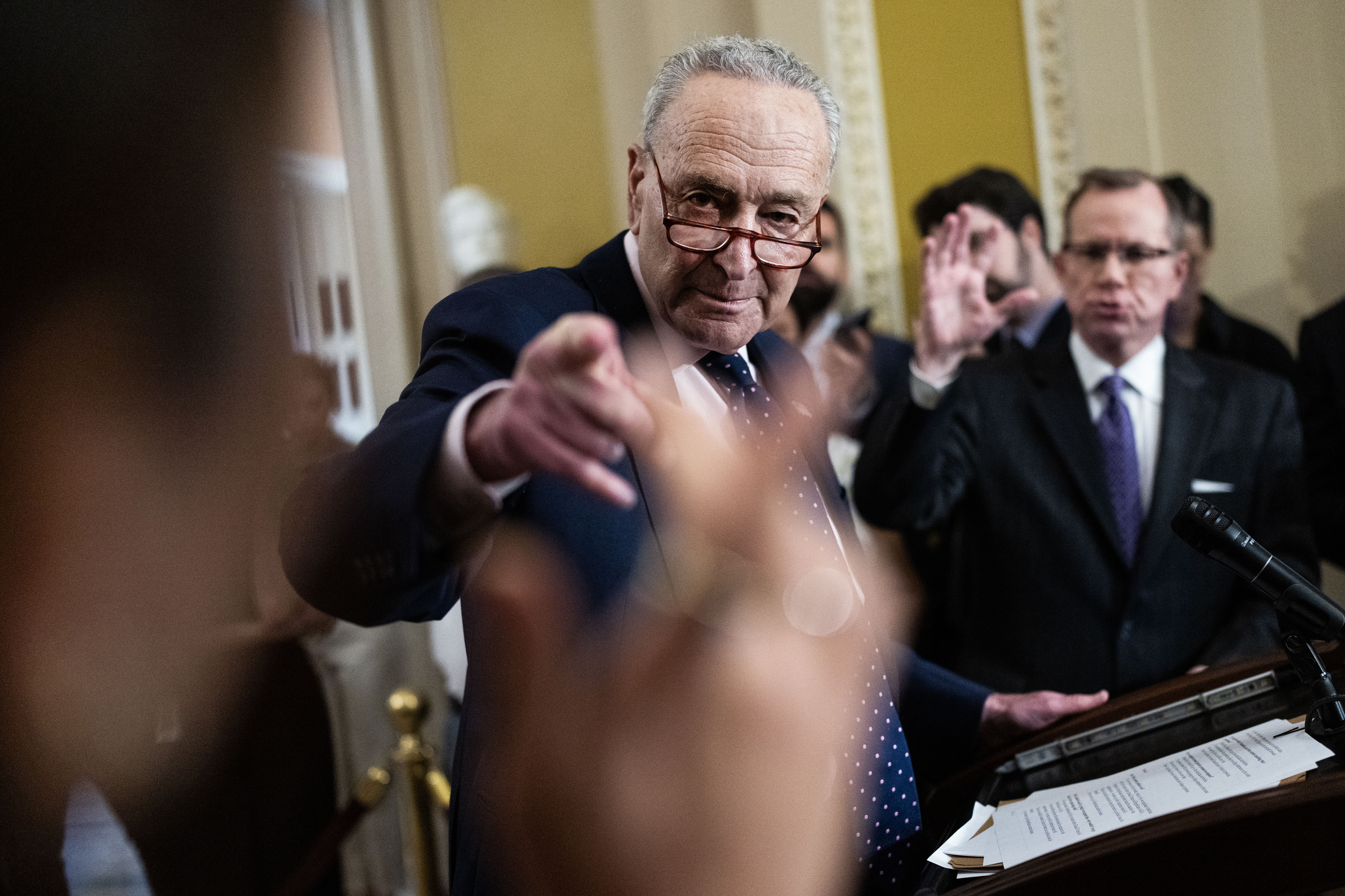
👀 1. Reproductive-rights blitz: Senate Majority Leader Chuck Schumer is planning to zero in on the topic next month — potentially forcing Republicans to take tough votes on issues such as contraception and in vitro fertilization, Axios' Stef W. Kight writes. Keep reading.
🇦🇫 2. Psaki book fallout: A House committee is threatening to subpoena Jen Psaki if she doesn't schedule an interview about the U.S. withdrawal from Afghanistan, Axios' Alex Thompson reports.
- The former White House press secretary gave the Foreign Affairs Committee an opening after she falsely wrote that President Biden hadn't looked at his watch during a ceremony for soldiers killed during an explosion at Kabul's airport. Keep reading.
🔗 Raj Shah, Speaker Mike Johnson's deputy chief for communications, is gearing up to leave his position before the end of the summer, Axios' Juliegrace Brufke writes.
- Shah, a deputy press secretary during the Trump administration, was a key link to the former president's allies as Johnson faced threats from conservative hardliners. Keep reading.
7. 🚙 Cars that beep when you speed

Illustration: Brendan Lynch/Axios
A California bill, which cleared its first vote yesterday, would require new cars to beep when you speed — like they do when you forget your seatbelt.
- Why it matters: California's auto market is so big that automakers might just make all new U.S. vehicles comply with the law in the most populous state, AP reports.
The bill, aimed at reducing road deaths, would require new cars sold in California by 2032 to beep when drivers break the speed limit by at least 10 mph.
- The bill passed its first vote in the state Senate only narrowly — an indication it could face a tough road.
- State Sen. Brian Dahle, a Republican from Lassen County, said he opposed the bill partly because people sometimes need to speed in an emergency: "It's just a nanny state that we're causing here."
💡 How it works: The technology — intelligent speed assistance — uses GPS to compare a vehicle's speed with a dataset of posted speed limits. Once the car is at least 10 mph over the speed limit, the system emits "a brief, one-time visual and audio signal to alert the driver."
- 🇪🇺 The technology has been used in Europe for years. Starting later this year, the EU will require new cars sold there to have the system. But drivers will be able to turn it off.
8. 🥗 1 food thing: Restaurants of tomorrow
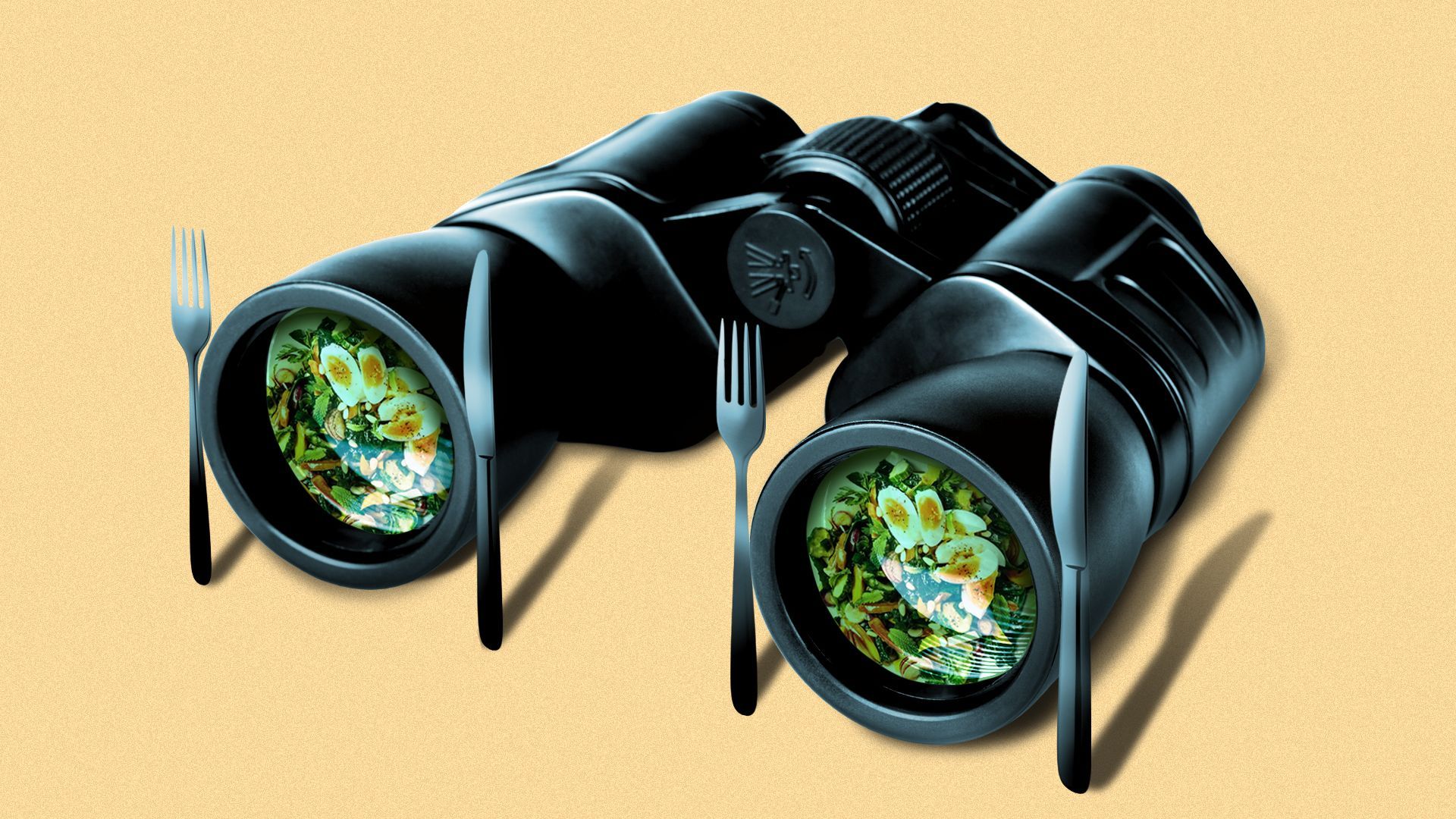
Illustration: Sarah Grillo/Axios
From weird ingredients to far-out hospitality schemes, restaurants are trying to lure back inflation-weary consumers, Axios' Jennifer A. Kingson writes from the National Restaurant Association's annual show in Chicago.
- Why it matters: Social media and technology have upped the ante for what restaurateurs need to do to entice patrons — and recover from their pandemic-era swoon.
The convention offered glimpses of the directions that food service will take:
- An "underground logistics" company called Pipedream Labs is building subterranean tunnels to deliver groceries and meals, starting in Austin.
- A company called Pairwise is using CRISPR to create gene-edited salad — starting with better-tasting mustard greens.
- The Avocado Bread Company is riffing on avocado toast by baking guacamole spices into many types of bread.
📬 Please invite your friends to join AM.
Sign up for Axios AM

Catch up with the most important news of the day