Axios AM

March 31, 2026

1 big thing: Era of unshackled warfare
2. ⚛️ The race to build new nuclear reactors
HOUSTON — As nuclear energy deals pile up, executives face a huge challenge: How to build multiple plants quickly, Axios' Chuck McCutcheon writes.
- Why it matters: Nuclear is seen as critical to powering AI data centers, but the supply chains, workers and permits needed to build plants haven't kept pace.
🔮 At last week's CERAWeek energy conference, industry officials predicted that companies' willingness to try new approaches — particularly with AI — will speed things up.
- Nvidia and Microsoft are joining forces to use AI tools to streamline nuclear construction, using virtual replicas that let engineers test changes.
- Aalo Atomics says it cut permitting time by 92% using Microsoft's Generative AI for Permitting solution, saving about $80 million a year.
The goal is a "copy and paste" approach, said Aalo's Jon Guidroz. "We need to build this [nuclear] stuff the way server racks and data centers get built."
- Getting a qualified workforce fully up to speed to build many plants will take time, said Ross Ridenoure, Hadron Energy's chief nuclear officer.
- "There will be, I think, a shortage initially, until the training programs catch up with the demand," he told Axios.
The bottom line: Hyperscalers are bringing a much-needed sense of urgency, said TerraPower president and CEO Chris Levesque.
3. 💰 "The Axios Show": Dimon's American Dream bet
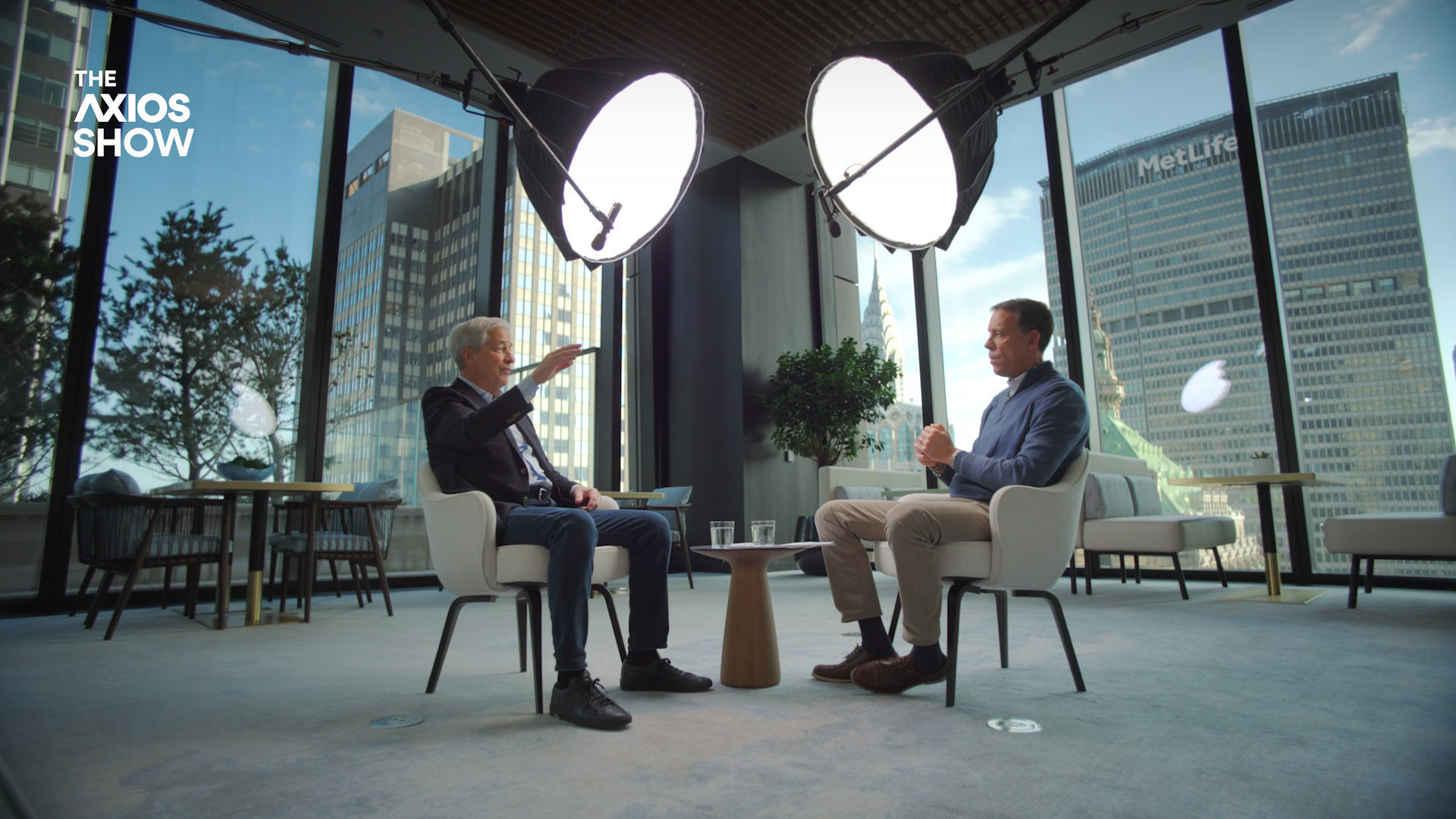
Capitalism has left some people behind, JPMorgan Chase chairman and CEO Jamie Dimon said on a new episode of "The Axios Show" out later this week — and he wants his bank to help create economic opportunities for as many of them as possible.
- Dimon tells Axios CEO Jim VandeHei: "I've been speaking about the fraying of the American dream for years. And I think you have to acknowledge that there's a flaw," especially for lower-income Americans.
🏦 The bank is launching an ambitious multiyear program today called the American Dream Initiative. The plan is to invest money and resources into small businesses, affordable housing and job training across the country.
- The program aims to support small businesses by unlocking more access to capital, coaching, and tools for tasks like payroll and invoicing.
Why it matters: Dimon is betting that juicing economic opportunity at the local level is not just good for business, but for the U.S. as a whole.
- "America's military strength is also predicated on economic strength," he said. "And that economic strength is somewhat predicated on life, liberty and the pursuit of happiness — and equal opportunity. So if you want to have an equal opportunity country, you need to do some of these things to give people more opportunity."
4. 📱 Poll: Super scrollers sour on democracy


Heavy social media users are less likely to think democracy is the best form of government and more likely to stray from democratic norms, Axios' Avery Lotz writes from new polling by Gallup and the Charles F. Kettering Foundation.
- Among U.S. adults who don't use social media or use it for less than an hour a day, 72% and 73%, respectively, rank democracy as the best form of government.
The share slips to 57% among those who spend five or more hours a day on social media.
5. 🎓 Rahm's '28 pitch: Raid ICE to fund college
6. 🔋 America's energy advantage


The U.S. has a key advantage in weathering the Iran war-triggered energy shock that was missing in previous episodes of overseas tumult: an economy that has become substantially less energy-intensive, Axios Macro co-author Neil Irwin writes.
- Why it matters: Higher prices at the gasoline pump, for jet fuel and for diesel will no doubt hurt. But both the average household and the economy as a whole have more capacity to weather the hit than in the past.
Over recent decades, the share of U.S. economic activity has increased in service industries that demand less energy. And the sectors that do require large-scale energy resources have become more efficient.
- Consider 1991, when the Persian Gulf War created an oil price shock that contributed to a recession that cost President George H.W. Bush his reelection. At the time, the U.S. used 6.1 million barrels of oil a day.
- Now, America uses 7.5 million barrels of oil a day. That's up 23% in 35 years. But GDP has risen by about 400% over that same span.
7. 📚 New book: Trump's 10 leadership commandments
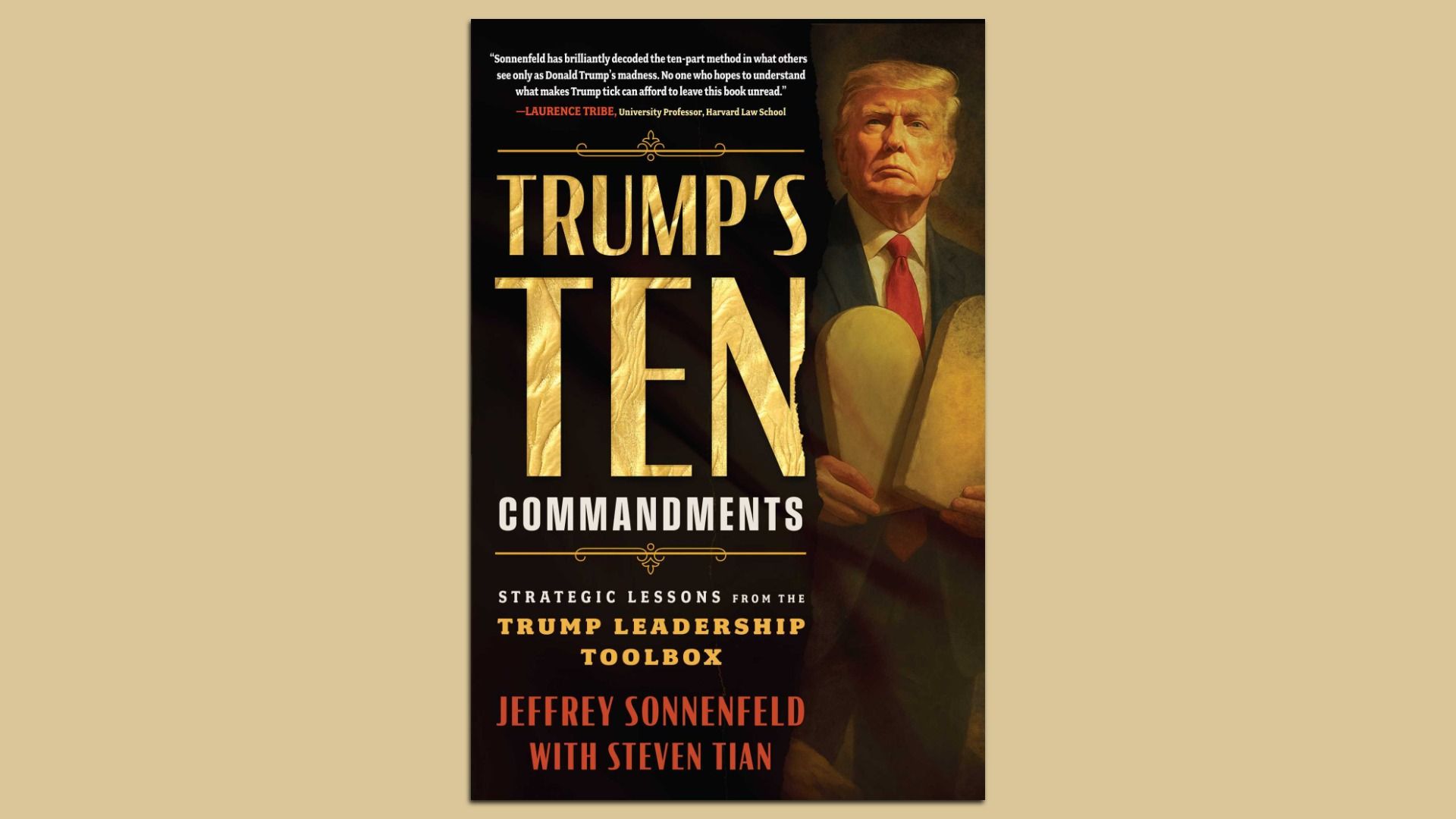
Jeffrey Sonnenfeld, a professor at the Yale School of Management who is one of the nation's premier CEO whisperers, is out today with "Trump's Ten Commandments: Strategic Lessons from the Trump Leadership Toolbox," including "Reducing Complexity to Simplicity" and "The Role of Grandeur, Image, and Heroic Aura."
- Why it matters: "Like him, loathe him, or try in vain to look past him, Trump is the most consequential leader on the planet right now," Sonnenfeld told me. The professor calls his book an "objective leadership analysis by [someone] who has known him for a quarter century."
🌴 Sonnenfeld met Trump in 1992. The mogul's trademark seduction began: The two later conversed at Trump Tower, over lunch at one of Trump's golf clubs, at the Connecticut home of Larry Kudlow, and at a Sonnenfeld CEO summit at the Waldorf Astoria in Manhattan.
- Based on all those years of studying Trump, Sonnenfeld says the tactics include "divide and conquer, the sleeper effect of constantly repeating false information with unshakable confidence, starting negotiations by giving the other side a bloody nose rather than a handshake of trust, centralizing all power [in your own hands], personal grandiose branding on everything."
The bottom line: "The key insight about how Donald Trump leads is that he is the sun around which all else must revolve in the Trump solar system," Sonnenfeld concludes. "Power must not reside in institutions, collectives, or equals; all power must radiate from Trump himself. If he is not at the center of an event, then in his retelling, it is not important, or it did not happen."
8. 👀 1 for the road: Trump library reveal
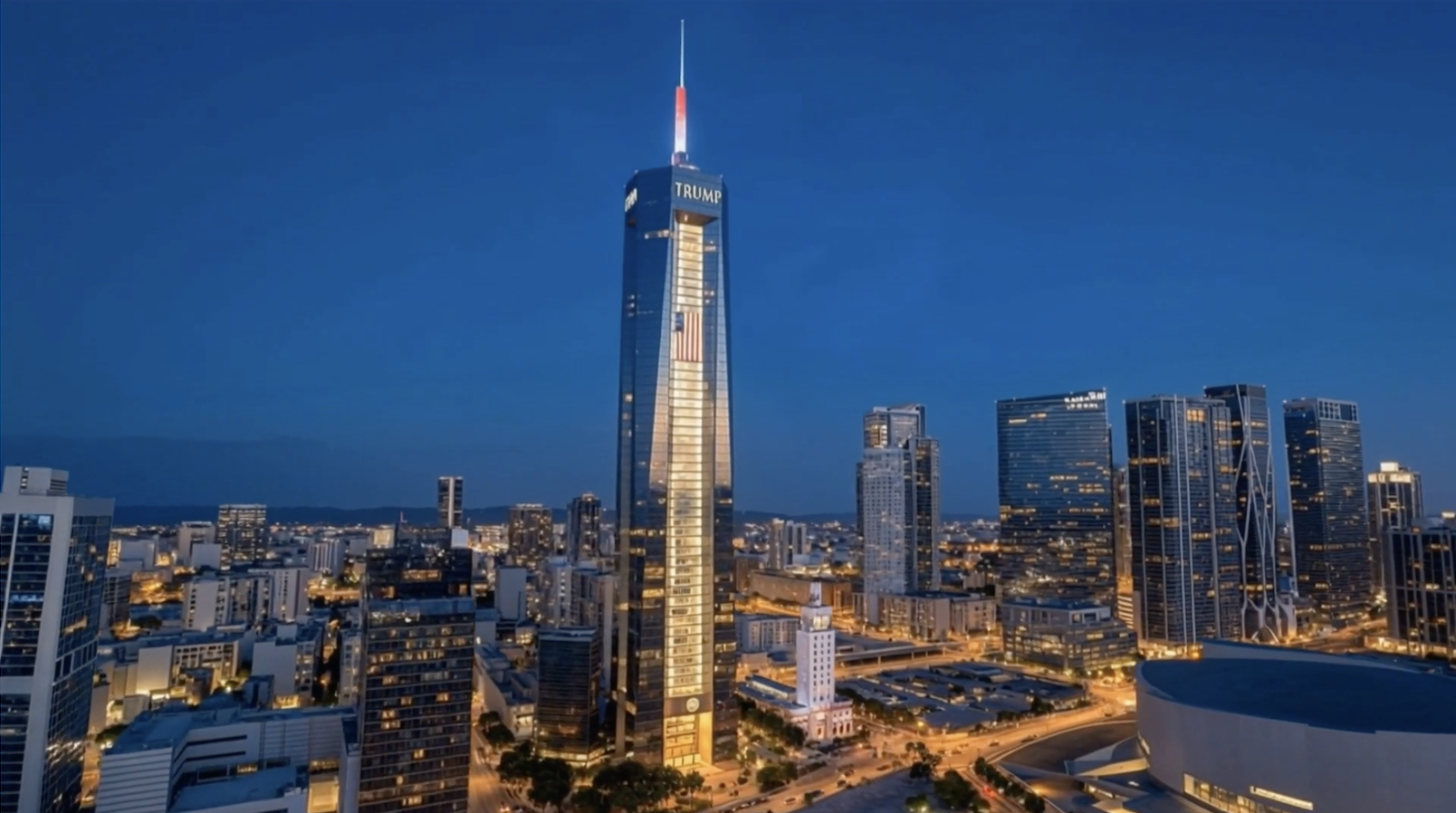
President Trump last night unveiled the first renderings of the presidential library he plans to build on prime Miami real estate after he leaves office.
- A nearly two-minute video on Truth Social depicts it towering over the city's existing skyscrapers, suggesting the shrine could become the tallest building in South Florida.
The mock-ups show space for an Air Force One 747 jet, a Marine One helicopter and several other aircraft.
- Plans also include a large golden statue of Trump in an auditorium (pictured below) and a golden escalator reminiscent of the one the president famously descended in 2015 at Trump Tower in Manhattan.
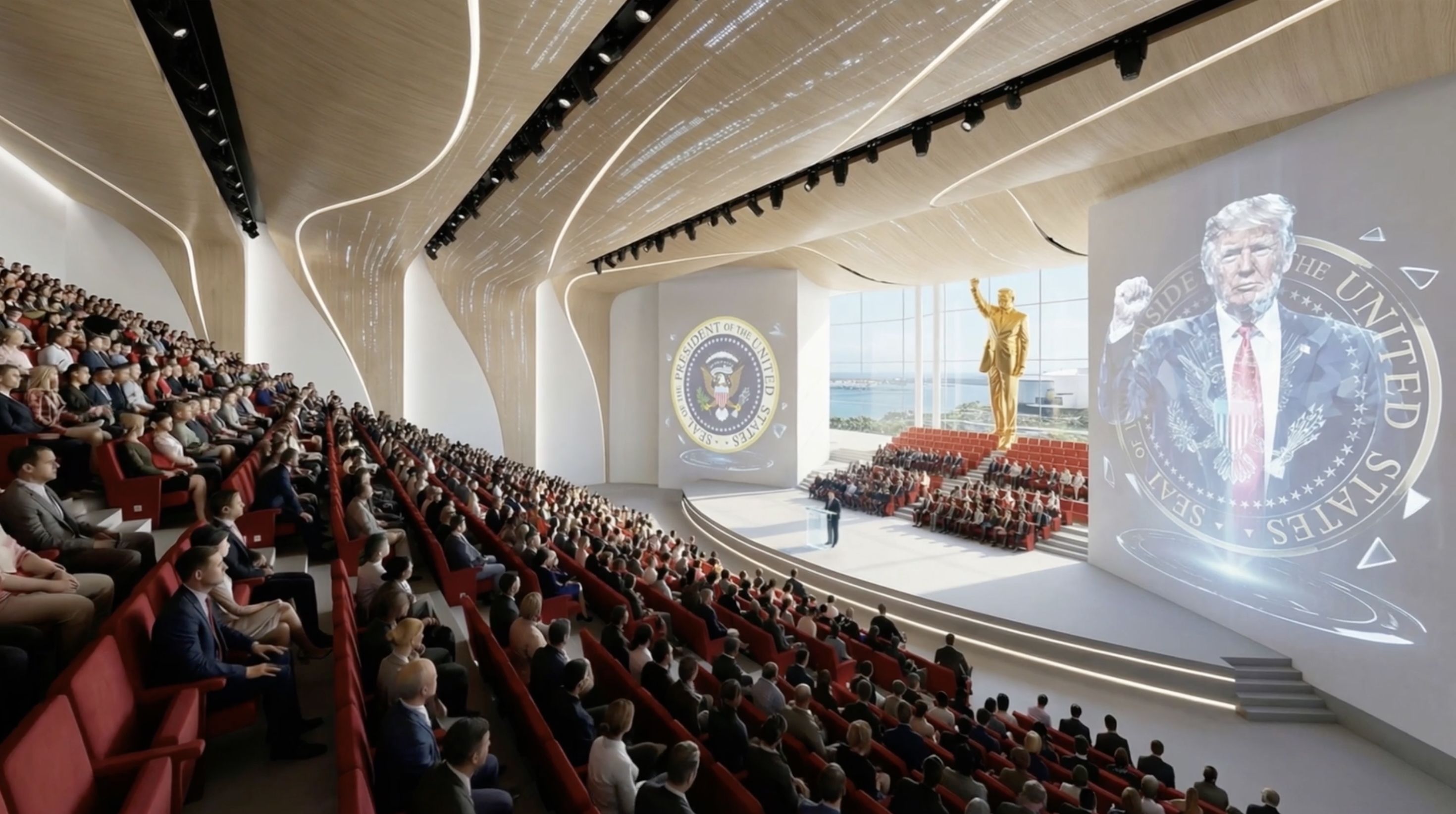
Between the lines: Local officials will have little say over the project — including its height — after Florida barred cities and counties from regulating presidential libraries, Axios' Marc Caputo notes.
- The state handed over the 2.63-acre plot of land, formerly a parking lot for Miami Dade College, to Trump's library foundation last year for $10.
✈️ Also yesterday, the pro-Trump state lawmakers who control Tallahassee gave Trump another gift when Gov. Ron DeSantis signed legislation officially renaming Palm Beach International Airport to "the President Donald J. Trump International Airport."
- The name change becomes official on July 1. More on the airport.
Axios AM