Axios AM

January 18, 2025

🧁 Axios is 8 today! Thank you to all the readers and colleagues who believed in us from Day 0! We'll always work hard to make you smarter, faster on what matters!
- Smart Brevity™ count: 2,185 words ... 8½ mins. Thanks to Erica Pandey for orchestrating. Edited by Lauren Floyd.
⚡ Day 2: The Trump administration plans a week-long immigration raid in Chicago beginning Tuesday morning — carried out by 100-200 U.S. Immigration and Customs Enforcement (ICE) officers, targeting immigrants in the country illegally with criminal backgrounds, The Wall Street Journal reports.
1 big thing: A chilling, "catastrophic" warning
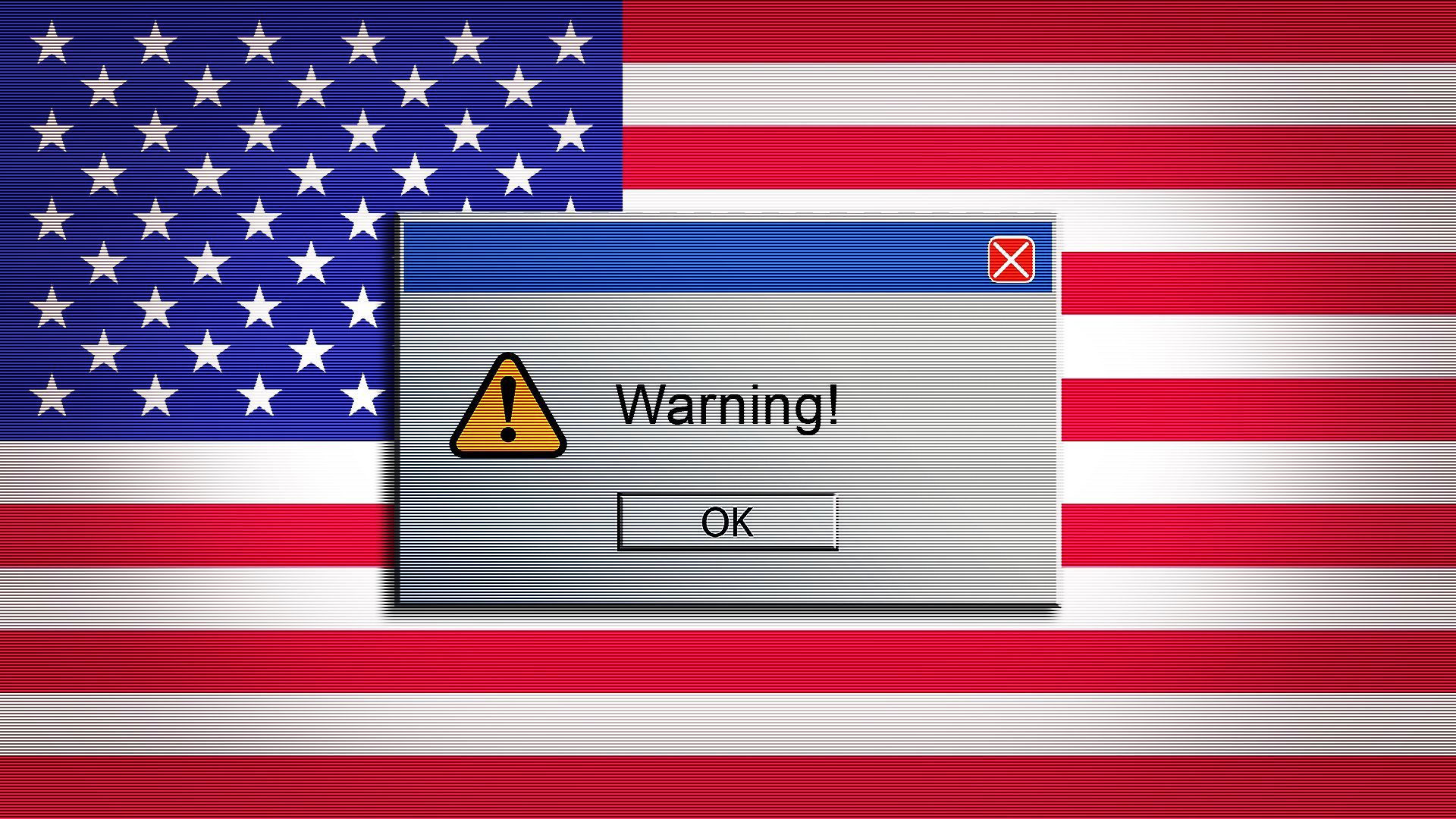
Jake Sullivan — with three days left as White House national security adviser, with wide access to the world's secrets — called us to deliver a chilling, "catastrophic" warning for America and the incoming administration:
- The next few years will determine whether artificial intelligence leads to catastrophe — and whether China or America prevails in the AI arms race.
Why it matters: Sullivan said in our phone interview that unlike previous dramatic technology advancements (atomic weapons, space, the internet), AI development sits outside of government and security clearances, and in the hands of private companies with the power of nation-states, Jim VandeHei and Mike Allen write in a "Behind the Curtain" column.
- Underscoring the gravity of his message, Sullivan spoke with an urgency and directness that were rarely heard during his decade-plus in public life.
Somehow, government will have to join forces with these companies to nurture and protect America's early AI edge, and shape the global rules for using potentially God-like powers, he says.
- U.S. failure to get this right, Sullivan warns, could be "dramatic, and dramatically negative — to include the democratization of extremely powerful and lethal weapons; massive disruption and dislocation of jobs; an avalanche of misinformation."
👀 Staying ahead in the AI arms race makes the Manhattan Project during World War II seem tiny, and conventional national security debates small. It's potentially existential with implications for every nation and company.
- To distill Sullivan: America must quickly perfect a technology that many believe will be smarter and more capable than humans. We need to do this without decimating U.S. jobs, and inadvertently unleashing something with capabilities we didn't anticipate or prepare for. We need to both beat China on the technology and in shaping and setting global usage and monitoring of it, so bad actors don't use it catastrophically. Oh, and it can only be done with unprecedented government-private sector collaboration — and probably difficult, but vital, cooperation with China.
"There's going to have to be a new model of relationship because of just the sheer capability in the hands of a private actor," Sullivan says.
- "What exactly that model looks like, whether it takes more the form of guardrails and regulation, and some forms of support from the government — or whether it involves something more ambitious than that — I will tell you that some of the smartest people I know who sit at the intersection of policy and technology are working through the answer to that question right now."
- This is beyond uncharted waters. It's an unexplored galaxy — "a new frontier," in his words. And one, he warns, where progress routinely exceeds projections in advancement. Progress is now pulsing in months, not years.
🦾 Between the lines: Sullivan leaves government believing this can be done well — and wants to work on this very problem in the private sector.
- "I personally am not an AI doomer," he says. "I am a person who believes that we can seize the opportunities of AI. But to do so, we've got to manage the downside risks, and we have to be clear-eyed and real about those risks."
🖼️ The big picture: There's no person we know in a position of power in AI or governance who doesn't share Sullivan's broad belief in the stakes ahead.
- Regardless of what was said in public, every background conversation we had with President Biden's high command came back to China. Yes, they had concerns about the ethics, misinformation and job loss of AI. They talked about that. But they were unusually blunt in private: Every move, every risk was calculated to keep China from beating us to the AI punch. Nothing else matters, they basically said.
- That's why they applied export controls on the top-of-the-line semiconductors needed to power AI development — including in Biden's final days in office — and cut off supply of the hyper-sophisticated tools Chinese firms need to make such chips themselves.
🇨🇳 That said, AI is like the climate: America could do everything right — but if China refuses to do the same, the problem persists and metastasizes fast. Sullivan said Trump, like Biden, should try to work with Chinese leader Xi Jinping on a global AI framework, much like the world did with nuclear weapons.
- There won't be one winner in this AI race. Both China and the U.S. are going to have very advanced AI. There'll be tons of open-source AI that many other nations will build on, too. Once one country has made a huge advance, others will match it soon after. What they can't get from their own research or work, they'll get from hacking and spying. (It didn't take long for Russia to match the A-bomb and then the H-bomb.)
- Marc Andreessen, who's intimately involved in the Trump transition and AI policy, told Bari Weiss of The Free Press his discussions with the Biden administration this past year were "absolutely horrifying," and said he feared the officials might strangle AI startups if left in power. His chief concern: Biden would assert government control by keeping AI power in the hands of a few big players, suffocating innovation.
Sullivan says a conversation he had with Andreessen struck a very different tone.
- "The point he was trying to register with me, which I thought was actually a very fair point, is: I think about downside risk; that's my job," Sullivan told us. "His point was: It should also be my job as national security adviser to think about how AI applications running on American rails globally is better than AI applications running on some other country's rails globally."
🔭 What's next: Trump seems to be full speed ahead on AI development. Unlike Biden, he plans to work in deep partnership with AI and tech CEOs at a very personal level. Biden talked to some tech CEOs; Trump is letting them help staff his government. The MAGA-tech merger is among the most important shifts of the past year.
- The super-VIP section of Monday's inauguration will be one for a time capsule: Elon Musk, Jeff Bezos, Tim Cook, Sam Altman, Sundar Pichai and Mark Zuckerberg — who's attending his first inauguration, and is co-hosting a black-tie reception Monday night. The godfathers of tech are all desperate for access, a say, a partnership.
- Also in a spot of honor: TikTok CEO Shou Chew.
A fight might await: Steve Bannon and other MAGA originals believe AI is evil at scale — a job-killer for the very people who elected Trump. But for now, Bannon is a fairly lonely voice shouting against AI velocity. Trump and the AI gods hold the stage.
The bottom line: There's a reason our Behind the Curtain column writes obsessively about AI and its collision with government. We believe, based on conversations with AI's creators and experts, this dynamic will reshape politics, business and culture beyond most imaginations.
2. TikTok is Trump's problem now
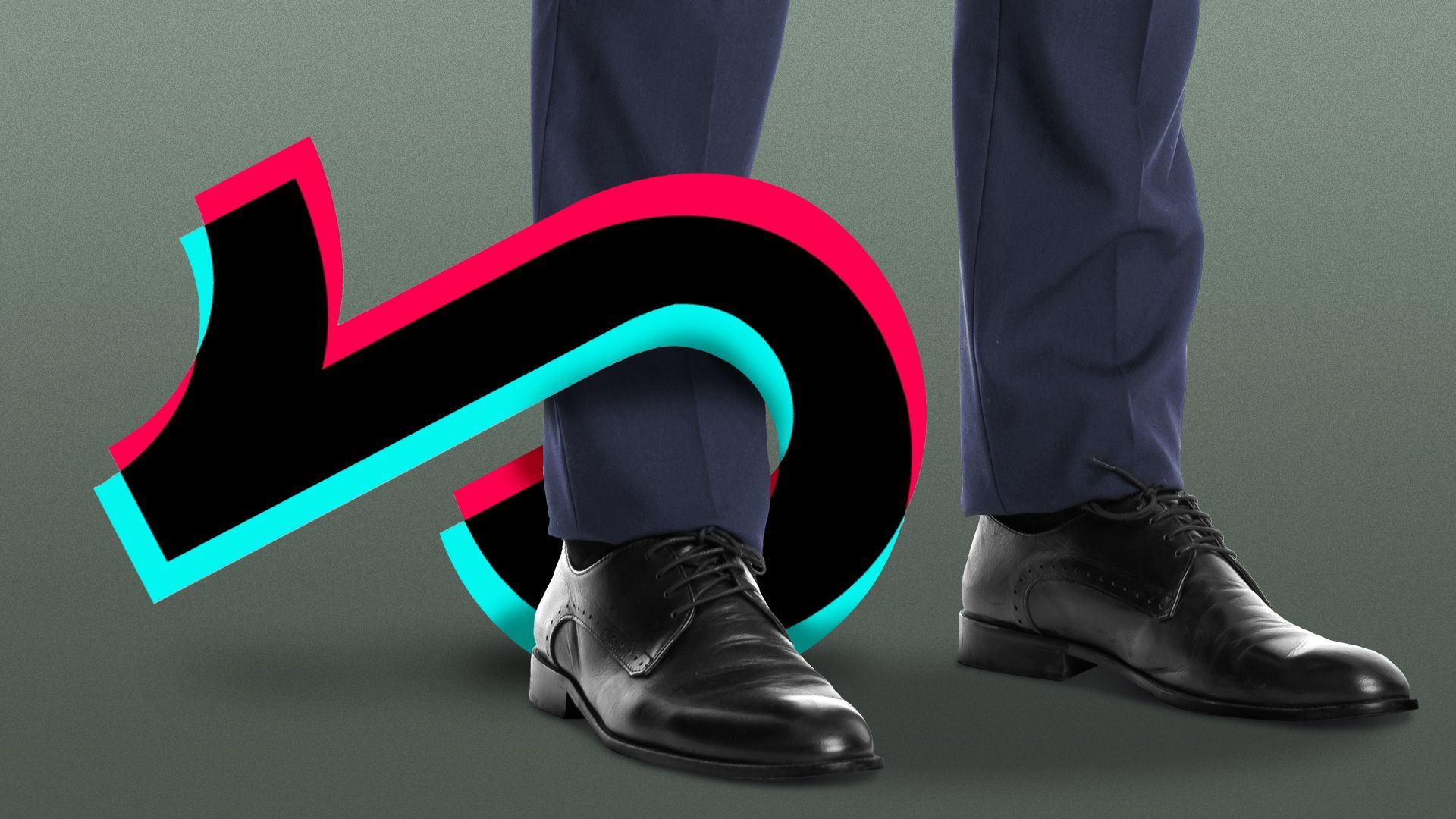
Years of debate, months of procrastination and weeks of panic have brought the U.S. to the brink of banning TikTok — a bipartisan achievement that top politicians suddenly want nothing to do with.
- Why it matters: On the eve of his inauguration, President-elect Trump is facing an enormous challenge to his popularity, his executive power and his word. He has vowed to save TikTok — but failed to explain how he can do so without violating U.S. law, Axios' Zachary Basu writes.
⚡ The latest: Yesterday, the Supreme Court upheld the law passed by Congress last year that forces Chinese parent company ByteDance to divest from TikTok by Sunday, or else face a ban in the U.S.
- The decision was unanimous, with all nine justices shrugging off a brief from Trump asking the court to delay the ban so that his administration could "pursue a negotiated resolution."
President Biden, who signed the TikTok bill into law, won't enforce the ban — saying in a statement yesterday that "actions to implement the law simply must fall" to the Trump administration, given the timing.
- But TikTok said the app "will be forced to go dark" tomorrow, unless the Biden administration "immediately provides a definitive statement to satisfy the most critical service providers assuring non-enforcement."
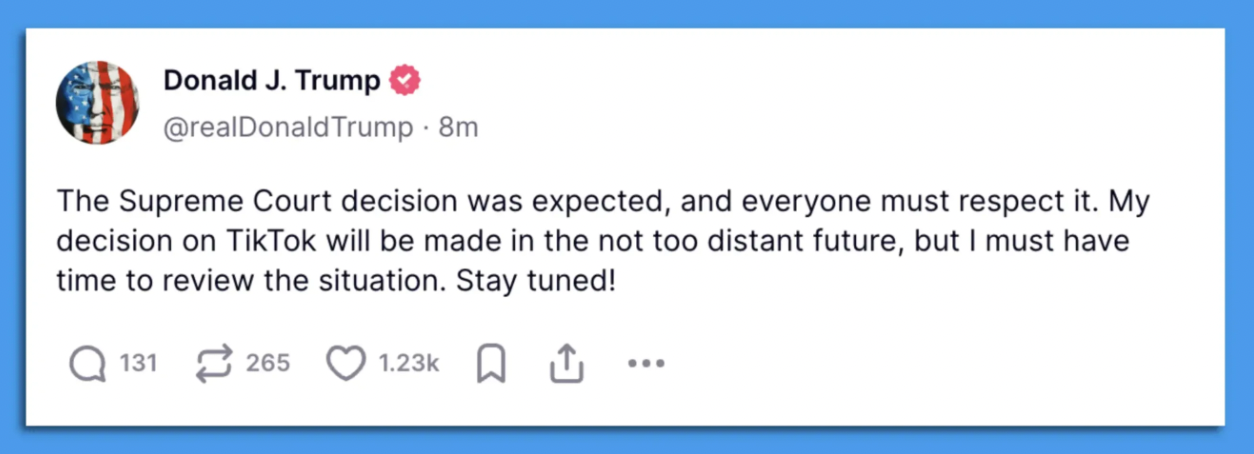
What to watch: Trump is considering an executive order delaying enforcement of the TikTok ban to give the administration time to find a U.S. buyer, despite ByteDance's refusal to sell for the past eight months.
- It's unclear how the executive order could bypass the letter of the law. App stores run by Google and Apple could face fines and liability risk if they ignore the Supreme Court's ruling.
- Still, Trump is trying: He discussed TikTok with Chinese President Xi Jinping in a phone call Friday, and has invited TikTok CEO Shou Zi Chew to be a VIP at Monday's inauguration.
🐘 The intrigue: One of the biggest obstacles to Trump's salvation mission is his own party.
- Sen. Tom Cotton (R-Ark.), the chair of the Intelligence Committee, blocked Democrats' attempt to extend the deadline for the ban on Thursday.
- "Let me be crystal clear: there will be no extensions, no concessions, and no compromises for TikTok," Cotton said, echoing the hawkish language typical of most Republicans before Trump's change of heart.
3. 🇻🇪 Trump's team wants Maduro out
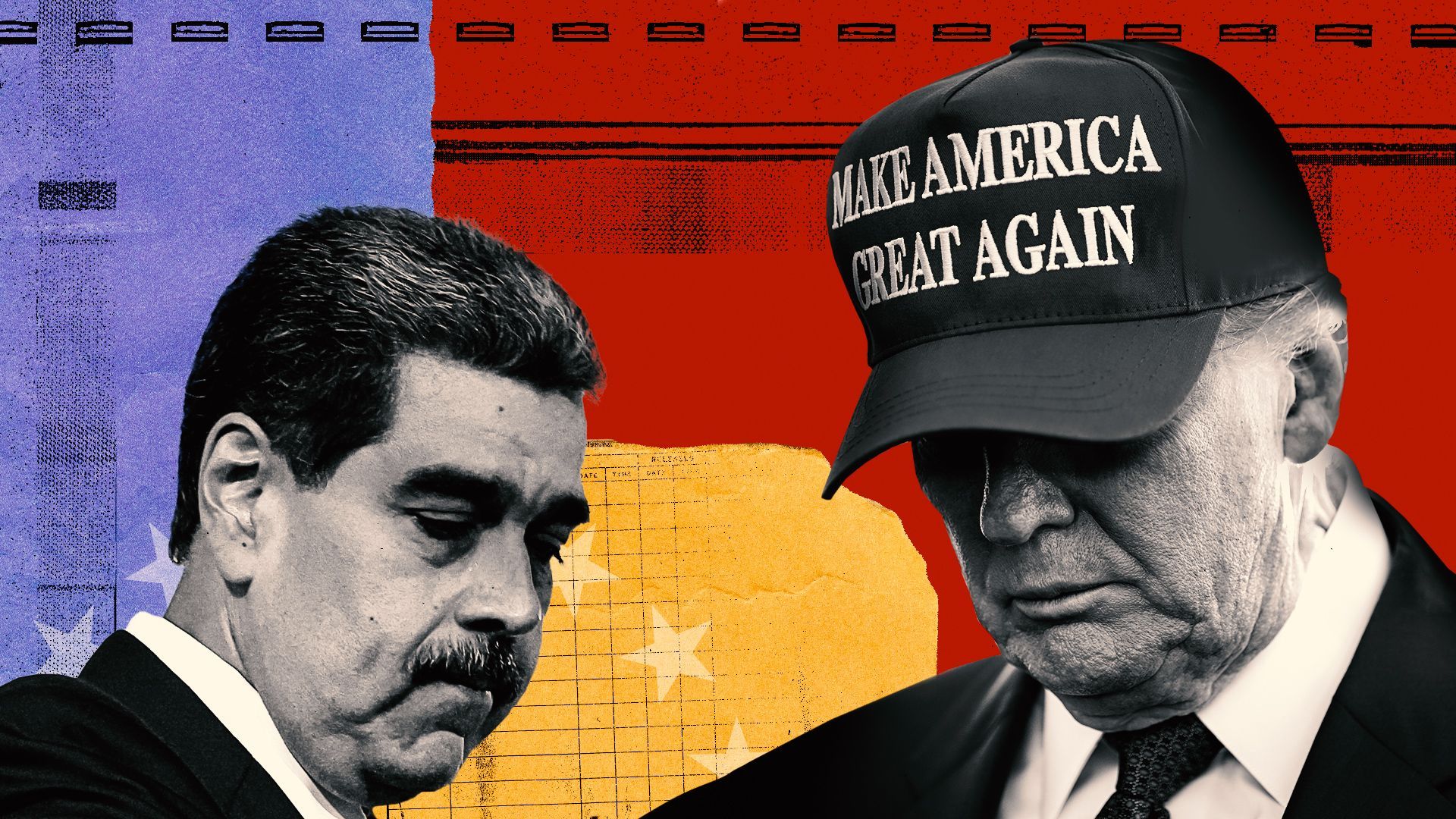
The incoming Trump administration wants regime change in Venezuela, where dictator Nicolás Maduro stole his election, jailed a rival and this month even threatened to invade the U.S. territory of Puerto Rico.
- Why it matters: Venezuela under Maduro has been a massive problem for Latin America and the U.S. It's accounted for the largest modern-day migration in the Western Hemisphere — nearly 8 million people have fled Maduro's regime in the past decade, Axios' Marc Caputo reports.
Trump's team says it wants Maduro to go the way of recently toppled Syrian dictator Bashar al-Assad. But regime change doesn't necessarily mean military action, Trump advisers say.
- "We wouldn't mind one bit seeing Maduro being neighbors with Assad in Moscow," a Trump adviser involved with foreign policy discussions told Axios.
🔭 The big picture: Trump's interest in Venezuela is part of a broader national security policy that's anything but the isolationist model his "America First" theme often has seemed to project — especially when it comes to the Western Hemisphere.
- Trump's tactics have been dubbed the "Donroe Doctrine."
4. 🥶 Indoor inauguration

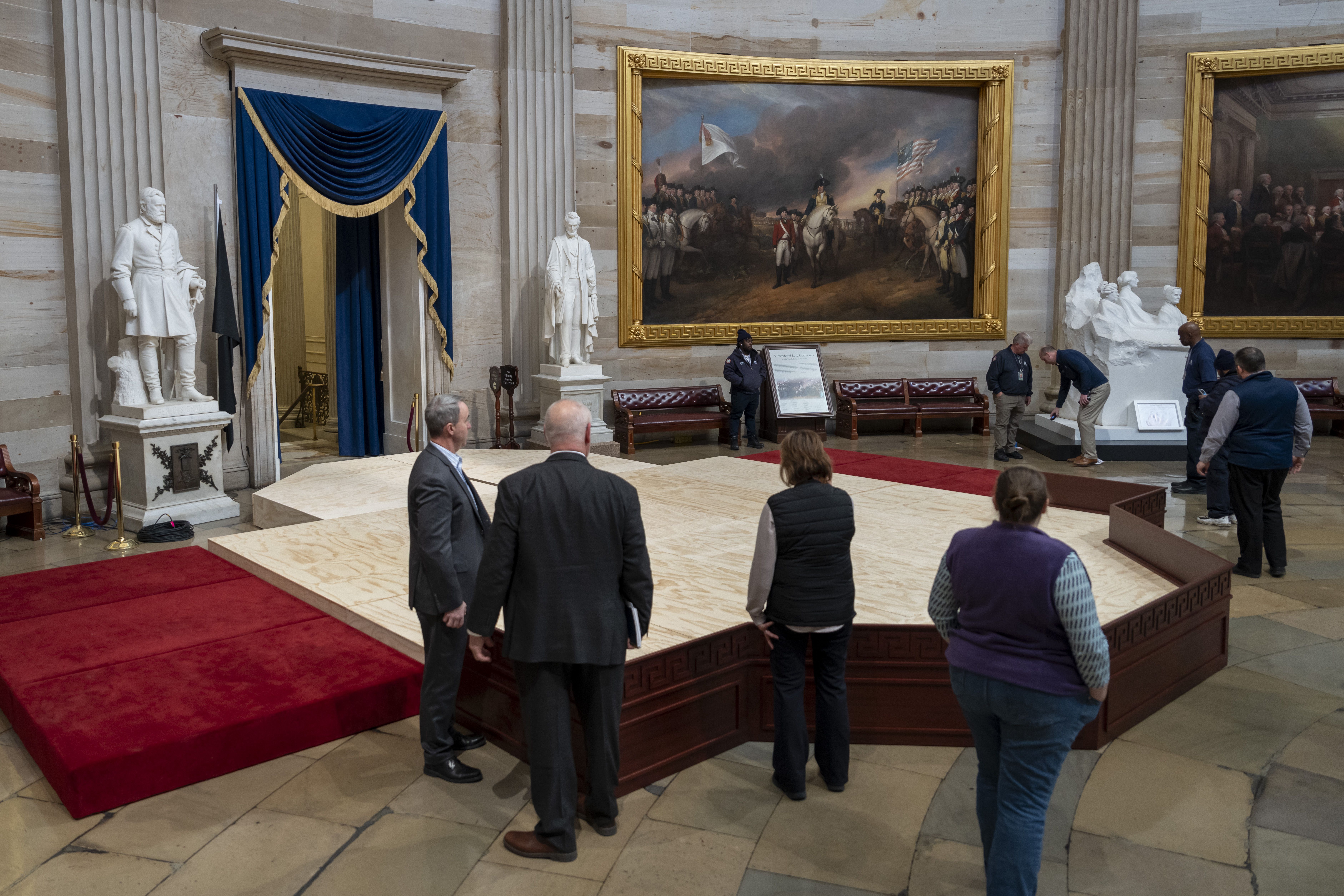
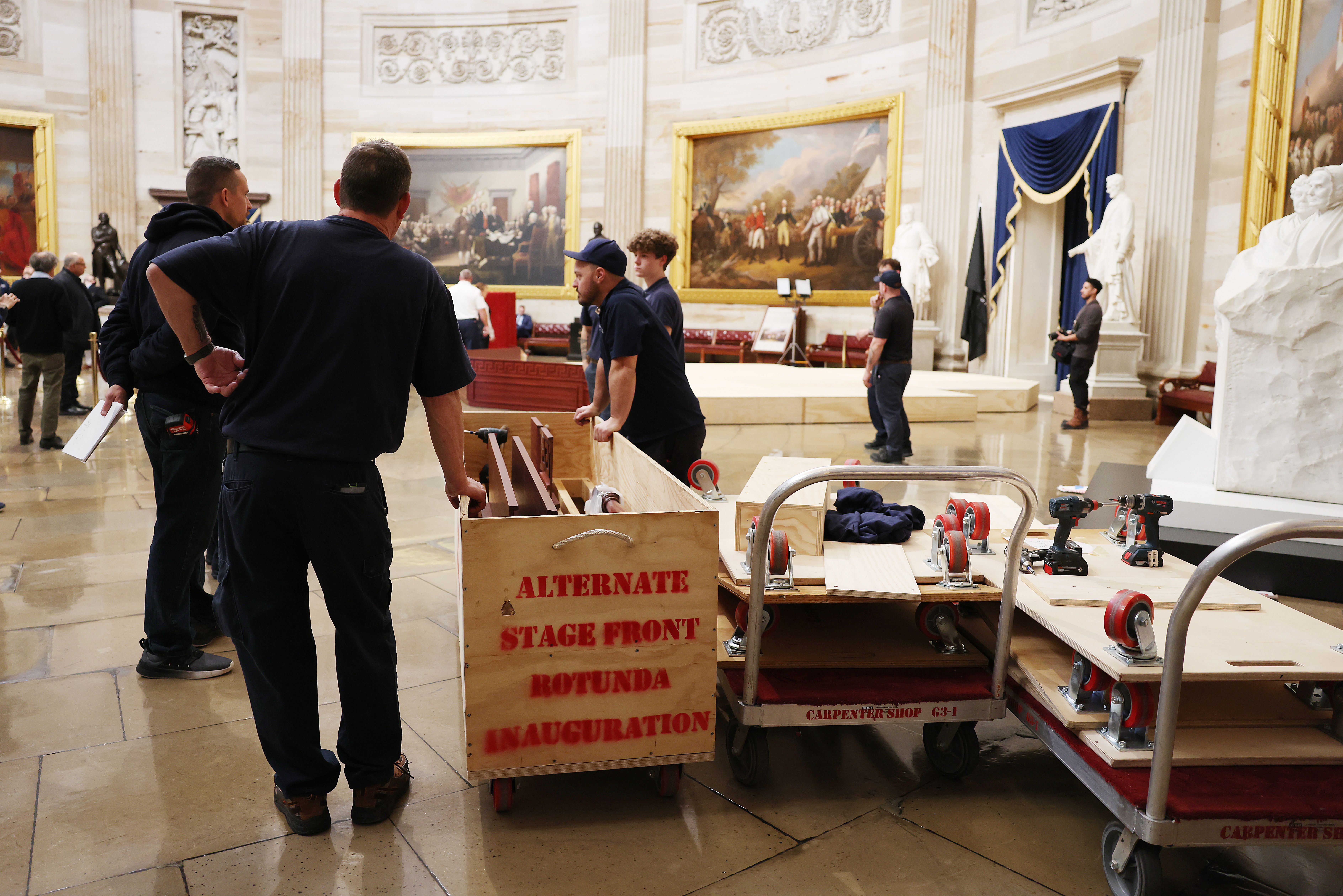
After President-elect Trump moved his inauguration inside the Capitol because of cold, workers scrambled to build a backup stand in the Rotunda.
- Air temperatures Monday are expected to hit the low- to mid-20s, with wind chills that could register as low as 12º.
Trump is moving the traditional parade down Pennsylvania Avenue to Washington's Capitol One Arena.
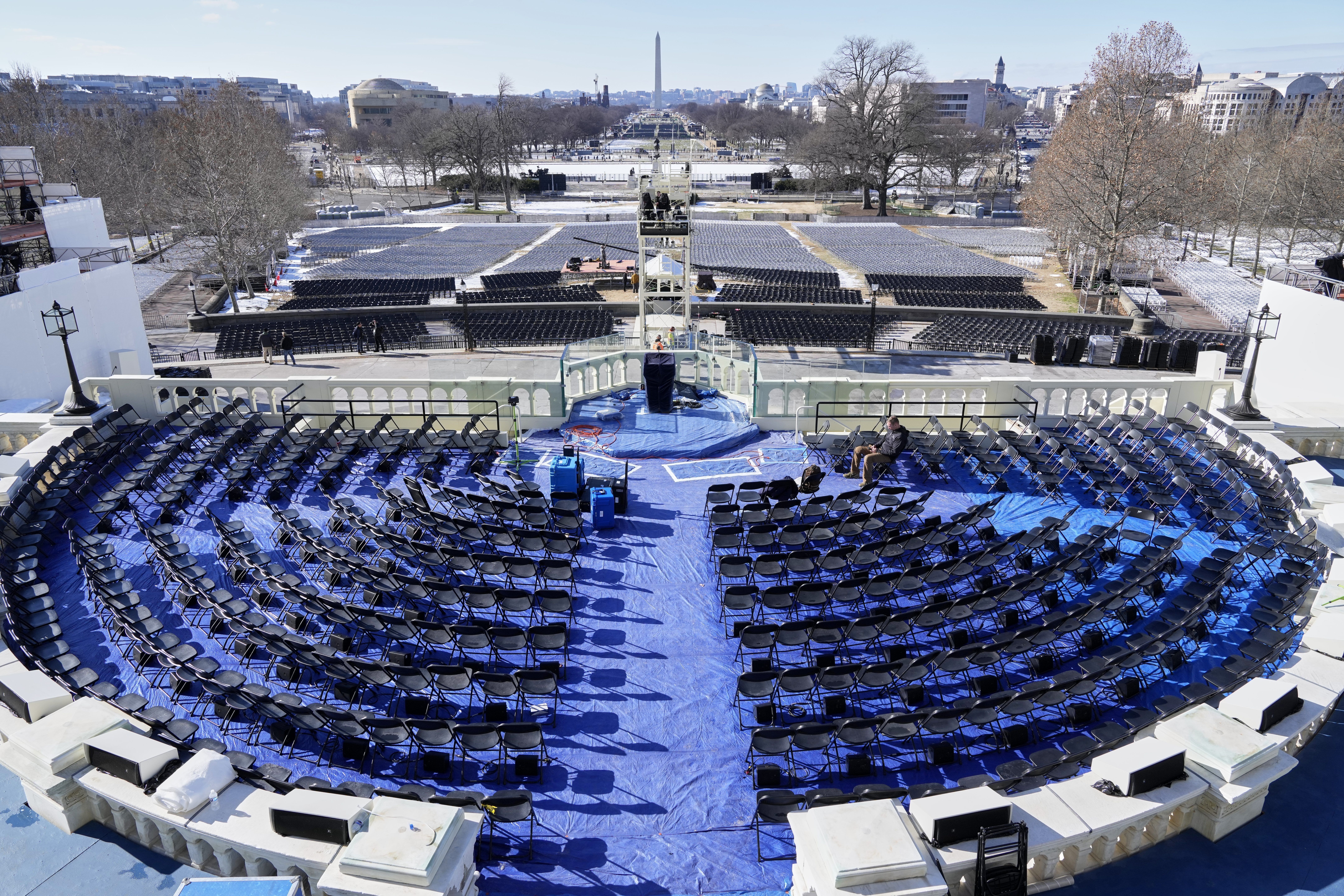
The grand stage on the Capitol's West Front will now go unused.
- Schedule: This evening through Tuesday.
5. 🗳️ GOP solidifies edge


For the third year straight, the share of Americans who support the Republican Party is larger than the share who support the Democratic Party, according to Gallup data out this week.
- The last time Republicans had the edge was in 1991.
📉 Dems in dumps: A Wall Street Journal poll finds that by a 24-point gap (36% to 60%), voters view the Democratic Party more unfavorably than favorably — the party's weakest rating in Journal polls dating to 1990. More results.
6. 📜 Tory Burch on ERA's big day
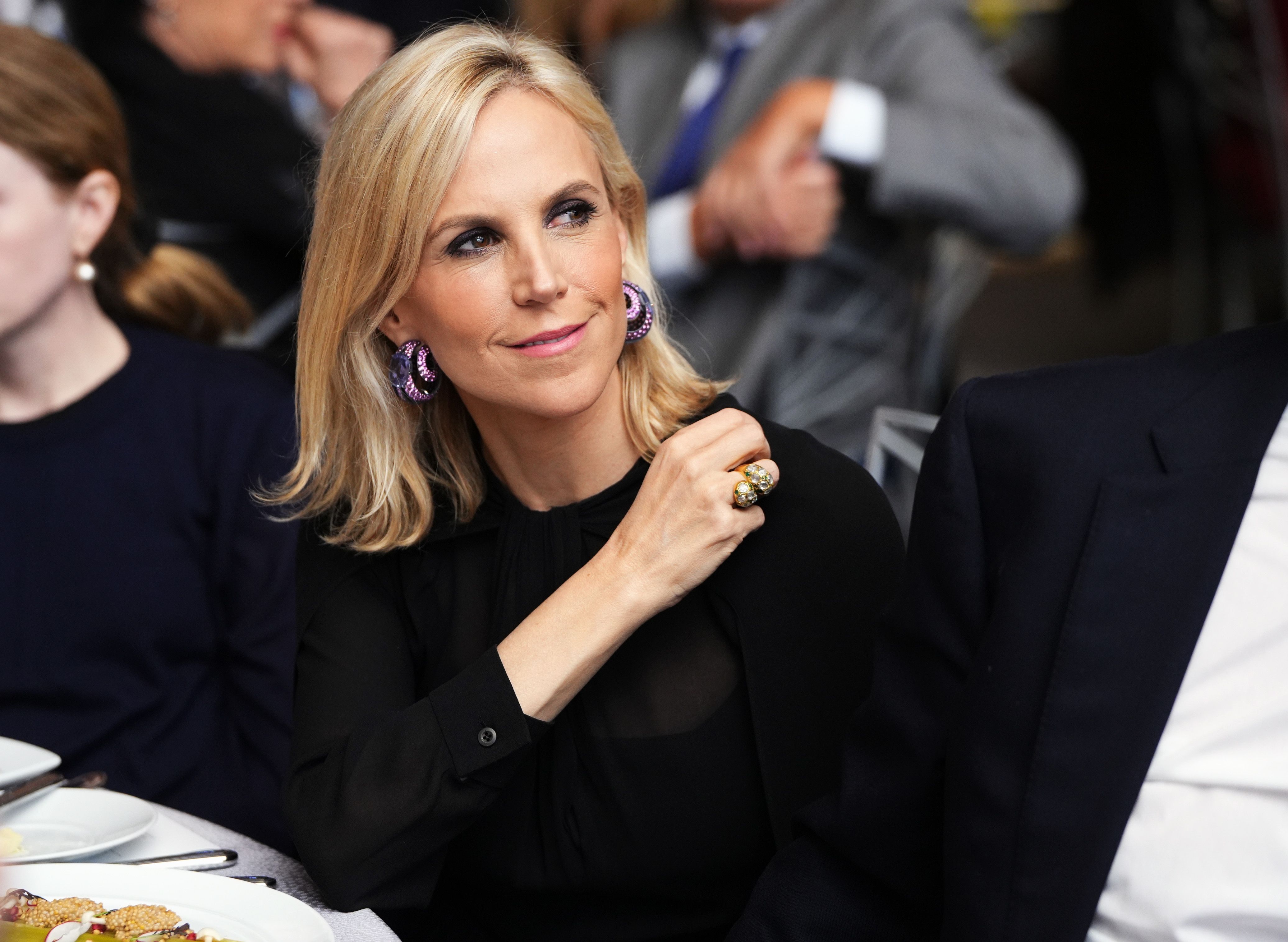
Tory Burch, who was among the advocates who helped convince President Biden to give the Equal Rights Amendment a symbolic boost on his way out, tells Axios it was "a great day for women."
- Why it matters: Biden's statement yesterday, saying the 28th prospective amendment should be considered ratified and "the law of the land," doesn't change anything constitutionally. But with 3½ days left in office, Biden renewed attention for a century-old fight that energized generations of women.
💼 Burch, one of America's most successful and influential fashion entrepreneurs, launched her label at her kitchen table.
- "When I talk to men," Burch told us, "they don't want their daughters to be treated differently than their sons. ... Of course it's what women and girls want. But it's also what men want."
Keep reading ... Go deeper: Life lessons from Tory Burch.
7. 🏠 Record housing squeeze


You need to earn $117,000 a year to afford a median-priced U.S. home — a new high in data going back to 2012, Axios' Sami Sparber writes from a Redfin report.
- That's $33,000 more than the median household income in the U.S. — around $84,000.
8. ⚖️ 1 for the road
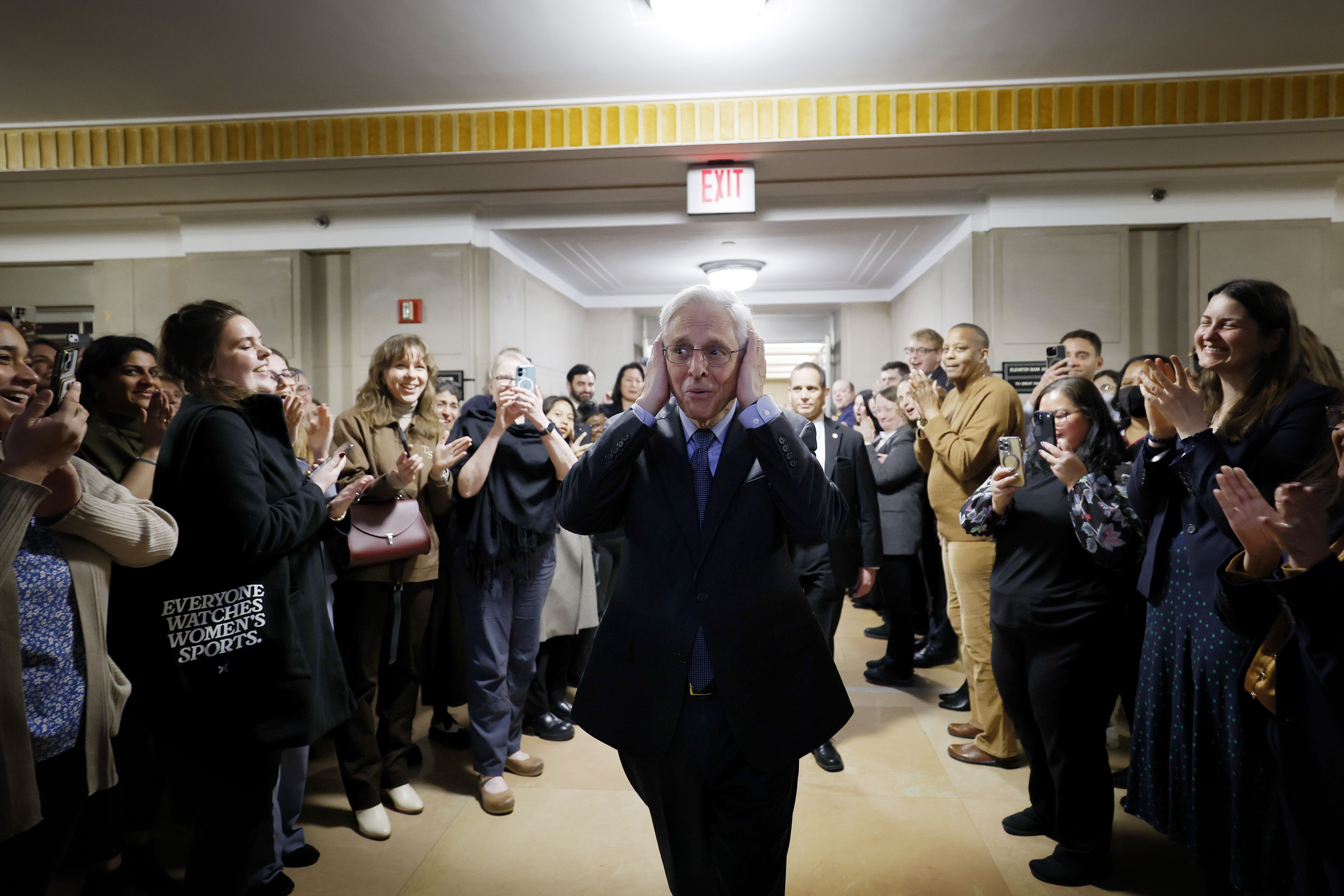
Attorney General Merrick Garland got a traditional "clap out" from his staff as he left the Justice Department yesterday for the last time.
- Go deeper: Garland's legacy.
📬 Thanks for reading! Please invite your friends to join AM.
Sign up for Axios AM