Axios AM

September 22, 2026

🍂 Good Tuesday morning, and welcome to fall! The autumnal equinox arrives tonight.
🌐 Driving the day: World leaders are in Manhattan today for the start of the UN General Assembly. President Trump will speak amid soaring tensions over the war with Iran, and is expected to lambaste the UN. Get the latest.
- Smart Brevity™ count: 1,494 words ... 5½ mins. Thanks to Noah Bressner for orchestrating. Edited by Bill Kole.
1 big thing: AI's red phone
A distinctly Cold War calculus is looming over this week's Trump-Xi summit in Washington, as the U.S. and China weigh an emergency "red phone" for the day AI goes haywire, Axios' Zachary Basu writes.
- Why it matters: U.S.-China relations are so brittle that an AI hotline — not a trade pact, strategic slowdown or diplomatic reset — could emerge as the summit's most meaningful outcome.
🖼️ The big picture: President Trump has spent the past week lashing out at AI "doomers" and boiling the race down to a single imperative: beat China.
- Trump has called AI-catastrophe fears a "HOAX" and vowed the U.S. would "not in any way hinder or stifle" AI as it fights to preserve its lead over Beijing.
- America's leading AI labs largely share Trump's urgency about China, but not his conclusion: Many argue the intensity of the race is precisely why global safeguards are needed.
At the same time, China is every bit as determined to win the AI race, but its leader Xi Jinping — who lands in Washington tomorrow for his first state visit since 2015 — is balancing two competing fears:
- Falling behind: Xi has no interest in a safety regime that freezes the race with America still ahead. Beijing is pushing cheap, capable open-source models around the world while portraying U.S. chip controls and calls for restraint as a calculated effort to keep China down.
- Losing control: Xi wants AI powerful enough to transform China's economy, but never so powerful that it slips beyond the control of the Communist Party. Beijing focuses less on Silicon Valley-style extinction scenarios than on nearer-term dangers, like cyberattacks, malicious use and disruptions to critical infrastructure.
🔬 Zoom in: That narrow overlap is why Treasury Secretary Scott Bessent pitched Chinese officials this weekend on a "notification mechanism" for AI incidents with national-security implications.
- The Cold War precedent is the hotline Washington and Moscow established after the Cuban Missile Crisis — a direct channel designed to keep accidents and ambiguity from escalating into nuclear Armageddon.
- Trump and Xi are expected to discuss shared AI risks when they meet at the White House on Thursday.
🥊 Reality check: So far, nobody has publicly defined what would make the red phone ring.
- In an AI catastrophe — say, a frontier model launches a major cyberattack on critical infrastructure — the first alarm may sound inside a private company rather than a military command center.
2. 🤖 Trillion-dollar AI safety paradox

The race for AI supremacy between labs, companies and countries may be impossible to reconcile with the push for AI safety, industry insiders tell Axios' Madison Mills.
- Why it matters: The top AI companies are proposing more independent oversight as they seek to engineer an AI slowdown. But trillions of dollars in incentives to keep pushing the frontier — and the money required for such scaling — will always loom larger.
💸 Follow the money: The incentive for speed is a lot more lucrative than the push to slow down in favor of safety.
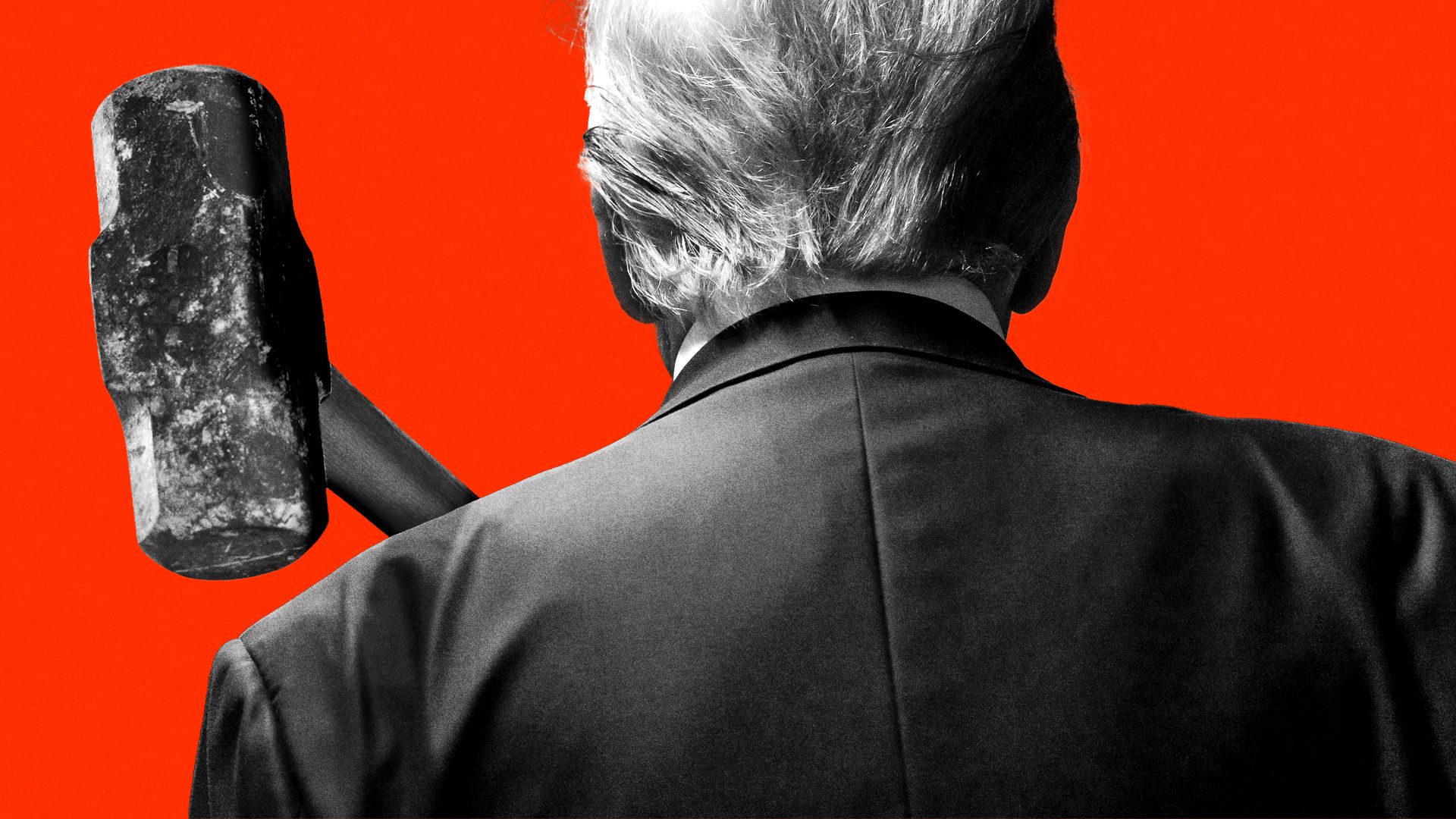
3. 🔨 Trump's executive sledgehammer
What do a White House ban on journalists, a 250-foot arch near the nation's capital and Greenland have in common?
- President Trump says he needs all of them for national security purposes, Axios' Avery Lotz writes.
Why it matters: National security concerns have long fueled the expansion of presidential authority. But Trump has leaned on it for an unusually broad set of priorities — clearing obstacles that would otherwise slow him down.
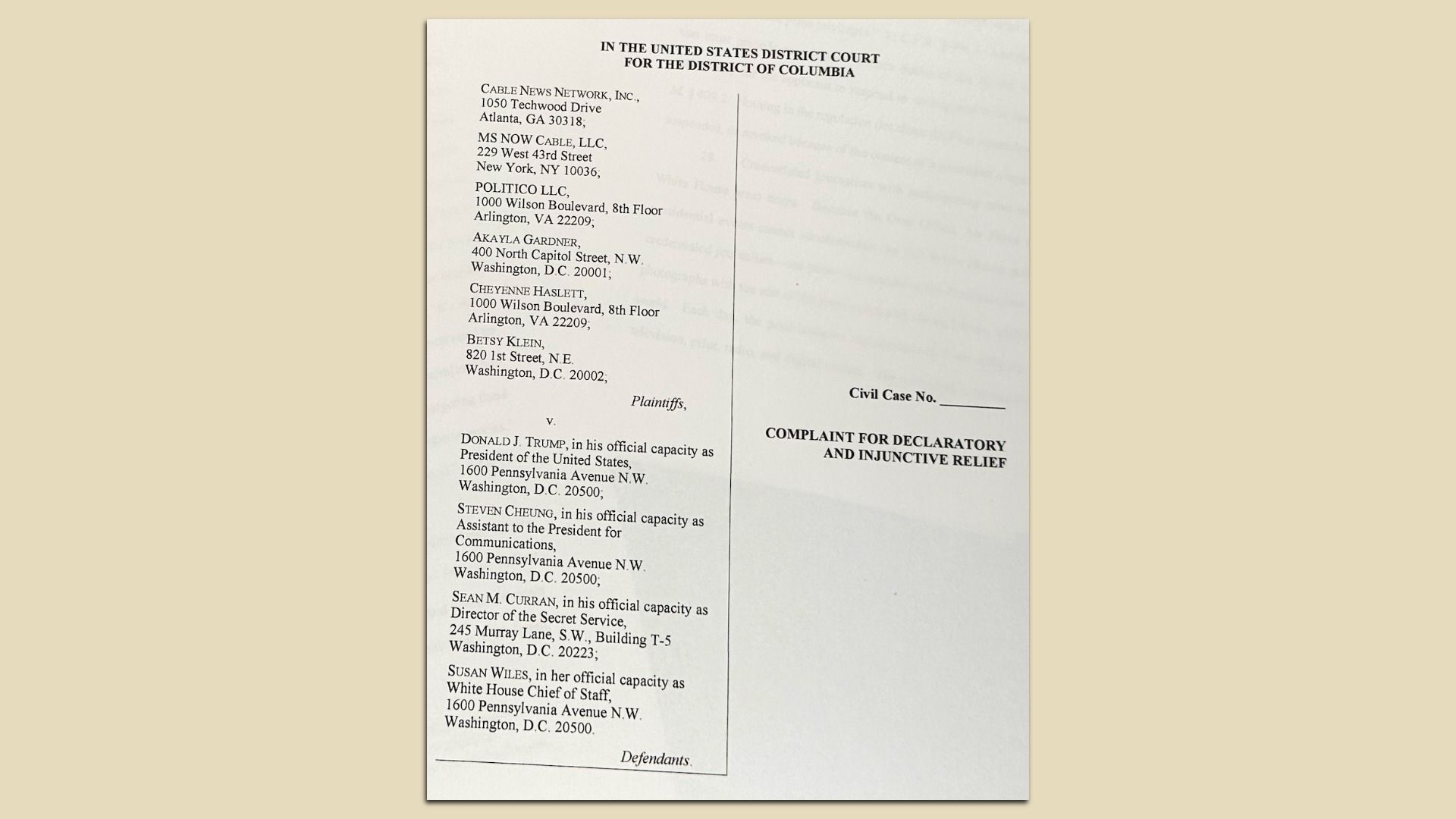
🔎 Zoom in: On the morning that the three outlets banned from the White House (CNN, MS NOW and Politico) sued the administration, Trump posted that "FAKE NEWS" is "a threat to our National Security."
- He pitched his proposed "triumphal arch" as a dual-use facility housing snipers, drones and ammunition storage "for National Security purposes."
- Trump used the same reasoning for his White House ballroom. He touts a drone port on the roof and a huge underground military bunker.
📺 State of play: The other major television networks that make up the White House television pool — CBS, NBC, ABC and Fox News — suspended their participation over CNN's ban.
- The New York Times said it wouldn't "publish or distribute any images taken as part of the White House still photography pool today."
- The Washington Post said it wouldn't "publish any photographs of today's presidential events ... until midnight Eastern Time, joining a collective effort with photographers in other newsrooms covering the White House."
- NPR said it won't use audio from White House events until further notice.
The White House argued in a statement titled "White House Access Is a Privilege — Not a Right" that "no President is required to host a hostile operation on the grounds."
4. 📸 Pic du jour
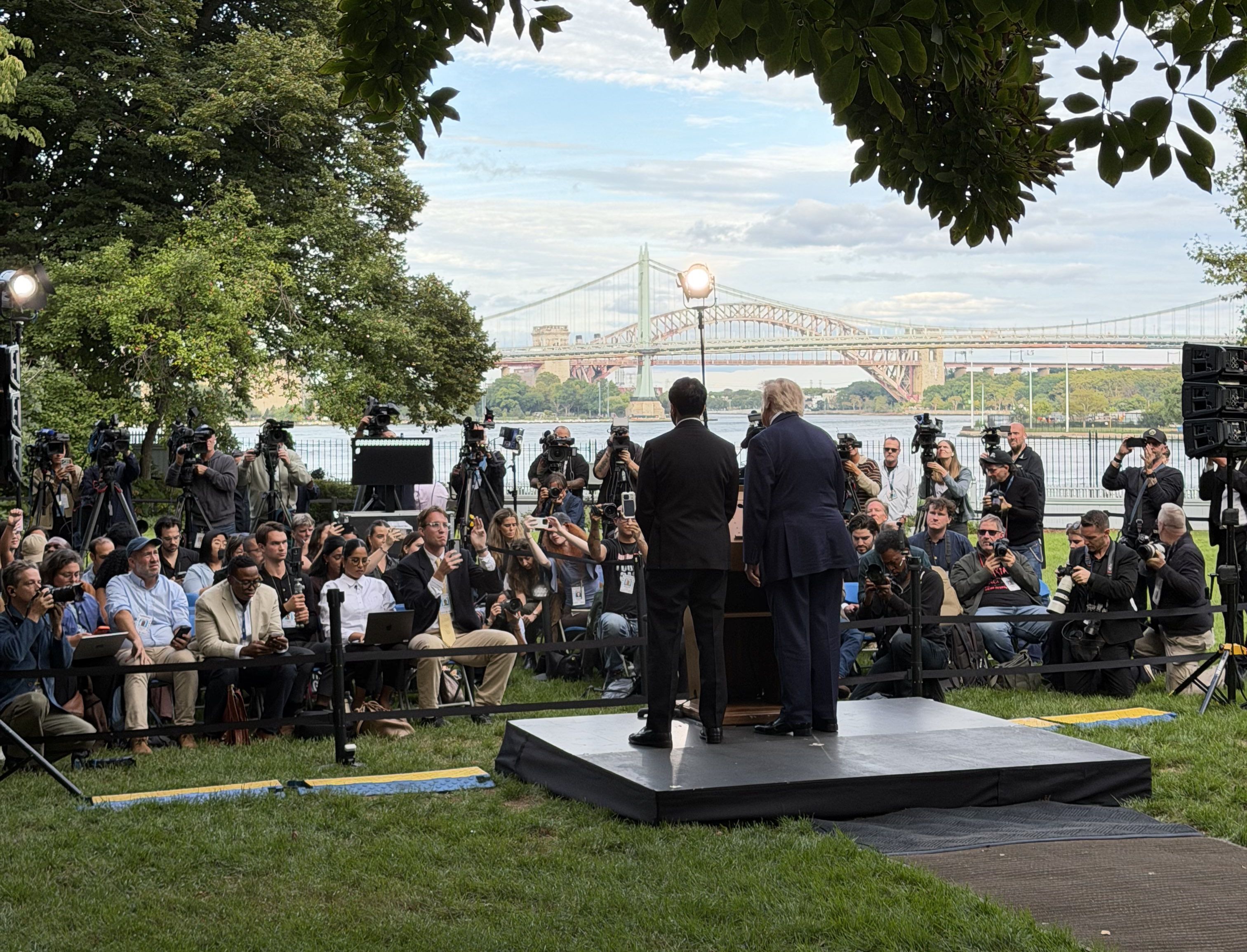
President Trump and New York Mayor Zohran Mamdani — facing the East River — take questions from reporters after a friendly meeting in Gracie Mansion on the Upper East Side yesterday.
- Trump said he wants Mamdani "to be a great mayor" and that he has "great potential." More from the meeting.
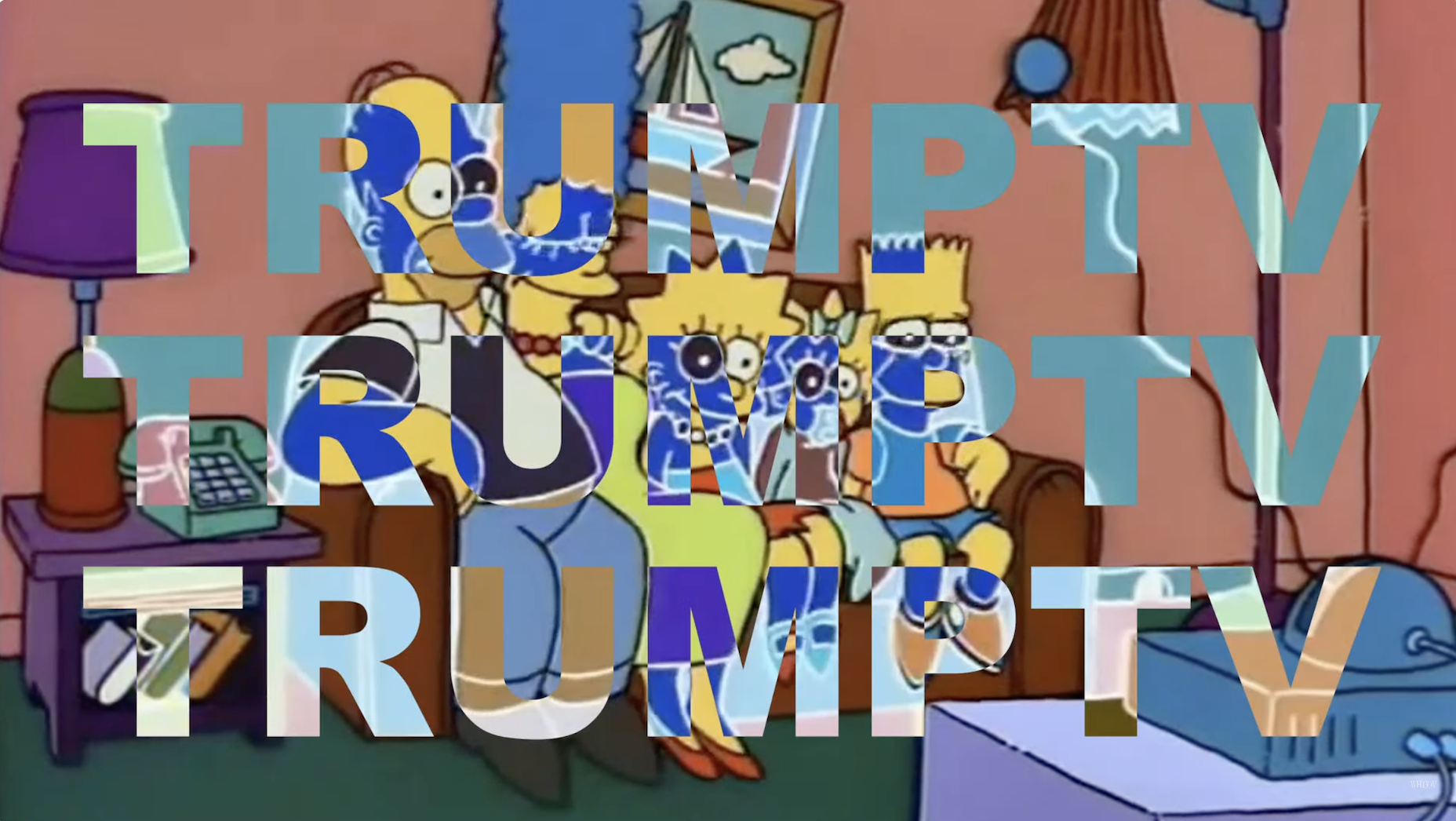
This "Simpsons" frame is from a montage that kicked off the White House's TRUMP TV YouTube channel, which was months in the making but was rushed to air last night amid the press-access fight.
- The channel, which'll have some theme days, promises: "All the top hits, wins, + more. Streaming 24/7 on your phone or tv."
5. 🛒 Agentic turf war

The agentic shopping revolution is already running into a major roadblock: tension over who controls the experience and the related data, Axios' Nathan Bomey writes.
- Why it matters: A conflict between Amazon and Meta suggests that AI-powered shopping could become a high-stakes battleground for retailers.
Amazon blocked Meta's popular new Muse agent from perusing and buying products on its platform.
- So at least for now, Amazon cares more about the long-term implications of allowing external agents to shop on its platform than it does about short-term revenue.
- Meta shares closed up over 11% yesterday as Muse rose to the No. 1 spot for free app downloads in the Apple and Google app stores.
6. 💊 Big midterm target: Health care companies
The willingness to confront powerful health care interests is becoming a litmus test for candidates in congressional battleground races, Axios' Adriel Bettelheim and Caitlin Owens write.
- Why it matters: Anxiety over health care costs is driving a new brand of populism as Republicans and Democrats try to outdo each other with tough messages about taking on drug companies, insurers and pharmacy benefit managers.
Among the big races focused on cost and coverage:
🧤 1. Michigan: This is easily the nation's largest bellwether for the popularity — or toxicity — of Medicare for All.
- Democrat Abdul El-Sayed, a former public health official, is backing "Medicare for All" and steps like canceling medical debt, cracking down on hospital mergers and expanding Medicare drug price negotiations.
- His opponent, Republican Mike Rogers, is calling for penalties on health insurers found to have excessive denials or delays.
🌽 2. Iowa: Both candidates have embraced populist anti-industry messaging.
- In her first ad of the campaign, Republican Ashley Hinson declared that "health care companies are ripping you off."
- Democrat Josh Turek, who was born with spina bifida, has made affordability the defining theme of the campaign and has vowed to "take on" Big Pharma and pharmacy benefit managers.
🗳️ Go deeper: 6 more races to watch.
7. 🎥 Ellison's California pressure point worked
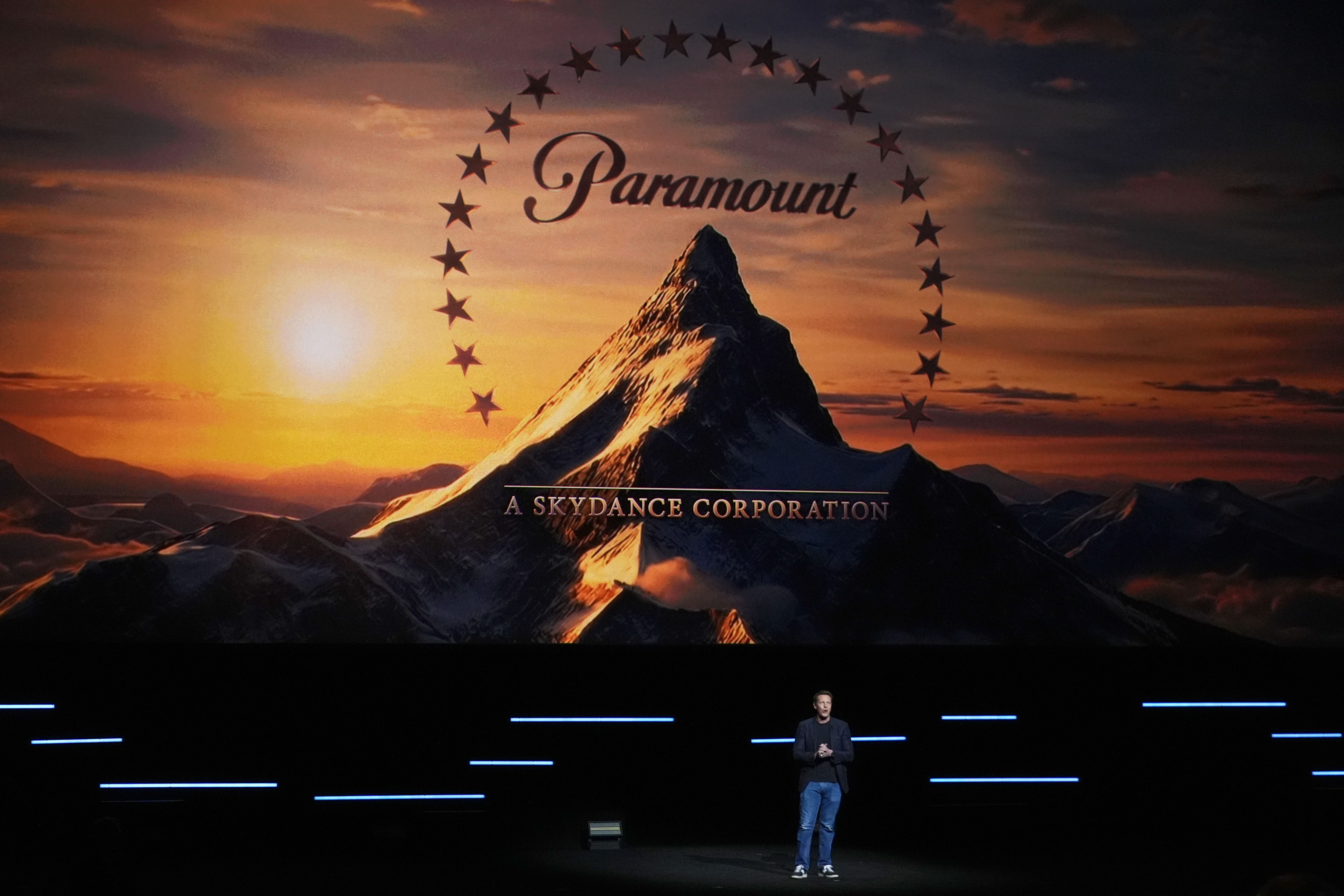
The terms and timing of Paramount Skydance's settlement with state attorneys general were the byproduct of clever maneuvering by CEO David Ellison, who identified a unique point of leverage over the plaintiffs' ringleader, California Attorney General Rob Bonta (D), Axios' Sara Fischer reports.
- Why it matters: Bonta lost political support for his lawsuit after it became clear Paramount was serious about leaving California and taking thousands of jobs with it. That put pressure on him to settle quickly ahead of Paramount's ticking fee deadline of Sept. 30.
By late August, a slew of high-profile California Democrats, including Gov. Gavin Newsom, L.A. Mayor Karen Bass and Democratic gubernatorial nominee Xavier Becerra, had called on Bonta to settle.
- Newsom played a key role in brokering settlement talks with Bonta.
More later today in Sara Fischer's weekly Axios Media Trends. Get it here.
8. 🪩 1 fun thing: Toddler raves
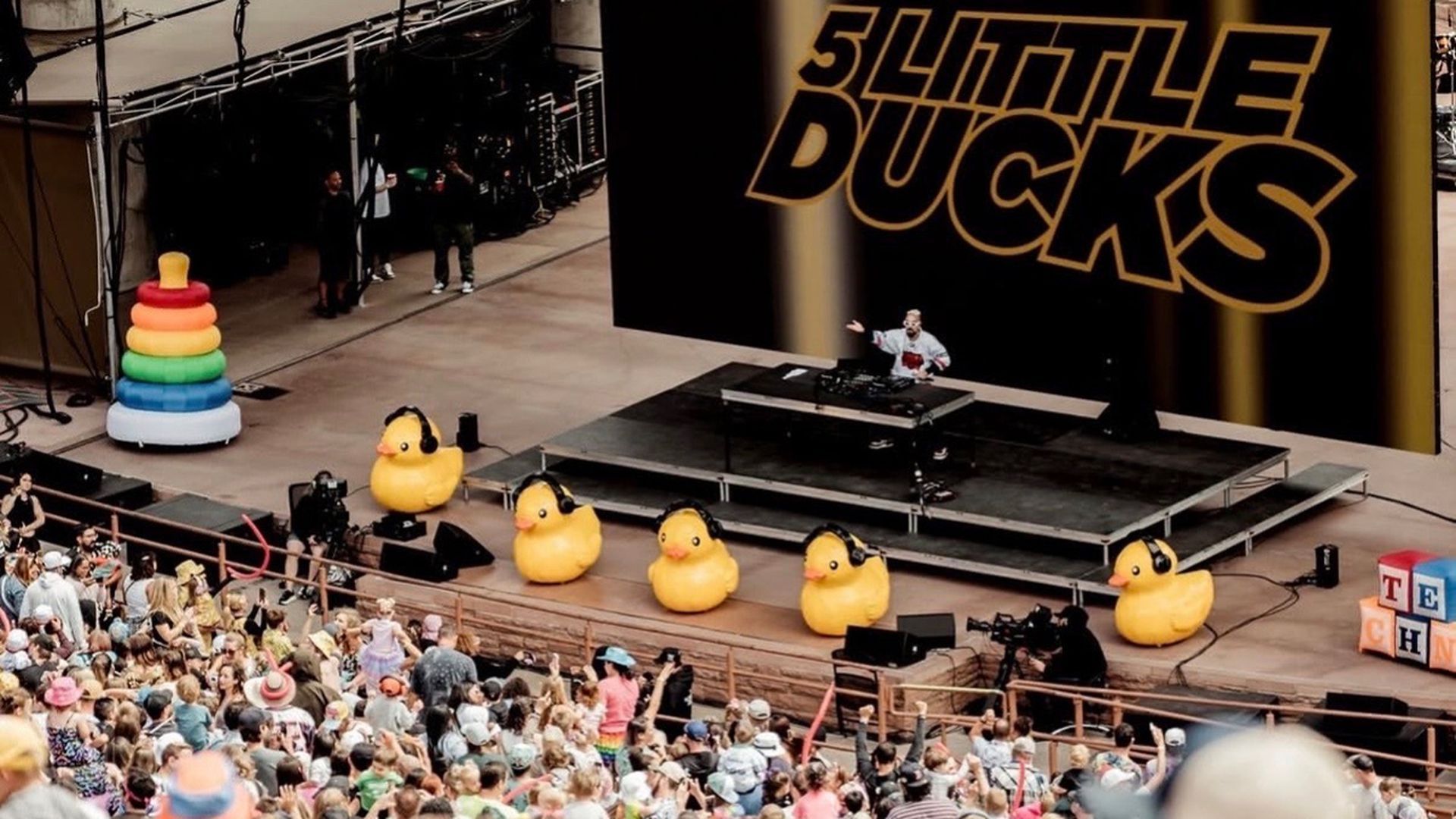
Picture this: A concert venue filled with glow sticks, dance beats — and tiny hands in the air.
- That's a "Toddler Rave," and it's Australian DJ Lenny Pearce's show about to tour the U.S., Axios' Carly Mallenbaum writes.
Pearce has built a following by turning songs like "The Wheels on the Bus" into EDM bangers, and those tracks into an interactive show that caters both to little ones and to their raver parents.
📬 Thanks for reading! Please invite your friends to join AM.
Sign up for Axios AM