Axios AM

May 23, 2026

1 big thing: Republicans sour on Trump economy
President Trump promised an economic golden age when he returned to office last year.
- Instead, voters are in their crankiest mood in years about their financial outlook — and the pessimism is spreading even to Republicans, Axios' Mike Zapler writes.
Why it matters: The growing GOP gloom could hardly come at a worse time for Trump and the party — less than six months out from a midterm that's likely to turn on the economy.
📉 Trump's approval rating has been dropping for months. But the University of Michigan's May consumer sentiment survey released yesterday revealed something more striking: Republicans are beginning to lose confidence in the economy, too.
- Republican and independent voters' attitudes about the economy hit a low point in Trump's second term, per the survey. Overall sentiment hit an all-time low, period.
- Expectations that inflation will remain high shot up among everyone surveyed, but especially Republicans. The long-run inflation expectations for Republicans "are currently more than double their February 2025 reading on a monthly basis," the Michigan survey found.


🧮 By the numbers: An AP/NORC poll out this week found that around 6 in 10 Republicans approve of Trump's handling of the economy. That's down from about 8 in 10 in February.
- Gallup's gauge of consumer economic confidence released yesterday found that Republicans' economic outlook has dipped for the past four months, to the lowest level of Trump's second term.
- A CBS News/YouGov poll this month told much the same story: Just 36% of Republicans said Trump's policies were making them financially better off.
2. 👁️ The new neighborhood watch
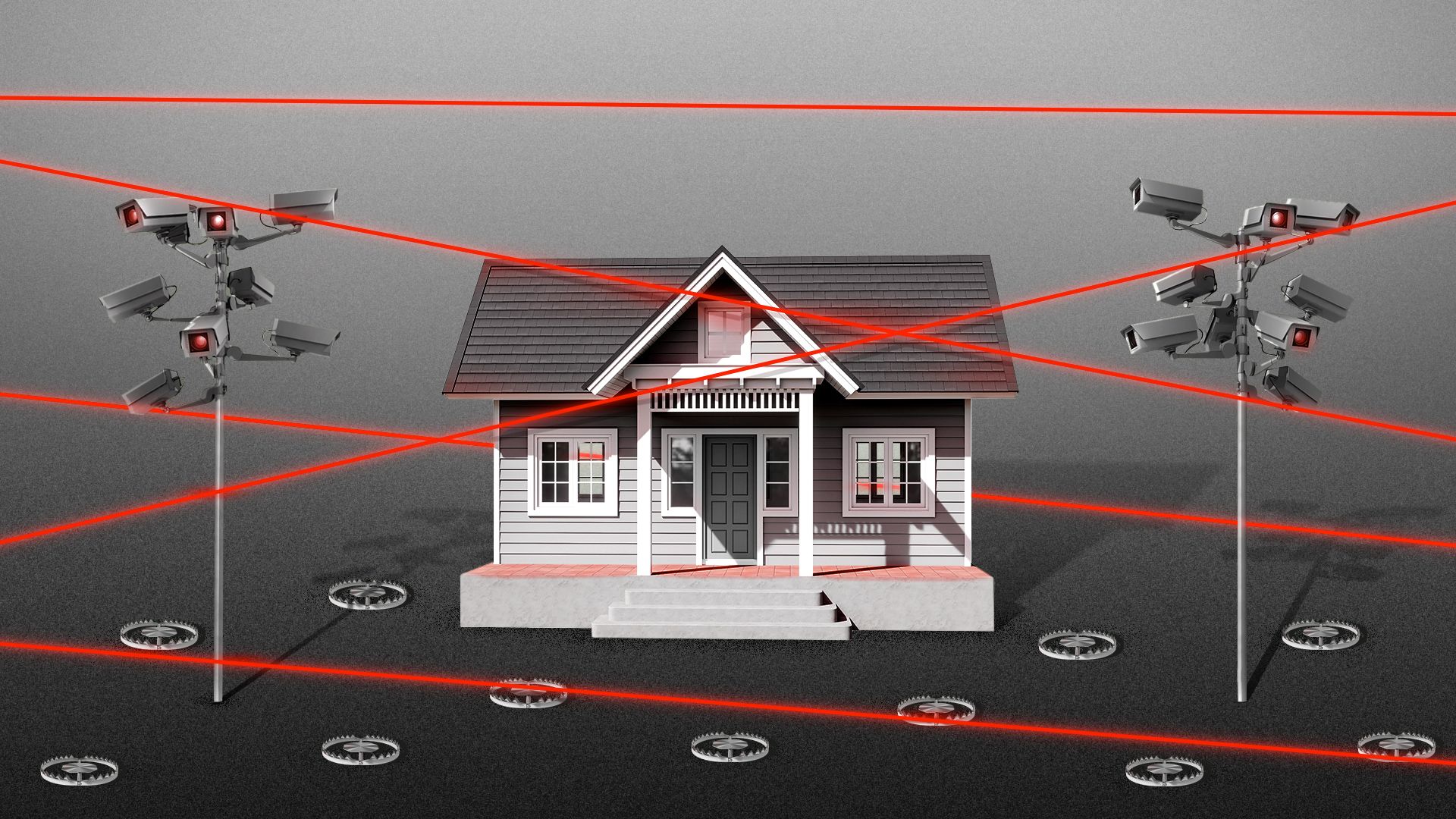
Axios' Russell Contreras helps us understand how technology is changing the fabric of relationships with neighbors:
America's classic neighborhood watch programs are fading as AI-powered apps turn neighborhoods into digital watch zones.
- Why it matters: The automation of neighborhood safety with tools like Amazon's Ring and the Nextdoor app is quietly dismantling one of the country's most basic forms of civic life — neighbors who actually know each other.
- What's replacing it is faster, smarter and far more detached. Shared videos of "suspicious" strangers and wildlife alerts are in. Out are block captains, porch meetings and "See Something, Say Something" signs.
Zoom in: Ring doorbells stream constant footage, allowing users to post it all on an app as alerts.
- Nextdoor posts flag "suspicious" strangers and let users shame dog walkers who don't pick up poop.
- License plate readers are cropping up in thousands of communities, alarming privacy advocates.
🔎 As surveillance technology spreads, neighborhood watch programs are being dismantled.
- Ann Arbor, Mich., removed more than 600 neighborhood watch signs this year after officials said they encouraged racial profiling and made some residents feel unwelcome.
- Police say many programs simply fade as volunteer participation dries up and younger residents opt out.
3. 😰 AI backlash weighs on Wall Street

The growing AI backlash could slow adoption of the technology, posing an underappreciated risk for investors buying into the current frenzy, Axios' Emily Peck writes.
- Even SpaceX's IPO prospectus — which is threaded with AI hype — warns that the backlash is a real threat to the business.
⚠️ Community outcry against AI was a key topic in recent meetings Morgan Stanley strategists held with investors in the U.S., they wrote in a note this week. The two important areas of concern: job loss and electric bills.
- "These issues may increasingly become a part of the political landscape and could result in greater pushback to data center growth," the note says.
And the growing opposition to data centers, along with some projects getting canceled, is "sapping confidence" among investors, according to a note investment bank Jefferies sent to clients, Axios' Madison Mills reported.
4. 🐘 Trump's revenge campaign backfires
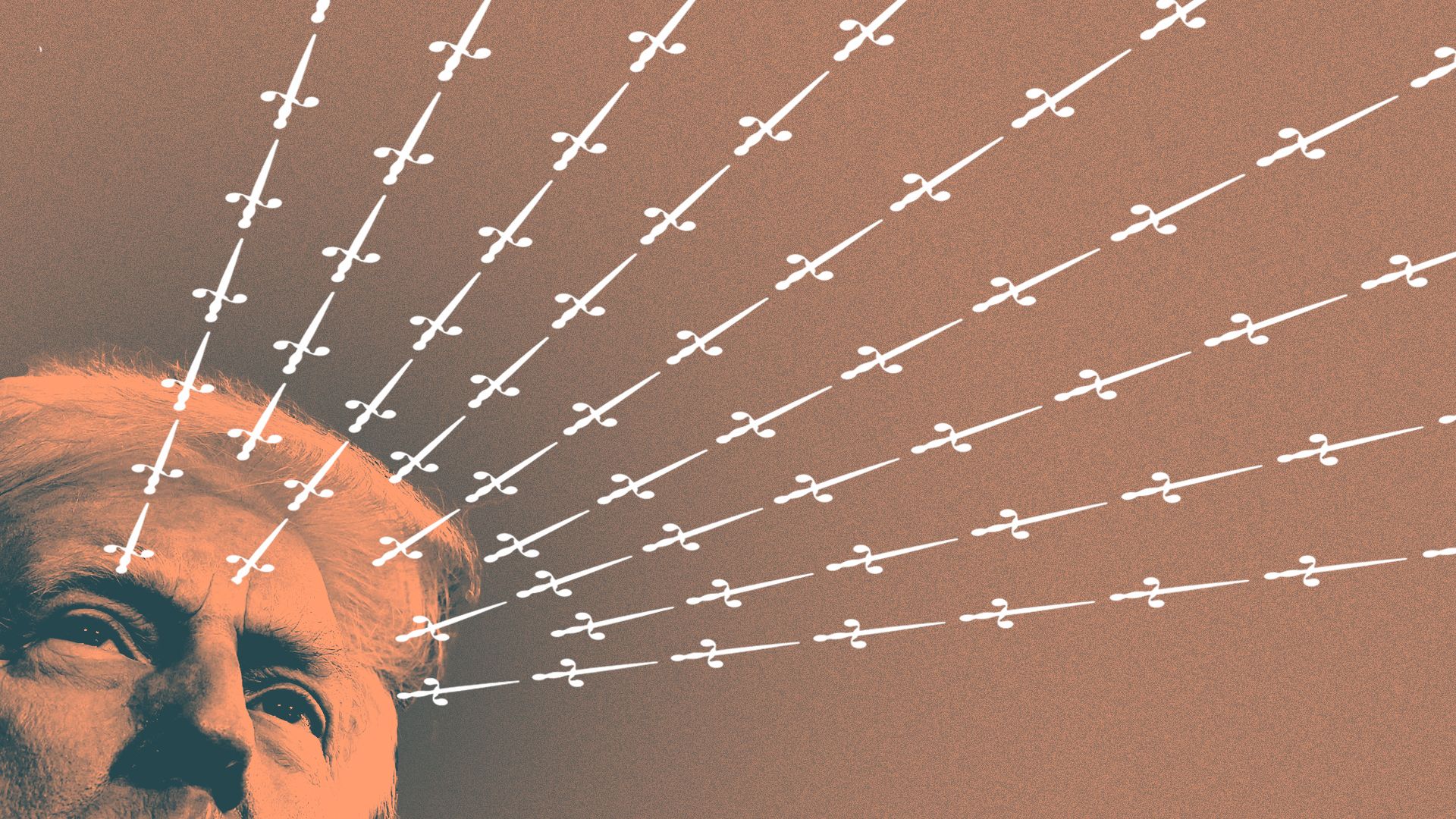
President Trump's week started in triumph when he took out a pair of Republican adversaries up for reelection — but ended in a rare moment of Republican resistance, largely of his own making, Zapler writes.
- Why it matters: Trump has spent the better part of a decade steamrolling congressional Republicans. But the costs of his revenge tour — and some politically toxic priorities — have caught up with him.
👋 Just as the Senate was getting ready to take up a reconciliation bill Thursday to fund immigration enforcement, Senate Majority Leader John Thune (R-S.D.) suddenly sent the chamber home until June.
- The move spared Republicans from having to vote on Trump's $1.8 billion "anti-weaponization fund" to compensate people his administration says were targeted by the Biden Justice Department.
- The fund was turning into a political debacle on the Hill — a "slush fund" to critics in both parties.
- Republicans also might've been forced to vote on security funding for Trump's White House ballroom.
5. 🔎 End of internet's golden era
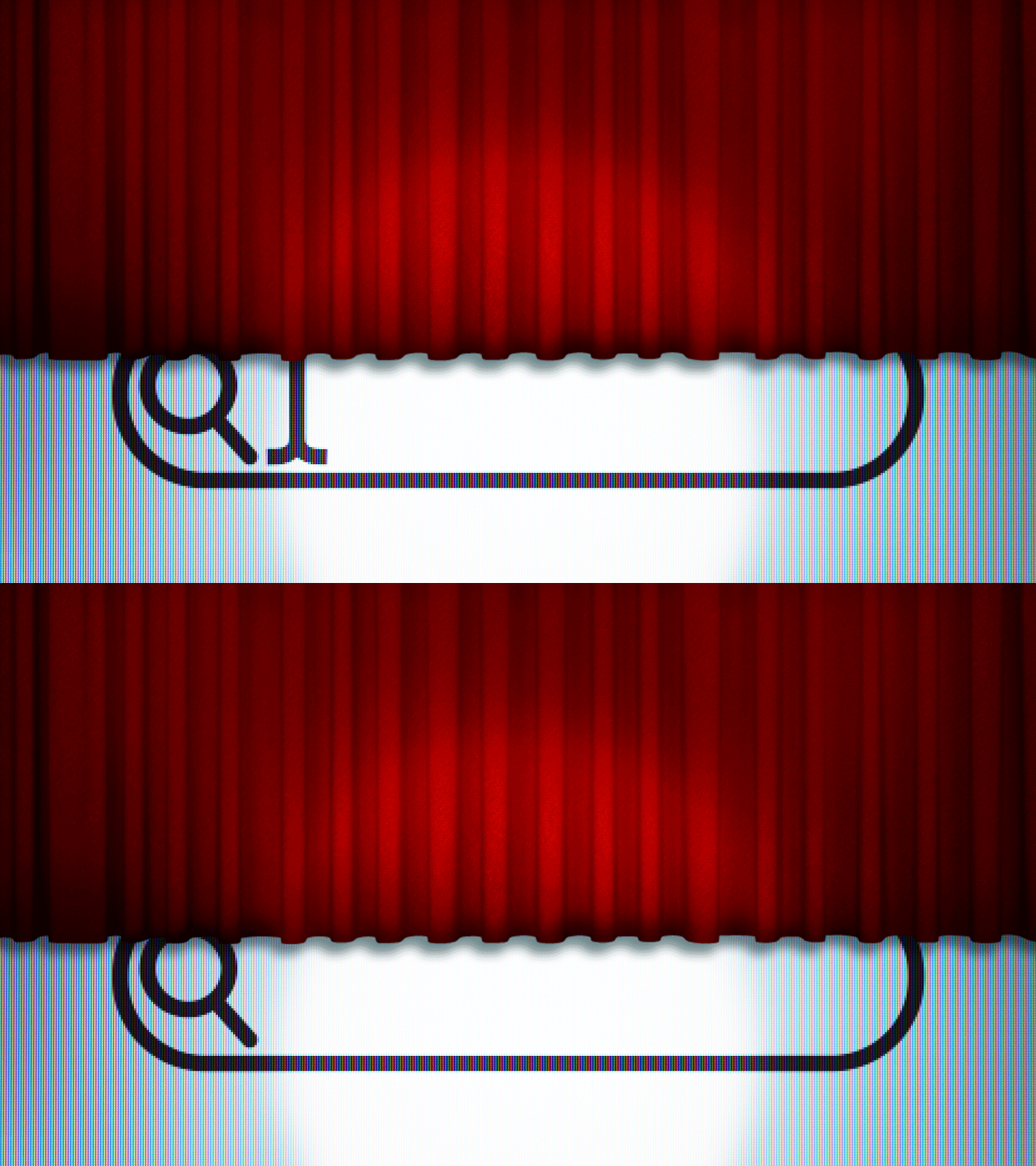
Google's overhaul of the search bar this week washes away one of the last vestiges of the internet's halcyon era — when search tools felt empowering, social media and swiping were novel, and popular disillusionment had yet to set in, Axios' Neal Rothschild writes.
- Why it matters: The AI era and the TikTok-ification of social media have produced a digital world that's responsive to today's market demands, and unrecognizable from a decade ago.
🖼️ The big picture: Americans' trust in Big Tech has plunged over the past 15 years, forcing drastic shifts from the status quo alongside technological advancements.
- The share of Americans with a "great deal" or "quite a lot" of confidence in tech companies was only 24% in 2025, down from 32% in 2020, according to Gallup polling.
Between 2015 and 2019, the share of Americans who said tech companies have a positive effect on the country plunged from 71% to 50%, according to Pew polling.
- Go back even further, and tech companies topped a 2010 Pew poll of the most favorable institutions, on par with small business.
6. 🏷️ Stat du jour: SpaceX eyepopper


With a $2 trillion valuation in sight, SpaceX is set to have the highest price-to-sales ratio on the S&P 500, far outstripping the likes of Nvidia and even Tesla, Axios' Lucinda Shen writes for Pro Deals.
- The unprofitable company would top every Magnificent 7 company and far exceed Tesla, which sits at a 16x P/S ratio.

SpaceX launched its biggest, most powerful Starship yet on a test flight yesterday — an upgraded version that NASA is counting on to land astronauts on the moon.
- The spacecraft reached its destination, the Indian Ocean, despite some engine trouble, before erupting in unexpected flames on impact, AP reports.
Musk congratulated the SpaceX team on "an epic first Starship V3 launch & landing! You scored a goal for humanity."
7. 🙈 Prediction markets spoil reality TV

"Pretaped reality TV shows are facing an unforeseen problem: Prediction markets are spoiling their endings," Variety reports.
- Fans who looked at the Kalshi market for "Survivor 50" before a second of the season had aired saw overwhelming odds that Aubry Bracco would win.
- Bracco took home the $2 million prize in Wednesday's finale.
🔮 Zoom out: Kalshi users also correctly predicted the winners of "Masked Singer" and "Next Level Chef."
- Kalshi head of enforcement Robert DeNault posted on X about "Survivor": "[N]o traders with large positions seem to have a relationship to the show or to the network."
- The company contends that traders act on spoiler information already circulating online.
Yes, but: It wasn't the only spoiler for Wednesday night's broadcast. Longtime host Jeff Probst accidentally revealed a competition loss before the challenge aired, leading CBS to cut to commercial.
8. 🍕 1 for the road: New York pizza shocker
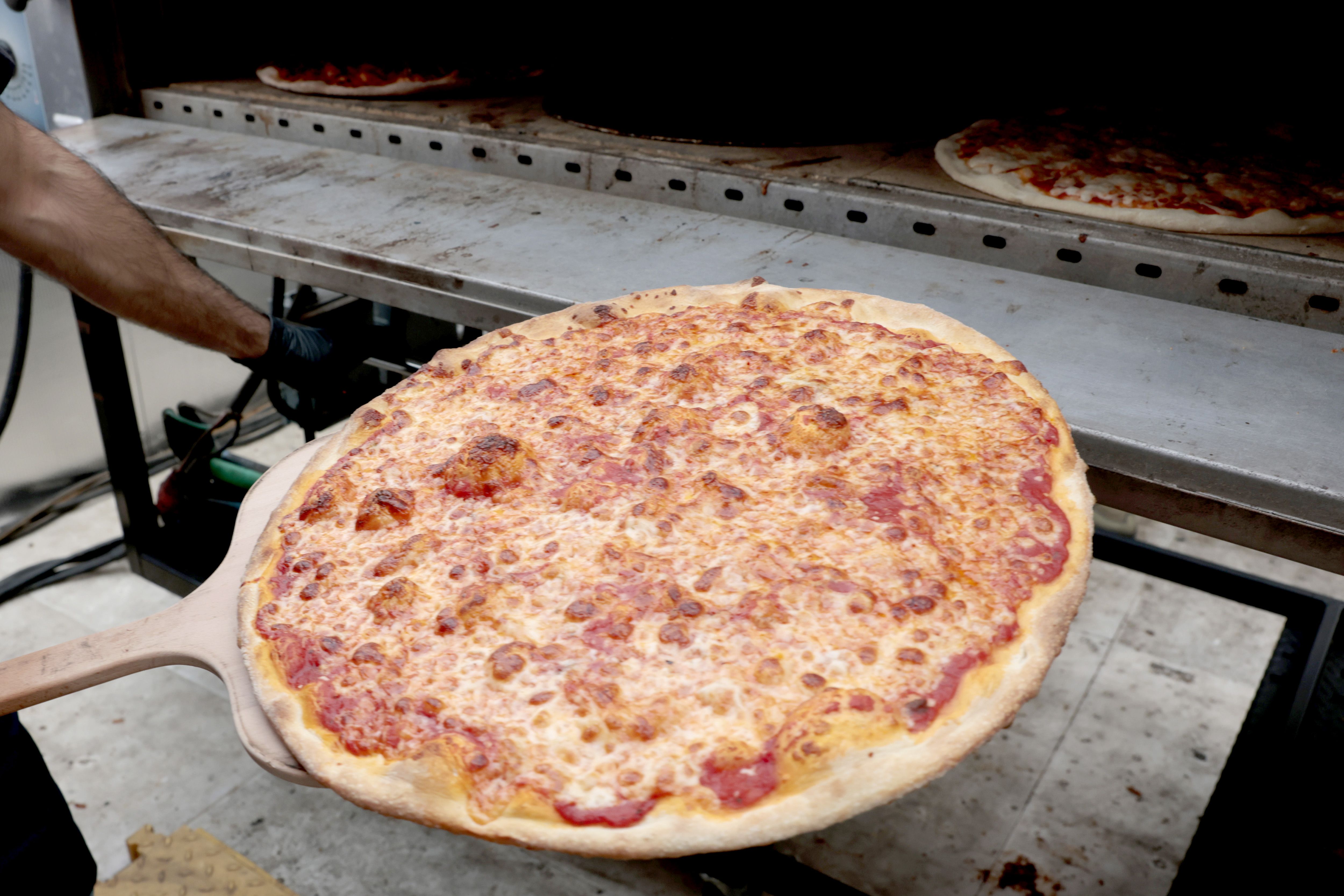
A looming ban on an additive used in many New York pizza and bagel shops may soon force thousands of businesses to change ingredients.
- A bill passed by state lawmakers and awaiting signing by Gov. Kathy Hochul (D) would bar potassium bromate, an oxidizing agent used to make bromated flour, AP reports.
- The chemical, which reduces rest time for dough and helps ensure a stronger, chewier product, is a suspected carcinogen that's already banned in much of the world.
🤯 "This is an earth-shaking event for New York pizza," said pizza historian Scott Wiener, who estimates that 80% of pizza and bagel joints rely on the flour. "That ingredient is part of the identity of the slice."
Axios AM