Axios AM

April 09, 2024

1 big thing: America's reality distortion machine
Illustration: Aïda Amer/Axios
2. 🇺🇸 Part 2: Normal America
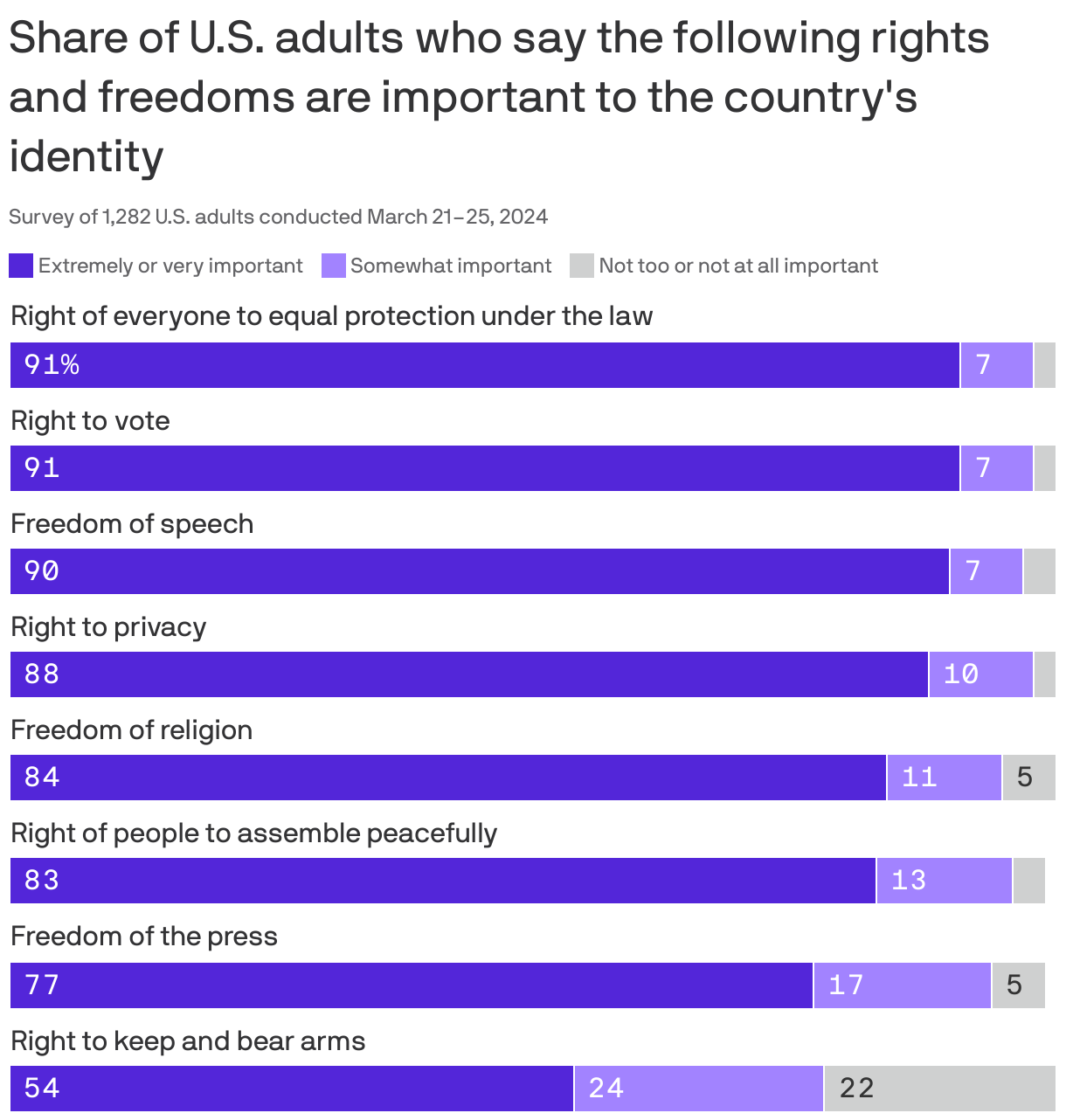
This new poll by the AP and the NORC Center for Public Affairs Research shows a striking amount of agreement on some very big topics, Jim and Mike continue.
Roughly 90% or more of Americans — Republicans and Democrats — agree the following rights and freedoms are extremely or very important to a functioning America:
- Right to vote.
- Right to equal protection under the law.
- Right to freedom of religion.
- Right to freedom of speech.
- Right to privacy.
Hell, almost 80% think the right to own a gun is important to protect.
- "If you get a bunch of normal people at random and put them in a room together and chat about issues, there's a lot more convergence than you might imagine," Michael Albertus, a political science professor at the University of Chicago, told AP.
- That's been our experience as we travel the country and dig deeper into how people are getting and sharing "news."
🔎 Between the lines: The acceptance of former President Trump's language and tactics by so many Republicans can be partly explained by this reality distortion phenomenon.
- His base often feasts off edge-case outrages — wacky liberal professors saying wacky things, illegal immigrants committing brutal but isolated crimes, surges in shootings in specific cities.
- Similar edge cases pulse through liberal channels and the word police. This helps explain how "LatinX" went mainstream, then got dumped.
Truth is, there's little market in the modern media environment for calm analysis of genuine holy-crap developments.
- There's an explosion of green energy progress in red states, a once-in-a-generation job market and rising wages among minorities that started under Trump and has been largely sustained under President Biden.
- There's little talk on left or right about the entrepreneurial dynamism still unfolding in America (look at America's early AI edge), or fading poverty, or bipartisan consensus on handling a rising China.
🧠 Here's a thought experiment to end on (Jim does this during speeches after testing it on his kids and friends):
- In a given year, you meet scores or more people you spend enough time with to appraise their character. Think about them: How many do you think are decent, normal people who do volunteer work, help shovel after a storm, look out for family and neighbors?
The answer will help pop your reality distortion bubble.
3. 🗳️ Biden's Latino squeeze
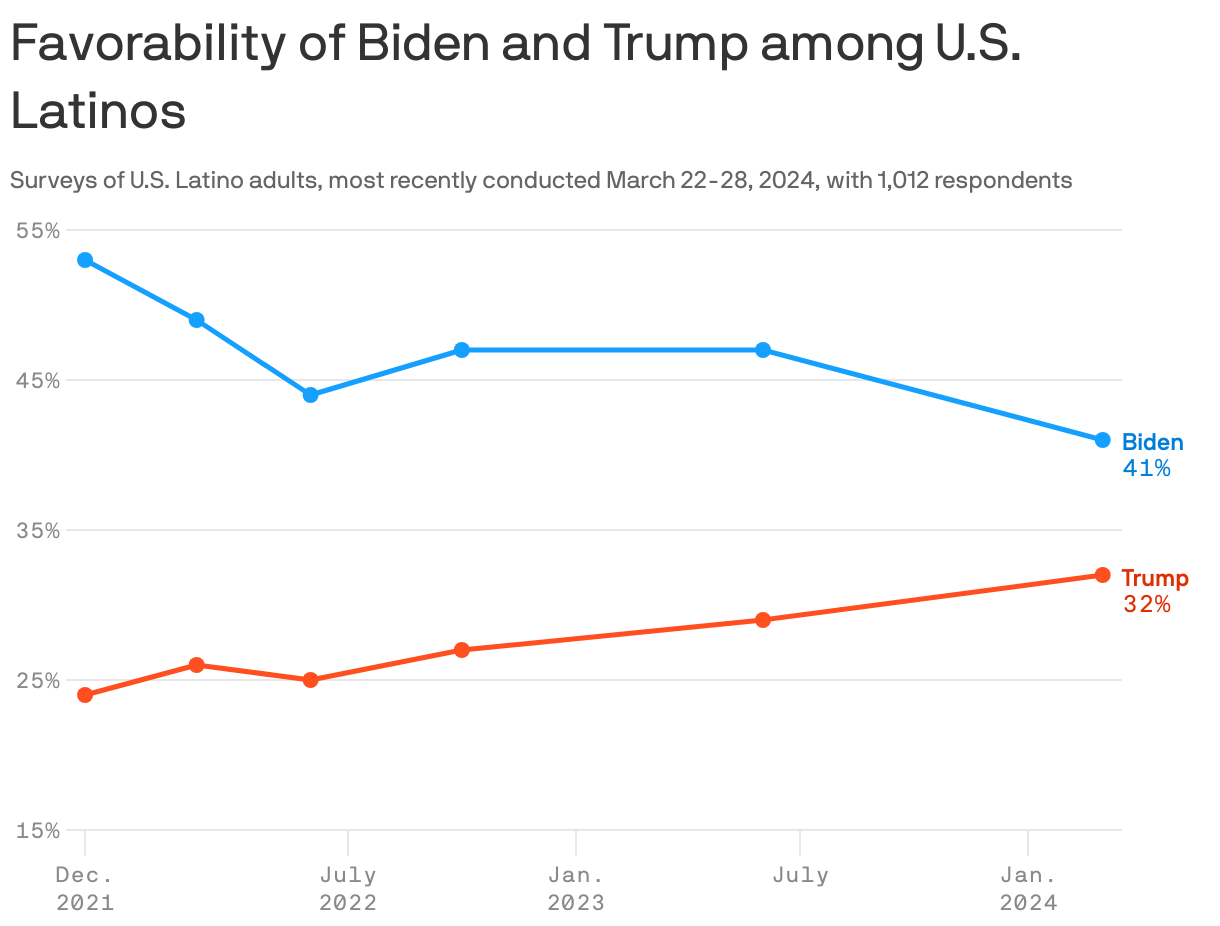
U.S. Latinos are warming to Donald Trump even as they prefer Democratic positions on several key issues, Russell Contreras writes from a new Axios-Ipsos Latino Poll, in partnership with Noticias Telemundo.
- Why it matters: The results point to a troubling gap in support for President Biden.
Many Latinos — a rapidly growing and crucial voting bloc, particularly in swing states Nevada and Arizona — appear to like Democrats' ideas more than they like Biden.
- Another troubling sign: Latino support for Trump is rising despite his persistently racist rhetoric about immigrants.
- Many Latinos acknowledge worrying that anti-immigrant rhetoric and policies such as Trump's vow to deport 1 million migrants could put them in danger.
🔢 By the numbers: Biden's advantage over Trump among all Latinos has fallen from 29 points after Biden's first year in office to just 9 points.
- Biden's lead shrinks further — to 3 points — among Latinos who said they plan to vote in November.
4. 📈 Charted: Hybrid work wins


For the first time since the pandemic, more workers prefer hybrid work arrangements than fully remote setups, Axios' Emily Peck writes from a new Morning Consult report.
- Hybrid workers are happier. Their "engagement" with work increased in 2024 from the previous year.
5. 🎲 Trump's abortion gamble
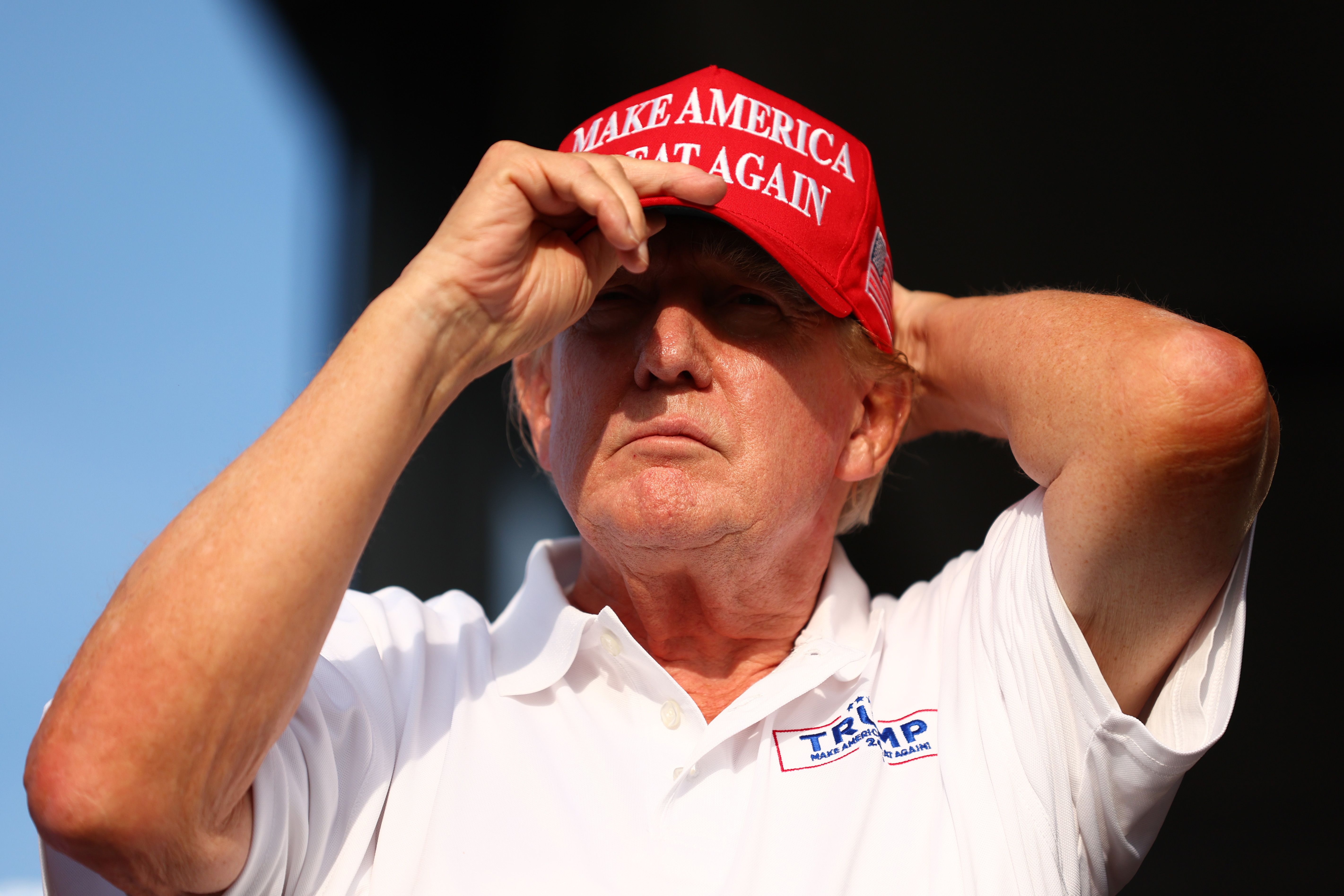
Former President Trump issued a formal statement on abortion yesterday with a simple calculus in mind: His position might infuriate conservative activists — but they'll vote for him in November anyway.
- Why it matters: Trump has spent months privately wrestling with how to insulate himself from Democratic attacks on abortion, knowing that the issue could be one of his biggest vulnerabilities in the 2024 election, Axios' Zachary Basu writes.
By declining to endorse a national abortion ban — and suggesting he would leave legislation up to individual states — Trump is also seeking to thread a needle with conservatives.
- He's taking credit for the end of Roe v. Wade while resisting a national ban because "we must win" elections to get anything done.
Between the lines: The Biden campaign still sees plenty to work with, including Trump's inconsistent history on abortion and the fact that his latest statement effectively endorsed strict abortion bans in dozens of states.
6. ⚖️ Trump juror questionnaire
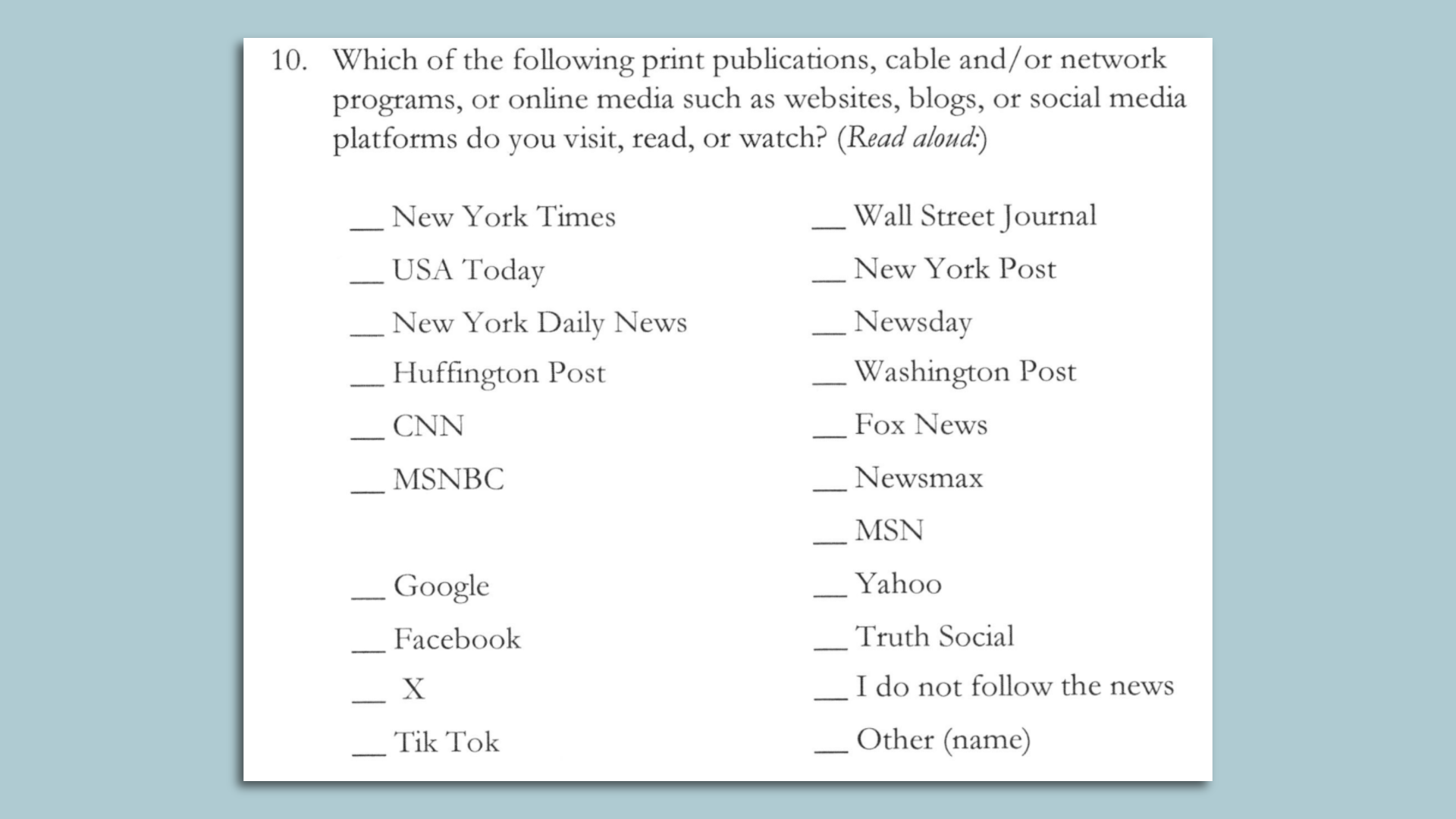
Via Manhattan D.A.'s office
Prospective jurors for former President Trump's upcoming hush-money trial in Manhattan will be asked 42 questions about their lives and habits, including:
- Whether or not they're a member of an extremist movement such as QAnon or the Proud Boys.
- Whether they have any feelings or opinions about how the presumptive Republican presidential nominee is being treated in the case.
- Whether they have ever worked for a Trump-owned company.
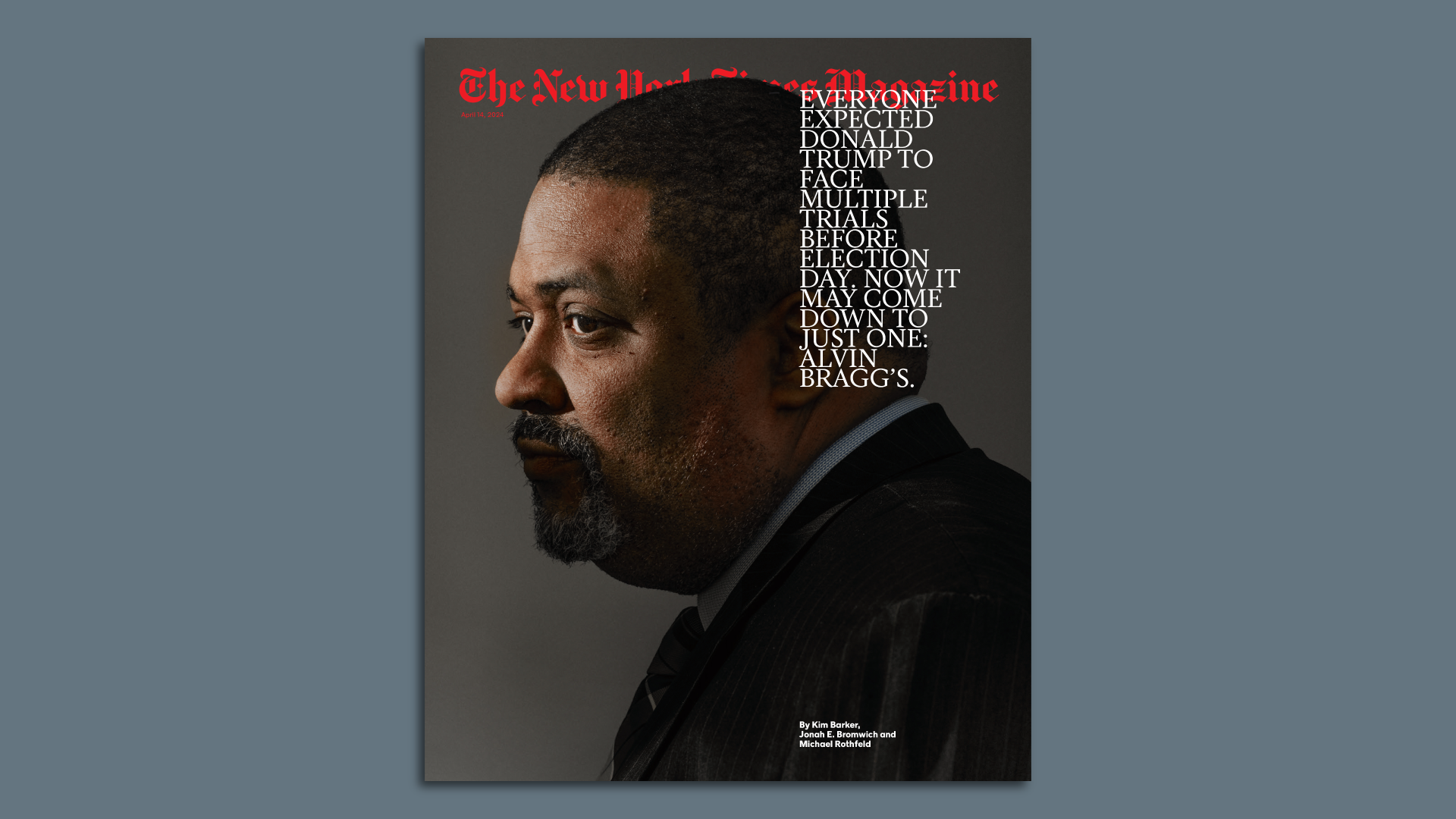
Alvin Bragg — the under-the-radar district attorney behind the Manhattan trial — is on the verge of becoming the only prosecutor to face off against the master of spin before November's election, Kim Barker, Jonah Bromwich and Michael Rothfeld write in a six-page New York Times Magazine investigative profile.
"After the indictment, a chorus of critics — some but not all on the right — questioned the legal reasoning, wisdom and winnability of the hush-money case. Today, many experts believe that Bragg's legal strategy looks considerably stronger."
Keep reading (gift link — no paywall).
7. 🌇 A sunset in every direction

Yesterday's total eclipse drew Americans to a sliver of the country for "one of the greatest one-day migrations in history," N.Y. Times cosmic affairs correspondent Dennis Overbye writes.
- Why it mattered: It's rare for any single event — no matter how short — to bring Americans together.

😎 Do you have a tale about eclipse neighborliness today? A funny encounter when you were out? Drop us a line at [email protected] with your name and city, and we'll share some stories!
8. 🏀 The road ends
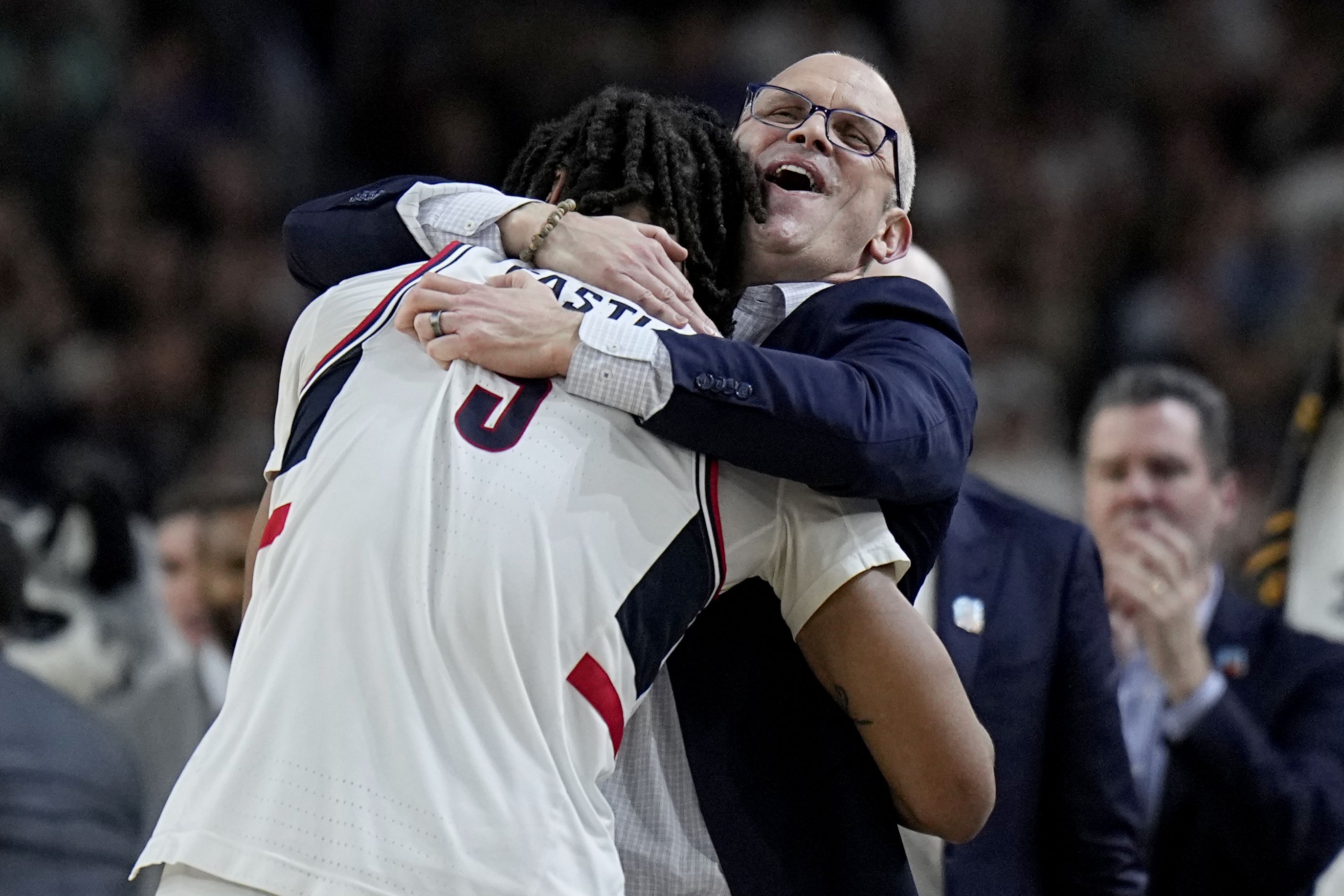
UConn cruised to a 15-point win over Purdue last night to become the first back-to-back men's college basketball national champions since 2007.
- The Huskies won their six March Madness games by a staggering 23.3 points per game — the largest margin ever by an NCAA champion.
Between the lines: Only Florida (2006-2007) and Duke (1991-1992) have won repeat titles since John Wooden's legendary UCLA dynasty of the '60s and '70s.


18.7 million people watched the South Carolina-Iowa women's NCAA title game on Sunday, Axios' Sara Fischer and Noah Bressner write.
- It's the most-watched women's game ever, and the highest-rated basketball game — men's or women's, college or pro — since 2019.
Why it matters: The star power of Iowa guard Caitlin Clark is driving unprecedented momentum around women's sports.
Axios AM
Catch up with the most important news of the day