Axios AI+

August 12, 2026


Mady here with another request from you. I'm looking to talk to people (for a story) who are foregoing romantic endeavors to focus entirely on AI work. Signal me at Madymills.21 to discuss.
Today's AI+ is 1,168 words, a 4.5-minute read.
1 big thing: How BNY's CEO uses AI tools

Robin Vince is CEO of America's oldest bank, which is also one of Wall Street's earliest AI adopters: It had over 100 "digital employees" in early 2025 before everyone else was using agents.
Why it matters: This is our first installment in a series on how executives use AI tools.
What follows is an edited version of our conversation:
Axios: On a scale of 0 to 10, 0 being no AI usage and 10 being totally AI-pilled, where would you rank yourself?
Vince: "I'm probably a nine out of 10. I won't give myself a full score though, because one of the lessons for me in AI is that it's moving so quickly that actually being able to use it to its fullest extent feels like one of those quests you're never going to quite reach.
- "This feels to me like one of those lessons that is not unique to AI. We all have to be lifelong learners," Vince said, adding it's about "being OK with being a bit uncomfortable."
Can you take me into an example of a recent instance where AI surprised you?
- For a firm with 46,000 employees, "there's no person who can see the picture as completely, and so now to have AI be able to see a picture that you otherwise couldn't have seen and make recommendations in terms of what you'd actually do? That's a very significant thing."
- AI's "ability to see through all of these threads and hold them concurrently" to make suggestions is game-changing, Vince said.
Take me into a day in your life of AI usage.
- "This is where I humble myself because I'm sure that my usage of it is like 5% of what it could be if I was operating perfectly. ... [Eliza, BNY's in-house AI platform] understands my calendar. It understands my emails. It understands my documents, and so it coaches me at the beginning of the day, with how I should approach my day proactively."
I have one minute left in our interview to try and break some news with you, since you were just added to OpenAI's board. Thoughts on IPO? Advice for them as a public company CEO?
- "I've been on the board for all of two weeks, so I won't break any news. But for me ... being the chairman and the CEO of America's oldest bank, and then to see ... sort of the polar opposite of a very new company that's moving incredibly quickly at the intersection of one of the most important topics of our time ... what a privilege."
2. The AI lab revolving door keeps revolving

Longtime OpenAI executive Brad Lightcap is leaving the company to start something new, he told employees yesterday.
Why it matters: It's the latest executive departure from the company and another example of an early employee leaving an AI lab to start their own thing.
What they're saying: "It is bittersweet to share that I'll be moving on from OpenAI to start something new," Lightcap wrote in a message to employees that he posted on X.
- He will stay at OpenAI for a few weeks and said he's "not going far" without offering much detail.
- Lightcap reported directly to CEO Sam Altman, covering special projects after being moved out of the COO role — first revealed in January when Thinking Machines' Barret Zoph returned to OpenAI.
- Zoph left OpenAI five months later.
Zoom in: Lightcap is just the latest OpenAI executive to leave the firm.
- Fidji Simo, OpenAI's No. 2 executive, stepped down over health issues in July, though she has since joined an AI health startup.
- OpenAI's head of ethics also left the company less than a year after joining, the Financial Times reported this week.
- Kevin Weil — formerly OpenAI's chief product officer — left the company in April and is reportedly looking to raise a $150 million round for his new startup focused on AI in science.
- The company's CMO also recently left to focus on her recovery from cancer.
Between the lines: The talent wars apply to every AI lab, sure, but a lot of people have left OpenAI lately, including a number of people who focus on AI safety.
Zoom out: Lightcap's exit comes amid a broader trend of longtime AI executives and even founders leaving their firms.
- The latest high-profile example is Jeff Dean, who left Google to start Discovery Loop.
- Lilian Weng, a co-founder of Thinking Machines, left to rejoin OpenAI.
Friction point: As we've reported, there are many reasons driving the talent reshuffle.
- Even the most technically experienced employees worry AI could replace their job. This group is eager to get into an AI lab pre-IPO to secure generational wealth.
- Others hope to literally be at the frontier, and are looking to go to the AI lab best positioned for takeoff.
- A third group is primed to do their own thing: After training AI, they're ready to work on its applications by starting their own businesses.
The bottom line: The AI race's talent reshuffle continues.
3. The currency of the AI age

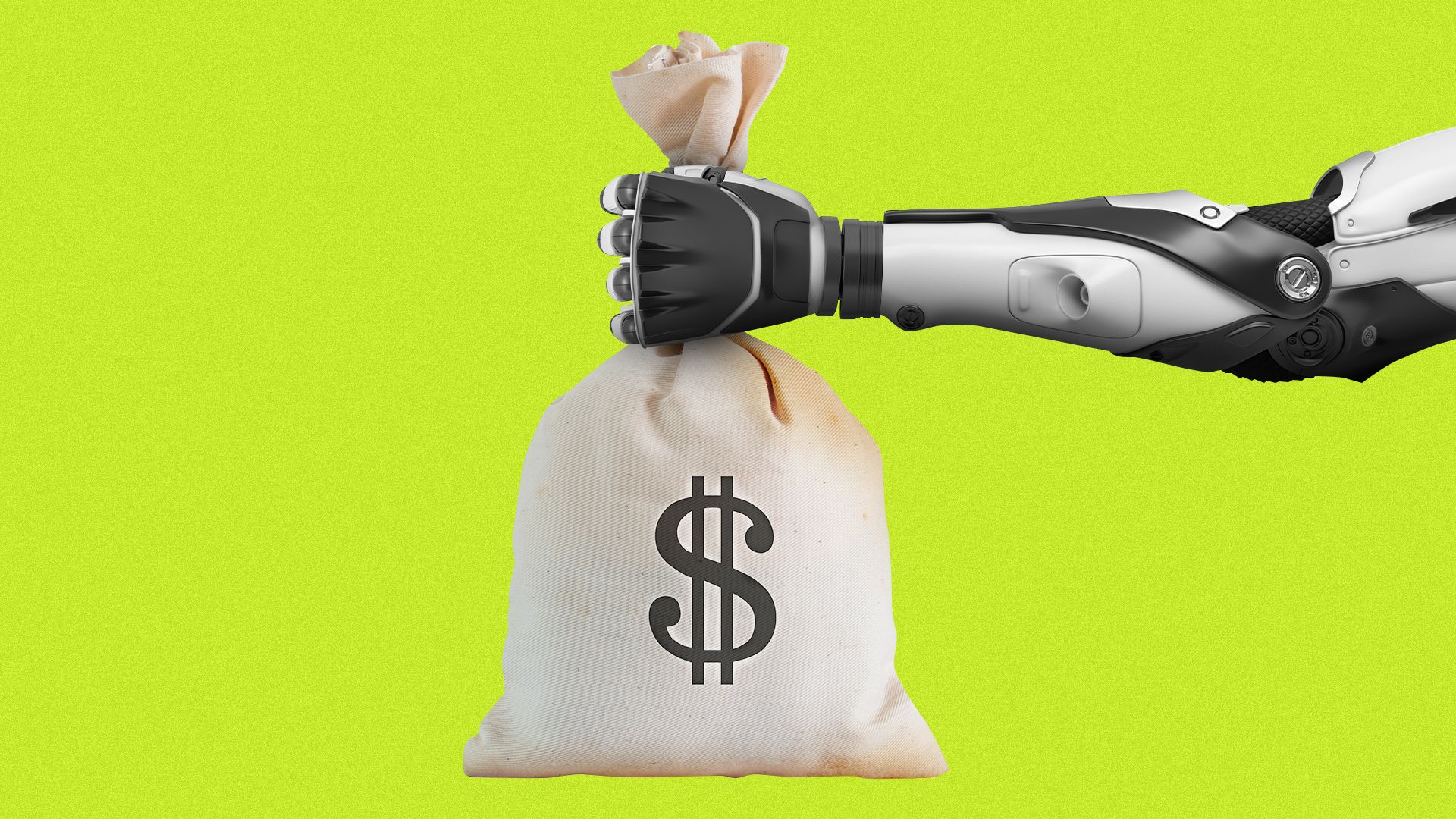
There's an effort underway to create a futures market for AI compute — the processing capacity needed to train and run AI models — akin to how investors buy and sell commodities like oil or grain.
Why it matters: A compute futures market would bring more transparency, new ways to manage volatility and even more investment into what's fast becoming a critical part of the economy.
The big picture: Futures markets allow companies to hedge against swings in prices. If you're an airline, you can buy oil futures to manage costs. A farmer might buy soybean futures to hedge against how well his crop does that year.
- Historically, creating a more transparent market for a commodity has unlocked more investments. Plenty of traders and investors in oil and soybeans never own the underlying asset.
The latest: The exchange operator CME Group said yesterday that it plans to launch two compute futures contracts on Oct. 5, "pending regulatory review." The group is working with Silicon Data, a company that publishes indexes tracking compute pricing.
4. Training data
- AI's cyber risks are moving too fast for defenders to decide how to fight them. (Axios)
- Grok Bot — SpaceXAI's new tool that acts as a swarm of AI agents — drafts emails, signs into apps and websites, remembers previous tasks and is designed to act autonomously to simplify task delegation. (Bloomberg)
5. + This
Anthropic's Claude will add an invisible watermark to all text it creates, apparently even human text that it copy edits, as part of an effort to comply with the EU AI Act.
- Lots to unpack here, but our editor astutely pointed out that many are asking how to get around the watermark.
- Her hot take? Consider writing for yourself.
Thanks to Megan Morrone for editing this newsletter and Matt Piper for copy editing.
Sign up for Axios AI+
