Axios AI+

December 03, 2024

I can't believe I finally got to write about Enron (see + This) — I'm a total Enron junkie.
Today's AI+ is 1,221 words, a 4.5-minute read.
1 big thing: OpenAI's plan for chatbot ads

OpenAI's potential plan to incorporate ads in products like ChatGPT is hardly surprising — but should still serve as a wake-up call for AI makers and users.
Why it matters: AI chatbots cost a fortune to run and remain available for free. Advertising could open up huge new revenue opportunities for OpenAI and its competitors, but it also risks separating the interests of AI companies from those of their customers.
Driving the news: OpenAI CFO Sarah Friar told the Financial Times that OpenAI is weighing the inclusion of ads in its products, but wants to be "thoughtful about when and where we implement them."
- Other AI providers have also begun exploring or incorporating ads in chatbots and AI-powered search engines. That includes Microsoft and Perplexity, as well as startups like Adzedek.
Zoom in: There is a range of means by which advertising can merge with the conversational experience of a chatbot — and the "how" is important.
- Currently, creators of custom chatbots can incorporate ads using technology from Microsoft and Adzedek. These tools will deliver a related but distinct and clearly marked ad along with the response to a user's query.
- OpenAI and others could do something similar. As long as the ads are clearly marked and don't otherwise affect a chatbot's response, the experience is comparable to what happens today with search engine ads.
- But if these lines aren't clear, the ads will call into question whose needs a chatbot is really serving — and undermine users' trust in the technology.
The big picture: Advertising has long been the primary revenue source for most consumer internet services, allowing companies to offer everything from email to social media largely for free.
- The approach has proven widely popular, with paid consumer email service relegated to a niche. For-pay social networks, meanwhile, have largely failed to attract sufficient critical mass and flopped, though LinkedIn and X have adopted freemium models.
Yes, but: Ad-based business models have driven internet companies to ratchet up engagement strategies and track users' activities for better ad targeting.
- AI makers will be tempted toward similar tactics — with an additional risk arising from the technology's known power to persuade and bond with users.
- A chatbot-turned-salesman could be both lucrative and annoying. An AI companion that sneaks in a sponsored message, or an AI agent that makes choices for you based on ad dollars, could be predatory.
Between the lines: OpenAI, in particular, has been looking to reassure investors and the broader business community that it has a plan to boost revenue as it continues to rack up giant losses and announce pricey new projects.
- The company raised $6.6 billion in an October funding round, but is also losing billions of dollars per year.
- To date, its revenue has come from a mix of business customers along with consumers who pay $20 a month for a premium version of ChatGPT.
What they're saying: An OpenAI representative told Axios the company has no current plans to implement advertising.
What we're watching: Meta has been aggressively pushing its AI assistant into Facebook, Messenger, Instagram and WhatsApp.
- The social media giant, whose business is fueled almost entirely by advertising, has also said it plans to use AI to generate new content.
Go deeper: I talked more about what ads in chatbots could mean during an appearance on NPR's "Here & Now."
2. Fei-Fei Li's startup turns photos into 3D worlds
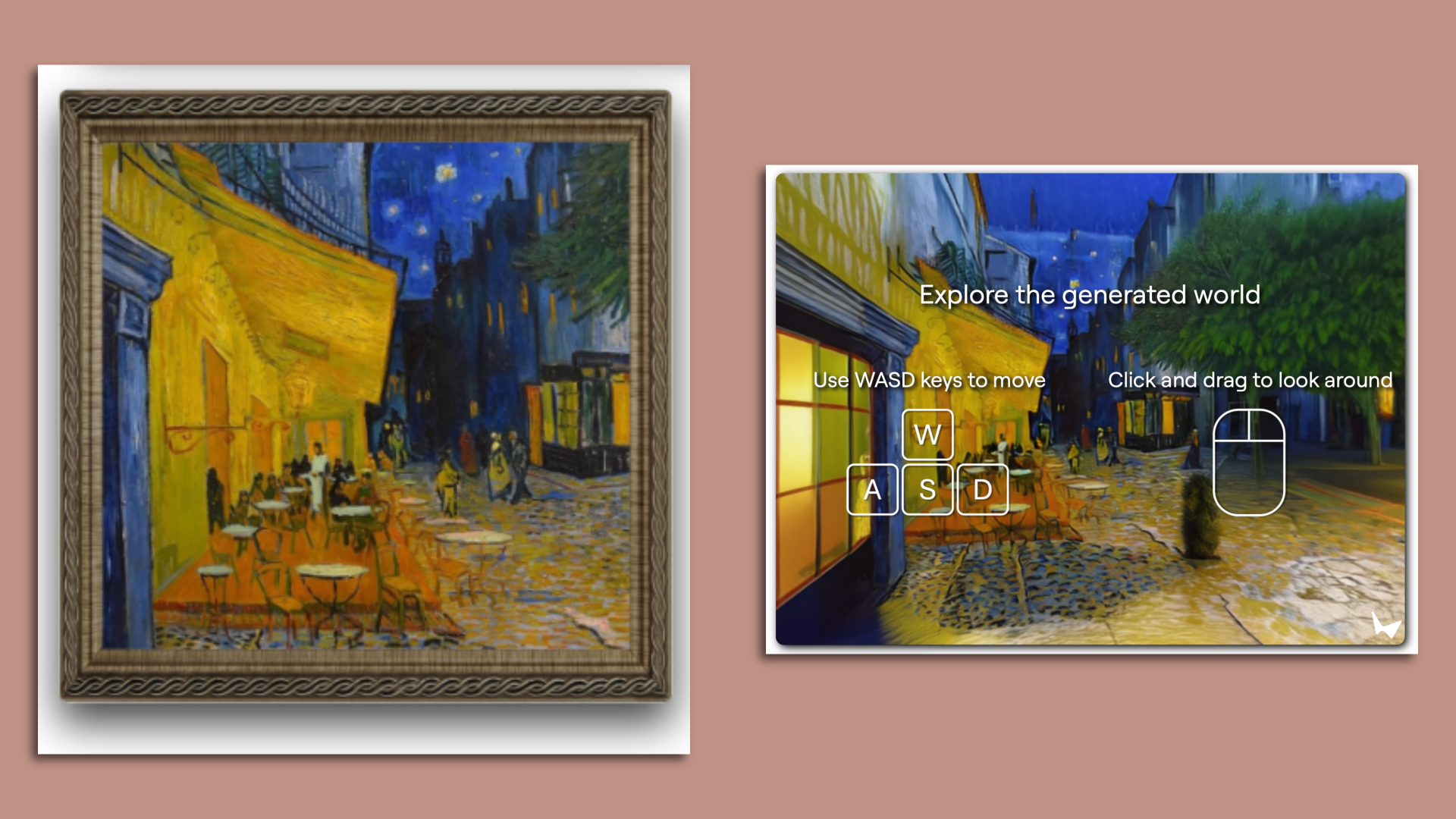
Stanford professor Fei-Fei Li, dubbed the "godmother" of AI, released an early peek at what her AI startup has been working on: an engine that can turn still images into realistic three-dimensional worlds.
Why it matters: Li is focused on the intersection of generative AI and the physical world, a challenging but potentially lucrative area.
Driving the news: In an interactive blog post yesterday, Li's World Labs demonstrated its approach, sharing examples of realistic photos and fantasy images being turned into 3D worlds, including one based on a Van Gogh painting.
- The post shows a variety of two-dimensional images next to the navigable 3D spaces produced from them, which visitors can tour using their keyboards.
- World Labs also showed the ability to shift focus and add other effects.
- "This will change how we make movies, games, simulators, and other digital manifestations of our physical world," the company's post said.
Catch up quick: World Labs unveiled itself in September, announcing it had received $230 million in funding from Andreessen Horowitz, NEA and Radical Ventures, alongside a list of prominent tech executives, celebrity investors and corporate venture arms.
- The company is still small, with just over 20 employees and an office in San Francisco's SoMa neighborhood.
3. Intel CEO forced out as turnaround fizzles

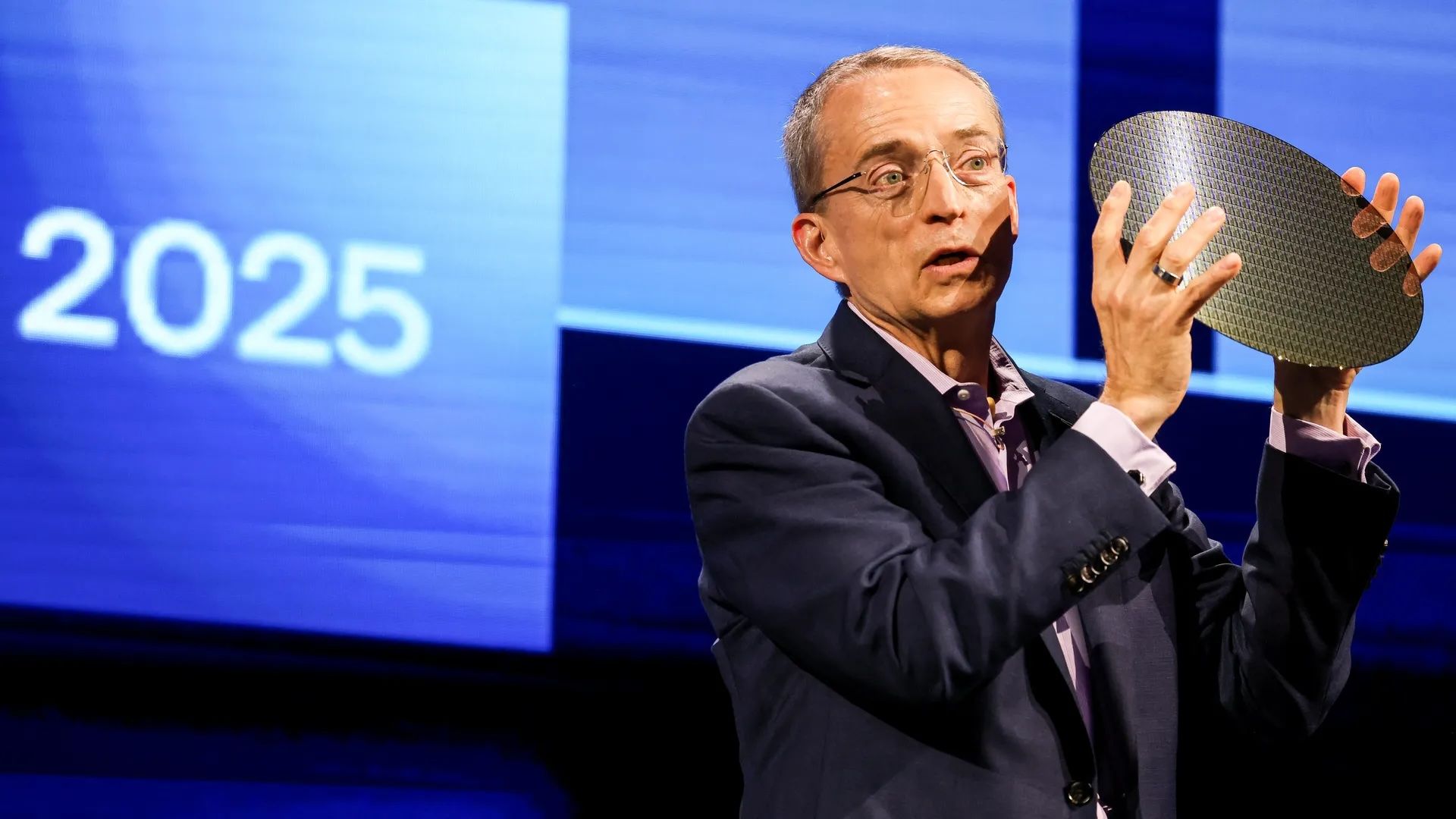
The CEO of Intel is leaving the company as investors fear it's falling behind in the AI chip wars against booming titans like Nvidia, among other challenges.
Driving the news: Pat Gelsinger abruptly retired Sunday after 40 years with the company, spent in two different stints, including his nearly four-year run as CEO.
- CFO David Zinsner and Michelle "MJ" Johnston Holthaus were named interim co-CEOs while the company searches for a permanent replacement.
- Intel's independent chair, Frank Yeary, will become interim executive chair during the transition.
Between the lines: Intel had ceded a dominant foothold in AI chip technology to Nvidia long before Gelsinger rejoined the company as CEO in 2021. Meanwhile, the company has continued to struggle to keep pace even in its home turf: the chips that power PCs and servers.
- But it was the board's lack of confidence in his plan to win back market share from its now much larger rival that drove it to seek a change last week, Bloomberg reported, citing people familiar with the matter.
The big picture: Intel's stock has dropped by half in 2024.
- In August, it announced plans to cut 15% of its workforce, even as it seeks to bolster production after landing billions in federal funding.
- And in a symbolic sign of its struggles, the company lost its spot last month in the 30-stock Dow Jones Industrial Average to the surging Nvidia.
Zoom out: Gelsinger's exit comes amid questions not just around Intel's AI strategy, but also its grand plans for its manufacturing business.
- Manufacturing was long the company's strength, but in recent years it has fallen behind TSMC and Samsung.
What we're watching: As Washington gears up for Trump tariffs and a possible trade war with China, the U.S. is likely to seek ways to bolster domestic chip production — an effort that's bound to involve Intel, which has already won billions in CHIPS Act funding.
4. Training data
- Exclusive: A new startup is launching a sort of "methane GPT" that uses AI to detect where the gas is coming from and help hold polluters accountable. (Axios)
- Raiza Martin, the Google product lead who helped shepherd NotebookLM from idea to product, is leaving Google for a new endeavor. (X)
- Speaking of Google, the search giant is launching a private preview of Veo, its text- and image-to-video engine, for some of its Vertex AI business customers. (Google)
- ChatGPT is refusing to answer queries that include certain names; privacy requests and/or legal action could be why. (TechCrunch)
- Jeff Bezos is among the investors in a nearly $700 million funding round for Canadian AI chipmaker Tenstorrent. (TechCrunch)
5. + This
Enron, the company synonymous with early 2000s corporate malfeasance, is back — but this time, apparently, as "performance art," a crypto venture or something else.
Thanks to Megan Morrone and Scott Rosenberg for editing this newsletter and to Caitlin Wolper for copy editing it.
Sign up for Axios AI+
