Axios AI+

May 06, 2026


Mady here after yesterday's busy day hearing about how Jamie Dimon uses Claude. Today's AI+ is 1,175 words, a 4.5-minute read.
1 big thing: AI's layoff alibi
Coinbase is the latest in a string of companies to pair layoffs with announcements that AI is changing the way the company operates.
Why it matters: Companies are increasingly blaming AI for job cuts, but the evidence points to a messier mix of automation, cost-cutting and market pressure.
Driving the news: Coinbase CEO Brian Armstrong told employees Tuesday the firm will lay off about 700 workers and rebuild around "AI-native" pods and talent.
- Armstrong cited crypto volatility before turning to AI in the layoff memo.
- Coinbase did not respond to a request for comment.
What they're saying: OpenAI CEO Sam Altman has warned that some companies are "AI-washing" layoffs — blaming AI for cuts they might have made anyway.
Zoom out: Coinbase joins Block, Pinterest and Shopify in tying workforce cuts or restructurings to AI, though it is often hard to tell whether automation drove the layoffs or merely helped justify them.
- Block is the only one of those stocks beating the S&P 500 year-to-date. Its stock rose after announcing its AI-driven job cuts.
- None of the companies appears to have offered concrete AI productivity metrics on earnings calls before announcing the cuts.
- Goldman Sachs economist Joseph Briggs told Axios those metrics can help separate real AI-driven job losses from executive spin.
AI could lift unemployment near term, Briggs said, but create jobs over time.
- He sees about a half-point increase in the overall long-term unemployment rate due to AI adoption, which he calls a relatively "benign view."
- He did acknowledge that unemployment could spike in the short term if the AI transition happens very quickly.
Yes, but: AI was the single largest cited reason for U.S. layoffs through Q1, per Challenger, Gray & Christmas data.
- Briggs said AI-related layoff claims are most credible at large tech companies, where the technology is already being used heavily and more roles are directly exposed to automation.
- Larger tech firms have already fully corrected from a post-COVID hiring boom, retreating to their long-run employment trends.
Between the lines: For now, AI is creating more jobs than it's killing, in part due to a surge in data center construction, according to Goldman Sachs.
- Just 20% of 1,200 CEOs expect AI to reduce hiring, down from 46% in 2024, per an EY-Parthenon survey out Monday.
The bottom line: AI-linked layoffs may be overstated in the short term, even as the technology reshapes hiring and wages over time.
2. OpenAI makes default ChatGPT more personal

OpenAI is making the default ChatGPT more accurate and personal — changes that could make people rely on it more while giving it more access to their lives.
Why it matters: Even subtle changes to a chatbot's tone, accuracy or memory can trigger backlash.
Driving the news: OpenAI says it updated ChatGPT's default model to respond with more accuracy, more personalization and fewer gratuitous emoji.
- GPT-5.5 Instant is rolling out to all ChatGPT users and to the API.
Enhanced personalization is initially for Plus and Pro on the web.
- Free, Go, Business and Enterprise will come later.
- Paid users can keep GPT-5.3 Instant for three months.
By the numbers: OpenAI says GPT-5.5 Instant produced 52.5% fewer hallucinated claims than GPT-5.3 Instant on high-stakes prompts in areas like medicine, law and finance.
- It also cut inaccurate claims by 37.3% in conversations users had flagged for factual errors.
Zoom in: The new model "matches the scale of the task," the company said in a blog post yesterday.
- For casual advice prompts, it avoids unnecessary follow-ups and cluttered formatting.
Between the lines: Instant will also draw on more of a user's context in responses to prompts.
- That includes information from past chats, files users have uploaded and Gmail, if connected.
Reality check: OpenAI says this means users won't have to repeat themselves as often, but not everyone wants a chatbot with persistent memory.
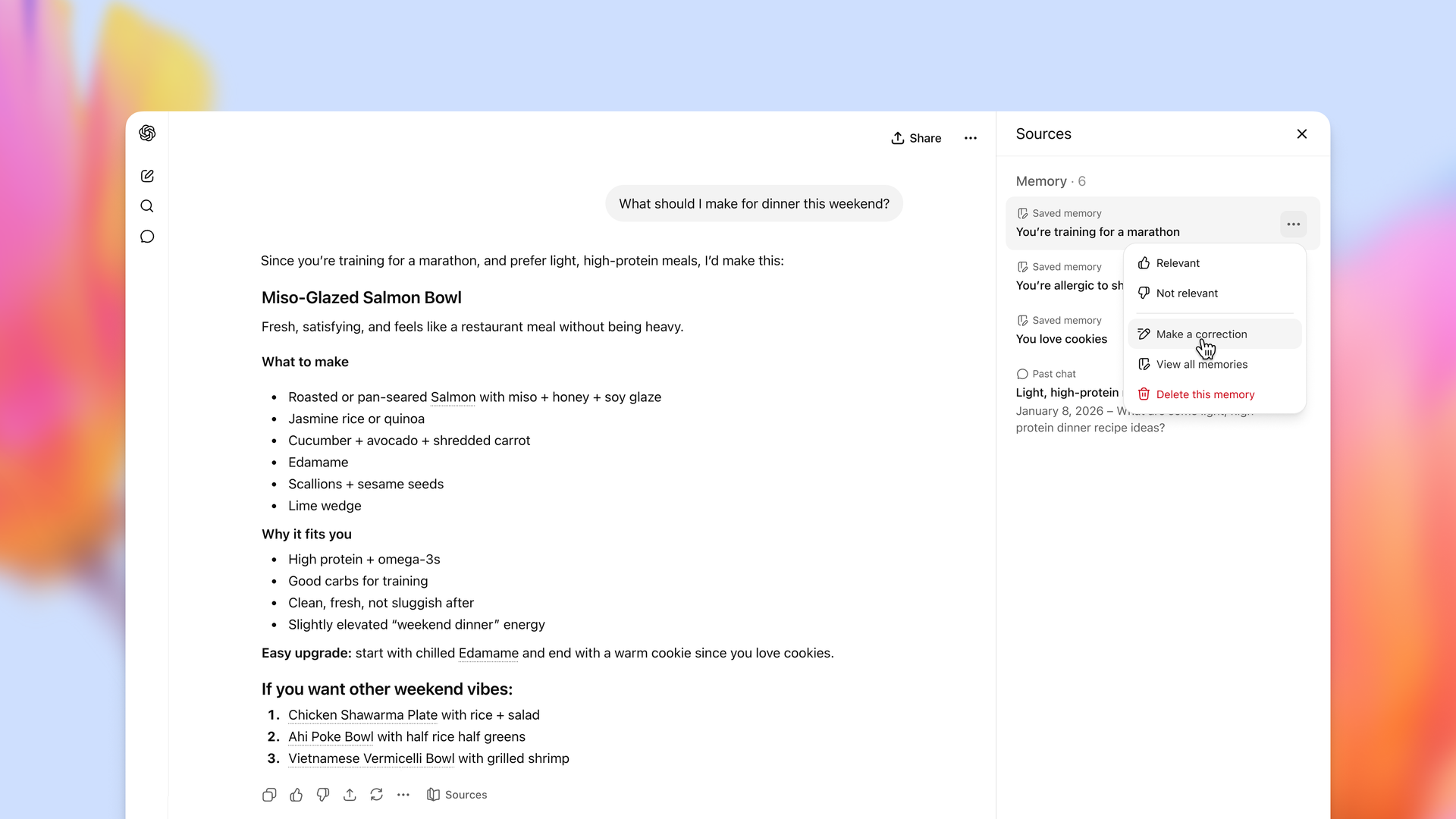
- The company is also adding "memory sources," a control that shows users some of the context ChatGPT used to personalize an answer, such as saved memories or past chats.
- OpenAI says users can delete or correct outdated memory and use temporary chats that don't use or update memory.
Yes, but: The increased memory serves as a reminder that prompts may be stored by AI services, depending on the service and settings.
- Connecting your chatbot to third-party services means putting more of your personal or work information at risk.
Zoom out: Lower hallucination rates can also create new problems.
- Users may trust answers more even when the model is still capable of getting things wrong.
What we're watching: Whether OpenAI's new memory-source controls are enough to reassure users who want more personalized answers without feeling watched.
3. Hugging Face launches robot app store
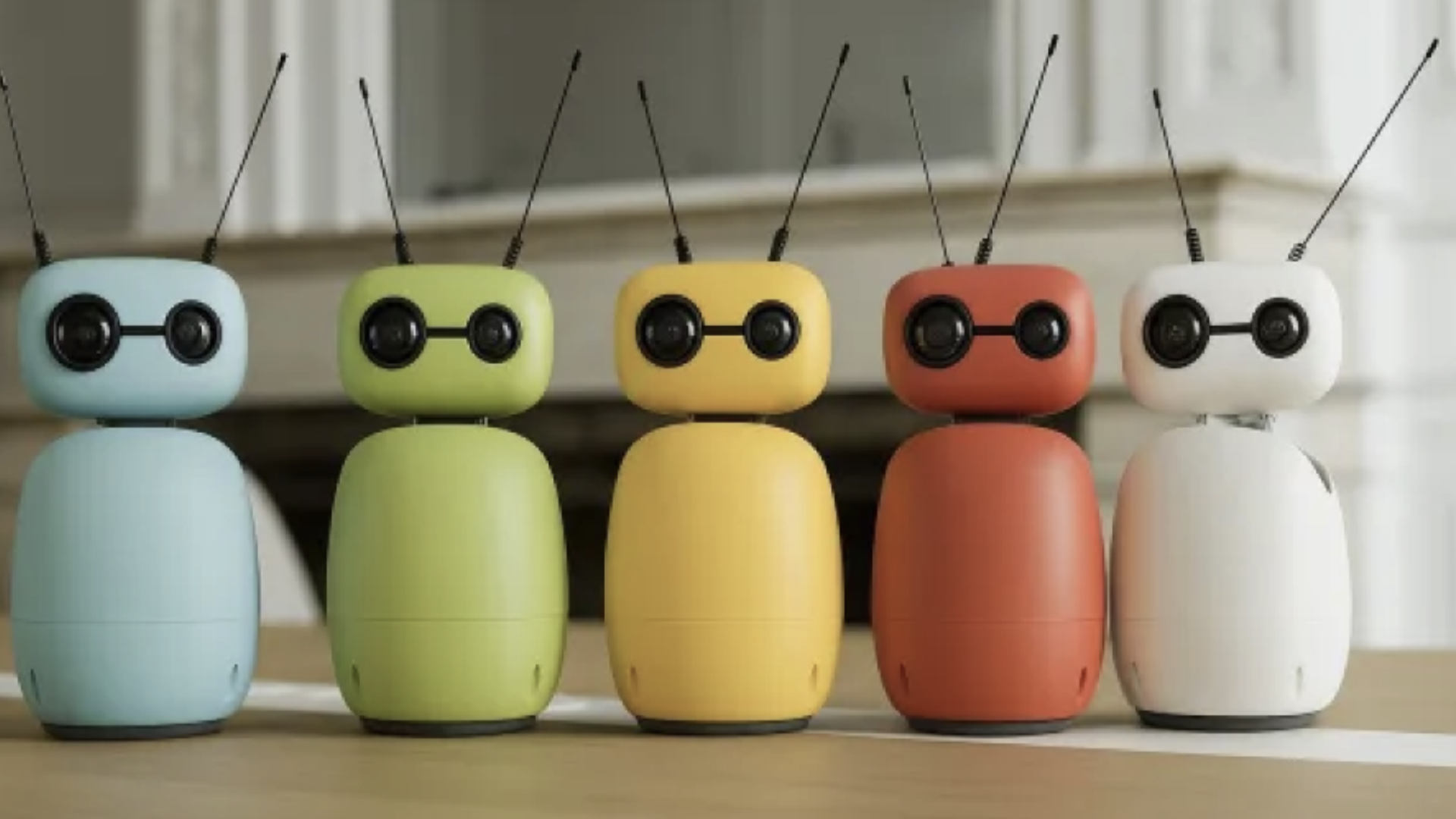
Open-source AI platform Hugging Face will formally launch an app store today for its Reachy Mini robot, CEO Clément Delangue tells Axios.
Why it matters: The goal is to help nontechnical people create customized uses for the open-source robot, Delangue said.
Driving the news: The store already has about 200 apps designed to be downloaded or modified easily.
- Among those is an office receptionist app that Delangue said he built in less than two hours.
- Others include baby monitor apps, cooking assistants and an app that tracks whether you get distracted while working.
What they're saying: "Our goal is to make it so that everyone can build for their own use cases," Delangue said in an interview.
- "The most important thing right now for AI is that it doesn't only get to be built by a few people in Silicon Valley."
By the numbers: Hugging Face says there are now around 10,000 of its Reachy Mini devices in the hands of customers or on the way, with 3,000 being shipped last week.
- The robot ranges from $299 to $449 for the version that runs untethered to a computer.
What we're watching: Whether the combination of the low price and an app store could propel the Reachy Mini beyond tech enthusiast tinkerers.
4. OpenAI launches self-serve ad platform


OpenAI has launched a self-serve advertising platform, executives said, marking a significant step in its goal of generating $2.5 billion in ad revenue this year and $100 billion by 2030.
Why it matters: The new platform makes it easier for a broader set of advertisers to buy ads on ChatGPT.
- That's especially true for smaller businesses that can't afford to outsource all of their ad capabilities to big agencies.
Zoom in: A beta version of the new Ads Manager tool is beginning to roll out to advertisers in the U.S.
5. Training data
- Author Scott Turow and five book publishers sued Meta and CEO Mark Zuckerberg over the training and operation of its large language models. (Associated Press)
- Apple is planning to allow customers to use a range of third-party AI models to power various Apple Intelligence features. (Bloomberg)
- Microsoft is scrapping efforts to bring an AI copilot to Xbox. (The Verge)
6. + This
Single-celled plankton are turning waves purple along parts of the Northern California coast.
Thanks to Megan Morrone for editing this newsletter and Matt Piper for copy editing.
Sign up for Axios AI+
