Axios AI+

February 05, 2025

Save the date: Axios returns with our fourth annual What's Next Summit in Washington, D.C., on Tuesday, March 25, for a day of insightful conversations with figures at the forefront of seismic shifts in how we work, play and live.
Today's AI+ is 1,250 words, a 4.5-minute read.
1 big thing: Musk resets Washington's permissions


Nearly every computer system draws a line between the right to look at files and the right to change them — but till now, the details barely mattered to most non-programmers.
The big picture: The early days of Trump's second administration — as Elon Musk and his Department of Government Efficiency (DOGE) crew execute a hostile takeover of the federal government's digital infrastructure — are giving Washington a crash course in the importance of system permissions.
- With "read-only" permission, you can open, review and copy data and programs.
- With "read-write" access, you can delete files, alter data and rewrite code.
Why it matters: Much of the capital and the nation is still trying to figure out whether Musk is simply scouring the federal books to flag waste and fraud — as the Trump transition originally described the DOGE effort — or if he has unilaterally, and maybe unconstitutionally, seized a sort of line-item veto power over every dollar the government spends.
- "Read" or "write" could be the difference between a budget review and a spending freeze. It could also be the difference between speeding up the government or tearing it down.
Catch up quick: Over the past few days, reports that Musk and his team had gained unprecedented access to broad swathes of federal systems came with assurances that DOGE would have "read-only" access.
- The sharpest controversy has been over the Treasury Department's payment system — a venerable corner of the bureaucracy responsible for actually writing checks from federal accounts to everyone from military contractors to Social Security recipients.
Multiple outlets reported alarm late last week among nonpartisan career Treasury employees that DOGE workers had gained access to the payment system.
- The Wall Street Journal and Politico wrote that anonymous administration sources said Musk's team would only be reading Treasury information, not changing it.
But a Monday story in Wired says DOGE has obtained much broader "read-write" capabilities.
- "A 25-year-old engineer ... who previously worked for two Elon Musk companies, has direct access to Treasury Department systems," Wired reports, citing three unnamed sources.
- The engineer's access includes "the ability not just to read but to write code on two of the most sensitive systems in the U.S. government: the Payment Automation Manager and Secure Payment System at the Bureau of the Fiscal Service," two of those sources told Wired.
The other side: A letter from an unnamed Treasury Department official to members of Congress yesterday afternoon defended the DOGE project.
- "Currently, Treasury staff members working with Tom Krause, a Treasury employee, will have read-only access to the coded data of the Fiscal Service's payment systems," the letter read. "This is similar to the kind of access that Treasury provides to individuals reviewing Treasury systems, such as auditors."
- Krause, CEO of Cloud Software Group, is now serving as a "special government employee" at Treasury, according to the letter.
Context: No documented evidence has surfaced to date showing anyone at DOGE has meddled with Treasury data or programs.
- But concerns over what DOGE employees might do with "read-write" power may not be entirely unfounded, given Musk's repeated boasts on X that he and DOGE have "deleted" one federal organization or that another agency should "die."
There are three roads this story could take from here.
1. The DOGE project really does stick to "read-only" work.
- Providing the Trump administration and Congress with informed recommendations for saving taxpayers' money, rather than taking direct action, would defuse much of the controversy — but hardly seems in character for Musk.
2. DOGE's team keeps working in a fog of confusion and no one really knows what they're doing inside federal systems.
- That means whatever happens in the next government IT meltdown or federal shutdown crisis will be blamed on them.
3. Musk starts directly blocking Treasury payments, provoking a constitutional crisis.
- If you don't mind breaking things, you can drastically alter IT systems a lot faster than any judge can stop you.
Two important facts are worth remembering, whatever happens.
- Even plain read-only access is plenty sensitive, given the nature of the payment system's data, which includes Social Security numbers and tax information.
- While tackling this project, Musk remains not only the wealthiest person on the planet but the owner and CEO of multiple giant companies that do billions in direct business with the U.S. government.
2. DOGE hopes to overhaul government with AI
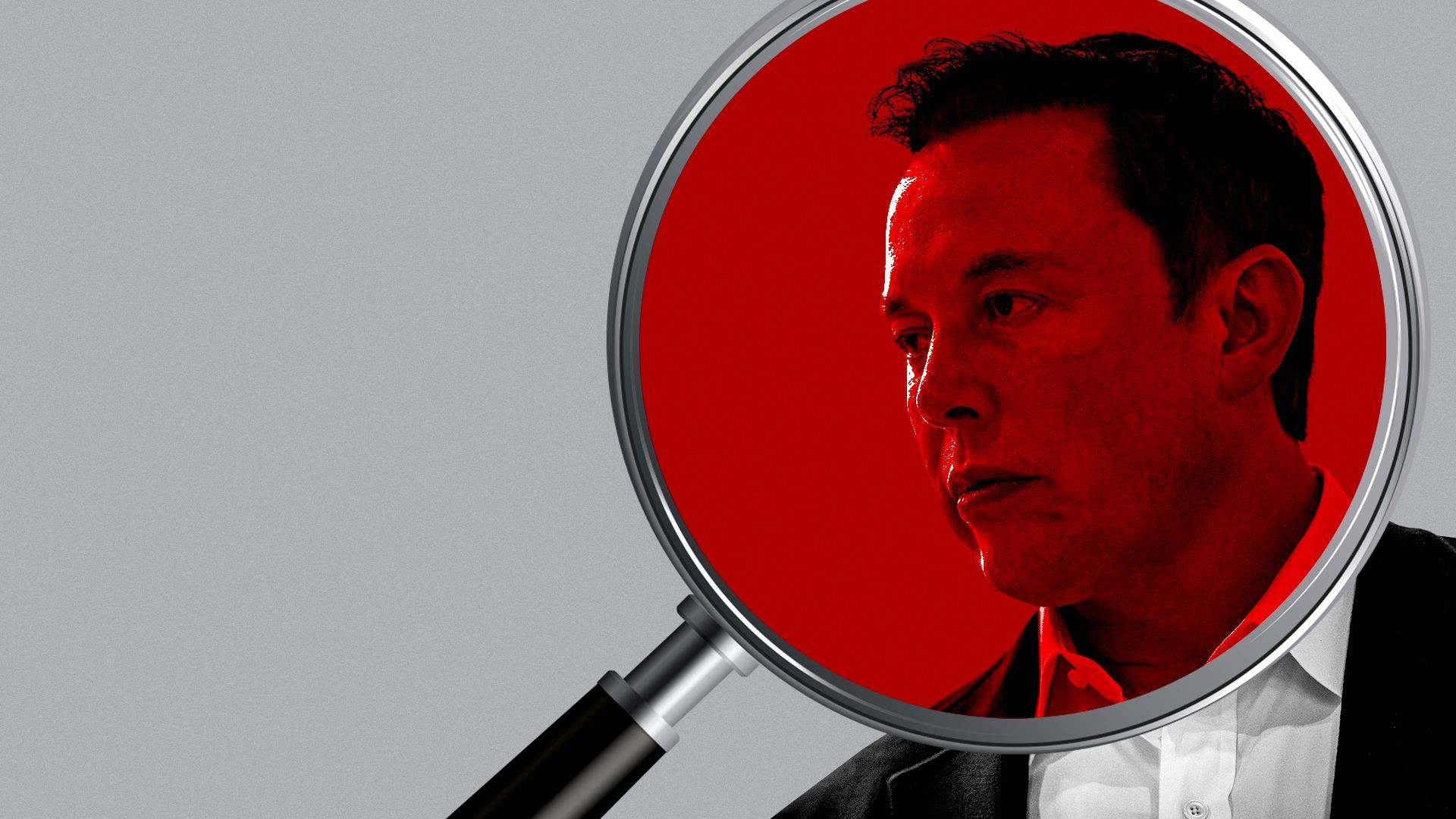
As part of their effort to streamline government, Elon Musk and DOGE have proposed applying artificial intelligence programs and techniques to identify waste and fraud.
The big picture: Leaders across industries and around the world all hope to accomplish something similar in their firms and institutions. But it's almost impossible to execute overnight — and the less carefully and transparently it's pursued, the more likely it is to go awry.
Driving the news: In a Monday meeting at the General Services Administration's Technology Transformation Services, Thomas Shedd, a former Tesla engineer recently appointed as director of TTS, outlined broad plans to implement AI across the federal government as a tool to automate tasks, write code and combine systems across agencies. The meeting was reported by the New York Times, Wired and 404 Media.
Yes, but: Musk's efforts have been secretive to date.
- The public knows virtually nothing about what kinds of AI the government wants to employ, how and where it plans to apply it, and what kinds of oversight and safeguards might be put in place to guard against error, bias and the technology's tendency to make things up.
- These are questions being asked in boardrooms and workplaces everywhere today as leaders excited about AI's potential struggle to win buy-in from suspicious employees. It's reasonable for government leaders and employees to ask them, too.
Our thought bubble: AI could and probably will eventually help make government more efficient. But voters and workers have to be able to trust that it's being introduced transparently and thoughtfully.
3. Half million Cal State students get ChatGPT


The California State University (CSU) system is introducing OpenAI's ChatGPT Edu — a version of ChatGPT customized for educational institutions — to more than 460,000 students and over 63,000 staff and faculty across its 23 campuses.
Why it matters: ChatGPT is already transforming higher ed, giving students more access to professors' expertise and boosting efficiency, but many are still cautious about genAI's long-term effects on learning.
- OpenAI says this is "the largest implementation of ChatGPT by any single organization or company anywhere in the world."
Zoom in: The initiative aims to equip students with key AI skills to help them prepare and succeed in a workforce that's already becoming more AI-literate.
- Faculty in the Cal State system can use ChatGPT to develop curriculum and create interactive course-specific GPTs, while students can use it for personalized tutoring, study guides and research.
4. Training data
- Google has removed a line from its AI principles that pledged the company wouldn't use its AI for weapons or surveillance work. (TechCrunch)
- Elizabeth Kelly, the head of the U.S. AI Safety Institute, is expected to leave her post this week. (Bloomberg)
- New EPA head Lee Zeldin wants to "ensure data centers and related facilities can be powered and operated in a clean manner with American-made energy." (Axios)
- NOAA's new leader faces decisions about how to integrate AI-based weather forecasting with the agency's existing tools. (Axios)
- Robotics startup Figure said it is ending a deal with OpenAI and will use its own models going forward. (TechCrunch)
5. + This

I'm not saying I like Lego and typewriters ... but ... I built a little Lego typewriter to go next to my big Lego typewriter.
Thanks to Scott Rosenberg and Megan Morrone for editing this newsletter and Matt Piper for copy editing it.
Sign up for Axios AI+
