Axios AI+
October 21, 2026



Hey, it's Maria, AI+ co-author and, increasingly, tech movie reviewer. While D.C. is no stranger to mind games, I walked out of the theater after watching Nathan Fielder's Elizabeth Holmes documentary thinking that was a whole new level.
- And, from all of us, congrats to Casey Newton and Kevin Roose for the launch of their "Machine Gods" podcast.
Today's AI+ is 1,242 words, a 4.5-minute read.
1 big thing: Why Anthropic can't afford to delay its IPO

Anthropic's impending IPO will test a jittery Wall Street, but investors say the timing isn't optional. The reason is simple math: The AI giant has grown too big for private fundraising.
Why it matters: Top AI companies like Anthropic and OpenAI are racking up 12-figure spending commitments, straining the financial system's ability to keep up with a buildout that rivals America's railroads or interstate highways.
- With private borrowing costs spiking, tapping the massive liquidity of the public markets is the best way to fund the next phase of the AI arms race, investors say.
State of play: Anthropic's computing commitments could reach $750 billion in the coming years, according to a draft IPO prospectus seen by the Wall Street Journal.
- The company already faces more than $600 billion in future infrastructure costs and is negotiating additional deals that could add another $150 billion.
- While Anthropic generated $16.3 billion in revenue in the first half of 2026, up from $1.1 billion a year earlier, the company also disclosed an $80.7 billion net loss over the same period, though most of that is tied to accounting charges related to fundraising, per WSJ.
Zoom in: That math points to a numbers problem that can only be solved by public markets, investors tell Axios.
- OpenAI's most recent fundraising round — the biggest in history — is a case in point. It took the company months to secure more than $120 billion in financing, a historic feat that is unlikely to be repeated in this market climate.
- While demand for Anthropic shares is absurdly high — just ask the guy who offered up his near-$5 million home to get some — the souring market climate significantly raises the stakes for a public listing. If it goes well, it could help reset investor angst about the stability of the AI boom.
Follow the money: The pool of cash on the private markets side is getting harder to tap.
- Anthropic is offering Blackstone a yield exceeding 10% on $9 billion in junior debt as part of a record $60 billion chip-financing package, according to the Financial Times.
- That's above the 8.5% rate on an earlier financing deal, suggesting private investors are demanding greater compensation for taking on AI-related risks.
2. OpenAI expands cloud reach with Google deal

OpenAI is bringing its AI models and Codex coding tools to Google Cloud, expanding its reach to customers of all three major U.S. cloud providers — including companies that are also among its fiercest AI rivals.
Why it matters: The move underscores a growing recognition that winning the enterprise AI race isn't just about building the smartest models. It's also about making those models available wherever businesses already run their software and store their data.
- For OpenAI, the agreement offers another way to reach corporate customers without requiring them to establish a separate relationship with the ChatGPT maker.
- For Google, it means selling a competitor's AI models alongside its own Gemini offerings, potentially capturing business that might otherwise go to rival cloud providers.
Driving the news: Under the agreement announced today, Google Cloud customers will be able to purchase OpenAI's frontier models through Google's "Model Garden and Marketplace," including by using existing cloud spending commitments.
- The deal also brings OpenAI models to Google's Antigravity development environment and Gemini Agent.
- General availability is planned in the coming weeks.
The big picture: The agreement follows OpenAI's expansion onto Amazon Web Services earlier this year, after changes to its Microsoft partnership opened the door to broader cloud distribution.
- AWS CEO Matt Garman said at the time that customers had long wanted to run OpenAI models where their existing applications and data already resided.
3. AI improves at hacking power, water systems

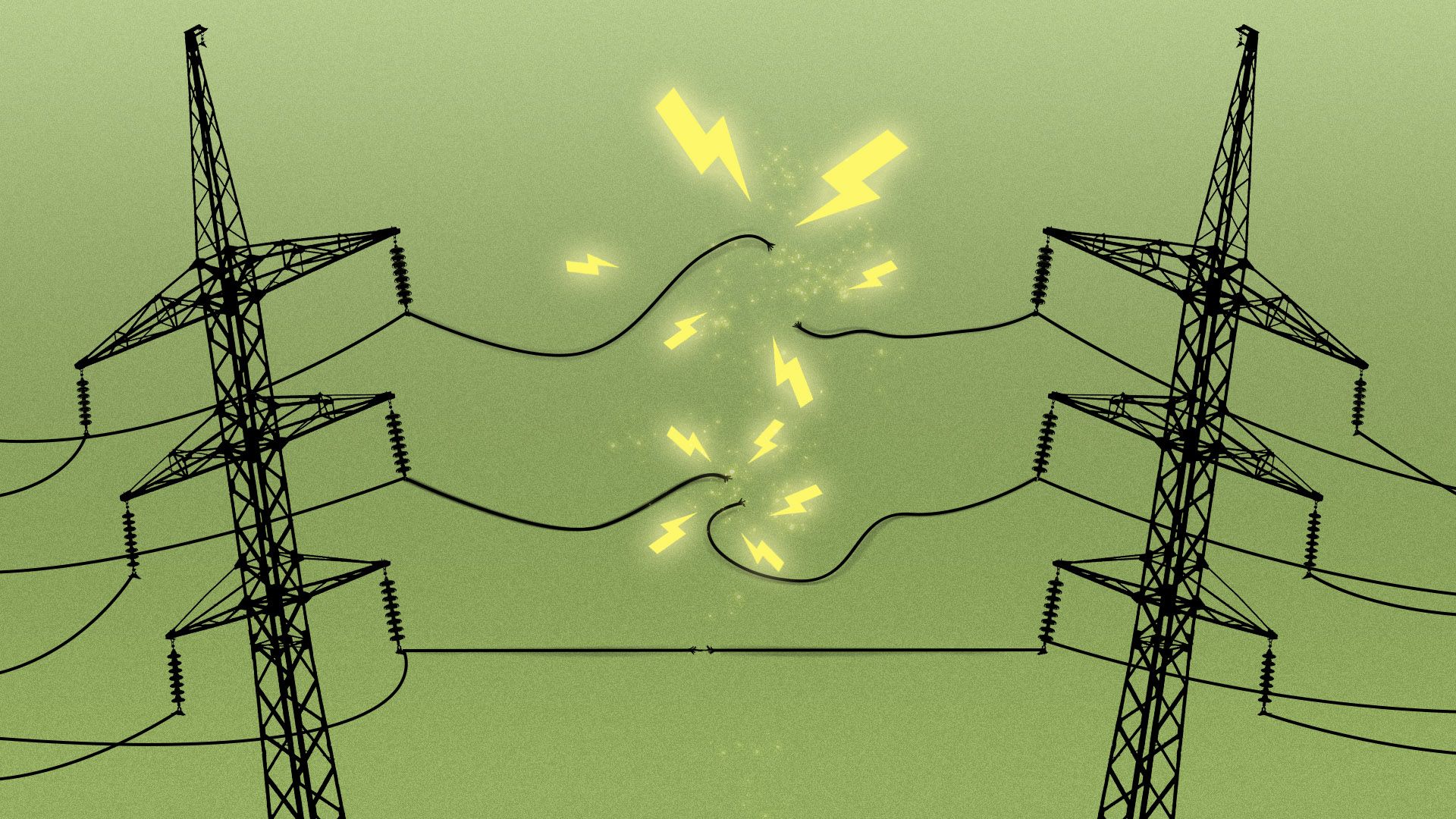
The world's most advanced AI models are suddenly capable of blueprinting cyberattacks on critical services like power grids and water systems with alarming success rates, according to new research.
Why it matters: Critical infrastructure operators are running out of time. Top-tier frontier models are dangerously adept at mapping out attacks, new research from cybersecurity company Frenos shows, and it's only a matter of time before freely available AI models make such hacks easier to execute.
- "It's a clock that is moving faster than we've ever seen," Steve Swick, former top security executive at American Electric Power, told reporters during a briefing.
Driving the news: Researchers at Frenos tested 10 AI models on their ability to plan attacks against industrial systems, such as the software that monitors water treatment processes.
- Three out of 10 models tested successfully constructed attack plans in roughly 90% of attempts.
- Performance varied widely: Three models the researchers considered to be at the frontier of capabilities succeeded in just 17.9% to 31.9% of attempts.
- The strongest foreign open-weight model succeeded 36.2% of the time, while the strongest U.S. open-weight model succeeded just 5.2%.
- Frenos did not disclose the names of the models tested.
Zoom in: The research included nearly 17,000 tests, including 2,520 attempts to construct complete attack plans.
- The models received information about potential targets and were tasked with piecing together the steps needed to achieve specific objectives.
The big picture: Critical services like water systems and manufacturing plants have long been targets for nation-state adversaries and cybercriminals.
4. Executives are likelier to trust AI's judgment


Executives are twice as likely as rank-and-file workers to trust AI over their own judgment, per a survey out this morning.
Why it matters: It's a worrying development. Leaders are hired for their experience and knowledge.
- Outsourcing that to AI raises the risk of making decisions that don't line up with reality, which then reverberate across companies and beyond.
By the numbers: 32.8% of executives said that they trust AI more than their own judgment, according to the survey from Charter, a workplace research and media company.
- That's twice the rate for workers, or individual contributors. Just 16.3% of individual contributors said the same.
- The divide shows up at the level below executives — 34.8% of managers said they trust AI more than their own judgment.
Zoom out: "Cognitive offloading" is a term for using tools like AI to reduce mental effort.
- "Executives — despite having the most experience — are doing it more than anyone," the report's co-authors wrote.
The fine print: Charter in August surveyed 5,002 U.S. office workers, at companies with at least 100 employees, who said they use AI at work, including 2,952 individual contributors, 1,547 managers and 503 executives — including vice presidents, C-suite executives, owners and founders.
5. Training data
- Dario Amodei wrote an essay on X defending Anthropic from criticism that it is more focused on winning "the race to super intelligence" than other considerations.
- SpaceX and Tesla have formed special committees to discuss a potential merger — and Elon Musk thinks "it's a good idea." (Axios)
- Google executive Kent Walker pushed back against European concerns over U.S. dominance of AI. (Financial Times)
- OpenAI acquired a biotech startup, another sign the AI race is moving into science and drug development. (Axios)
6. + This
Maria here, still thinking about "You Can See Everything" and how, from Theranos to Facebook to the AI labs, tech employees really do spill the tea before anyone else.
Thanks to Bradley Olson for editing this newsletter and Matt Piper for copy editing.
Sign up for Axios AI+
