Axios AI+

March 12, 2026


Mady here, thinking about the lobster planted in front of the Wall Street bull in the Financial District. Bullish or bearish?
Today's AI+ is 1,118 words, a 4-minute read.
1 big thing: Don't get used to cheap AI

AI may never be as cheap to use as it is today.
Why it matters: AI companies are hooking users with low prices that won't last — straight out of the Amazon and Uber playbook.
The big picture: The push to show profits before IPOs could end the era of cheap AI.
- "These LLM companies are going to go public and they're going to raise prices because they have to," May Habib, CEO of Writer, told Axios.
State of play: New models from OpenAI, Google and Anthropic are generally getting faster and cheaper.
- The industry was fixated on training chips. Now Nvidia and its rivals are focused on inference — the computing that lets models answer your questions.
- Aggregate token pricing — the cost of generating text — has fallen, partly due to a massive efficiency jump in inference.
Driving the news: Nvidia is expected to unveil a more efficient AI chip at its developer conference next week, according to reports.
- As prices fall, usage is surging — and total corporate AI spending is rising, according to Ramp, which tracks business expenses.
Zoom in: Yet margins are still negative for AI labs, according to PitchBook.
- OpenAI is projected to burn $14 billion in 2026, up from $8 to $9 billion in 2025.
- Anthropic's margins have swung from -94% in 2024 to about +40% in 2025, though they remain pressured due to higher than expected inference costs.
Zoom out: Fierce competition has pushed labs to price aggressively, squeezing profits.
- In February, 90% of VC funding dollars went to AI startups. OpenAI and Anthropic alone captured 74% of VC dollars, according to Crunchbase.
- Labs also get discounted compute through strategic partnerships — sometimes described on Wall Street as circular financing. Microsoft reportedly provides OpenAI compute at below-market rates.
- Even with those discounts, OpenAI and Anthropic are still losing money.
Between the lines: Every time you send a complex query, the AI lab is effectively losing money on the transaction.
- Free accounts have limited token use, which is expanded when you sign up for a standard consumer subscription. But those low-cost subscriptions are among the most heavily subsidized.
- In February, 28% of corporate OpenAI chat spending flowed through personal consumer plans rather than higher-margin enterprise tiers, according to Ramp.
- Ramp's data shows Anthropic capturing the majority of tracked business AI spend.
Flashback: Silicon Valley has seen this movie before.
- The so-called "millennial lifestyle subsidy" meant VC money helped underwrite cheap Uber rides and DoorDash deliveries.
- Before that, Amazon built its base with low prices, free shipping and, for years, no sales tax in most states.
- Eventually, all of these companies had to charge enough to cover costs — and make a profit.
Follow the money: The current iteration of AI subsidies won't last forever.
- Both OpenAI and Anthropic are widely expected to go public. Public investors will demand earnings growth and expanding margins.
- Even as chips get more efficient, total spending keeps rising. Labs need more capacity, more upgrades and more supply to meet demand.
The bottom line: The costs of AI will keep going down.
- But total spend from customers will need to keep going up if AI companies are going to become profitable and investors are ever going to get returns on their massive investments.
2. Microsoft previews Copilot Health AI tool
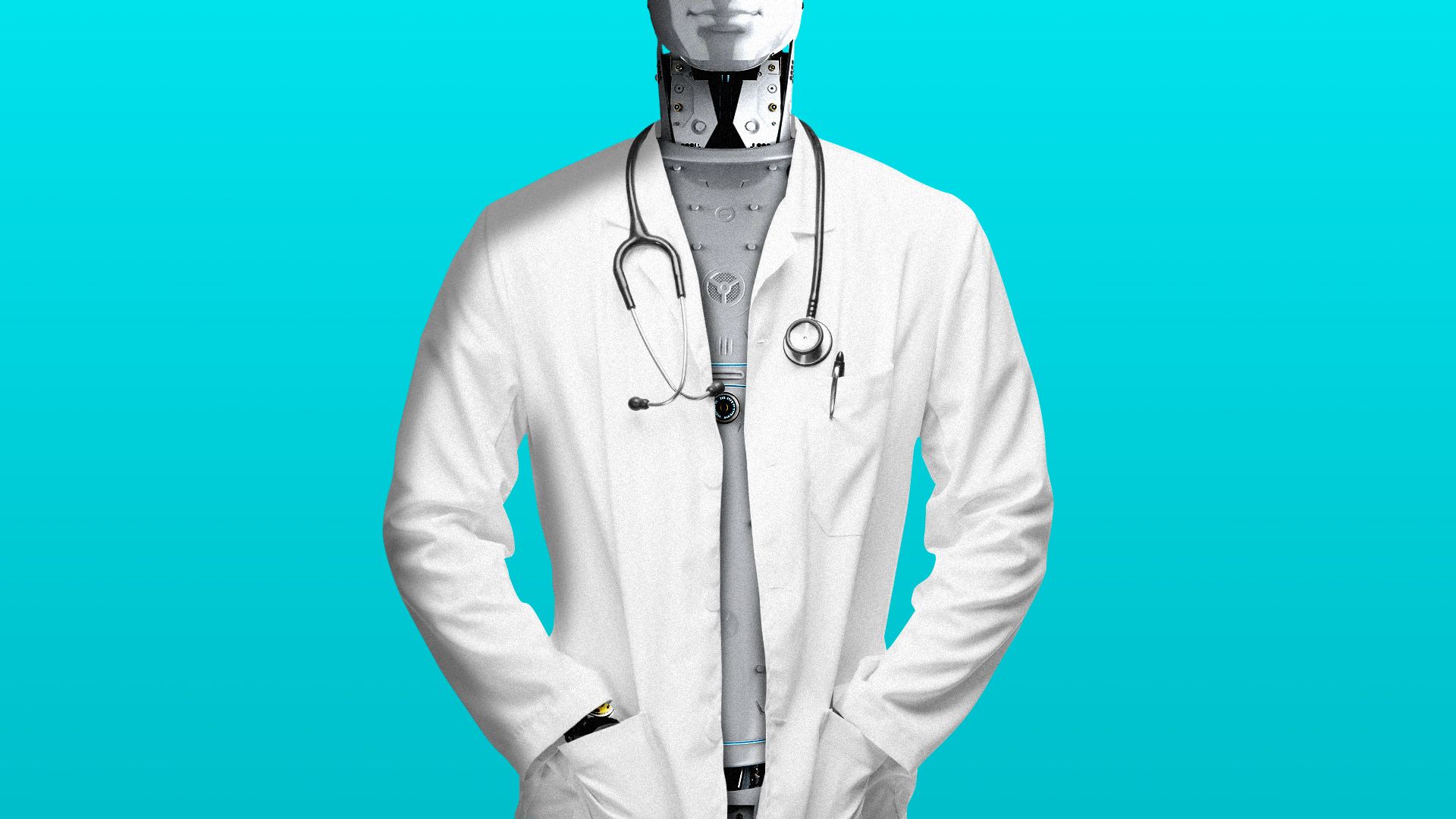
Microsoft today announced Copilot Health, a new AI service that lets users upload electronic health records and data from fitness trackers and other devices.
Why it matters: Microsoft is entering one of AI's fastest-growing arenas — health care — as OpenAI, Amazon and others expand their medical chatbot offerings.
Driving the news: Microsoft said Copilot Health will let users combine medical records, lab results and wearable data — including from Apple Health, Oura and Fitbit — and have the system analyze it to generate personalized insights.
The big picture: OpenAI announced ChatGPT Health in January, while Amazon on Tuesday said it was expanding access to its health chatbot, which previously was limited to customers of its One Medical service.
Zoom in: Copilot Health can draw on records from more than 50,000 U.S. health providers and data from 50 different types of wearable devices, Microsoft said.
- The tool can help users understand test results, identify trends in sleep, activity or vital signs and prepare questions for doctors ahead of appointments.
- For now, the service will be free and limited to U.S. users, with access granted through a waitlist for early testing. Eventually, Microsoft sees this becoming a paid service.
Threat level: Copilot Health conversations are encrypted and kept separate from general Copilot chats, Microsoft said.
- The company added that health data will not be used to train its AI models.
What they're saying: "This is going to be the most important application of AI, full stop," Microsoft AI head Mustafa Suleyman said in an interview. "It is already something that we get 50 million queries about every single day," he added, pointing to recent data shared first with Axios.
Between the lines: Suleyman argued Microsoft's long track record in health care and its experience handling sensitive data give it an edge over AI rivals.
- "We are, I think, a trusted brand, because Microsoft is old and wise, stable and committed for the very long term," he told Axios.
Suleyman said Microsoft sees Copilot Health as the "first steps towards a medical superintelligence," an always-on assistant that can synthesize records, wearables and lab results into personalized guidance.
- "I'm one of the very few privileged elites that gets access to a concierge doctor ... and that is like a magical privilege," he said. "I truly believe that this is going to be the thing that we make available to everybody at a very affordable price in the next few years."
What we're watching: Whether people are willing to hand over their full medical histories to an AI system may determine how far Microsoft and other AI companies get in their health care push.
3. Training data
- Perplexity says its new agent that can run on a separate computer is a more secure version of OpenClaw. (Axios)
- Meta announces new in-house AI chips in an effort to bring down costs and stay competitive in the AI race. (Bloomberg)
- Democrats say they're drafting legislation to codify "commonsense safeguards" around the use of AI in autonomous weapons and mass surveillance. (Axios)
4. + This
Bumble announced a new AI assistant called Dates that chats privately with users about their values, relationship goals and communication style, then alerts two people when it detects strong compatibility.
Why it matters: The dating world is already being AI-ified.
Thanks to Megan Morrone for editing this newsletter and Matt Piper for copy editing.
Sign up for Axios AI+
