Axios AI+

August 19, 2024

Ina here, for real this time, back from Paris and COVID.
If you'll be in Chicago, join my colleagues downtown at Axios House today and tomorrow during DNC week for newsworthy events featuring former senior advisor to President Obama, Valerie Jarrett; the Hon. Gina Raimondo, Rep. Ruben Gallego (D-Ariz.) & more. See our schedule and RSVP here.
Today's AI+ is 1,223 words, a 5-minute read.
1 big thing: Nvidia's weather-prediction breakthrough


A new generative AI weather model from Nvidia Research significantly advances the accuracy of short-range weather forecasting, helping to predict hazards from flash floods to tornado outbreaks, the company first told Axios.
Why it matters: This is the first AI model to demonstrate improved skill at simulating extreme weather events down to the kilometer-scale, Nvidia claims.
- If this advance is replicated by other researchers, it could usher in a new era of even more accurate short-term forecasts.
- That could save lives and money by helping people stay safe and protect their property.
The big picture: Until now, AI weather and climate models from Nvidia, Microsoft, Google and researchers elsewhere had demonstrated advances in using AI and machine learning to produce medium-range, global weather projections that rival or beat conventional, physics-based models run on supercomputers.
- In addition to accurate forecasts, the new model could help scientists take global climate change projections and more accurately apply them to local scales.
- This process is called "downscaling," and it too has historically been computationally limited.
What they're saying: "I'm convinced we're at that moment now where AI can compete with physics for storm scale prediction," study coauthor Mike Pritchard, a climate scientist at Nvidia, told Axios.
Zoom in: The new model, discussed in a paper submitted for peer review and available as a preprint, is known as StormCast. The paper is written with the Lawrence Berkeley National Laboratory and University of Washington.
- Nvidia claims the model can operate at the mesoscale level, which means it can resolve small-scale weather systems and includes some of the complicated physics of how thunderstorms form, intensify and dissipate.
- According to the study, the model already beats the accuracy of the top U.S. short-range weather prediction model, known as the high-resolution rapid refresh, or HRRR, when it comes to predictions of how storms will evolve on weather radar.
Zoom out: Weather prediction and climate research are in the midst of a rapid shake-up in how insights can be generated.
- AI models have tremendous compute power and timeliness advantages over traditional computer models.
- Experts agree that weather and climate are headed toward greater use of various forms of AI tools, though most — including Nvidia Research —argue that the proven, older ways of doing things should not be discarded.
The intrigue: While AI models, trained on historical weather and climate data, can be run in minutes on easily purchased computers, traditional weather forecasting models take hours to run on the world's most powerful supercomputers.
- Because the new model produces forecasts so quickly, it is possible for it to be used as part of an ensemble system, in which the model is run many times with slightly tweaked initial data to determine how sensitive the forecast is to shifts in different parameters.
- Ensemble forecasting can provide forecasters with more confidence in their predictions, or raise red flags that a storm situation may evolve differently.
Between the lines: StormCast produces hourly predictions at small geographic scales, using generative AI trained on data of historical observations and forecast outcomes.
- Nvidia Research claims it is the first AI weather simulation to predict the variables, such as temperature and moisture concentration, that determine atmospheric buoyancy — or the tendency to produce lift.
- This is a critical advance, since buoyancy can make or break a group of thunderstorms' ability to produce tornadoes, congeal into even large complexes that yield flooding rainfall, or weaken altogether. It is also a key factor for predicting heavy bands of snow during the winter.
What's next: Nvidia is working with the Weather Company as well as Colorado State University to test the new model, and may make it more widely available.
The bottom line: "An entirely new way to simulate the atmosphere has been born in the last five years," Pritchard said. "We're sort of scratching the tip of the iceberg on these local scales, what AI will be able to do. So I think it's a time to be excited about the potential improvements in local weather simulation."
2. Iran's ChatGPT-powered fake news


OpenAI said Friday it deactivated a cluster of ChatGPT accounts this week that were using the AI chatbot to craft fake news articles and social media comments as part of an Iranian disinformation campaign.
Why it matters: Nation-state adversaries have already shown a vested interest in disrupting the 2024 U.S. elections — and experts fear AI tools like ChatGPT could speed up their ability to craft disinformation.
- This is the first operation OpenAI has spotted and removed that focuses on the U.S. elections.
State of play: OpenAI identified, removed and banned an unspecified number of ChatGPT accounts this week that were using the tool to create content about the U.S. presidential elections and other topics.
- OpenAI linked the activity to a group known as Storm-2035, which is known for creating fake news websites and sharing them on social media to influence elections.
- Operators used ChatGPT both to create long-form fake news stories and to write comments for social media posts. Topics included the Israel-Hamas war, Israel's presence at the Olympic Games and the U.S. presidential election.
Driving the news: Microsoft shared details about this exact Iranian disinformation group last week, including some of the fake news sites, in the same report that kicked off the news about recent spear-phishing attacks targeting the U.S. presidential campaigns.
- OpenAI has found a new set of social media accounts the group was using to spread this information.
Zoom in: OpenAI identified a dozen accounts on X, formerly Twitter, and one Instagram account as part of its investigation.
- A Meta spokesperson told Axios that it has deactivated the Instagram account and said it's linked to a 2021 Iranian campaign that targeted users in Scotland.
- X did not immediately respond to a request for comment, but OpenAI says all of these social media accounts appear to no longer be active.
- The actors also created five websites that posed as both progressive and conservative news outlets sharing information about the elections.
- In one example, operators used ChatGPT to create a headline that read, "Why Kamala Harris Picked Tim Walz as Her Running Mate: A Calculated Choice for Unity."
Reality check: Most of the social media accounts sharing this AI-generated content didn't get much engagement, OpenAI found.
- "We all need to stay alert, but stay calm," Ben Nimmo, principal investigator on OpenAI's intelligence and investigations team, told reporters.
- "There's a big difference between an influence operation posting online and actually becoming influential by reaching an audience."
Between the lines: Nimmo said OpenAI used its own tools, including new ones developed since its last threat report in May, to detect these accounts after the Microsoft news last week.
What we're watching: There's still a long way to go until the November election, and foreign influence operations could gain more steam online.
Go deeper: Iran is now the biggest foreign threat to the 2024 elections
3. Training data
- Nancy Pelosi issued a statement opposing California's new AI bill, calling it "well-intentioned but ill-informed." (TechCrunch)
- Elon Musk says X is closing operations in Brazil (but not shutting down the service in that country) over a legal battle with Brazil's Supreme Court Justice Alexandre de Moraes. (Business Insider)
- AMD will pay nearly $5B to acquire cloud equipment provider ZT Systems. (WSJ)
4. + This
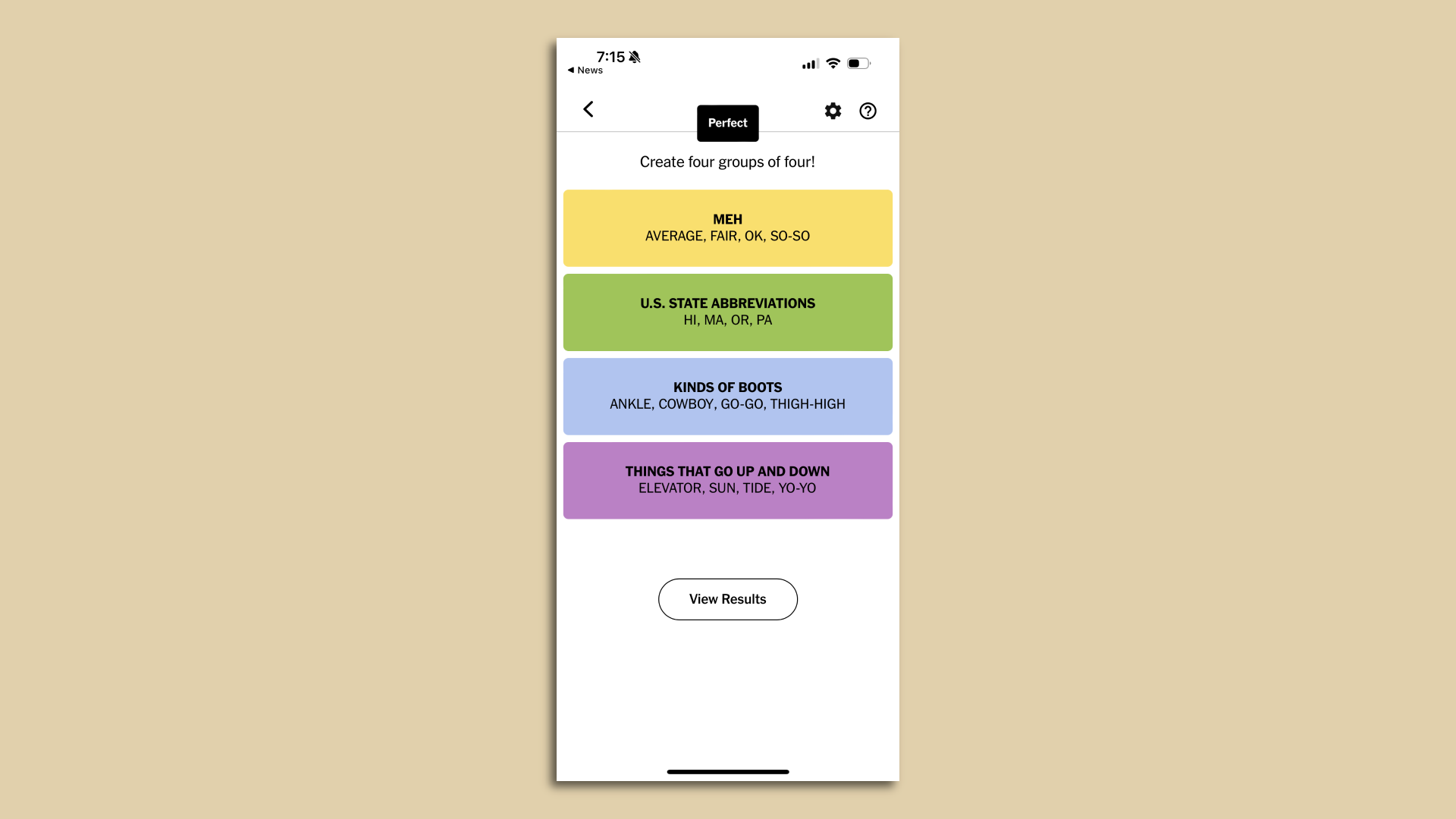
Apparently AI still isn't good at solving the NYT's Connections puzzles. So I still have that going for me.
Thanks to Scott Rosenberg and Megan Morrone for editing this newsletter and to Cindy Orosco-Wright for copy editing it.
Sign up for Axios AI+
