Axios AI+

August 01, 2024

I knew free refills on soda were rare in Europe, but only today did I learn that they have been illegal in France since 2017. I'll have to feed my Diet Coke/Coke Zero addiction one drink at a time.
Today's AI+ is 1,214 words, a 4.5-minute read.
1 big thing: Olympics become AI testbed
Companies that forked over billions to sponsor the Olympics are using the Games to demonstrate their AI leadership.
Our thought bubble: While it is tempting to cast this year as "The first AI Olympics," it's more accurate to think of it as the last Games in which the technology remains confined to the sidelines.
Driving the news: A number of Olympic partners are using the games to show off new AI initiatives, from chatbots for athletes to machine learning-generated performance recommendations to helping athletes get a better night's sleep in the Olympic Village.
The big picture: The International Olympic Committee laid out a broad Olympic AI Agenda, which outlines a series of principles — but not the specifics — for the role it envisions for the technology.
Between the lines: AI holds huge potential for helping teams and athletes gain insights into their performance and adjust their training accordingly.
Yes, but: Artificial intelligence is expensive, running the risk that its adoption will widen the divide between the rich countries that already dominate the medal count and the rest of the world.
Intel — the games' official AI partner — is using AI to power a chatbot for athletes and to help broadcasters chop the footage (for which they have paid dearly) into ever more pieces to be consumed by fans of a particular country, sport or athlete.
- Intel has also launched a pilot program with the IOC in Senegal (a country that has won only a single medal) to help use AI to identify potential athletes in five of the country's villages. Intel says it scanned more than 1,000 children, identifying 40 as having "significant talent."
- A scaled-down version of that system will be on display in Paris, allowing fans at the Stade de France to mimic various Olympic events, with an AI system evaluating their form and talent.
Omega, the official timekeeper of the games, isn't relying on AI to decide who won or lost but has found other ways to incorporate the technology, Alain Zobrist, CEO of Omega Timing, told reporters last week.
- Omega is using a range of cameras and sensors to track the movements of swimmers, and then using computer vision and AI to understand acceleration, deceleration, number of strokes and time in the water. This allows for detailed performance analysis.
- In tennis, computer vision is helping understand athletes' reaction time to serves and how this correlates with the quality of their returns.
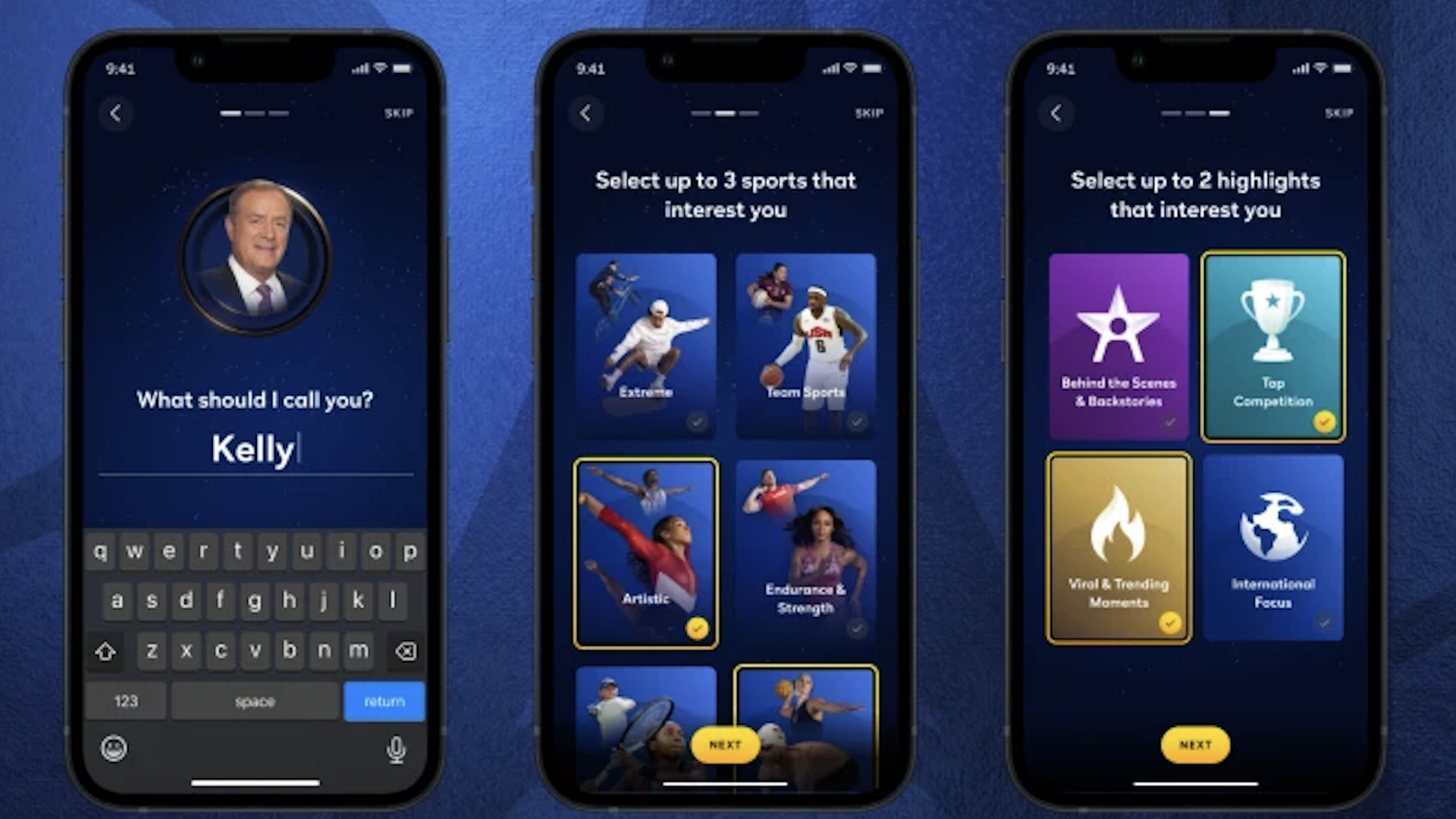
Broadcaster NBC, meanwhile, is using AI to allow a digital version of Al Michaels to deliver personalized highlights as part of a daily recap to fans.
- "When I was approached about this, I was skeptical but obviously curious," Michaels said in an NBC Sports press release. "Then I saw a demonstration detailing what they had in mind. I said, 'I'm in.'"
By contrast, Warner Bros. Discovery, which holds broadcast rights in Europe, says it decided not to make use of AI for Paris.
- "I don't think it's too far off, and I'm quite sure AI will have a much more impactful role at LA '28, but AI is not a driving force of technology for us at Paris 2024."
Airweave, the Japanese maker of the modular plastic mattresses that sit atop the cardboard bed frames in the Olympic Village, is offering an AI body scan to help athletes determine the ideal level of firmness for each of the mattresses' three segments.
- Despite the high-tech scans, the beds are still receiving mixed reviews from athletes.
The other side: Not everyone sees AI as the panacea for Olympic-size challenges. Getty Images, which produces millions of photos during the games, has invested in underwater robots and private 5G networks, but is still trying to identify a role for AI in its editorial operations.
- "We're always looking to see how we can do it ethically," said Michael Heiman, Getty's VP of global sport.
- The area with the biggest potential is using facial recognition to help identify which athlete is in a particular photo — a process that today often requires a photographer to verbally indicate an athlete's start position or bib number, which can then be matched with official records.
- Heiman said that facial recognition might work today in a professional league with a relatively modest number of players, but isn't yet ready to identify the faces of thousands of less well-known athletes.
Go deeper: I spoke to NPR's "Here & Now" about the use of AI at the Paris Games.
2. Exclusive: CISA's first-ever chief AI officer

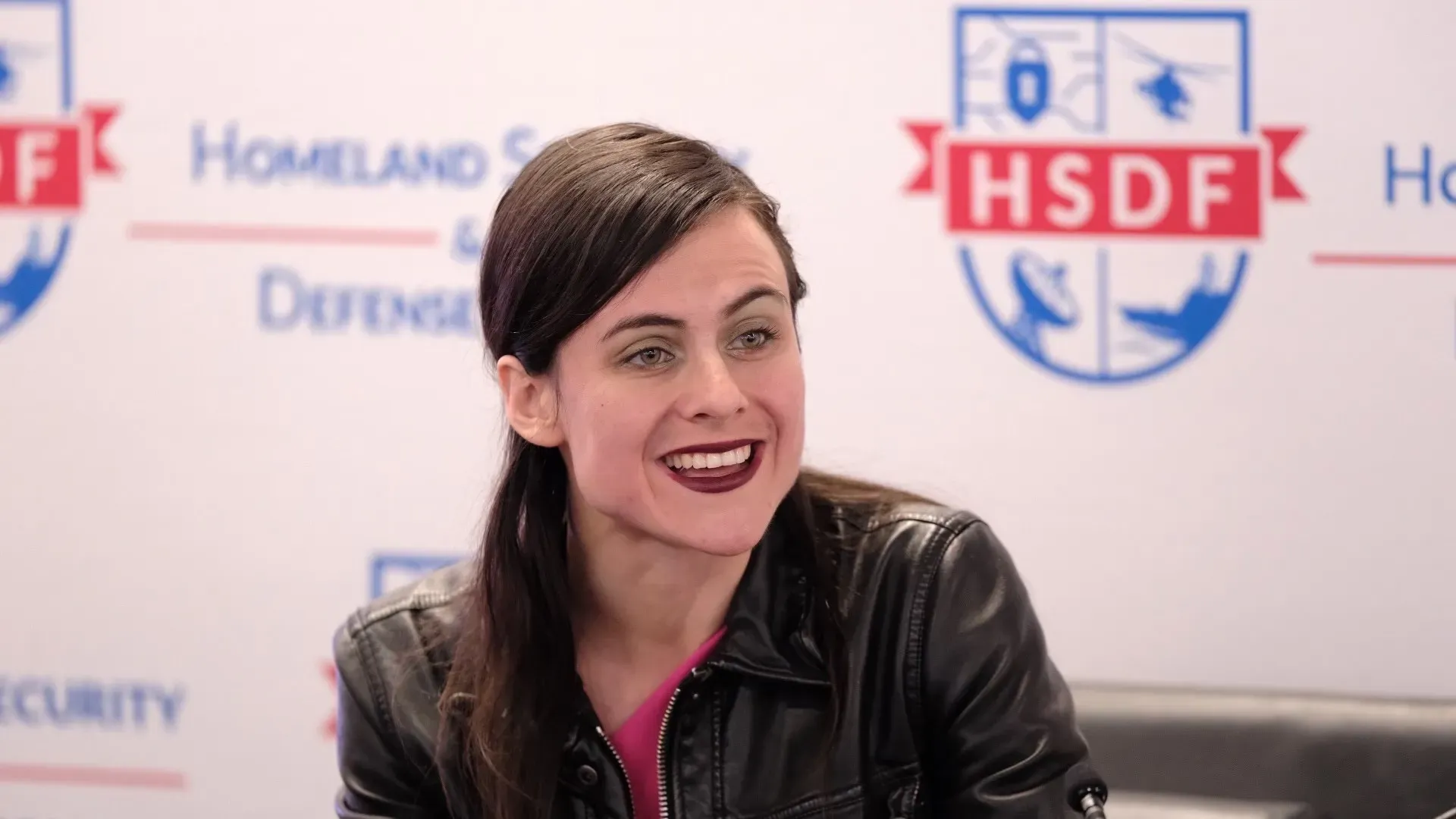
The Cybersecurity and Infrastructure Security Agency has named Lisa Einstein as its first-ever chief artificial intelligence officer, the agency exclusively shared with Axios.
Why it matters: Creating this new senior-level position underscores just how seriously the country's top cybersecurity officials view both artificial intelligence tools' opportunities and threats.
Zoom in: Lisa Einstein started this week as the first chief AI officer at CISA within the Department of Homeland Security.
- She had been a senior adviser at the agency since last year, focused on AI issues — she helped craft CISA's AI roadmap and facilitated the first-ever AI tabletop exercise between the government and the private sector.
- Einstein also led a pilot program at the agency, required as part of President Biden's AI executive order, that tested AI cybersecurity tools to see how good they were at finding software vulnerabilities. The results were delivered to the White House earlier this week.
- Her new position will let her stand up an office within CISA solely dedicated to determining the best ways that both CISA and critical infrastructure organizations can use AI software.
Catch up quick: CISA has been using AI for years to automatically analyze threat intelligence data, process reports about security flaws and reverse-engineer malware.
The big picture: Several federal agencies have been appointing new chief AI officers as a requirement under Biden's AI executive order. However, CISA is one of the few agencies t hat didn't face that requirement.
- "AI is important enough for CISA's mission that we are creating a senior leadership position to institutionalize our work," Einstein said.
Between the lines: More critical infrastructure sectors — such as banks, water systems and electric power operators — have been coming to CISA for advice on how they can safely integrate AI into their systems.
- Experts have said that the newest wave of AI tools could help understaffed security teams more quickly analyze threat data or detect malicious activity on their networks.
The bottom line: "If I'm successful, I will empower every single person within CISA to understand their role within AI security," Einstein said.
- "We all have a role to play here, and it's such an interesting and exciting mission for me to think about how I can help everyone play their role and come together around a streamlined mission."
3. Training data
- Google will now penalize sites that host deepfakes. (The Verge)
- Sources say TikTok was paying Microsoft nearly $20 million per month to use OpenAI models in the cloud. (The Information)
- The EU's AI Act goes into effect today, triggering staggered compliance deadlines over the next two years. The first one kicks in six months from now. (TechCrunch)
4. + This

I took a bit of time off from sports to check out the Musee d'Orsay with my colleague Sara Fischer. I also got to hang out with Vince, who was pretty popular.
Thanks to Scott Rosenberg and Megan Morrone for editing this newsletter and to Caitlin Wolper for copy editing it.
Sign up for Axios AI+
