Axios AI+

December 18, 2024

Our second AI+ Summit of the year is a wrap! Thanks so much to my colleagues, all our speakers, and all those who watched online or came in person. In today's newsletter, three reports from the event. More coverage tomorrow.
Today's AI+ is 1,140 words, a 4-minute read.
1 big thing: "Peak AI bubble"

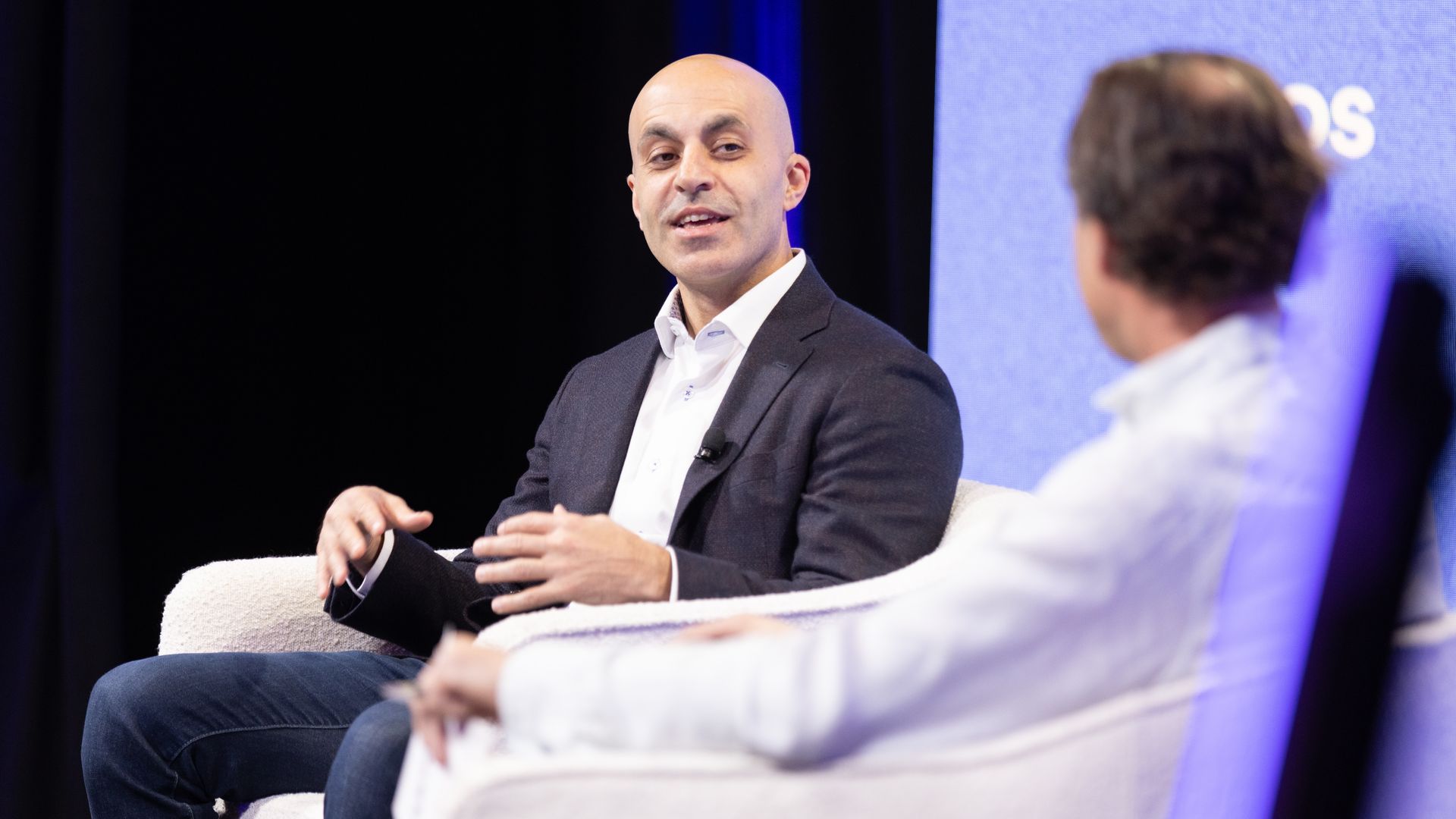
"It's peak AI bubble," DataBricks CEO Ali Ghodsi told Dan Primack at the Axios AI+ Summit in San Francisco.
Why it matters: Earlier on Tuesday, Databricks announced it had secured up to $10 billion in new funding — one of the largest investment rounds in Silicon Valley history — at a $62 billion valuation.
- "When you get billion dollar valuations on companies that have nothing, that's a bubble," Ghodsi said, notably referring to other companies, not his own.
- Databricks, per Ghodsi, handles "the boring plumbing behind the scenes" that large enterprises need to organize and secure their data. Its business has boomed as companies seek to gain value from AI using that data.
Zoom in: When asked why Databricks decided on another investment round now rather than going public, the CEO said the decision came down to timing.
- "So six months ago, we were like, 'Hey, it's just dumb to IPO this year. Just wait, right? Let things settle, get more data,'" he said. "Earliest theoretical possibility of an IPO would be next year. And then, you know, there's lockup periods and so on. So it would just be too long of a period for employees to get liquidity."
Behind the scenes: The 11-year-old company initially intended to raise $3 billion to $4 billion, at about a $55 billion valuation, Ghodsi said. But as the press reported on news of the fundraise, investors started to call and the prices went up, he told Primack.
- At one point, he said, there was $19 billion of interest in the funding in the company, which has $3 billion in annual recurring revenue.
- The funding came from Thrive Capital and also includes investments from Andreessen Horowitz, DST Global, Abu Dhabi-based MGX, Wellington Management, and Capital Group, among other existing investors.
What's next: Databricks is more likely to go public next year or the year after, Ghodsi said.
- "I do think the majority of the lifetime of Databricks will be as a public company, even though we're not public yet," he said.
One AI thing: When asked what one thing he'd like President-elect Trump's new AI czar to do, Ghodsi said, "Be careful with regulation. Look at use cases, but don't hold research back."
2. Sierra founders: Bots will keep other bots honest

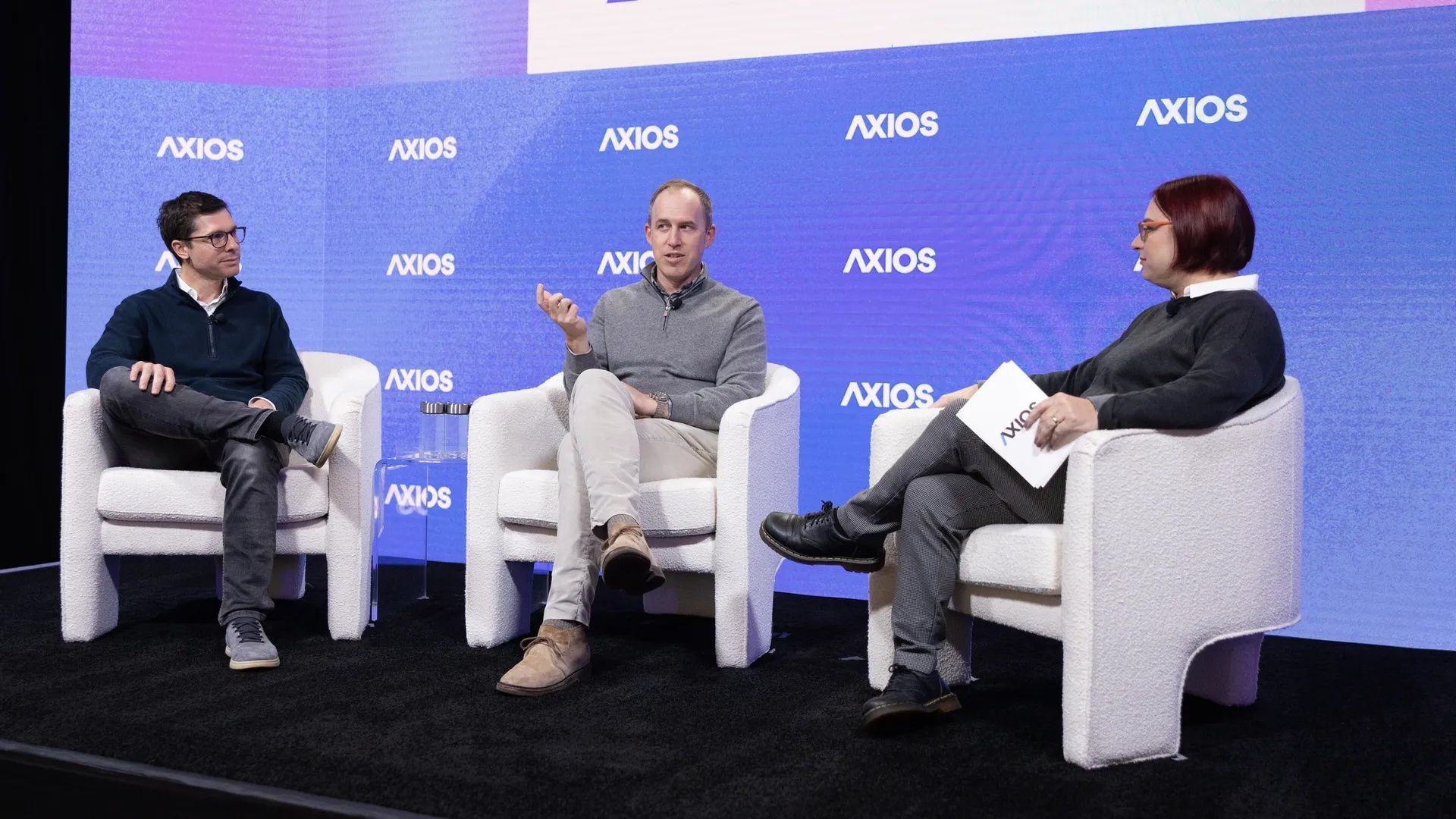
As AI chatbots turn into agents that perform tasks for users, they're likely to continue to make mistakes and make things up. The co-founders of AI agent startup Sierra have one remedy: Assign other bots to correct them.
The big picture: "The solution to many problems with AI is more AI," Sierra founder and former Google VP Clay Bavor told Ina at the AI+ Summit, in a joint interview with Sierra's other founder, former Salesforce executive and OpenAI chair Bret Taylor.
- "Supervisor agents" trained on company policies can review the work of frontline agents that are answering customers' questions and intervene when they stray, the co-founders said.
Zoom in: Sierra, which builds custom AI agents for enterprise customer service, focuses on three types of agents: personal, role-based and customer-facing, the co-founders said.
- "At Sierra, we help primarily consumer brands build customer-facing AI agents that don't just answer questions, but actually can take action on your behalf," Taylor said.
- For example, if you have ADT home security and you have a problem with your alarm, you'll now chat with the ADT AI, which is powered by Sierra's technology, he said.
Between the lines: Giving autonomy to generative AI tools opens up a range of tantalizing possibilities for increased productivity — but it also vastly increases the potential of catastrophic risk.
- Earlier this year, an AirCanada chatbot offered a bereavement fare to a customer that was far more generous than company policy provided. (A Canadian tribunal ruled the company had to pay up.)
- "You obviously don't want an AI that is representing your company, your brand, to your customers making stuff up," Bavor said. "It's a problem area that we at Sierra have really run towards, and there's no silver bullet."
The "supervisor agents" are among their solutions.
- "Think of them almost as like Jiminy Cricket agents that look over the shoulder of the primary agent," Bavor said.
3. Anthropic's Krieger: AI agents are like self-driving cars

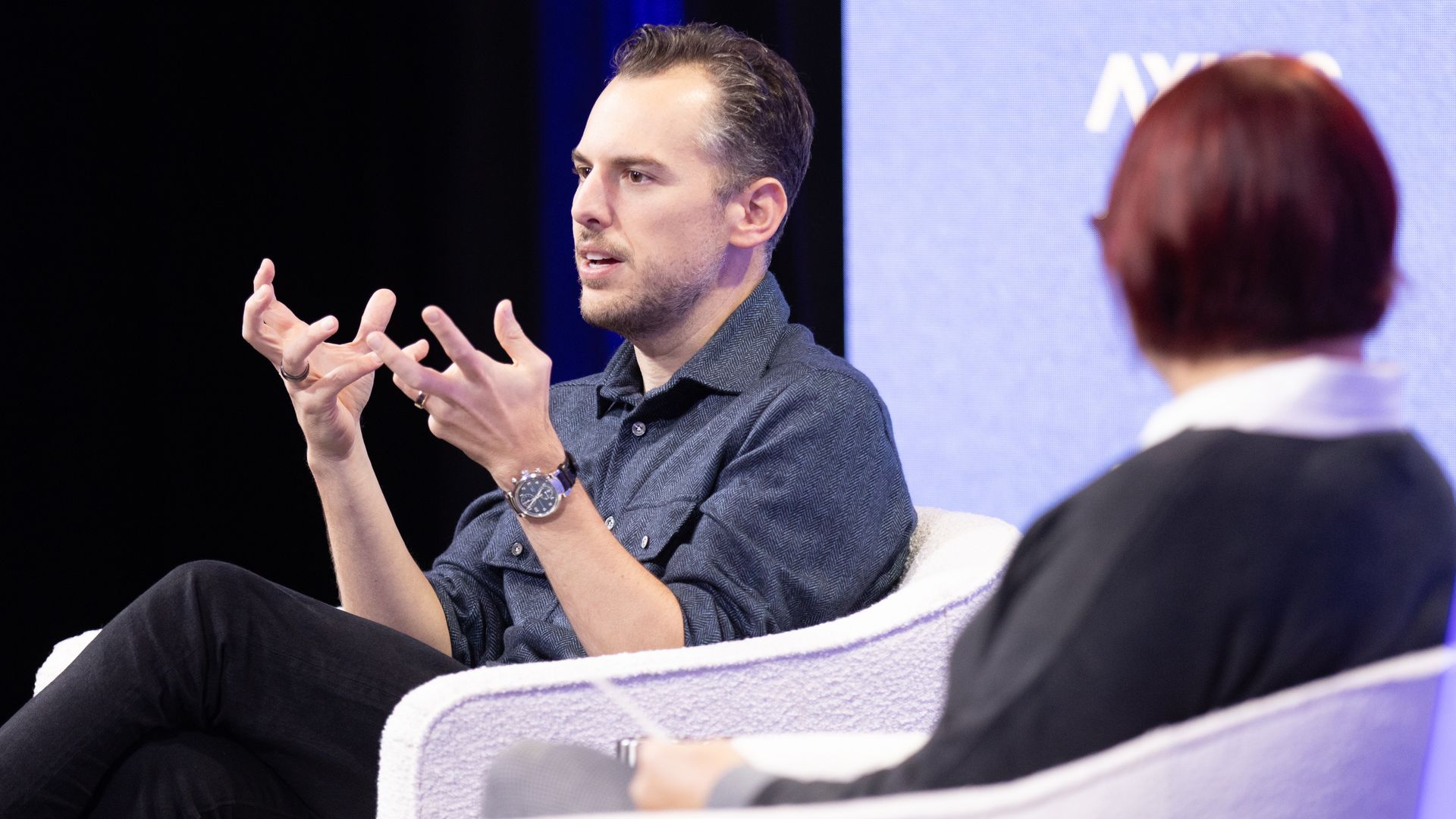
AI agents are still at least a year away from being able to work autonomously, Anthropic chief product officer Mike Krieger told Ina at the Axios AI+ Summit yesterday.
The big picture: Krieger compared users' adoption of AI agents as they evolve to the process of drivers adapting to Tesla's self-driving mode.
- When drivers start using self-driving capabilities, they're instructed to keep both hands on the wheel, but, he said, "eventually it's more like, as long as you're checking in every once in a while, I'm comfortable with it."
Catch up quick: Krieger co-founded Instagram and sold it to Facebook in 2012, then left Facebook in 2018 and later started Artifact, an AI news app. Artifact shut down in January, and Krieger joined Anthropic as its chief product officer in May.
- Krieger told Axios that he first felt the tug of working on generative AI while beginning to use it at Artifact. "Things that would've taken me months to build were done in an afternoon," he said.
Between the lines: Krieger said one of the biggest problems with current AI chatbots is how tough it is for users to learn to write prompts. "The future is here, it's just that not everybody knows how to use it yet ... is chatting with a model even the right UI? can we do something better?"
- In the future, he hopes, average users won't have to learn to become skilled prompt engineers. Instead, the models will get better at understanding what users want.
- Ideally, he says, users could hand Anthropic's Claude AI a to-do list that it could complete without any help.
Case in point: This year, the Instagram founder said he used Claude to help write the text in his family's holiday card — and read a list of addresses off a poorly formatted PDF so he could print address labels.
- Next year, Krieger says, he'd like to see Claude take over the entire holiday card process, or at least "get me mostly there."
Yes, but: One sticking point is that users will want AI agents to check in when they don't know what to do next. But users don't want them to check in too frequently.
- The agents should ask permission to complete a task when they deem it could be problematic — and explain why they're doing so, Krieger said.
4. Training data
- OpenAI says some developers will now have API access to its "reasoning" model called o1. (TechCrunch)
- Anthropic released details about its new tool that can detect users trying to trick its Claude chatbot. (Axios)
- Trend Micro shows off an "AI brain" designed to help its customers automate their cybersecurity. (Axios)
5. + This
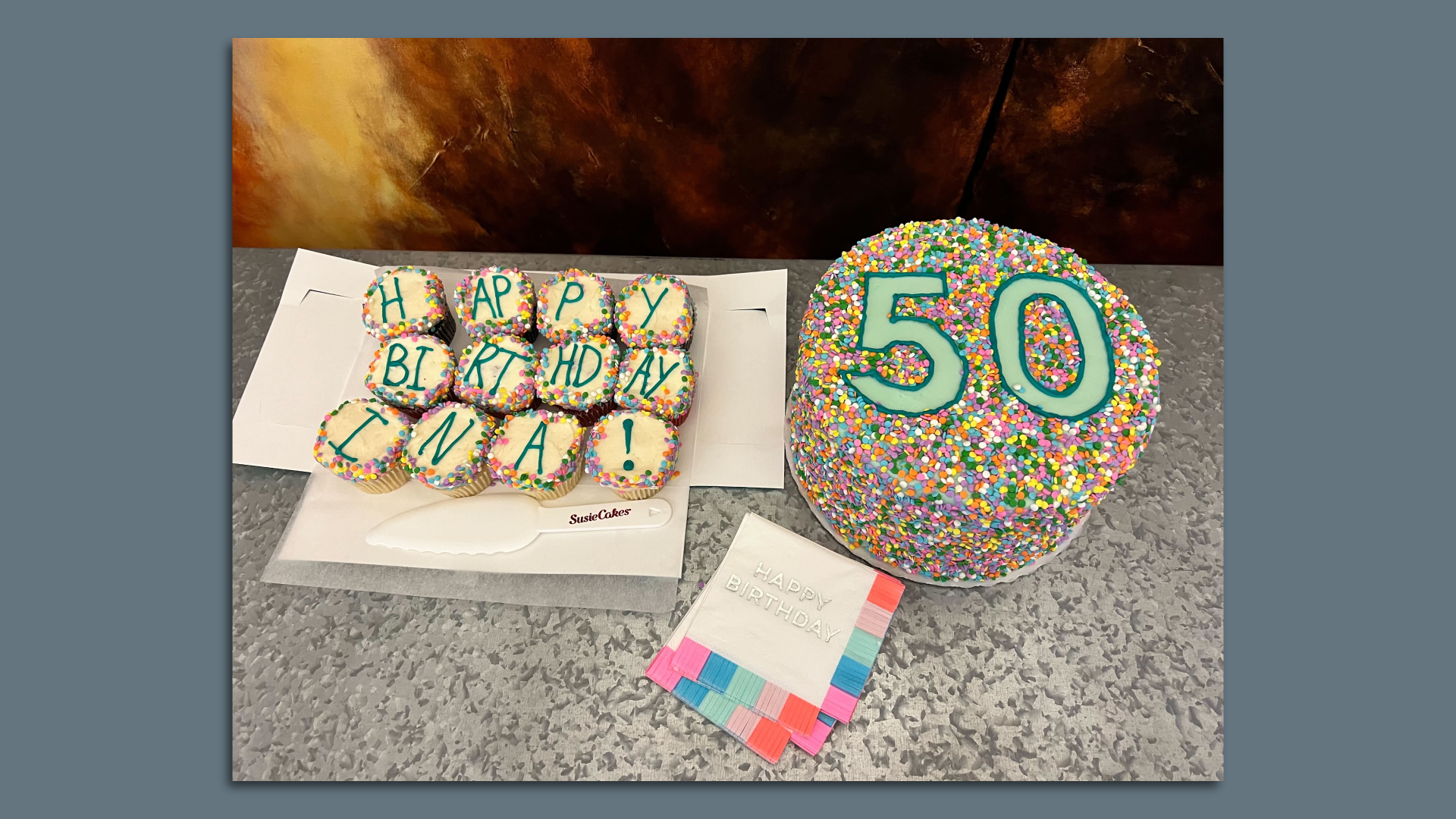
There was a small but colorful birthday celebration backstage at the end of our summit.
Thanks to Megan Morrone and Scott Rosenberg for editing this newsletter and Anjelica Tan for copy editing it.
Sign up for Axios AI+
