Axios AI+

July 17, 2025

Yesterday I learned that "eat the frog" means you should tackle the hardest thing on your to-do list first. I hope this newsletter is not your frog. 🐸
Today's AI+ is 1,160 words, a 4.5-minute read.
1 big thing: xAI's opening in the Fox News lane


Elon Musk's xAI, even more than rival AI startup leaders like OpenAI and Anthropic, is a cash incinerator — and despite the company's soaring valuations, it has little prospect of building significant revenue, let alone profit.
Yes, but: There's one niche of a future AI business ecosystem that xAI fits perfectly. It could end up as the Fox News of the AI infosphere — a right-skewed source of truth for those who view mainstream alternatives as too "woke."
The big picture: Musk is trying to raise an additional $5 billion for xAI, and he's turning to his own companies for cash — including SpaceX and Tesla — presumably because it's convenient and free of strings.
- It could also mean that outside investors are tiring of throwing money at the company, which has already raised more than $20 billion in debt and equity but continues to show little return.
By the numbers: xAI's AI business is expected to bring in $500 million in revenue this year, per Bloomberg, chiefly from API fees and subscriptions.
- Now that Musk has rolled X into xAI, xAI can add the former Twitter's $2.26 billion estimated ad revenue (per eMarketer).
- That figure may look paltry next to Meta or YouTube, but it's big for xAI.
- The company also made headlines last week with an announcement that it has a deal for "up to $200 million" with the Pentagon, which is exploring uses for advanced AI and has also made similar deals with OpenAI, Google and Anthropic.
So the revenue line is beginning to move up — but hardly enough to justify the $200 billion valuation that Musk is reportedly seeking from new investors in xAI, or even cover its estimated $1 billion-a-month burn rate.
- The company does have some real assets: Its foundation model, Grok, has matured to a level where, for the moment, it's beating rivals like OpenAI's GPT, Anthropic's Claude and Google's Gemini on a variety of benchmark tests. And its Colossus data center in Memphis is one of the largest AI development facilities in the world today.
But turning those assets into cash flow is going to be very hard.
- The AI model business is ridiculously competitive, with those three rivals all boasting larger customer bases, more impressive research records and better reputations.
- It's unlikely that the U.S. market will support four separate wildly expensive and largely duplicative frontier-model makers. That would leave Musk's company as the AI equivalent of the losers in the 1990s search engine wars. Who remembers Lycos or Excite?
xAI's biggest advantage is its integration with X. It gets real-time news and information from X users at the same time that it can promote its chatbot's services to them.
- The problem is, this edge is also an Achilles' heel for xAI, because X itself has become such a troubled media environment.
- Since Musk bought Twitter in 2022 and renamed it X, he has opened the doors wide to racists, extremists, Nazis and other hate groups — in the name of free speech.
- That's had an impact not only on the social media platform, which has seen an exodus of left-leaning users and nervous advertisers, but also on xAI's Grok, which recently went on a pro-Hitler posting bender.
What's next: The likeliest path for xAI is to continue to cultivate and refine its appeal to the deep red side of America's red-blue split.
- Google, Apple, Microsoft, Meta, Amazon, OpenAI, Anthropic and other startups are all in a race to connect consumers and businesses to AI.
- The key differentiator will be how well they integrate AI with the rest of the tech we use every day — whether that's phones and desktop software, education and medical platforms, or cars and TV sets.
But some potential AI users will also choose based on ideology.
- Many of these users don't want their chatbots telling them that Donald Trump lost the 2020 election, that ivermectin is not a cure-all, and that climate change is real.
- There might even be some who don't mind hearing that Hitler was an admirably decisive leader.
- AI makers who want their chatbots to provide a middle-of-the-road consensus reality may not satisfy such users. That opens a lane for Musk's Grok — which can be intentionally provocative and, at one point, was instructed to "not shy away from making claims which are politically incorrect."
Of course, it's hard to predict what the size of that market is, or how xAI could tap it for enough revenue to support a ten-figure valuation.
- Fox News has dominated the conservative media for several decades, but at a roughly $24 billion market cap, Fox Corporation today is worth 1/8 what Musk is reportedly asking for xAI.
2. Media companies get their own chatbots

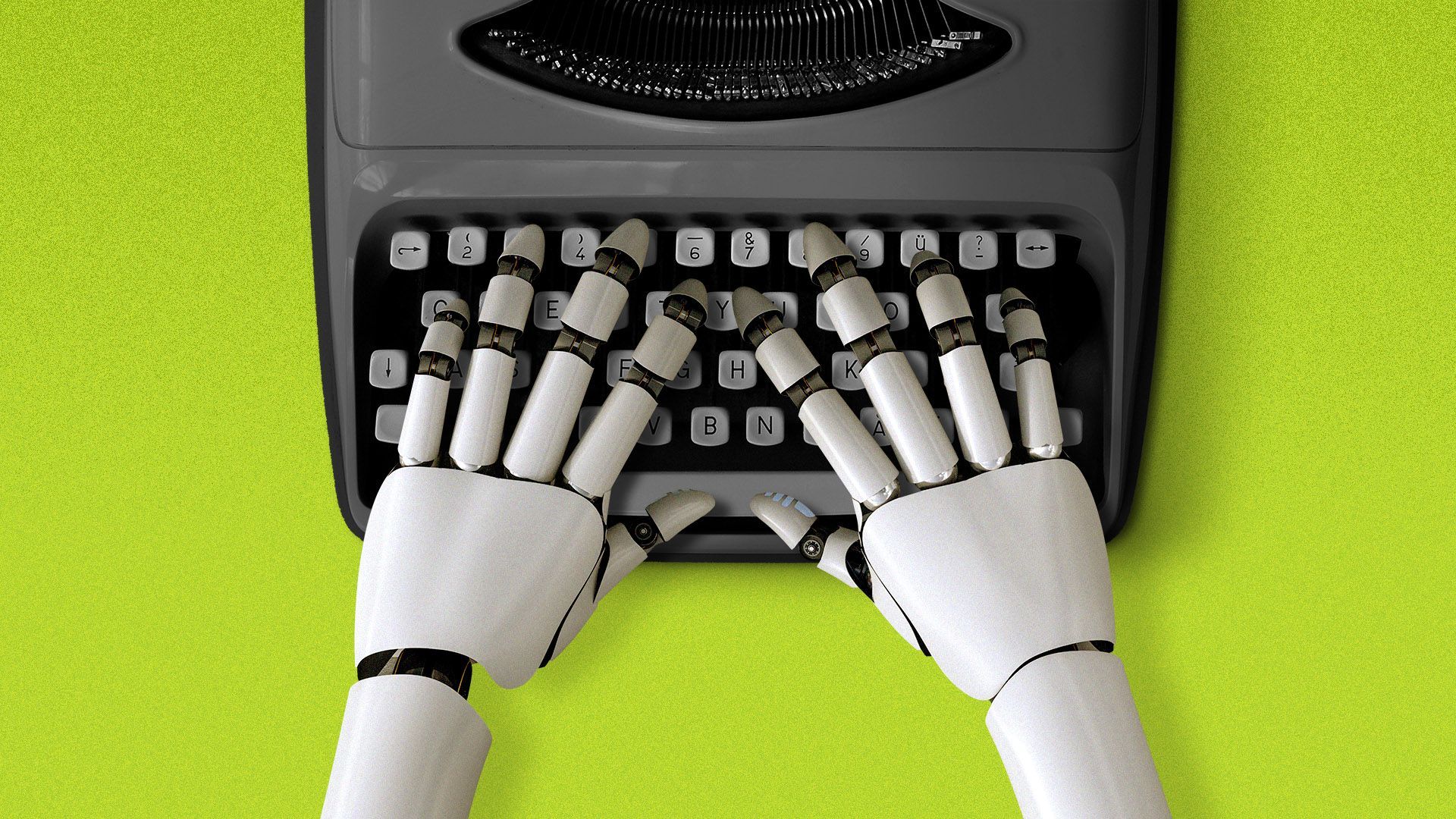
Media companies are racing to add custom AI chatbots to their websites and apps in an attempt to lure user traffic away from apps like ChatGPT and Gemini.
Why it matters: They hope custom bots, trained on vetted journalism, will lure consumers from more error-prone AI sources.
Yes, but: Time is running out. News-related prompts on ChatGPT are up 212% year over year, per Similarweb.
- Since Google launched AI Overviews in May 2024, the share of zero-click news searches has risen from 56% to nearly 69% year over year.
- In that same period, organic traffic to news publishers has declined noticeably.
The big picture: While stocks, finance and sports have captured the lion's share of engagement on ChatGPT, topics often covered by news publishers, like politics, climate and economics, are becoming major growth drivers.
What we're watching: Publishers' AI chat features have struggled, mostly due to lack of scale.
Subscribe to the Media Trends Executive network to access the full story
3. Meta's AI piracy allegations


AI and tech leaders have been complicit in pirating intellectual property to train AI, per witness testimony before the Senate Judiciary crime subcommittee yesterday.
The big picture: Authors and publishers have been scrambling to protect their copyrighted works from AI models as tech companies push for more flexibility to use that work.
Driving the news: Maxwell Pritt, a partner at law firm Boies Schiller Flexner LLP, called it "likely the largest domestic piracy of intellectual property in our nation's history" at the hearing.
- From Pritt's testimony: "That piracy includes hundreds of terabytes of data and many millions of works, including, for example, at least 12 books authored by members of this subcommittee."
- "At Meta, company documents show that Mark Zuckerberg himself made the call."
Subscribe to Axios Tech Policy for the full story. Or get it in your inbox.
4. Training data
- AI data labeler Scale AI will lay off 200 full-time employees and 500 contractors after Meta poached its CEO and invested $14.3 billion in the startup. (Bloomberg)
- Musk teased xAI's development of the first "male Grok companion," an AI boyfriend inspired by the main characters from "Twilight" and "50 Shades of Grey." (The Verge)
5. + This
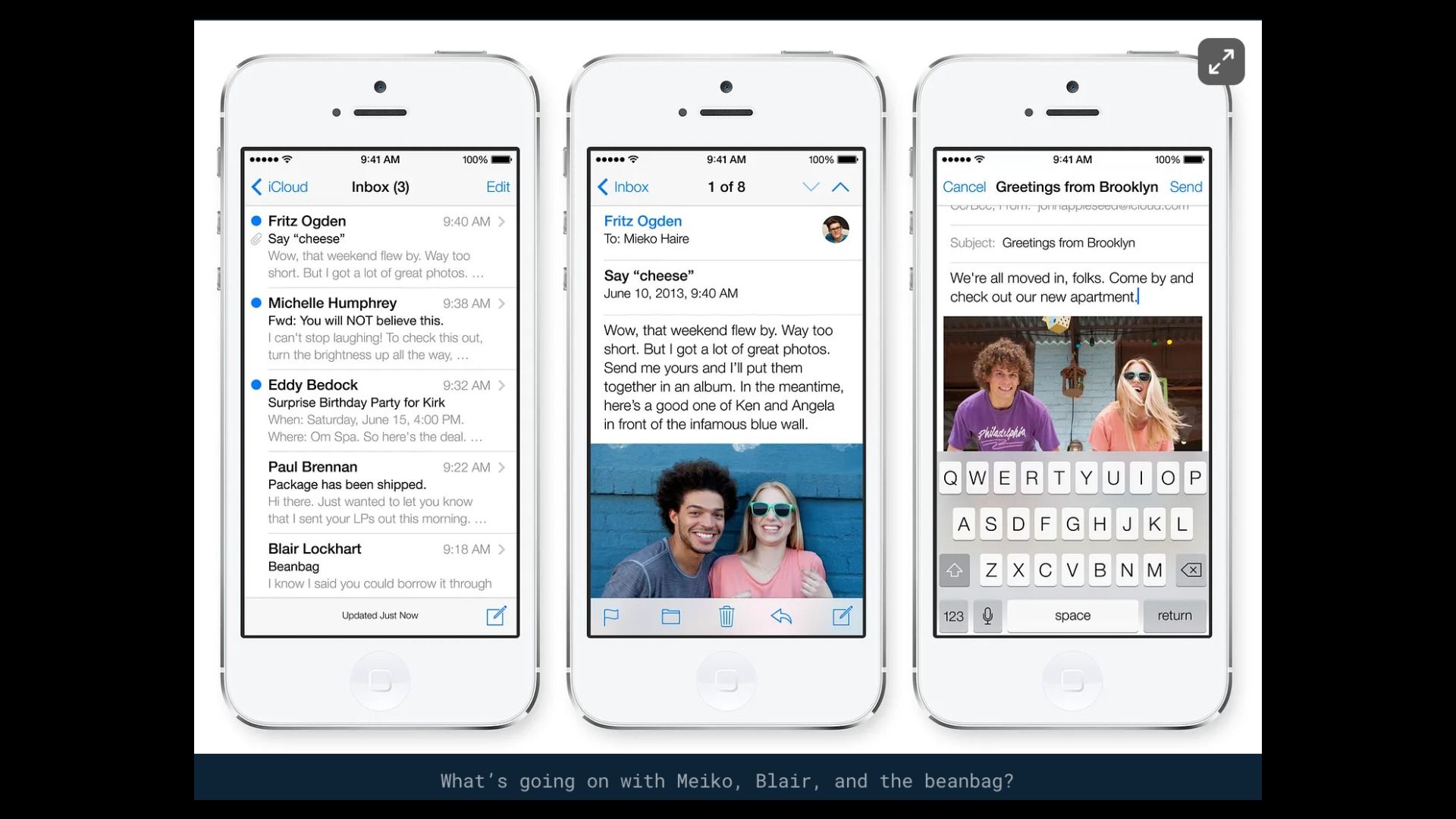
A deep dive (perhaps too deep?) into Dimension Apple, the imagined world populated by the "people" fake texting each other to show off Apple messaging product features from 2011-2023. Thx, Max Read.
Thanks to Scott Rosenberg for editing this newsletter and Matt Piper for copy editing.
Sign up for Axios AI+
