Axios AI+
November 21, 2024

I'm trying something new: Whenever I want to open social media on my phone, I play a word game or puzzle instead. I'm doing a lot of crosswords. And Wordles. And sudoku.
Situational awareness: The Department of Justice is formally seeking that a federal court order Google to sell or spin off its Chrome browser, as reports had predicted. Google says it will appeal.
Today's AI+ is 1,136 words, a 4.5-minute read.
1 big thing: AI's global safety dance

AI safety experts from around the world are convening in San Francisco this week to compare notes on how to evaluate and mitigate the risks posed by artificial intelligence.
Why it matters: Governments are looking to gain from AI's potential benefits, but officials are also worried about potential risks.
- Anthropic CEO Dario Amodei assured the gathering that the two goals need not be seen in opposition, noting that investments in making AI systems safer often help advance the underlying technology itself.
- "We refer to this as a 'race to the top,'" Amodei said, pointing to work around making AI systems more explainable that has also helped make models more effective.
Yes, but: Amodei warned that the risks posed by AI are real, especially as generative systems become more powerful and are given greater autonomy.
- "We need to start acting now to mitigate these risks," Amodei said.
The big picture: Politicians and leaders from tech companies joined regulators from more than a dozen countries for the inaugural convening of the International Network of AI Safety Institutes.
- Amodei was the most prominent tech executive to speak at the event, but many other tech giants were represented, including IBM, Apple and Salesforce.
- Much of the initial discussion yesterday focused on the broad approaches needed to ensure that AI is developed safely.
- Later technical sessions focused on the challenges posed by having to test and evaluate systems that even their creators don't fully understand, and in a field where the state of the art is rapidly changing.
What they're saying: On a panel of global AI leaders from Africa, Asia and Europe, a representative of Singapore's government voiced a sentiment that is common among many developing countries: the desire not to be left behind.
- "Even as we talk about the misuse of AI, we are also mindful of the missed use of AI, meaning the missed opportunities," said Hong Yuen Poon, a deputy secretary in Singapore's Ministry of Digital Development and Information. "Don't get me wrong. Safety is very important and we do take safety very seriously in Singapore."
- For his part, Poon suggested a pragmatic approach, trying out promising technology at a small scale before engaging in widespread use.
Between the lines: Barely mentioned in yesterday's opening session — but weighing large on the minds of many — was how the re-election of Donald Trump will impact future U.S. efforts.
- Organizers from the State and Commerce departments took pains to stress the bipartisan nature of their work — including video testimonials from Congressional leaders in both parties.
- "We all share a desire to make sure that we are mitigating the potential risks to public safety and national security so we can harness the enormous potential of this breakthrough technology," Elizabeth Kelly, Director of the U.S. AI Safety Institute, told Axios. "It's why you've seen members of Congress on both sides of the aisle vote to fund the AI Safety Institute, co-sponsor and vote for legislation that would formally authorize us and, in fact, speak today."
- Commerce Secretary Gina Raimondo, the highest-ranking U.S. official attending the event, stressed that the issues around AI safety are bigger than politics. "It's frankly in no one's interest, anywhere in the world from any political party, for AI to be dangerous."
What's next: This gathering comes ahead of a summit for global heads of state and other leaders planned for February in Paris.
2. Exclusive: AI boosts search for rare metals

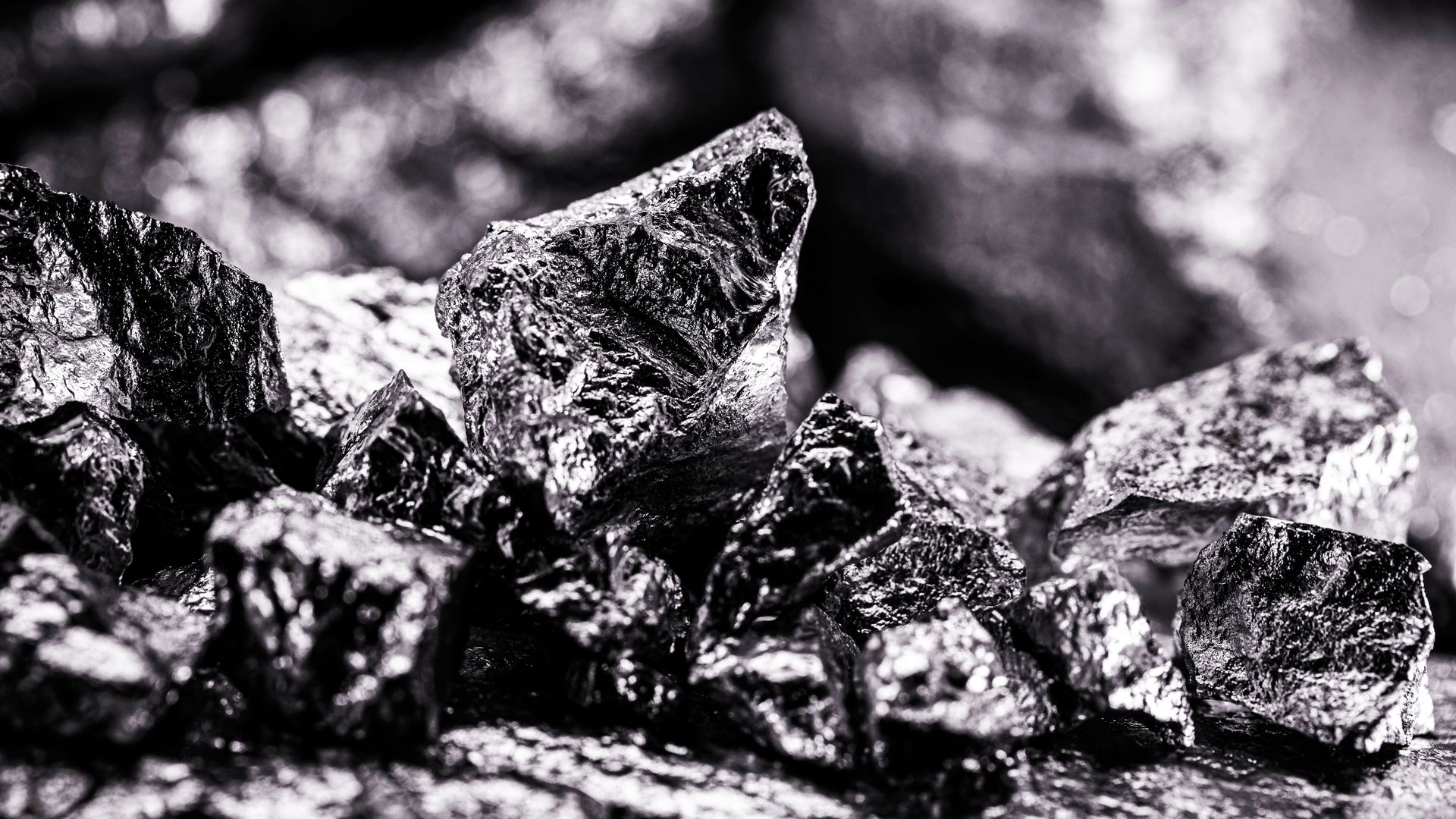
A company using artificial intelligence-driven methods announced a significant expansion of a find of a large deposit of palladium, platinum and nickel in southeastern Australia, the lead company first told Axios today.
Why it matters: Palladium and other related metals are vital to the transition to cleaner energy technologies, with uses in catalytic converters, hydrogen fuel cells and solar panels.
Zoom in: The find could make it the largest such discovery in Australia to date, Earth AI's CEO and founder Roman Teslyuk told Axios.
- Earth AI, founded in 2017, uses AI technology drawing from geophysical and other data to predict where valuable deposits of certain minerals may be found.
- This is an expansion of the company's second find, and its third attempt to locate valuable metal and mineral deposits, including in largely unexplored areas, Teslyuk said.
He said the company was able to spend under $300,000 to make the find, from making predictions about where valuable metals might be located to conducting exploratory drilling.
- This makes the AI-driven approach far cheaper than more conventional mining companies, which tend to explore sites close to already operational mines.
- "We can afford to fail several times before we succeed, and it doesn't really affect our costs as much," he said.
Yes, but: The discovery itself doesn't mean that the deposit will be profitably mined.
- Market conditions as well as the cost of accessing minerals and then getting them to the global market play roles in such a decision.
The intrigue: The expansion of the earlier discovery in southwestern New South Wales, near Wombat, is located at a site known as the Fontenoy Project.
- It was made in conjunction with Legacy Minerals, which is a base-metal projects exploration company.
- At about 2 kilometers by 2 kilometers, or 1.2 miles by 1.2 miles, Earth AI says this expansion could make it one of the largest platinum group elements prospects globally.
- Russia and South Africa are the two largest producers of palladium. But Russian exports may be subject to sanctions tied to its invasion of Ukraine, while South Africa's palladium mines are increasingly expensive, Teslyuk said.
Ten years ago, about 150 new metal and mineral deposits were being discovered annually around the world, he said. Now, though, with much higher demand, that number is down to about 45 per year.
Zoom out: The U.S. and other countries are going to great lengths to secure a greater supply of valuable metals and minerals needed to power the clean energy economy, from EV batteries to wind turbines and solar panels.
- A recent International Energy Agency analysis found that while supplies of critical minerals have so far outpaced demand, meeting the Paris Agreement's climate targets would require a steep increase in production.
- That report noted increasingly vulnerable supply chains and the need to find new sources outside of countries such as China.
What we're watching: The degree to which this site in Australia expands further with ongoing exploratory drilling, and whether it spurs the increased use of AI methods in the mining industry.
3. Training data
- Nvidia projected strong demand for its products in Q4, the first period to include sales of its new Blackwell AI chip. (Axios)
- Tools for Humanity, the company that builds the technology behind Sam Altman's World project, has hired former X/Twitter executive Nick Pickles as chief policy officer. (Reuters)
4. + This
Talk about a party foul. A truck in Arizona overturned, spilling cans of White Claw all over the highway.
Thanks to Megan Morrone and Scott Rosenberg for editing this newsletter and to Caitlin Wolper for copy editing it.
Sign up for Axios AI+
