Axios AI+

November 15, 2023

Ina here. Join Axios' Javier E. David and Nathan Bomey today at 12:30pm ET for a virtual event about the impact of AI in business. Guests include Harvard Business School professor Karim R. Lakhani and Accenture North America CEO Manish Sharma. Register here to attend virtually.
Today's AI+ is 1,249 words, a 4.5-minute read.
1 big thing: AI gives doctors real-time answers

Illustration: Shoshana Gordon/Axios
Scientific information and data analytics giant Elsevier is partnering with a medical startup to give doctors the ability to use generative AI to access the most up-to-date medical research as they treat patients in real time, the company shared exclusively with Axios.
Why it matters: There's far more medical information available than doctors can take in and process on their own. Experts say the adoption of AI could dramatically improve the quality of care patients receive — while also lowering costs, cutting wait times and expanding access.
How it works: Elsevier is working with OpenEvidence to create ClinicalKey AI, a tool that allows doctors to input symptoms, explore drug interactions and get results that include data and information from hundreds of medical journals and other verified sources.
- Elsevier Health president Jan Herzhoff sees ClinicalKey AI as a potential "game-changer," estimating that half of all medical decisions can eventually be supported by generative AI.
- Elsevier said it's working with 1,000 clinicians this month in an early access program with plans to release the tool more broadly next year.
- It's not about typing into a generic AI system like ChatGPT or Bard, but rather combining the power of the AI models with domain-specific data.
- The result is that far fewer errors and "hallucinations" can occur than when querying a generic tool trained on the broader internet.
What they're saying: Danny Tobey, a doctor and lawyer who heads DLA Piper's AI practice, said the ability of doctors to use AI to marry the symptoms they see in patients with the latest research will be incredibly valuable.
- "What it's going to do is elevate the floor, which I think is very helpful," Tobey told Axios. "Not everyone has access to the best doctors."
Between the lines: In the rapidly evolving landscape of medicine, doctors train only once, then spend the rest of their careers trying to keep up with constant change.
- Uneven training means that presenting the same set of symptoms to various doctors will often lead to different diagnoses, says AI pioneer Daphne Koller, co-founder of Coursera and current CEO of medical AI startup Insitro.
Yes, but: While less prone to hallucination, AI tools trained on specialized domain data like medical journals will still reflect other problems in the research, like findings from small populations that don't translate to broader, more diverse populations.
- "It's still biased by all the preconceptions of what people wrote," Koller said.
- And some recents studies show that doctors still don't trust AI and worry that it might increase their legal liability.
Flashback: Founded during the COVID-19 pandemic, OpenEvidence initially focused on providing information to drugmakers — and later became the first AI tool to score above 90% on a standard medical licensing exam.
- OpenEvidence founder Daniel Nadler sold his prior AI startup, Kensho Technologies, for $550 million in 2018. He says he wasn't planning an encore but was inspired to start OpenEvidence after witnessing the flood of new research in the weeks following the outbreak of COVID-19.
- "You're going from not having a needle to now you have a needle, but it's buried in a haystack that's like doubling in size every couple weeks," Nadler said.
- Though initially targeted to big pharmaceutical research, Nadler said OpenEvidence found tremendous demand when it opened its engine to broader use. Its site received more than a million visitors, including queries from 30,000 licensed U.S. doctors.
2. Actors get AI compensation in historic contract
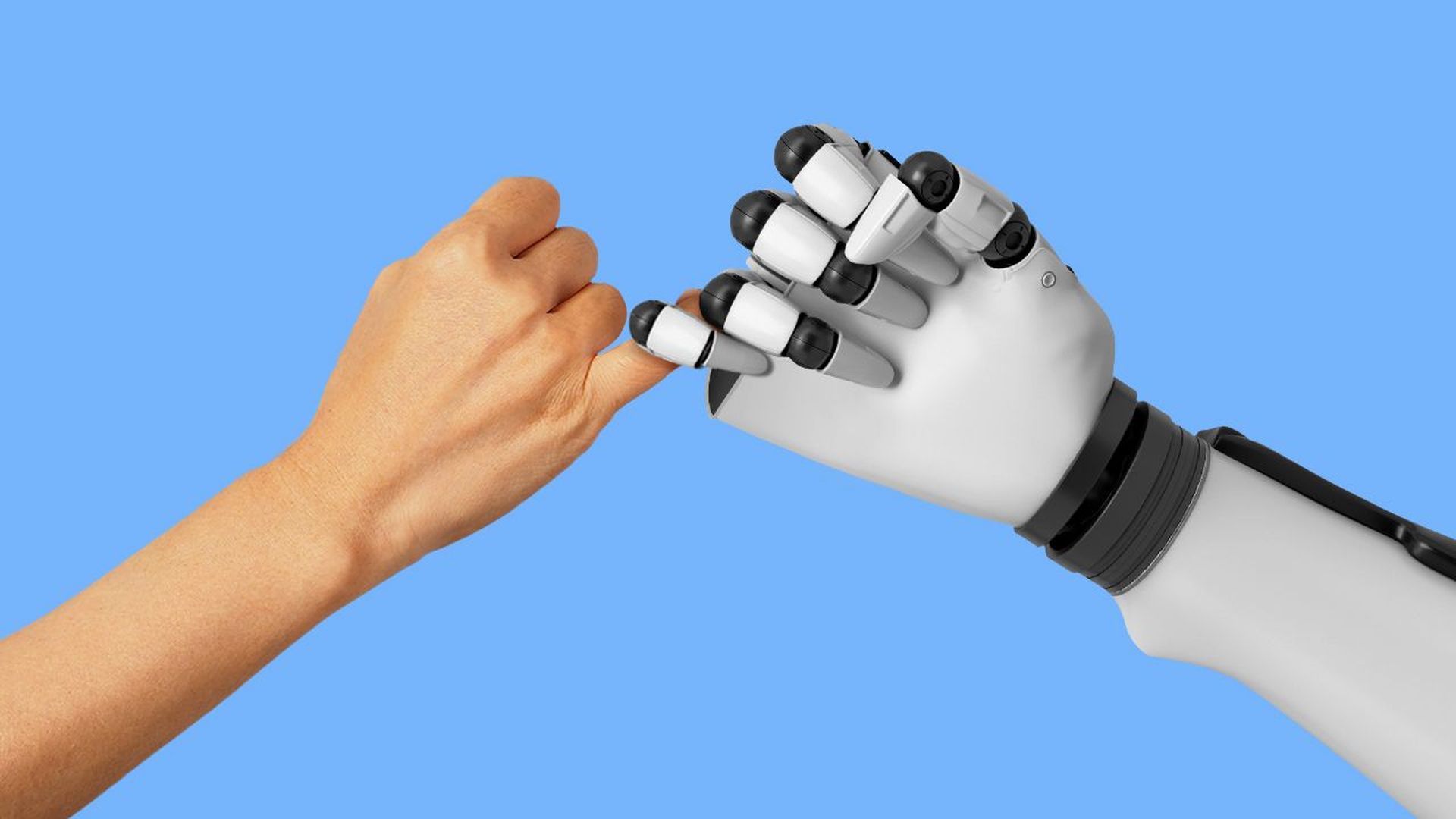
Illustration: Natalie Peeples/Axios
The tentative agreement the Hollywood actors' union reached last week with movie studios goes further in outlining specific AI compensation requirements than agreements Hollywood writers 'and directors' unions won earlier this year, Axios' Sara Fischer reports.
Why it matters: Actors face a different type of existential threat from AI than some of their Hollywood peers.
- Specifically, SAG-AFTRA, the union representing actors, pushed to ensure that performers be compensated for digital replicas of their likenesses.
- Compensation is not addressed in the three-year Directors Guild or Writers Guild contracts negotiated with studios this year.
Details: The tentative agreement reached last week, which still needs to be officially ratified by SAG-AFTRA members, establishes two definitions for "digital replicas" of a performer and sets compensation and consent terms for the use of those replicas.
- Employment-Based Digital Replicas are replicas "created during a performer's employment with their physical participation, and used to portray the performer in scenes they didn't actually shoot." These performers are generally entitled to compensation for the creation and use of their replicas and are entitled to residuals "for use that would normally generate residuals."
- Independently Created Digital Replicas are replicas "created often using existing materials, and used to portray the performer in scenes they didn't actually shoot." For these performers, compensation and residuals are freely bargained.
What to watch: One area that's already starting to cause conflict between SAG-AFTRA members is compensation and consent for "synthetic performers," or digitally created performers that weren't built using scans of specific people but were trained on large data sets of films of real actors.
- Justine Bateman, an actor, filmmaker and author who advised SAG-AFTRA on AI during the contract negotiations, has vigorously criticized any use of AI in entertainment.
- "SAG signing off on 'synthetic performers' and 'digital doubles' taking the place of human performances throws every crew member under the bus. No human actors = no set and no crew," she posted on X last week.
3. Exclusive: Cheap visor for Apple's spatial video
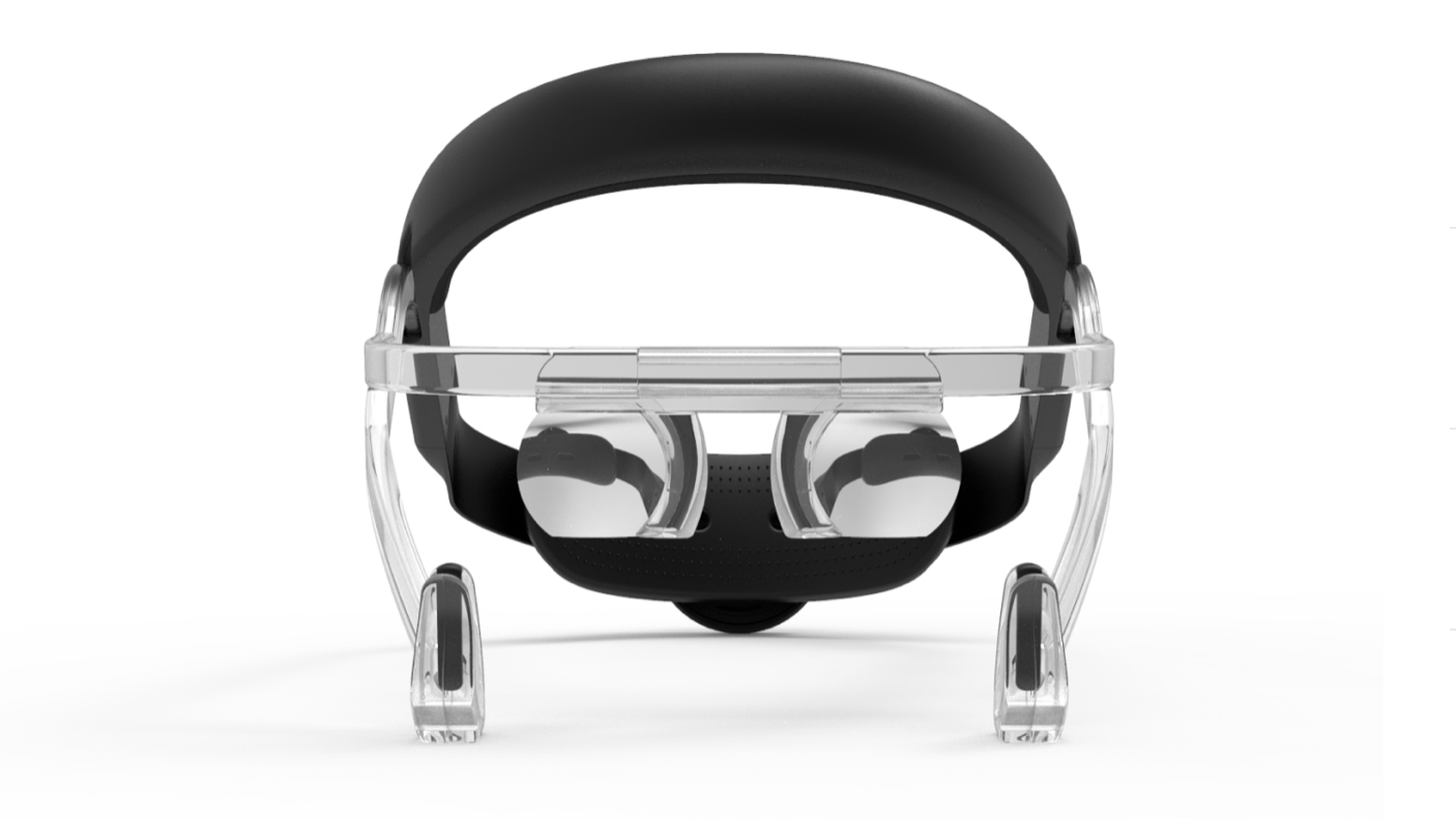
Image: Zappar
AR startup Zappar says its $80 Zapbox headset is the first mixed reality device capable of playing back the new spatial video format that Apple has just added to the iPhone operating system.
Why it matters: The latest test version of iOS gives recent iPhones the ability to harness multiple cameras to capture content in a more immersive way.
- While these new videos are primarily designed for playback on the forthcoming Vision Pro, Zappar says its device can play them back today. Apple's headset will cost thousands of dollars and isn't arriving until next year.
Details: Zappar showed off the new capability in a video shared first with Axios. In the coming weeks it plans to add a specialized app for viewing the spatial movies on Zapbox.
- Like previously available budget headsets such as Google's Cardboard and Samsung's Galaxy VR, Zapbox relies on the smartphone for the display and processing power. It works now with the iPhone 11 and later models, and Android support is said to be coming later this year.
- Zapbox comes with two Bluetooth controllers and also offers the ability to view 3D models from Sketchfab and play VR games like chess and pool.
Yes, but: Zapbox may be the first, but it won't be the only company besides Apple to support the new format. Other VR headset makers are likely to quickly follow suit. And many of those offer significantly higher resolution and more features than Zapbox.
4. Training data
- We tested AI-driven trip planners — don't use them without double-checking their work. (Axios)
- Google DeepMind detailed a new weather forecasting system that's quicker and more accurate at predicting extreme weather than traditional systems. (MIT Tech Review)
- Health care misinformation is on the rise due to fake images, video and audio created with AI. (Axios)
- Andreessen Horowitz-backed AI platform Civitai lets users offers "bounties" for non-consensual sexual images of specific people. (404 Media)
- A startup pushing for more responsible AI has a Commerce Department partnership. (Axios Pro)
5. + This
I'm filled with emotions about Pixar's "Inside Out 2." The joy that the first trailer has been released is mixed with the sadness that I have to wait until next year for the full movie.
Thanks to Megan Morrone and Scott Rosenberg for editing this newsletter.
Sign up for Axios AI+

Scoops on the AI revolution and transformative tech, from Ina Fried, Madison Mills, Ashley Gold and Maria Curi.