Axios AI+

January 24, 2025

Good morning. I'm on a train to Zurich after a busy but insightful week in Davos. Today's AI+ is 1,273 words, a 5-minute read.
1 big thing: OpenAI's Operator agent types, clicks, orders things

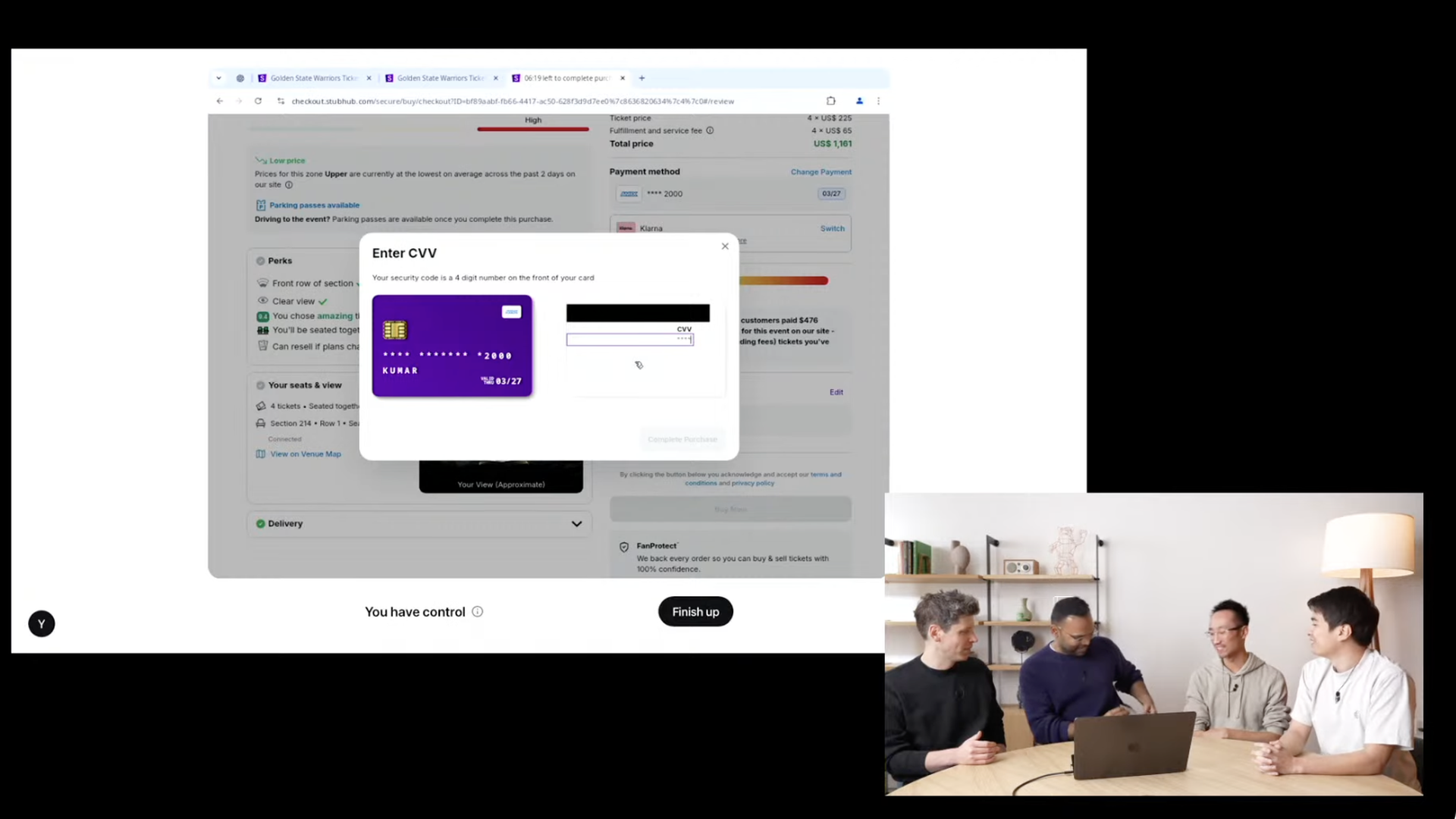
OpenAI released a "research preview" of its first agent Thursday — Operator, a tool that can do web tasks for you.
Why it matters: With 2025 shaping up to be the year of the AI agent, AI firms are racing to free AI from the chat box and set it loose in the world. For now, that world is going to be the web browser.
The big picture: AI optimists' manifestos promise the new tech will save lives, reimagine education and make us more productive, but this new release only showed us slightly easier ways to buy concert tickets and order grocery deliveries.
- All the demos involved tasks that are currently easy to do without an AI agent — and even without AI.
How it works: Users can tell Operator to fill out forms, order products, make reservations and more. It opens its own browser and starts clicking and typing while you watch.
- In a blog post introducing the product, the company said Operator will "help people save time on everyday tasks while opening up new engagement opportunities for businesses."
- In Thursday's demo, CEO Sam Altman and three colleagues prompted the AI to make dinner reservations, buy tickets and order from Instacart.
- After typing the request, the four men simply watched as Operator did its thing.
In real life, you might use that time to do something else.
- But the time you save — especially when you consider how much time you may have to spend supervising the agent to fill in passwords or make sure it doesn't run wild with your credit card — is pretty minimal.
- Operator is only available for now to $200/month Pro subscribers in the U.S. OpenAI says it will roll out more widely in coming weeks and months.
State of play: Other AI companies have released similar tools designed to complete tasks on your behalf, but theirs were more focused on productivity.
- Anthropic released its "computer use" feature in October that collects data from the web and adds it to spreadsheets, among other features.
- In December, Google released Project Mariner, a tool that automatically completes tasks in Chrome.
Between the lines: OpenAI views Operator as the first baby steps toward loosing its AI on the world beyond ChatGPT's window.
- "Teaching the model how to use the same basic interface we use on a daily basis ... unlocks a whole new range of software to use that was previously inaccessible," OpenAI's Reiichiro Nakano explained in the demo.
- "That's what the core research project is about. It's about removing one more bottleneck on our path toward AGI and letting our agent move around and act in the digital world."
Fun fact: Open AI wasn't the only company to release an AI agent assistant yesterday.
- AI startup Perplexity launched Perplexity Assistant for Android. The company claims the tool can also help you buy things without going to a retailer's website, although TechCrunch found this feature to be "slow and error-prone."
Flashback: Remember Google Duplex? It was a tool Google announced in 2018 to help make dinner reservations and other appointments over the phone.
- The company discontinued it in 2022.
2. Trump signs AI and tech executive orders


President Trump signed executive orders yesterday aimed at boosting U.S. competitiveness in AI and tech.
Why it matters: The approach is a departure from the Biden administration's executive order that focused on regulating the technology.
- Industry players had been asking for the government to focus on specific risks and assess how existing laws already apply to AI.
What they're saying: "We're basically announcing the administration's policy to make America the world capital in artificial intelligence and to dominate and to lead the world in AI," David Sacks, Trump's AI and crypto czar, said in a signing ceremony in the Oval Office.
- "It is the policy of the United States to sustain and enhance America's global AI dominance in order to promote human flourishing, economic competitiveness, and national security," the order says.
What's inside: The order states that the U.S. must "develop AI systems that are free from ideological bias or engineered social agendas."
- It calls for the administration to develop an AI "action plan" within 180 days.
- The EO also calls for White House officials and agency heads to immediately review and freeze any policies from the rescinded Biden-era AI executive order.
- The Office of Management and Budget has 60 days to revise its AI compliance plan memos to make them consistent with Trump's order.
Trump also signed an executive order establishing his President's Council of Advisors on Science and Technology to bring industry and academia together to maintain U.S. tech and science leadership.
- The order specifically calls out "transformative technologies such as artificial intelligence, quantum computing, and advanced biotechnology."
The big picture: Earlier this week, Trump announced billions in private AI investment through Stargate, a partnership between OpenAI, SoftBank, Oracle, and the UAE's MGX.
- Trump on Thursday responded to Elon Musk's claim that Stargate does not actually have the money needed: "The government's not putting up anything. They're very rich people, so I hope they do."
- Trump said he doesn't take Musk's comments personally and chalked it up to Musk hating one of the people on the board. Trump said he relates as he has "certain hatreds" of people, too.
Our thought bubble: Much of the Biden executive order is already implemented across federal agencies, but its requirement that developers of the most advanced AI models share the results of safety testing is now lifted.
- Trump has not offered an alternative. His executive order does not detail how to advance AI innovation but rather directs a study on how to do that.
3. Trump pledges to speed AI energy buildout

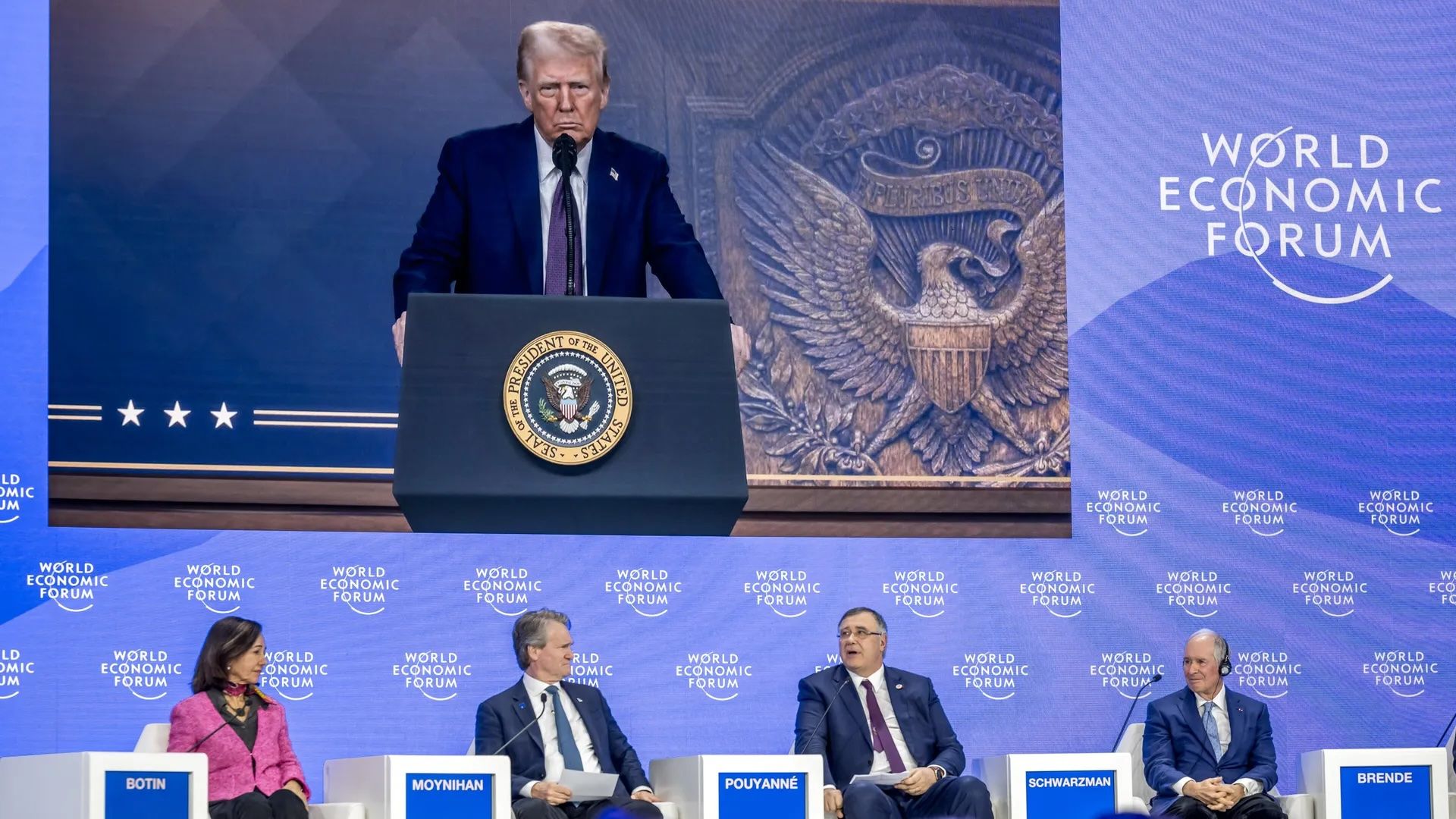
The Trump administration will give "rapid approvals" to AI companies looking to build power plants attached to their data centers, President Trump said in a virtual address at the World Economic Forum on Thursday.
The big picture: One motivation for Trump's national energy emergency declaration is easing construction of new fossil-fueled power plants to serve AI data centers.
Driving the news: Trump said that building AI power plants is "going to be a very big thing," and intends to approve them under the emergency declaration "without having to go through years of waiting."
- "We need double the energy we currently have in the United States for AI to really be as big as we want to have it because it'll be very competitive with China," Trump added.
Zoom in: He claimed that it was his idea to "build an electric generating plant right next to an existing plant as a separate building."
- The idea of new plants that would directly fuel data centers, rather than connecting to the wider power grid, is one that Chevron and Exxon are already exploring.
Between the lines: Data centers consume as much power as a small city, and as the AI boom and race with China continues, they will require even more resources.
- AI has driven new spending on real estate, building materials, semiconductors and energy — and its continued growth will demand an astounding amount of energy.
4. Training data
- Anthropic released Citations, a new tool for developers to use to ground the answers provided by its Claude family of AI models in specific source documents and reduce errors. (TechCrunch)
- The Anti-Defamation League condemned Elon Musk for posting a series of Nazi-related jokes on X. The organization had previously defended Musk's controversial use of an awkward hand gesture during an inauguration event that many interpreted as a Nazi salute. (Axios)
5. + This
As I was waiting for the train to Zurich, I saw a sign for another train headed to Rorschach, which led me down a bit of a rabbit hole online, where I found this.
Thanks to Scott Rosenberg and Megan Morrone for editing this newsletter and Matt Piper for copy editing it.
Sign up for Axios AI+
