Axios AI+
May 13, 2026


Mady here from Day 3 at Web Summit in Vancouver, where the pressure to be a top AI user is palpable. More on that below.
Today's AI+ is 1,215 words, a 4.5-minute read.
1 big thing: AI should cost as much as your rent
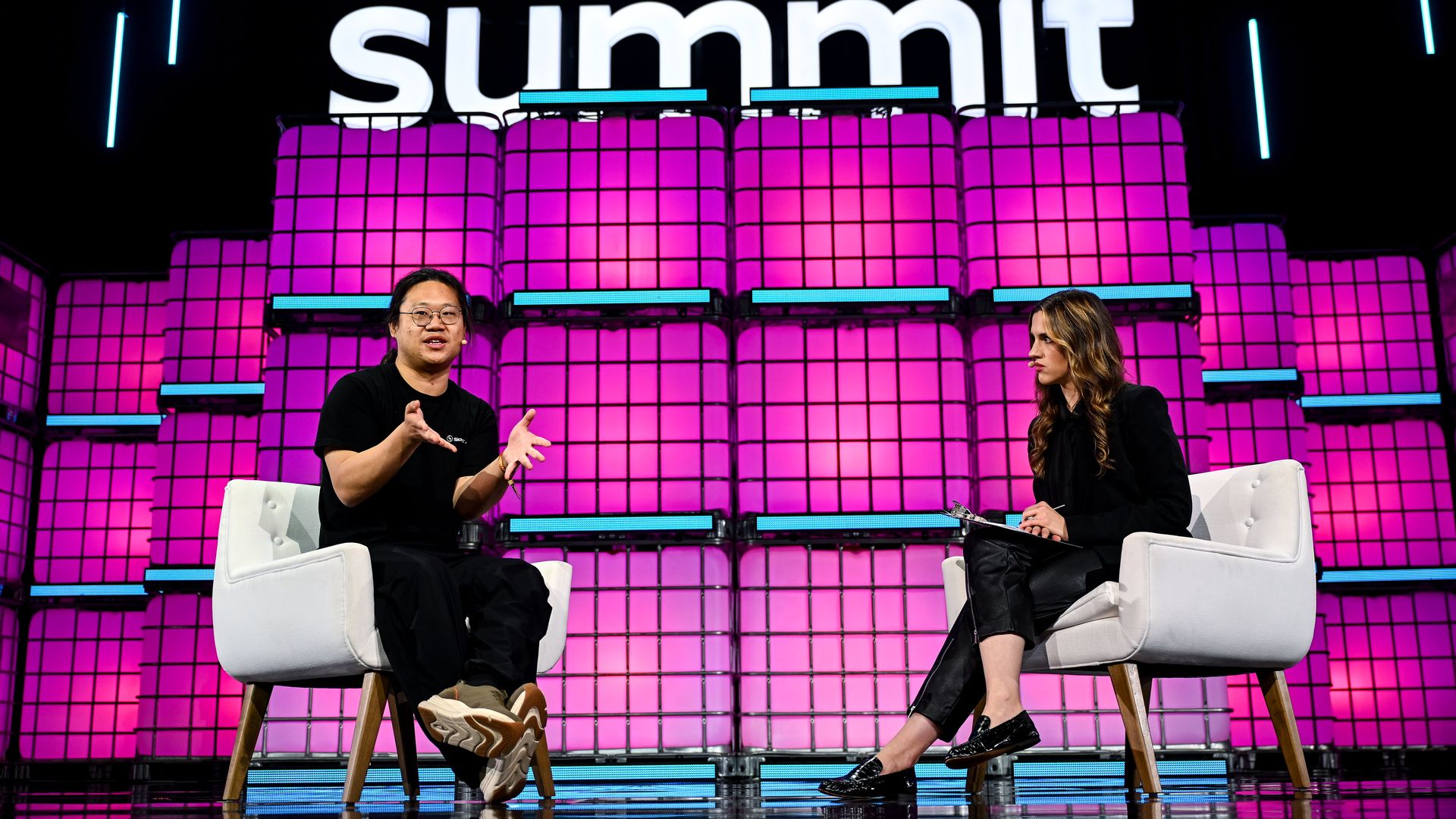
If you're worried you're falling behind on AI, developer Sigrid Jin has some advice: Use AI so much that your monthly bill rivals your rent.
Why it matters: Jin argues that tokenmaxxing, the practice of using as many AI tokens as possible, is the best way to understand the value of AI. He would know: Jin said he used 50 billion tokens in a single year.
What they're saying: The "majority of people" aren't experiencing how much AI has to offer because they're using free or $20 subscription plans, Jin told Axios onstage at the opening ceremony of Web Summit Vancouver.
- Jin said $200 plans offer "higher intelligence" and clearer returns than free or $20 subscriptions.
- "If you want to know the future of AI, try to do tokenmaxxing," he said, adding that he tells friends to spend as much on AI as they do on rent.
- That ROI can look like "running multiple businesses" or delegating common life tasks to agents.
Yes, but: At some point, revenue from AI will need to outpace the cost of tokens in order to justify all the spending. That's especially so for enterprise users.
- Companies are increasingly spending more on their AI bills than they do on the salaries of their human employees.
- Jin said users need their own benchmarks for ROI.
Flashback: Jin went viral on March 31 after he recreated Claude Code's codebase when Anthropic accidentally leaked its own source code. He rewrote it in Python to avoid a copyright takedown from the AI lab.
- The tokenmaxxing paid off: Jin created the fastest-growing GitHub repository in history, called Claw Code.
- Since then, Jin has received job offers from several AI labs, but has decided to focus on personal projects instead. He plans to launch a startup next month.
The bottom line: The pressure to increase AI usage isn't ebbing any time soon.
- That has led to what some developers, including OpenAI co-founder Andrej Karpathy, call "AI psychosis" — an obsession with pushing AI to its limits.
- Jin has found genuine joy in his usage, describing code as a "public good." He says he doesn't want to solely rely on AI, preferring to treat agents more like human collaborators than machines.
- When asked if he feels pressure to use even more tokens, Jin said, "Yes, of course."
2. Altman, Musk clash over AI safety motives
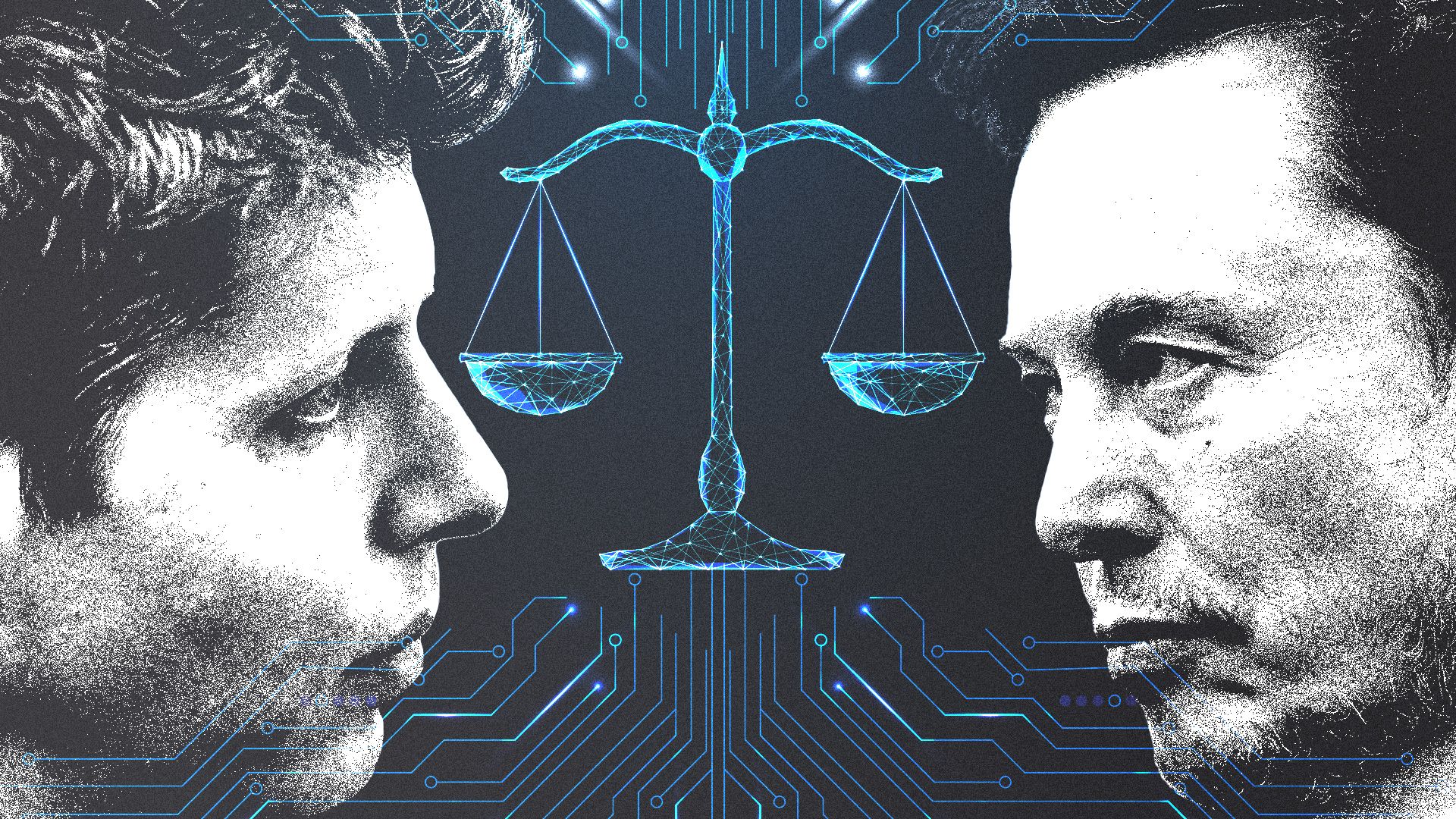
OpenAI CEO Sam Altman's first turn on the witness stand yesterday sharpened the central fight in Elon Musk's lawsuit: whether either man can be trusted to put AI safety ahead of money and control.
Why it matters: The testimony showed how hard it is for any AI leader to claim the moral high ground.
Driving the news: Altman rejected Musk's central claim that OpenAI and Microsoft had effectively tried to "steal a charity."
- "It feels difficult to even wrap my head around that framing," Altman said. He argued that shifting to a for-profit structure was the only way to raise the amount of money needed to develop safe and powerful artificial intelligence.
- Earlier in the trial, Musk offered a competing narrative, casting himself as the defender of OpenAI's original safety mission.
- Altman testified that Musk wanted to profit from OpenAI and also to control it, citing Musk's early push for a controlling stake or a merger with Tesla. Altman also said Musk wanted that control to pass to his children after his death.
Catch up quick: Musk filed the current lawsuit in 2024, accusing Altman, OpenAI, Greg Brockman and Microsoft of betraying OpenAI's nonprofit mission.
- The trial began last month in federal court in Oakland, with Musk, Brockman, Ilya Sutskever, OpenAI board chair Bret Taylor and others among the witnesses.
The big picture: Musk's lawyers used cross-examination to attack Altman's credibility, citing testimony from former OpenAI figures including Mira Murati, Sutskever and Helen Toner, along with older criticism from his career as a tech executive and investor.
- "I believe I am an honest and trustworthy businessperson," Altman said.
- Musk's lawyers also highlighted OpenAI's dealings with companies in which Altman holds a financial stake, including payments giant Stripe, chip startup Cerebras and fusion energy company Helion, where Altman holds a significant stake and was, until recently, board chair.
Between the lines: Neither side has offered a clean, reassuring story about AI governance.
What we're watching: Closing arguments are expected tomorrow.
3. Everything is chips now


Semiconductors are again turning out to be the It Girl of the global economy.
Why it matters: Chips are essential to the AI build-out, and that's driving a huge burst of demand, creating supply shortages, pushing up prices and creating an investment frenzy.
- It also puts chips at the center of geopolitics.
Zoom in: The stock market is now largely a story about chips. Since the launch of ChatGPT in 2022, the PHLX semiconductor index, which tracks 30 of the largest companies in the industry, has grown to account for 16% of the S&P 500's market cap, up from 4%, Bloomberg's John Authers noted earlier this week.
- Chip stocks, which had been powering a rally since March, dragged the market lower yesterday as the PHLX index fell 3%.
The big picture: It's hard to overemphasize how weird the chip market is at the moment. Outside of the pandemic, when supply chain issues drove up costs, typically the price of computing power has trended down.
- Now, the frenzied demand for "compute" to power AI has driven up prices throughout the chip supply chain: from the fanciest logic chips to memory chips that store data to older ones that power infrastructure like cars or industrial machinery.
4. Amazon turns Alexa into a shopper

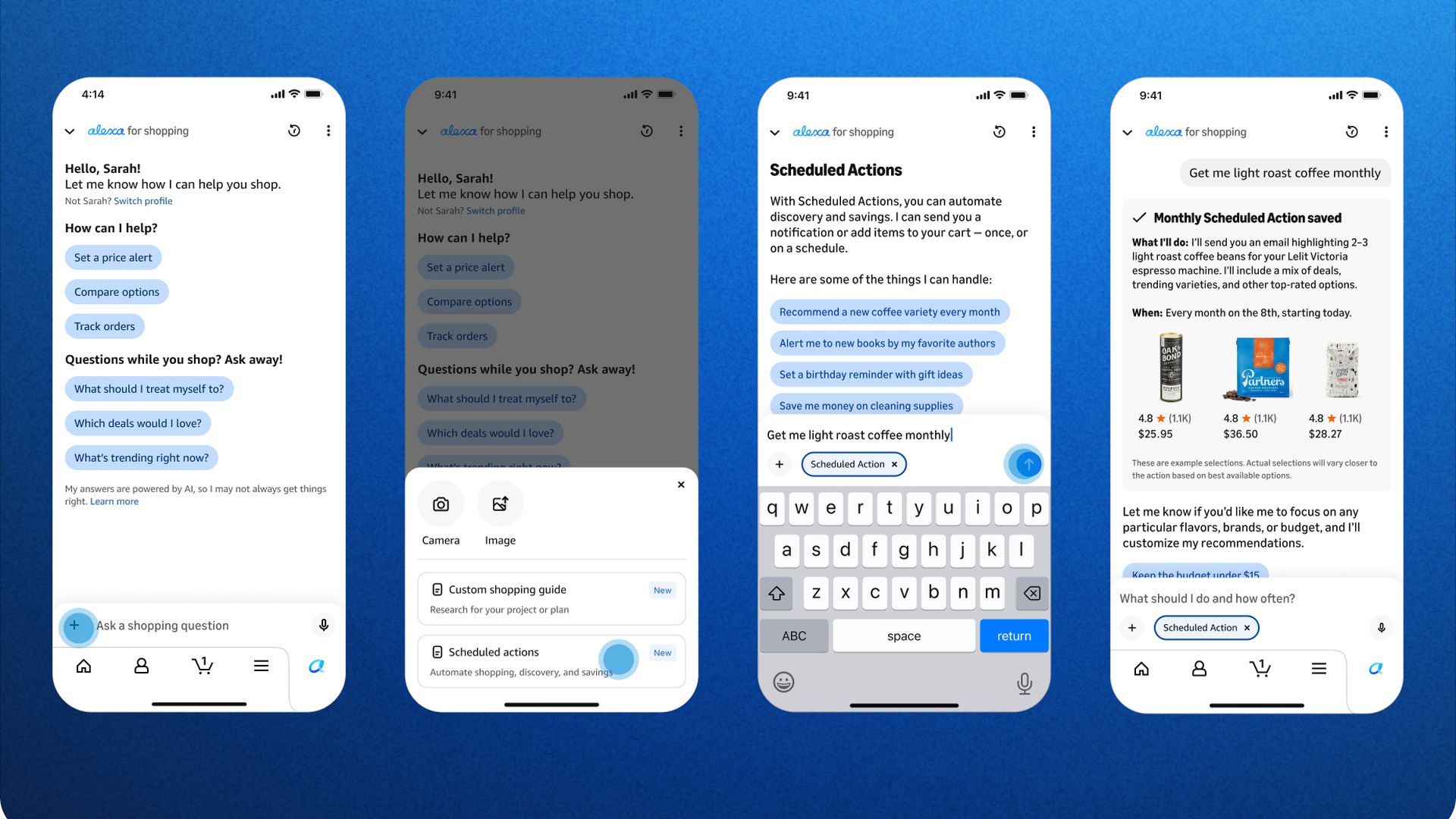
Amazon is making Alexa a more powerful shopping companion by folding its Rufus assistant into Alexa+.
Why it matters: AI shopping assistants are quickly moving from search boxes to software agents that can track prices, remember preferences, recommend products and eventually make purchases for consumers.
Driving the news: Alexa for Shopping rolls out to U.S. customers today on the Amazon app, Amazon.com and Echo devices, Rajiv Mehta, Amazon's vice president of conversational shopping, told Axios.
- Customers don't need a Prime membership or Echo device to use it.
- The assistant replaces Rufus, which Amazon launched in 2024 as its AI shopping assistant. More than 300 million customers used Rufus in 2025, Mehta said.
5. Training data
- Nvidia CEO Jensen Huang joined President Trump's delegation to China last night, during a refueling stop in Anchorage. A source tells Axios' Mike Allen that Trump invited Huang after media reports that the chip mogul wasn't part of the big delegation of U.S. CEOs joining the summit. (Axios AM)
- Anthropic is in talks to raise at least $30 billion in a new funding round that would value the company at $900 billion. (Bloomberg)
- Anthropic and OpenAI have both issued statements warning investors that secondary share purchases will not be recognized. (TechCrunch)
6. + This
If you think you're surrounded by AI, try empathizing with New York City's kindergarteners, New York Magazine reports. AI usage is exploding in classrooms, and even 6-year-olds are pushing back, with one suggesting playing with toys or even reading instead of looking at screens.
Thanks to Megan Morrone for editing this newsletter and Matt Piper for copy editing.
Sign up for Axios AI+
