Axios AI+

June 11, 2024

Hi from D.C. I know — I was in New York on Friday and Cupertino on Monday. Life comes at you fast.
- Join Axios' Mike Allen, Hope King and Nathan Bomey tomorrow at 8am ET in Washington, D.C., for an event examining the balance between government regulation and private sector innovation, featuring Rep. Jake Auchincloss (D-Mass.), U.S. Patent and Trademark Office deputy director Derrick Brent and Rep. Bryan Steil (R-Wis.). Register here to join in person.
Today's AI+ is 1,148 words, a 4-minute read.
1 big thing: AI is having its iPhone moment
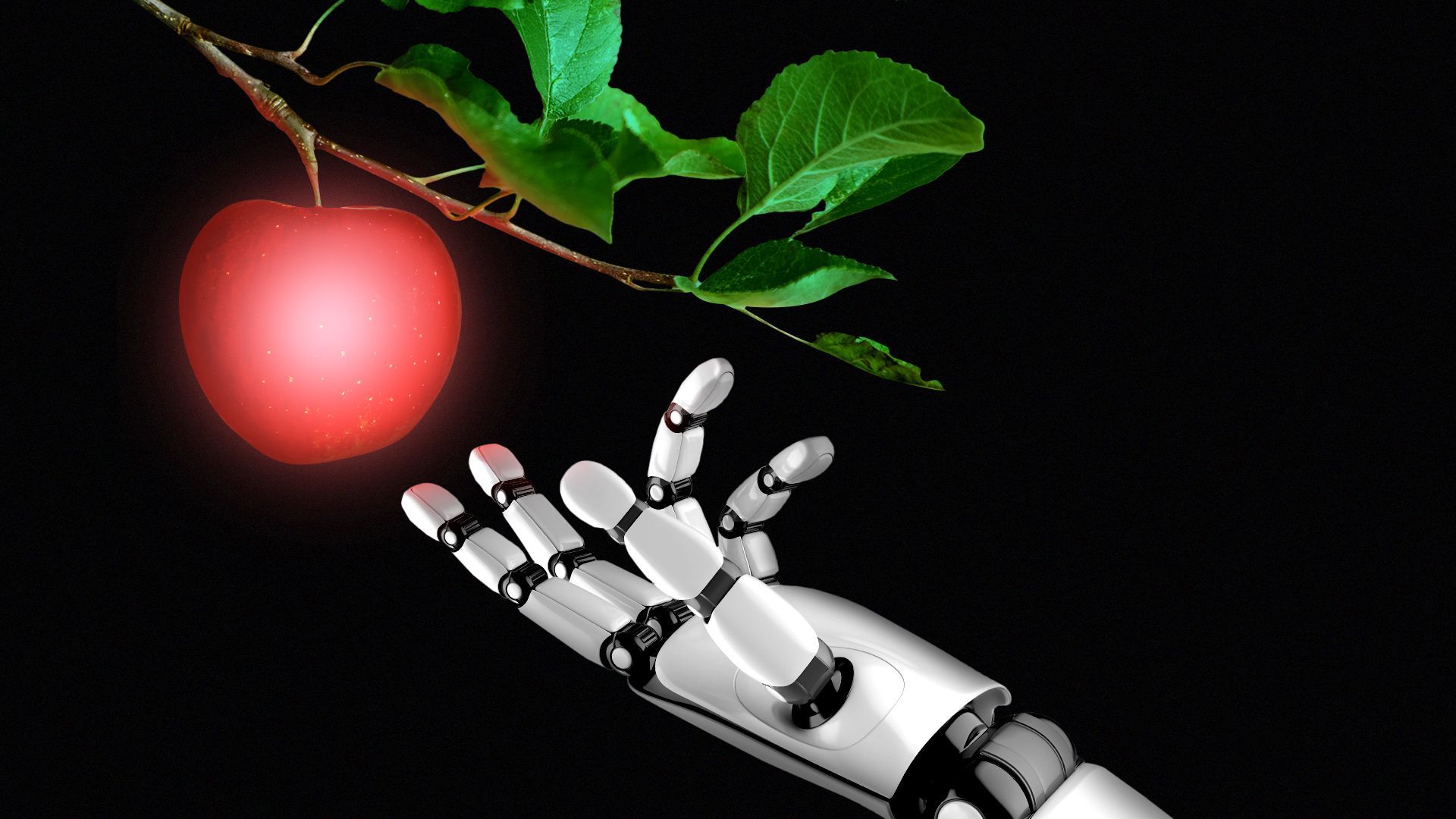
Apple combined the iPod with a cellphone 17 years ago and electrified the world — and now it's hoping that combining the iPhone with AI will strike similar sparks.
The big picture: Apple has never been known for being first to a key new technology, but it has always had a knack for picking exactly the right moment to jump in.
Driving the news: Apple's approach, dubbed Apple Intelligence, envisions a future in which a ubiquitous AI system that knows all about you can use that knowledge to surface the right information and take action on your behalf.
- In contrast to the current chatbots — which know about the world, but little about you beyond what you tell them — Apple is building a context engine that understands each customer and the information and people that matter most to them.
Yes, but: What Apple will ship this fall is a more basic set of generative AI capabilities. The initial features include a writing assistant, image and custom emoji generators, and a somewhat more capable Siri voice assistant.
- Over the coming year, Apple is promising the first examples of the broader vision, including the ability for Siri to to answer questions using the context of what's on screen and drawing on knowledge from across various applications.
Case in point: When someone says, "Open that podcast my wife sent a few days ago," Siri will be able to look for mail or other messages from the person it knows is the user's wife, find the recent link to a podcast, and then open the file in the podcast app.
- Similarly, when someone asks, "What time does my mom's flight land?" Siri will know who you are referring to and where to find that information.
Between the lines: Apple may not be building the most advanced frontier models like Google, Meta or OpenAI — but given what it showed yesterday, the company seems to be further along than many people thought.
- The proof will come when Apple's AI gets into the hands of millions of users, and we see how polished its features are and how well-protected from misuse and misfires.
- Apple didn't give reporters hands-on demos this week, and the new AI features aren't in the early OS releases Apple provides to developers.
Trust is where Apple has a real edge.
- The Apple Intelligence vision relies on access to a copious amount of personal data.
- Apple can reassure users that it won't abuse its access by drawing on a reputation for privacy that it has spent more than a decade fostering.
What they're saying: "Understanding this kind of personal context is essential for delivering truly helpful intelligence," Apple software executive Craig Federighi said yesterday.
- "But it has to be done right. You should not have to hand over all the details of your life to be warehoused and analyzed in someone's AI cloud."
As part of its privacy push, Apple is trying to do as much work as possible on the device itself.
- When Apple needs more processing power, its programs will pass the work over to a remote server in its data center.
Between the lines: Apple promises it will perform the handoff without letting itself or any other entity have access to the query.
- When an Apple query is handed to ChatGPT, information passes to OpenAI, but Apple will ask the user's permission each time. It also says OpenAI won't be able to store the information or train its systems on the data.
Yes, but: It's far too early to declare winners and losers in today's wave of AI adoption.
- Apple remains behind when it comes to building the largest AI models — hence its partnership with OpenAI.
- It's not clear just how broad Apple's AI capabilities are in this area, though Axios did confirm that all the Apple Intelligence features — both those running on devices and those that are processed in Apple's data centers — use the company's own models.
The bottom line: Apple unveiled a compelling, if incomplete, vision. But don't forget that the first iPhone had some huge limitations, too: It ran on a super slow network, didn't support third-party apps and couldn't even "copy" and "paste."
2. Musk threatens to ban iPhones at his companies

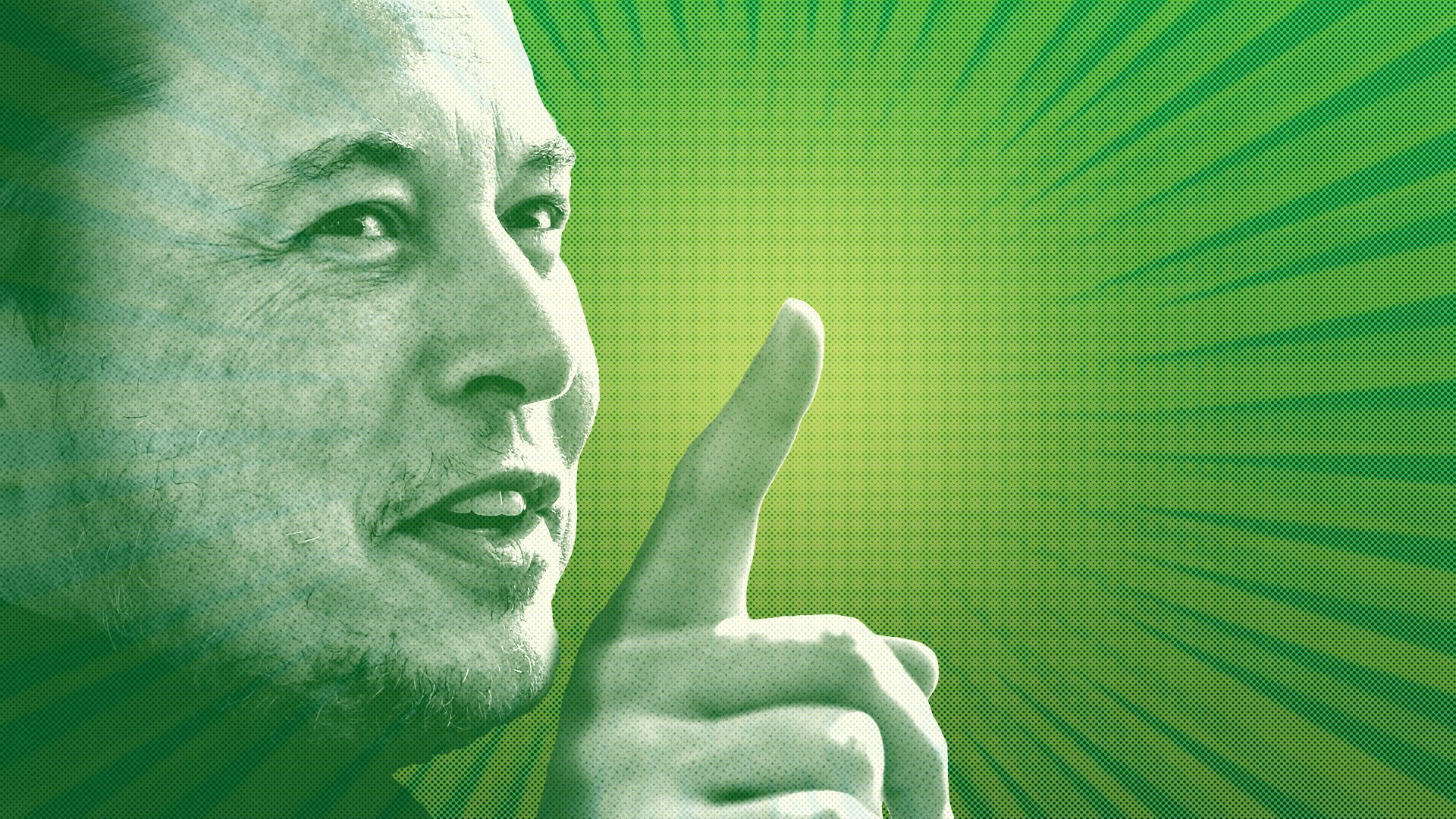
Elon Musk threatened to ban his employees from using Apple products after Apple announced that iPhone users would be able to ask ChatGPT questions through Siri, Apple's voice assistant.
Why it matters: Musk makes a lot of promises and threats, and often fails to follow through on them. But as one of the world's wealthiest people, he has the power to act on his whims when he wants to.
Driving the news: "If Apple integrates OpenAI at the OS level, then Apple devices will be banned at my companies. That is an unacceptable security violation," Musk posted on X, formerly known as Twitter, yesterday after Apple's announcements.
- It's not clear exactly what Musk means by "integrates OpenAI at the OS level," or whether Apple's description of how it plans to use ChatGPT in iOS would match most software developers' definition of that kind of integration.
- Apple touted the privacy and security protections of the AI services it will provide itself, and showed off a prominent dialog box that will ask users whether they want a query to be forwarded to ChatGPT.
Catch up quick: Musk has long been feuding with the iPhone maker. The latest bout kicked off last year when Apple "paused" advertising on Musk-owned X after he endorsed an antisemitic post.
The big picture: Musk has his own dog in the AI fight. He has raised $6 billion for his own AI company, xAI, to compete with OpenAI, Apple and every other AI provider.
Between the lines: Tesla promises to protect its customers from being tracked or having their data sold or shared.
- But Reuters reported last year that Tesla employees have spied on customers using the cars' many cameras.
- Musk biographer Walter Isaacson wrote that Musk wanted to use cameras inside the cars to collect evidence to protect Tesla from lawsuits.
The bottom line: For better or worse, most of Big Tech's customers have tended to prioritize convenience over privacy in the past, and today millions of people use ChatGPT.
3. Training data
- AI startups are being flooded with VC cash, but it will soon become hard to separate "AI startups" from all startups, Dan Primack writes. (Axios)
- The next version of iOS will let users record calls — and inform participants they're being recorded. (The Verge)
- Trading places: Ex-Nextdoor CEO Sarah Friar was named OpenAI's first CFO, and Instagram's former product lead Kevin Weil will be the company's new chief product officer. (Axios)
- Particle, a startup led by former Twitter execs that uses AI to summarize the news, raised $10.9 million. (Axios Pro)
4. + This
I can't believe I didn't notice that Sam Altman was wearing Lego sneakers when I chatted with him briefly before yesterday's Apple event.
Thanks to Megan Morrone and Scott Rosenberg for editing this newsletter and to Caitlin Wolper for copy editing it.
Sign up for Axios AI+
