Axios AI+

November 23, 2026



Ina here, making my way down to SoCal later today in hopes of beating the rain.
🚨 You thought the Jensen Huang story was over? It's not. Read on...
🗞️ The Axios Show: Legendary journalist Bob Woodward speaks with Axios' Mike Allen about how the Iran war and corruption allegations will hurt President Trump's legacy. Trump is "much worse" than Richard Nixon, he says. Watch the clip.
Today's AI+ is 1,179 words, a 4.5-minute read.
1 big thing: Huang is back

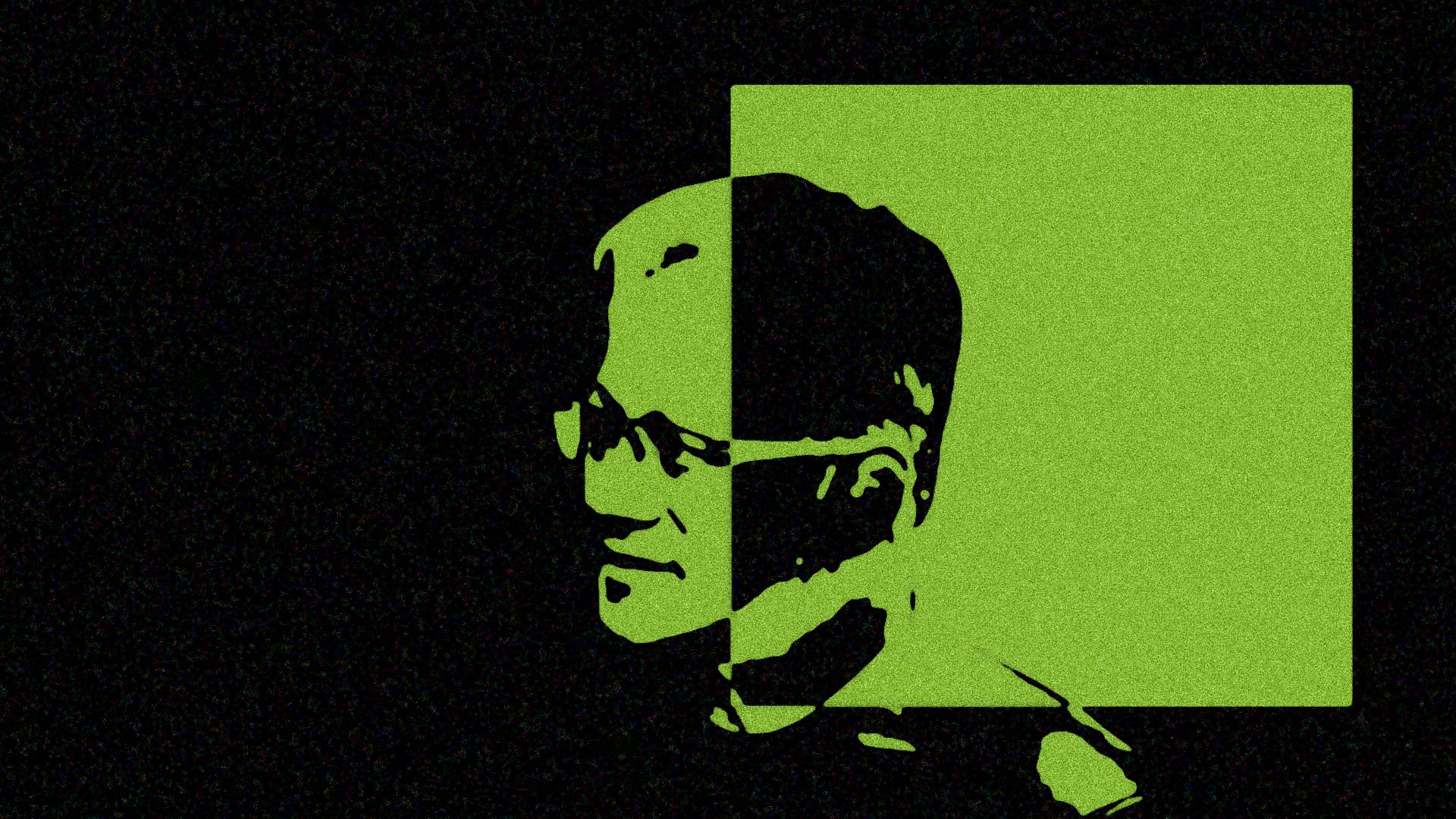
Nvidia announced Monday morning that it would reinstate Jensen Huang as CEO, president and board member.
Why it matters: Huang's ouster just days ago sent the stock market into correction territory.
What they're saying: "The Board believes Jensen is the right person to lead Nvidia, and that his reinstatement is in the best interests of our stockholders, employees, partners and customers," said Harvey C. Jones, chair of the board.
- The board said it was satisfied with Huang's "candor and ability to lead" following a series of meetings.
- "I am honored to return to Nvidia and lead one of the most consequential technology companies in the world at the beginning of a new industrial revolution," Huang said in the statement.
- "I take this responsibility with the greatest humility and renewed commitment."
Between the lines: The reinstatement comes after President Trump urged the board to bring Huang back.
- Just six days ago, Jones said the company did not intend to reinstate Huang, despite a growing campaign backed by Trump, Elon Musk and other tech leaders to bring him back.
By the numbers: Shares of Nvidia are up nearly 30% in initial trading.
- Investors told Axios early Monday they are still concerned about how much time Huang will have to spend in front of Congress.
Reality check: The board's unanimous decision still exposes Nvidia to huge risks that public companies don't ordinarily take.
- The New York Times reported just this weekend that his mistress was in regular contact with the Chinese spy apparatus during their affair.
- A series of articles in the last few days detailed years of extensively abusive behavior by Huang toward other executives and employees — enough to prompt settlements with some top officials. There is also the matter of the reported affairs with his direct reports.
- He remains under heavy bipartisan pressure from Congress to explain how he conducted himself and how Nvidia sold its products overseas.
What we're watching: Nvidia said its independent investigation into Huang will continue, and the company will cooperate with ongoing government inquiries.
- The company has also formed a national security and export control committee and is searching for a new chief compliance officer.
- This comes as the SEC is investigating Nvidia's accounting practices, according to Reuters.
2. Scoop: DNI Jay Clayton to double as acting cyber chief

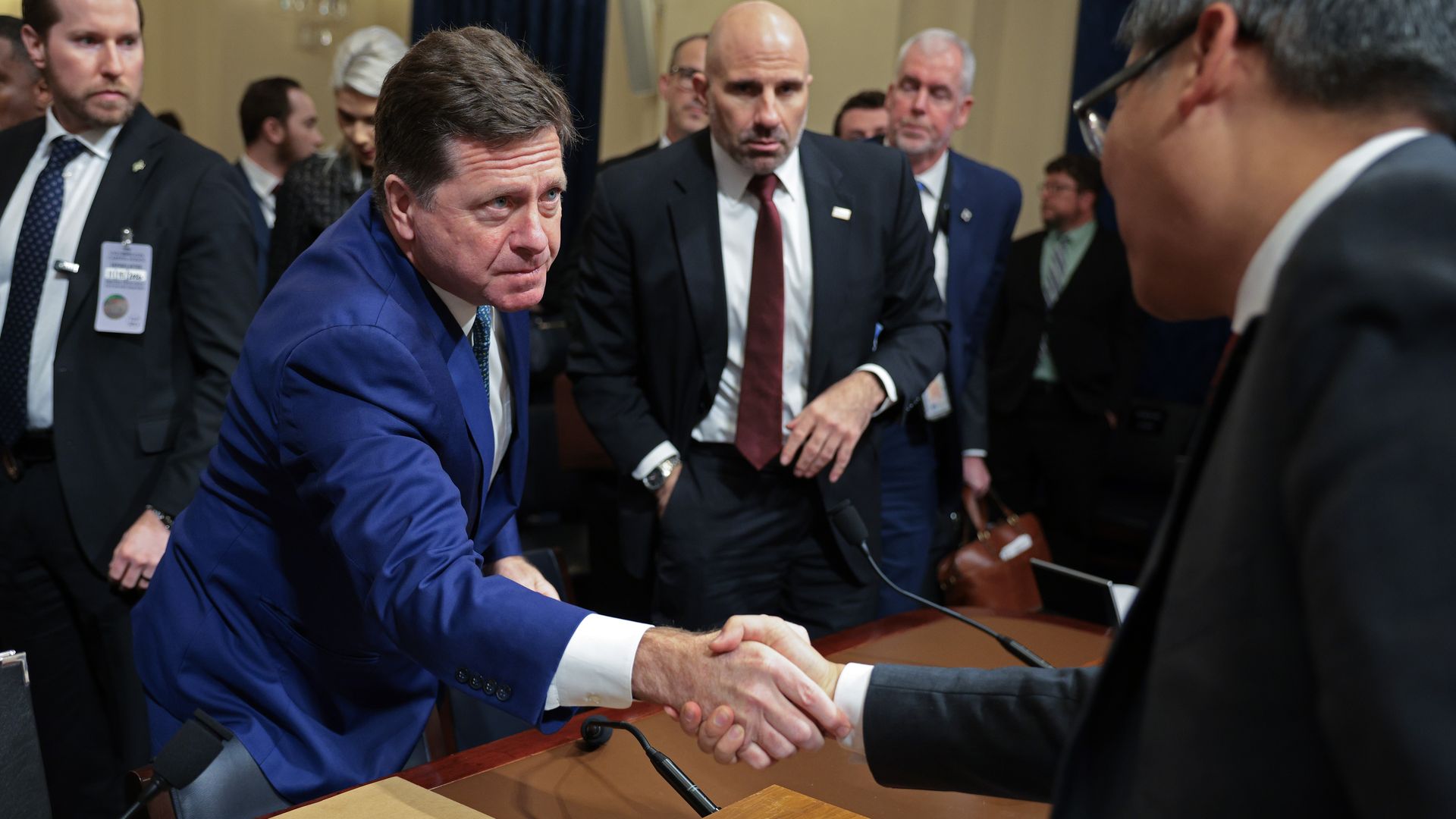
Director of National Intelligence Jay Clayton will also serve as acting national cyber director while Kirsten Davies awaits Senate confirmation to lead the office, Axios has learned.
- A White House official said the strong support Davies received convinced Trump to nominate her to lead the office permanently rather than keep her in an acting capacity.
Why it matters: Clayton, the nation's top intelligence official, will now coordinate cybersecurity policy as outages and reported cyberattacks expose vulnerabilities in America's digital infrastructure.
Catch up quick: President Trump announced Thursday he was tapping Davies, the Pentagon's chief information officer, to replace Sean Cairncross as national cyber director.
- Davies will assist Clayton as a senior adviser in the Office of the National Cyber Director until she is confirmed.
- Trump has increasingly turned to Clayton. He became director of national intelligence in August, and then Trump named him AI czar coordinating the government's approach to AI. Now he will temporarily lead the office responsible for coordinating cybersecurity policy.
What they're saying: "I'm excited to work more with Kirsten, who has the experience and capabilities needed to help America navigate our increasingly complex and powerful digital infrastructure as our next National Cyber Director," Clayton said in a statement to Axios.
- "I look forward to working with the ONCD team to ensure Kirsten has a seamless transition into the role upon her confirmation by the Senate."
The big picture: Two critical national security roles will temporarily fall under one official as President Trump shakes up his cybersecurity team amid the growing threat of AI-powered attacks.
- Recent disruptions have raised concerns about the vulnerability of the nation's digital infrastructure, although administration officials say there is no evidence they were caused by coordinated cyberattacks.
- Clayton himself has played a prominent role in the administration's response, telling lawmakers Wednesday that the outages appeared to stem from unrelated technical problems and system upgrades.
3. OpenRouter warns user data was routed to Chinese AI firm


Users of several AI services may have had their private conversations exposed to an unknown third party after their requests were routed to Chinese AI company MiniMax, according to an email OpenRouter sent to affected customers.
Why it matters: U.S. officials have long worried that Chinese open-source AI models that businesses use could expose sensitive American data to Beijing.
- The warning raises questions about whether businesses using those models through U.S.-based providers can keep their information out of China.
Driving the news: OpenRouter, a platform that routes developers' AI requests to models hosted by different companies, warned customers that prompts and responses sent to MiniMax models may have been accessed by a third party between July and October, according to emails posted on social media Friday.
- A spokesperson for Square, which owns OpenRouter, confirmed to Axios that the emails are legitimate.
- In its customer emails, the company also identified three providers that had forwarded requests to China-based MiniMax.
- OpenRouter did not name the specific Chinese AI lab that it believed was receiving the prompts and responses in a blog post on Saturday. The company also said it off-boarded three providers following its investigation.
- OpenRouter also removed privacy protections from 125 ways of accessing AI models that had previously been designated as not storing customer conversations.
Threat level: Customers of AI routing firms like OpenRouter often share sensitive company information, private conversations and even passwords with chatbots while developing applications.
- Many do so with the expectation that their prompts and responses will not be stored or shared beyond the providers needed to process their requests.
- However, the new findings raise questions about whether some of that information is being routed back to Chinese AI labs, even when developers believe they are using U.S.-based providers.
Read more
4. Training data
- Our Axios founders say conversations with more than 50 leaders in AI, government, business and cybersecurity suggest a major reckoning in the coming year as society deals with the many changes the rise AI has unleashed.
- The FBI is facing its second hack in three months — and this breach could impact local law enforcement and any individual who has been arrested or reported missing. (Axios)
- Alice Huang was in touch with members China's Ministry of State Security while in a relationship with former Nvidia CEO Jensen Huang, per the New York Times.
5. + This
Longtime tech writer Benj Edwards has managed to get an AI chatbot running on his old Super Nintendo console.
Thanks to David Nather for editing this newsletter and Egan Millard for copy editing.
Sign up for Axios AI+
