Axios AI+
August 23, 2024

Happy Friday! Today's AI+ is 1,145 words, a 4.5-minute read.
1 big thing: Opening AI's black box


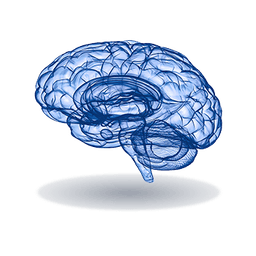
Scientists are opening generative AI's black box and beginning to understand the models' inner workings.
Why it matters: The prospect of harnessing genAI to make decisions and perform tasks is pushing researchers to better understand how AI systems work — and how they might be controlled.
- "We can't base our entire understanding of [large language models] on their inputs and outputs alone," says Marissa Connor, a machine learning researcher at the Software Engineering Institute at Carnegie Mellon University.
- "If you're relying on AI models to work in high-impact situations — like diagnosing medical conditions — then it is important to understand why they have a specific output."
Catch up quick: Unlike computer programs that use a set of rules to produce the same output each time they are given one input, genAI models find patterns in vast amounts of data and produce multiple possible answers from a single input.
- The internal mechanics of how an AI model arrives at those answers aren't visible, leading many researchers to describe them as "black box" systems.
- It's important to look into the black box model and "understand model bias, understand model decision-making and ensure safe system performance," Connor says.
Zoom in: One way AI researchers are trying to understand how models work is by looking at the combinations of artificial neurons that are activated in an AI model's neural network when a user enters an input.
- These combinations, referred to as "features," relate to different places, people, objects and concepts.
- Researchers at Anthropic used this method to map a layer of the neural network inside its Claude Sonnet model and identified different features for people (Albert Einstein, for example) or concepts such as "inner conflict."
- They found that some features are located near related terms: For example, the "inner conflict" feature is near features related to relationship breakups, conflicting allegiances and the notion of a catch-22.
- When the researchers manipulated features, the model's responses changed, opening up the possibility of using features to steer a model's behavior.
OpenAI similarly looked at a layer near the end of its GPT-4 network and found 16 million features, which are "akin to the small set of concepts a person might have in mind when reasoning about a situation," the company said in a post about the work.
- They found features related to rhetorical questions, price increases and human imperfection, and developed new metrics for evaluating features.
Yes, but: The papers from OpenAI and Anthropic acknowledge it is early days for the work, especially for how it might apply to AI safety.
- One issue OpenAI flagged is the difficulty interpreting many features because they have no clear pattern or there are spurious activations of the neurons.
- And while the research looks at larger language models than previous work, it examines just a slice of these massive models and captures a fraction of the concepts represented in a model's billions of neurons activated across a network's many layers.
The latest: Google DeepMind tried to tackle that limitation in its recent release of Gemma Scope, a tool that looks across all of the layers in a version of the company's Gemma model, covering 30 million features.
The big picture: The unknowns about what happens in a large language model between input and output echo observations in other areas of science where there is an "inexplicable middle," says Peter Lee, president of Microsoft Research.
- In biology, there's an understanding of DNA — including the fundamental physics underlying its chemistry — and descriptions of the behaviors of animals, microbes, plants and people. But in between are some of biology's biggest and most complicated questions, including how genetic, molecular and environmental processes shape a cell's development.
"My claim would be generative AI has created for scientists another example of that kind of problem," Lee says.
- "Why is it that at a certain scale the model goes from not understanding what is and isn't a joke to suddenly knowing what is and isn't a joke?"
What to watch: The question of how a model works leads to how it is evaluated, and that itself has become a major research focus.
- With genAI, "we are now, for the first time, allowing ourselves to fantasize about the possibility of computers doing highly skilled knowledge work," Lee says. That sort of work, he adds, isn't about achieving perfection but being effective and trustworthy.
The bottom line: At the end of the day, Lee says, how to evaluate an AI model is "as mysterious as how to evaluate a human being."
2. Stress-testing AI office tools for the government


A new government-supported program is actively recruiting people who want to help evaluate AI-enabled office productivity software.
Why it matters: Stress-testing generative AI tools is still one of the best ways to root out biases or false information in responses and privacy concerns like leaking sensitive information.
Zoom in: Humane Intelligence, an AI ethics nonprofit, is teaming up with the National Institute of Standards and Technology to launch a new competition to find flaws in AI office productivity tools.
- The first round of the competition is virtual, and anyone in the United States who is interested in red-teaming AI models is welcome to participate.
- In this round, participants will run through a set of test scenarios and try to identify as many "violative outcomes" as possible.
- Those who pass this round will be invited to participate in an in-person red-teaming exercise in late October at the Conference on Applied Machine Learning in Information Security in Arlington, Virginia.
The intrigue: Humane Intelligence is also inviting genAI model operators to donate access to their models for testing.
- Qualifying products must be used for workplace productivity, such as coding, process automation and similar activities, and the operators must be willing to have their models tested for a variety of issues.
Between the lines: This new competition is just one of the challenges that Humane Intelligence is launching with government partners and NGOs in the coming weeks, the nonprofit told Wired.
- Humane Intelligence sees these competitions as a way of engaging people with a variety of backgrounds, not just coders, in AI red-teaming.
What's next: Those interested in participating in the first round have until Sept. 9 to sign up.
3. Training data
- AI startup Perplexity is preparing to sell ads on its search engine by the fourth quarter of this year. (CNBC)
- Chinese startups are writing more efficient code for LLMs; building smaller, more specialized models; and training those models using less energy and time. (Wall Street Journal)
- Google told staff that former Character.AI CEO (and former Googler) Noam Shazeer will help lead Gemini AI. (The Information)
4. + This
Thanks to the quirks of Major League Baseball, player Danny Jansen — who was traded from the Toronto Blue Jays to the Boston Red Sox — could end up having to appear for both teams in the same game once a suspended game between the two is resumed on Monday.
Thanks to Megan Morrone for editing this newsletter and to Caitlin Wolper for copy editing it.
Sign up for Axios AI+
