Axios AI+

June 11, 2025

Hey there, again. Or for the first time if you're just finding us. Today's AI+ is 1,077 words, a 4-minute read.
1 big thing: Zuck's supersized AI ambitions

Mark Zuckerberg wants to play a bigger role in the development of superintelligent AI — and is willing to spend billions to recover from a series of setbacks and defections that have left Meta lagging and the CEO steaming.
Why it matters: Competitors aren't standing still, as made clear by recent model releases from Anthropic and OpenAI and highlighted with a blog post last night from Sam Altman that suggests "the gentle singularity" is already underway.
To catch up, Zuckerberg is prepared to open up his significant wallet to hire — or acqui-hire — the talent he needs.
- Meta wants to recruit a team of 50 top-notch researchers to lead a new effort focused on smarter-than-human artificial intelligence, a source told Axios yesterday, confirming earlier reporting by Bloomberg and the New York Times.
- As part of that push, the company is looking to invest around $15 billion to amass roughly half of Scale AI and bring its CEO, Alexandr Wang, and other key leaders into the company, The Information reported.
Zoom in: Scale itself would likely continue its current work, albeit without Wang and some other top talent.
- Zuckerberg has also been making eye-popping offers to individual researchers, which the Times says can stretch from seven to nine figures.
Between the lines: Meta is hoping to woo leading AI researchers by making the case that it has the resources and ongoing business to fund such a lofty ambition.
- But Scale AI is an unusual target. The company has built its business by focusing on the more manual tasks of AI — using humans to label data.
- However, Wang is close to Zuckerberg and seen as a rising star — a self-made billionaire and someone the Meta boss hopes can convince others to join the ambitious research effort.
- And Meta isn't a newcomer to the field. The company has released several versions of its open-source Llama models, published extensively and inserted its Meta AI chatbot into Facebook, Instagram and WhatsApp.
Yes, but: The company has reportedly struggled with performance in its latest models and has also seen some top researchers head for the exits, including AI research head Joelle Pineau, who announced in April that she was leaving the company.
The big picture: A Meta-Scale AI deal would follow a growing trend: tech giants buying parts of promising AI startups to secure key talent or intellectual property, without acquiring the full company.
- Last year, Microsoft struck a deal with consumer chatbot creator Inflection AI.
- Microsoft got the services of Inflection CEO (and DeepMind co-founder) Mustafa Suleyman as well as other colleagues and technology. Inflection's investors got an immediate return while also leaving in place a slimmed-down operation focused on sales to businesses.
- Google made a similar arrangement with Character.AI, acquiring key talent and a technology license, handing over millions to Character.AI's investors without buying the entire company.
- It's unknown whether this approach will ultimately pass muster, as some regulators in the U.S. and abroad see these deals as meriting further scrutiny, similar to outright acquisitions.
Zoom out: Meanwhile, the march to superintelligence continues at breakneck speed, fueled by giant investments in computing power and data centers.
- "We are past the event horizon; the takeoff has started," Altman wrote in his blog.
- "We have recently built systems that are smarter than people in many ways, and are able to significantly amplify the output of people using them."
What we're watching: What happens to Scale AI is particularly interesting given its role providing data labeling services to a host of companies including Google, OpenAI, Anthropic and Meta itself.
2. OpenAI and Google's unlikely partnership
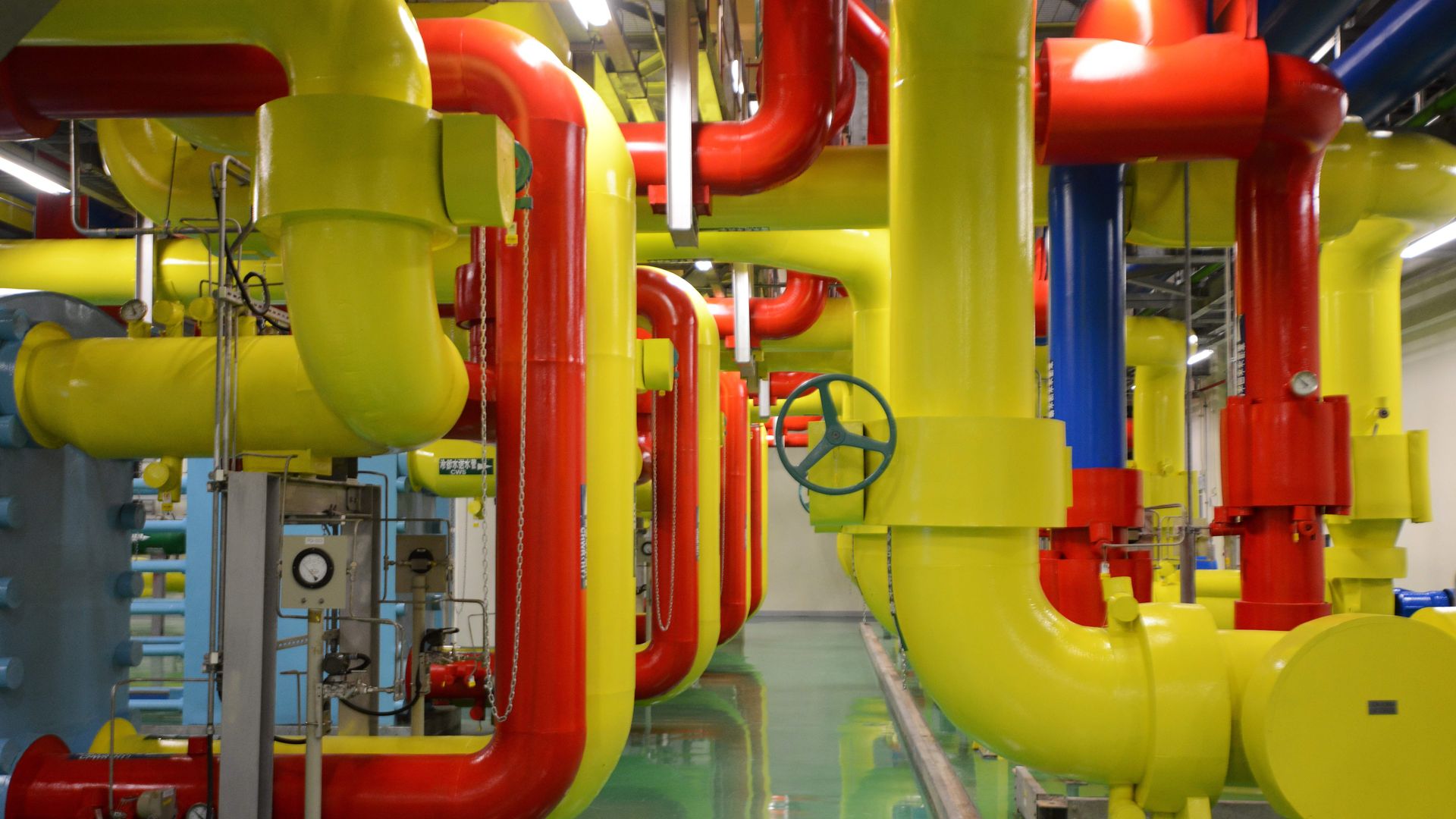
OpenAI has quietly inked a deal with Google to tap its cloud computing infrastructure to deliver AI services, a source familiar with the arrangement confirmed to Axios.
Why it matters: The agreement follows the launch of the $500 billion Stargate project with Oracle and SoftBank and is part of OpenAI's effort to expand beyond Microsoft's Azure as it looks to meet a crush of demand for ChatGPT and other services.
Driving the news: The deal, which was reported earlier by Reuters, adds to the amount of compute that OpenAI can access, but is not a replacement for Microsoft's Azure, which was once OpenAI's exclusive partner.
- Under its original deal with Microsoft, OpenAI had to seek a waiver for each outside cloud computing provider, but under a revised agreement the company can now get a set amount of compute capacity from wherever it chooses.
- While signed last month, Google is not yet delivering AI compute to OpenAI, nor has the deal been publicly announced.
- A Google representative declined to comment, and an OpenAI representative said the company has nothing to announce.
The big picture: OpenAI has been looking to increase its supply of computing capacity in a number of ways, most notably with Stargate, but also through international expansion and other arrangements.
3. Salesforce brings in the basketball bots

How do you simultaneously manage sales and support for an NBA team in the finals and a WNBA team with the league's most popular player? Enter the bots.
Driving the news: The group that owns the NBA's Indiana Pacers and the WNBA's Indiana Fever is tapping Salesforce's Agentforce to help manage the crush as part of a deal announced today.
- The goal is to personalize offers for Caitlin Clark's massive fanbase, distinguishing local season ticket buyers from faraway superfans who might prefer premium one-time experiences like locker room visits.
- While others see AI as a way to cut costs, Pacers Sports & Entertainment executive VP Joey Graziano told Axios he is trying to find new products to sell.
- "The average Fever fan is coming from over 200 miles away from our stadium," Graziano said. "That's not how a typical local professional sports team operates."
4. Training data
- Snap says it will release new AR glasses in 2026, a decade after its AR Spectacles came out. (Axios)
- New evidence shows how much AI is cutting into publishers' web traffic from Google. (Wall Street Journal)
- OpenAI's o3 model will get an 80% price chop to lower developer costs.(VentureBeat)
- However, a promised new open-source model from OpenAI, originally expected this month, won't come until later this summer, Altman posted on X.
- Elon Musk made a 3am X apology for his posts last week about Trump. (Axios)
5. + This
Now this was one heck of a catch.
Thanks to Scott Rosenberg and Megan Morrone for editing this newsletter and Matt Piper for copy editing.
Sign up for Axios AI+
