Axios AI+
February 03, 2026

My suitcase decided to spend an extra day in Amsterdam but I'm happy to report it has made it to Milan (and hopefully soon to me).
Today's AI+ is 936 words, a 3.5-minute read.
1 big thing: Fitbit's founders push AI into family caregiving
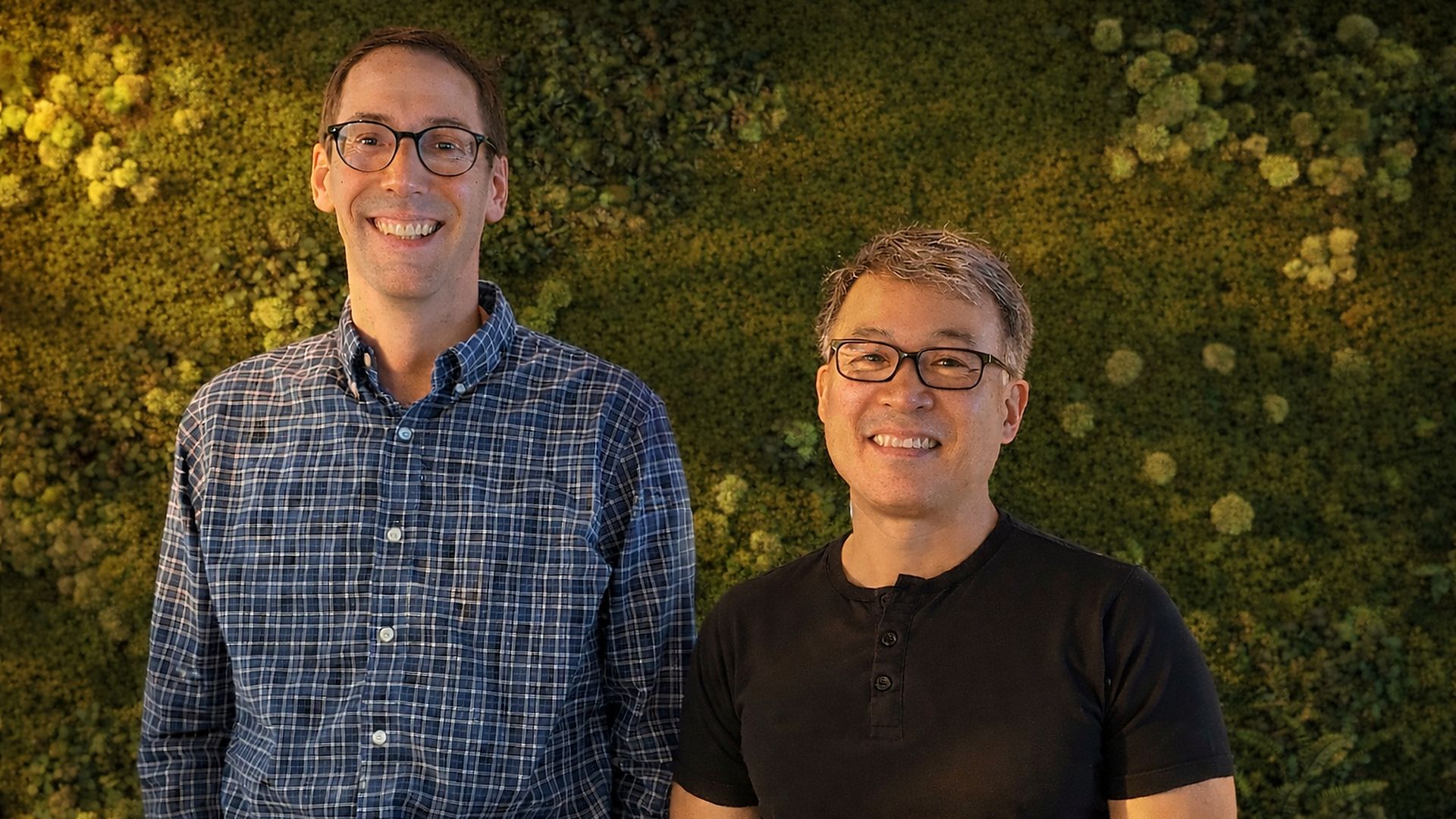
Two years after exiting Google, the co-founders of Fitbit are launching their next act: an AI-powered service for monitoring the health of one's entire family.
Why it matters: After helping turn personal health tracking into a mass habit at Fitbit, James Park and Eric Friedman are betting the next big shift is shared health, tapping AI to help ease the heavy mental load of caregiving.
Driving the news: Park and Friedman on Tuesday unveiled Luffu, a self-funded startup building what it calls an "intelligent family care system," starting with an app and eventually expanding into hardware.
- The product uses AI to organize family health data, learn routines and call attention to potentially meaningful changes before they become crises.
- The company has about 40 employees, many from Google and Fitbit, and is currently in private testing.
How it works: Luffu's AI is designed to operate mostly in the background, pulling together fragmented information that usually lives across portals, calendars, devices and documents.
- Families can log health information using voice, text or photos, with AI automatically extracting and organizing details.
- The system watches for patterns across multiple people — kids, parents, partners and even pets — and flags issues like missed medications, unusual vitals or changes in activity and sleep.
- Users can ask plain-language questions such as, "Is Dad's new meal plan affecting his blood pressure?" or "Did someone give the dog his medication?" and get tailored answers or charts.
What they're saying: "Our philosophy is quiet most of the time, helpful at the right time," Park and Friedman told Axios, describing Luffu as a guardian, not a surveillance system.
- Alerts are customizable and designed to reduce anxiety, not create it, Park said.
- "I didn't want to hover, and my mom didn't want to feel monitored," Park said in a statement, reflecting on the experience of piecing together care across providers and portals.
Families control what information is shared and with whom, the founders told Axios.
- "For instance, a user will be able to designate another person to have 'Guardian' level of control over their account which allows full control over a person's care and permissions."
- People will also be able to control whether their data will be used to train Luffu's AI, they said.
The big picture: Park and Friedman say the idea grew directly out of their own lives after Fitbit.
- At Fitbit, they helped make personal health data mainstream, building a platform used by nearly 150 million people.
- But caregiving for aging parents, often from afar, exposed how poorly today's health tools work for families trying to coordinate care.
Zoom out: Roughly 63 million U.S. adults are now family caregivers, according to recent research, up sharply from a decade ago — and the burden often falls on people juggling kids, careers and aging parents.
- Of the technology that is out there, most is designed for individuals, not the constellation of people who care for them.
What's next: The company plans to expand beyond software into hardware, but for now Park and Friedman are focused on refining the app and onboarding early users.
2. No one is ready for the autonomous world

The autonomous future stopped being theoretical this weekend, as a swarm of AI agents signed up for a social media network built just for them.
Why it matters: Security teams, corporate leaders and government officials are far from ready for a reality where agents have real autonomy inside their systems.
Driving the news: Since Thursday, 1.5 million AI agents have joined Moltbook, a social network designed just for agents built from an open-source, self-hosted autonomous personal assistant called OpenClaw.
- The agents are turning into security nerds: They've launched an agent-run hackathon and are debating what to store in their own memories because of security and privacy concerns.
The big picture: Gone are the days of assessing an internal cybersecurity plan and budget on a neat quarterly or annual cadence.
- Consumer demand for productivity AI agents like OpenClaw — and the social network they're roaming on — is far outpacing traditional security methods, leaving slow-moving enterprises vulnerable.
3. Elon Musk's vision


SpaceX made it official yesterday, acquiring xAI ahead of the decade's most hotly anticipated IPO.
Why it matters: Elon Musk is making one of the most audacious moves in the history of business and tech, arguably betting his empire on the idea of orbital data centers that are powered by the sun.
- Don't be surprised if this is a prelude to a future merger with Tesla, which recently invested $2 billion into xAI.
- Tesla would make the chips, SpaceX would be responsible for launch and satellites, and xAI would build the models and agentic networks.
The big picture: If this works, it could pose a major threat to OpenAI — the only AI giant it's impossible to see Musk partnering with or selling services to.
4. Training data
- Inside Musk's bet to hook users that turned Grok into a porn generator. (Washington Post)
- Interactive Advertising Bureau CEO David Cohen yesterday announced proposed draft legislation and plans to push for action to protect publishers from AI companies using their content to train models and generate summaries without compensation. (Axios)
- OpenAI is reportedly unsatisfied with some Nvidia chips and looking for alternatives. (Reuters)
- Sen. Maggie Hassan (D-N.H.) is demanding answers from an AI toy company accused of exposing tens of thousands of children's private conversations. (Axios)
5. + This

An accidental crying horse is capturing the vibe this year.
Thanks to Mackenzie Weinger for editing this newsletter and Matt Piper for copy editing.
Sign up for Axios AI+
