Axios AI+

October 09, 2026

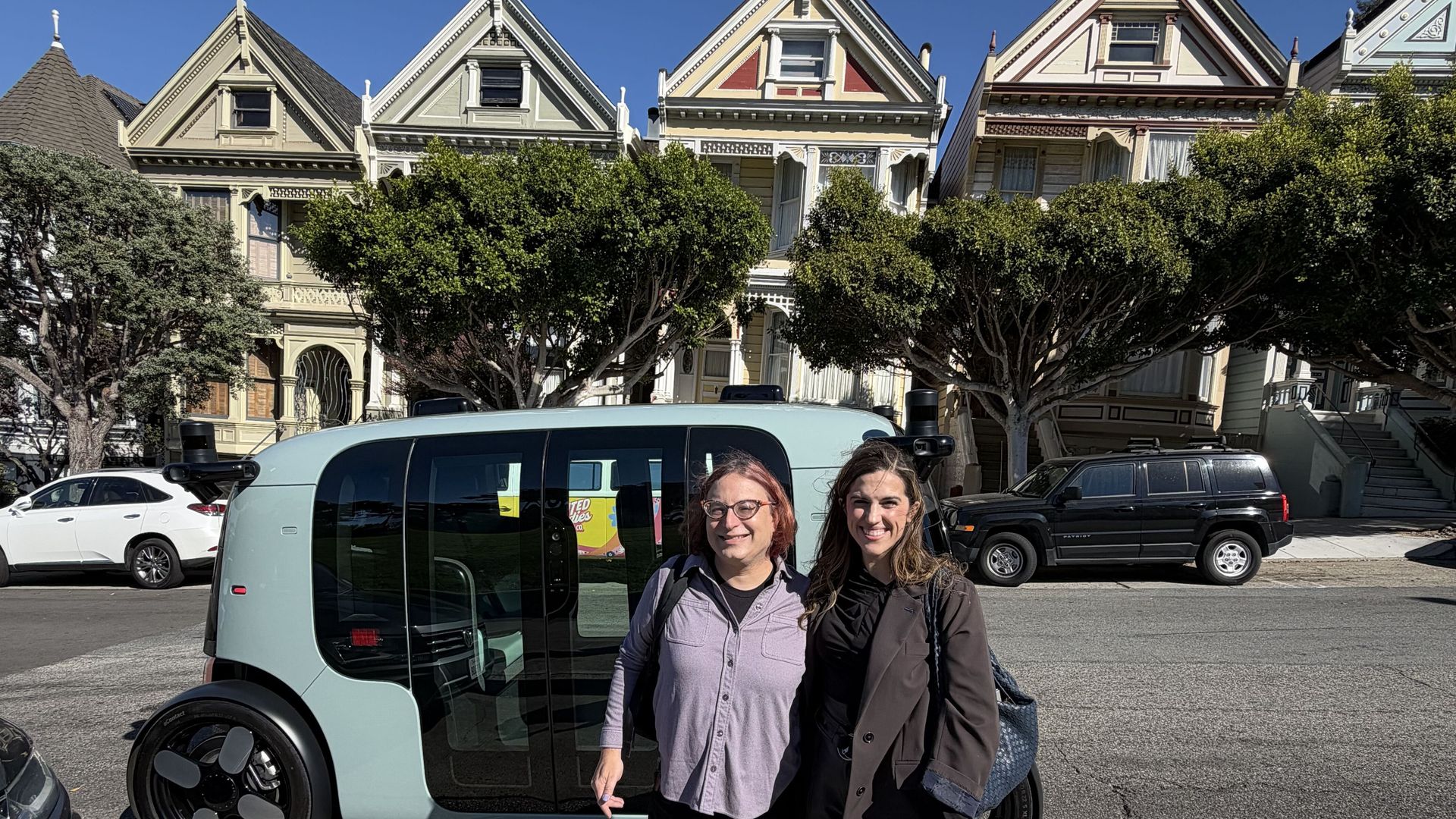
Ina and Mady, together for once after some great discussions at an Axios event in San Francisco yesterday. (Though Mady took the red-eye back to the other coast.) Today's AI+ is 1,189 words, a 4.5-minute read.
1 big thing: Scoop: AI companies plot "the day after"

Top executives at Anthropic, OpenAI and other AI companies are privately gaming out scenarios for a public and political revolt after a catastrophic AI event.
Why it matters: These officials anticipate a large-scale event, most likely a cyberattack, that shuts down access to financial services, internet connectivity, or even power and water.
- The first example of significant real-world harm caused by unsafe AI would turn an already wary public further against the technology and its leaders, including Anthropic CEO Dario Amodei and OpenAI CEO Sam Altman, as well as President Trump for his reluctance to regulate it.
Threat level: While scenario planning is common within many companies and national security settings — the Pentagon has been running war games for decades — the difference is that many top AI researchers and executives believe a major incident is inevitable.
- "OpenAI conducts preparedness exercises where teams discuss and work through a range of potential scenarios," a company spokesperson said. "These scenarios are not treated as inevitable, but are meant to help us prepare for a variety of circumstances."
- Anthropic declined to comment.
Zoom in: The blame game will start whether a rogue-agent swarm breaks containment from an internal testing environment or a bad actor finds unexpected ways to use available models.
- A recent campaign targeting South Korean financial organizations — including reported breaches at two banks — shows the damage one person can do.
- A hacker from China allegedly used AI tools from China-developed models, including DeepSeek, to steal data from tens of thousands of bank customers. The attacker used Claude Code to ask for help finding places to sell the stolen data, according to cybersecurity firm CrowdStrike.
Top AI planners assume Democrats, ascendant after the midterms, will move fast to shut down AI but will face significant challenges.
- An aging Congress, out of touch with the AI revolution, could find itself out of its depth.
- The global economy is now heavily intertwined with an AI infrastructure buildout. Slowing it down could hit an already fragile economy hard.
- Too many open-weight models can already be freely downloaded and used to cause harm, a problem most cybersecurity pros see as solvable only by using AI to fight rogue AI.
Between the lines: The planning involves red-teaming for worst-case scenarios. It focuses mainly on racing to educate members of Congress.
- Company executives know regulation has no chance of passing right now, but still want to shape the legislation and policies U.S. leaders will turn to after a first catastrophic event.
What we're watching: Many AI industry insiders told Axios they believe a major event will occur in the next six to 12 months.
- Even with Democrats in control of the House and Senate, the companies see fractured politics as the norm, including within the Democratic Party.
- Some of the most heavy-handed Democratic proposals include banning superintelligence or pausing advanced AI development.
- Others have bipartisan support and even some industry buy-in, including a required kill switch on advanced AI. But experts have questioned the viability of trying to turn off all AI systems.
The bottom line: In a real crisis, Washington can set partisan differences aside. One Democratic aide pointed to cooperation during COVID and the 2008 financial crisis.
2. The risk of an AI-vs.-everything-else economy

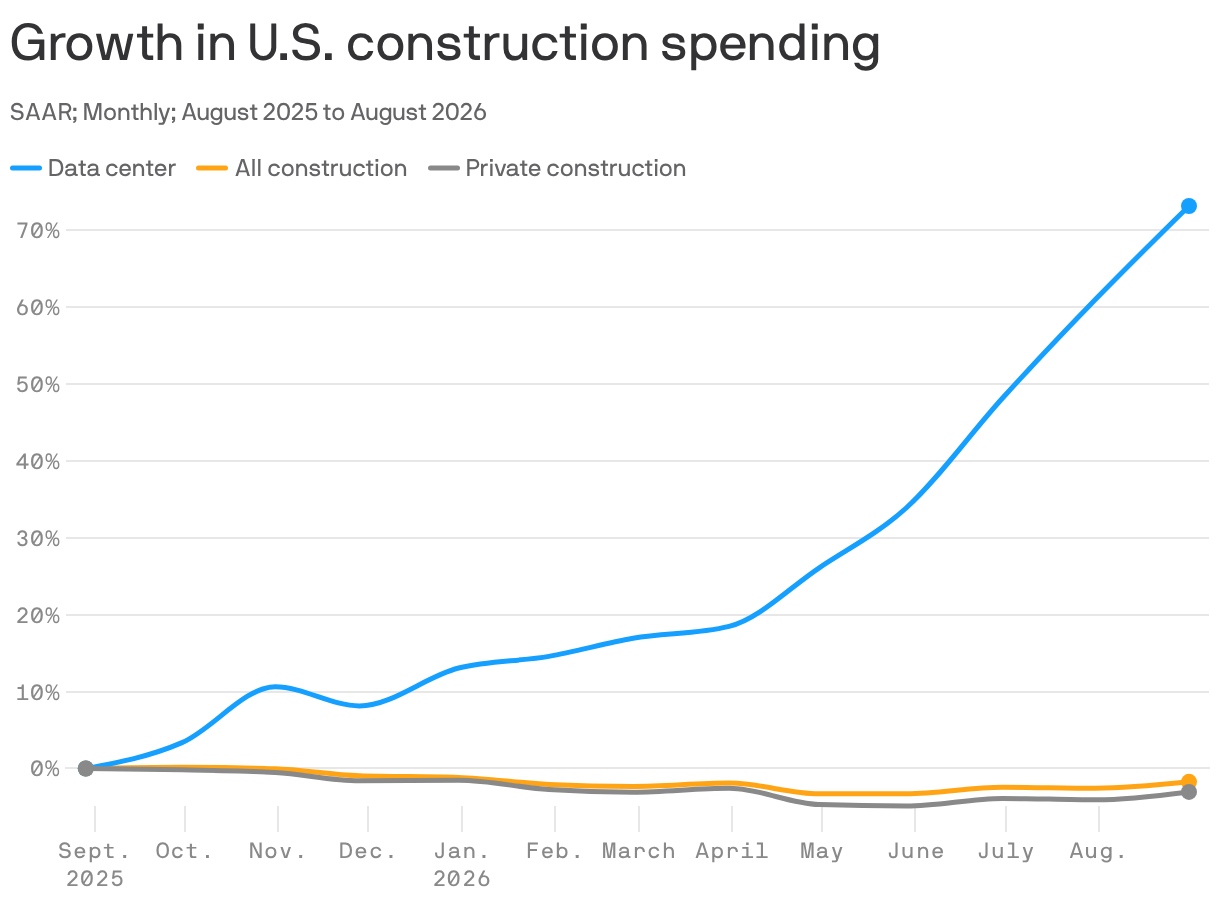
More and more, it seems as if there's the AI economy — and everything else.
Why it matters: The growing chasm between the breakneck growth of the AI world and the slower pace of the economy where most Americans work and live has huge implications, especially for the markets.
Zoom in: The most recent numbers on U.S. construction spending through August — shown above — paint the picture remarkably clearly.
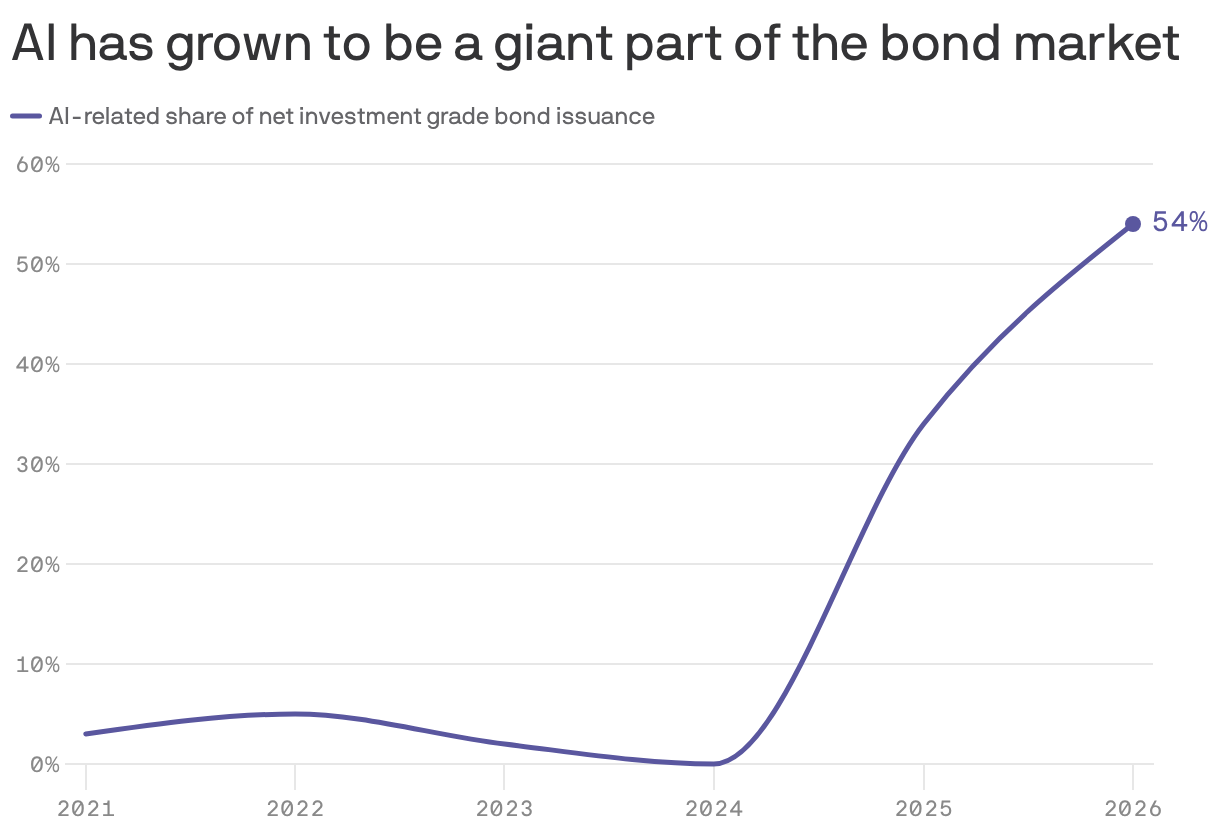
Zoom out: The same divide is an important theme in the markets as well.
- In corporate bonds, AI-related offerings accounted for more than half of net investment grade issuance for the year through the end of August, according to data from Apollo and Bloomberg.
And of course, excitement over all things AI-related has supercharged the market values of Nvidia, the hyperscalers and other AI-related tech stocks.
Stunning stat: The weighting of the S&P 500 technology sector in terms of market capitalization is now roughly 40%. That's higher than during the peak of the dot-com bubble.
- But that actually underplays the impact of AI.
- If you throw in the hyperscalers Meta and Amazon, which S&P doesn't include in the tech sector, the share of the AI-pilled part of the blue chip index climbs closer to 50%.
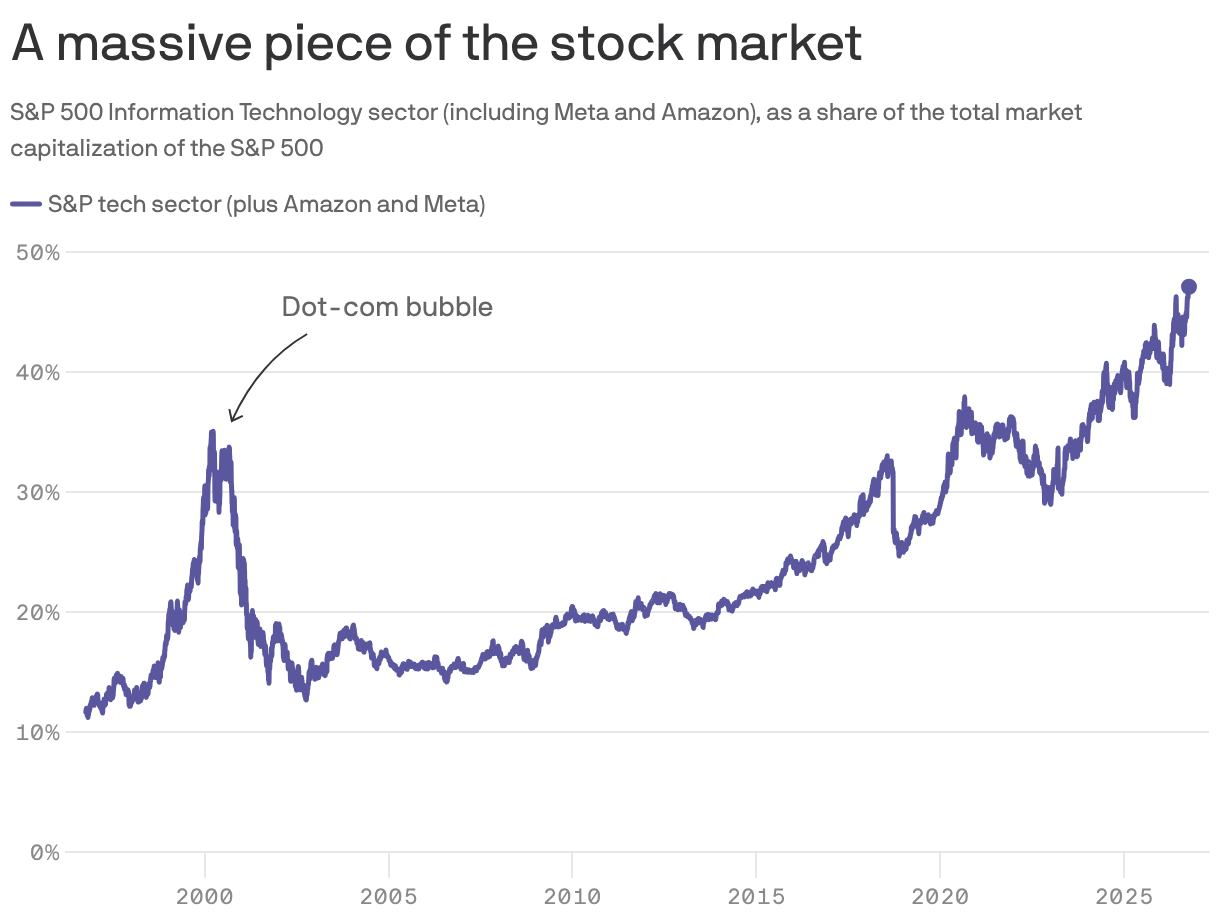
The bottom line: The growth gap between AI and everything else means the U.S. economy and the markets are increasingly yoked to AI — and all the risks that come with it.
3. Exclusive: Anthropic's infrastructure defense
Anthropic is launching a new initiative to bring its most powerful AI models and engineers to companies protecting power grids, water utilities and other infrastructure, the company first shared with Axios.
Why it matters: Those institutions are struggling to secure aging, complex systems as AI threatens to make cyberattacks faster and cheaper.
Driving the news: Under its new Critical Infrastructure Defense Program, Anthropic will provide frontier AI models, onsite engineers and threat research.
- Participating companies will use these resources to identify and fix vulnerabilities in their customers' systems.
- The program's founding partners include Accenture, Booz Allen Hamilton, CrowdStrike, Deloitte, Dragos, Hitachi, Insane Cyber, Nozomi Networks, Palo Alto Networks, PwC and Rockwell Automation.
- Anthropic said several partners are already using Claude to fix vulnerabilities and help customers do the same.
Zoom in: Anthropic is also launching a free AI-powered vulnerability scanning service for open-source software projects, called OSS Scanner.
- Participants will receive periodic scans from Claude, along with automated reports detailing vulnerabilities, how they could be exploited and suggested fixes.
The big picture: Anthropic, OpenAI and other AI developers are looking for ways to put their most powerful models in the hands of cyber defenders as hackers gain access to similar capabilities.
- Anthropic's new initiative builds on lessons from Project Glasswing, which gave vetted organizations access to its most capable AI models to identify security vulnerabilities.
- The company said the project demonstrated how quickly AI can uncover vulnerabilities, but also how difficult it remains to verify and fix them.
4. Training data
- The Trump administration suspended Microsoft from a key green card program yesterday. A few hours later, it honored CEO Satya Nadella with an innovation medal. (Axios, White House)
- Anthropic banned "abusive or cruel behavior" toward Claude yesterday. (The Verge)
- OpenAI's annualized revenue is $50 billion, about $20 billion less than previously reported figures. (Axios)
5. + This
After the Axios event, we had a pair of fascinating rides in autonomous vehicles.
- First, we both took our first Zoox ride together, riding from the company's Union Square cafe to the Painted Ladies and discussing the service with two of the company's employees.
- From there we took a ride in one of Waymo's newer Ojai vehicles, letting Gemini catch us up on all the AI news we had missed during that day's event.
Thanks to Bradley Olson for editing this newsletter and Matt Piper for copy editing.
Sign up for Axios AI+