Axios AI+
January 17, 2025

It wasn’t easy, but I found one of the few places in Munich with free soda refills: the U.S. burger joint Five Guys. Today's AI+ is 1,163 words, a 4.5-minute read.
1 big thing: China's AI gets better and cheaper


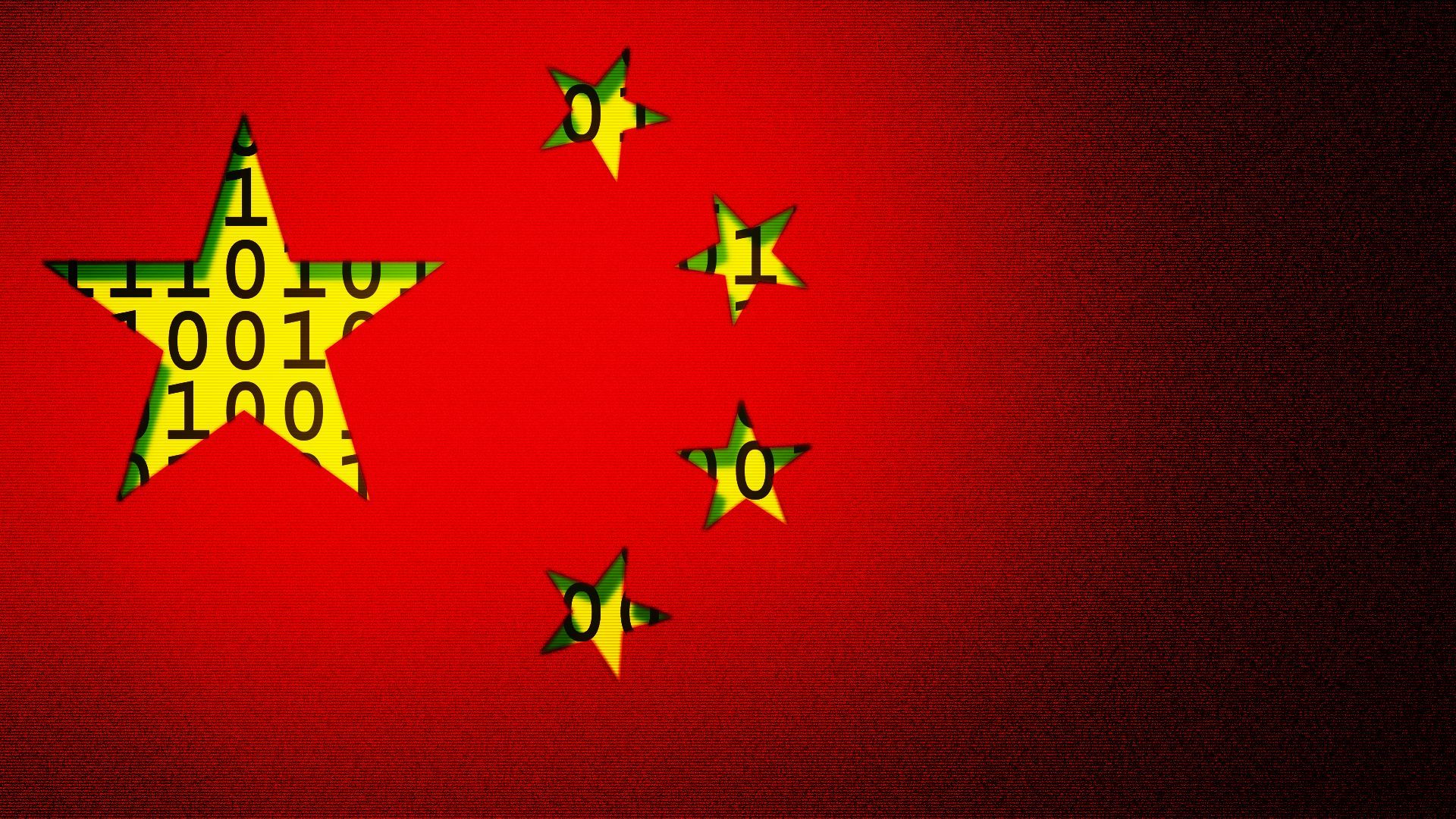
Chinese AI makers have learned to build powerful AI models that perform just short of the U.S.'s most advanced competition while using far less money, chips and power.
Why it matters: American policies restricting the flow of top-end AI semiconductors and know-how to China may have helped maintain a short U.S. lead at the outer reaches of the AI performance curve — but they've also accelerated Chinese progress in building high-end AI more efficiently.
Catch up quick: In late December, Hangzhou-based DeepSeek released V3, an open-source large language model whose performance on various benchmark tests puts it in the same league as OpenAI's 4o and Anthropic's Claude 3.5 Sonnet.
- Those are the most advanced AI models these companies currently offer to the broad public, though both OpenAI and Anthropic have next-generation models in their pipeline.
Stunning stat: Training V3 cost DeepSeek roughly $5.6 million, according to the company.
- OpenAI, Google and Anthropic have reportedly spent hundreds of millions of dollars to build and train their current models, and expect to spend billions in the future.
- AI pioneer Andrej Karpathy called DeepSeek's investment "a joke of a budget" and described the result as "a highly impressive display of research and engineering under resource constraints."
Between the lines: In an interview last year, DeepSeek CEO Liang Wenfeng said, "Money has never been the problem for us; bans on shipments of advanced chips are the problem."
- The V3 model was trained on Nvidia H800 chips, a less-powerful version of a chip the U.S. banned for export to China in 2022. Export of the H800 was then prohibited when the U.S. tightened controls again the following year.
The big picture: Some U.S. officials have argued for restricting China's access to advanced AI chips even further in hopes of slowing the country's development of the technology.
- On Monday, the Biden administration announced another big round of export controls aimed at choking the supply of chips to China via third-party countries.
What's next: Advances like V3 and OpenAI's powerful new "reasoning" model, o3, have lent weight to recent claims by OpenAI CEO Sam Altman and other industry leaders who predict the industry is closing in fast on artificial general intelligence (AGI). (Plenty of other observers remain skeptical.)
- AGI — or AI that can solve problems and perform tasks at a human or beyond-human level — is a holy grail for AI researchers, and many in the industry and U.S. government believe the technology's first developer will win a massive economic, scientific and security edge.
- Biden's latest export controls have led some observers to conclude the government shares the growing sense that AGI is close.
- "This is a 'break in case of emergency' policy, and the Biden administration identified that the emergency is that AGI is just a few years away," Gregory Allen, director of the Wadhwani AI Center at CSIS, tells Axios.
Yes, but: AGI is also not well-defined, and both optimists and pessimists have complained that it's become a moving goalpost.
2. Pro Policy's guide to TikTok's muddy future


The options to save TikTok rest on shaky legal ground, ultimately leaving it up to U.S. companies to decide how much risk they want to take on.
Why it matters: A flurry of vague promises from President-elect Trump and his officials to save TikTok is making it difficult to know what is legally possible for the platform as it fights for its survival.
Driving the news: Last night U.S. officials reportedly said Biden would not enforce the Jan. 19 deadline for TikTok to go dark, leaving the fate of the app up to President-elect Trump on his first days in office.
- Leaving enforcement of the law up to the Trump administration is effectively a win for TikTok.
Here's what could happen next:
1. Trump punts it back to Congress. The law passed with overwhelming bipartisan support and some lawmakers are pushing to delay the ban.
- On Wednesday night, Senate Democrats tried to pass a bill to extend the ban deadline but Senate Republican Tom Cotton blocked it. On Thursday, Senate Democrats held a press conference stressing how important it is to delay.
- Senate Minority Leader Chuck Schumer said on Thursday that he supports a delay: "TikTok should survive, but under new ownership."
2. Trump issues an executive order. The incoming president is reportedly considering issuing an executive order that would suspend the ban for 60 to 90 days.
- But an executive order would not override the law. TikTok would still be banned, and violating the law on the books could cost companies $850 billion.
3. Trump grants a 90-day extension. The divest-or-ban law allows for a 90-day presidential extension, but only if binding legal agreements for a qualified divestiture are in place.
- No such agreements have surfaced. Trump's incoming national security adviser Mike Waltz said on Fox that Trump would negotiate a deal to keep TikTok from going dark.
4. Trump strikes a deal during the extension period. The incoming president told SCOTUS in a filing that he alone can negotiate a deal through political means that will protect creators' First Amendment rights and address the government's national security concerns.
- But TikTok has been steadfast in its refusal to sell, calling one report of a sale to Elon Musk "pure fiction."
- And China and parent company ByteDance don't want to let go of the powerful algorithm, what creators and TikTok actually care about.
- One clue for what a deal might look like: Trump has said previously that he doesn't want a deal to result in even bigger monopolies, pouring cold water on tech giants trying to buy the app.
5. Trump tells his administration not to enforce the law. App stores could face a $5,000 fine per user under the law, with a five-year statute of limitations.
- Justice Brett Kavanaugh pointed out during oral arguments that providers "are not going to take that risk unless they have the assurance that a presidential statement of non-enforcement is, in fact, something that can be fully relied on because the risk is too severe otherwise, right?"
The bottom line: It's going to come down to the level of risk companies like Google, Apple and Oracle want to take.
Axios Tech Policy is covering all of TikTok's twists and turns. Get it in your inbox.
3. Training data
- Apple pulled its AI-generated news notification summaries after they regularly hallucinated fake headlines. (Axios)
- The number of teens using ChatGPT for schoolwork has doubled in the last year. (Pew Research)
- Former OpenAI exec Mira Murati just poached Jonathan Lachman for her new AI research lab. Lachman previously led special projects at OpenAI. (Wired)
- The FTC has referred a complaint about Snap's My AI chat companions to the DOJ. The complaint says the app could harm young users. (The Hollywood Reporter)
- Meta's CTO, Andrew Bosworth, reportedly told some employees that parts of the company's recent rollout of content moderation changes were "pretty ham-fisted, borderline unintentional." (The Information)
4. + This

An unexpected treat in Munich was getting to see this exhibit celebrating the works of Keith Haring and Andy Warhol.
Thanks to Scott Rosenberg and Megan Morrone for editing this newsletter and Matt Piper for copy editing it.
Sign up for Axios AI+
