Axios AI+

September 25, 2025

Happy National Quesadilla Day (sorry if that was too cheesy).
🚨 A day after Trump's reversal on Ukraine, President Volodymyr Zelensky told Barak Ravid on "The Axios Show" that if Russia doesn't end the war, Kremlin officials should find the nearest bomb shelter. Watch the clip
- Catch the full episode, out tomorrow. Subscribe to our YouTube
Today's AI+ is 1,273 words, a 5-minute read.
1 big thing: AI's trillion-dollar data center bet

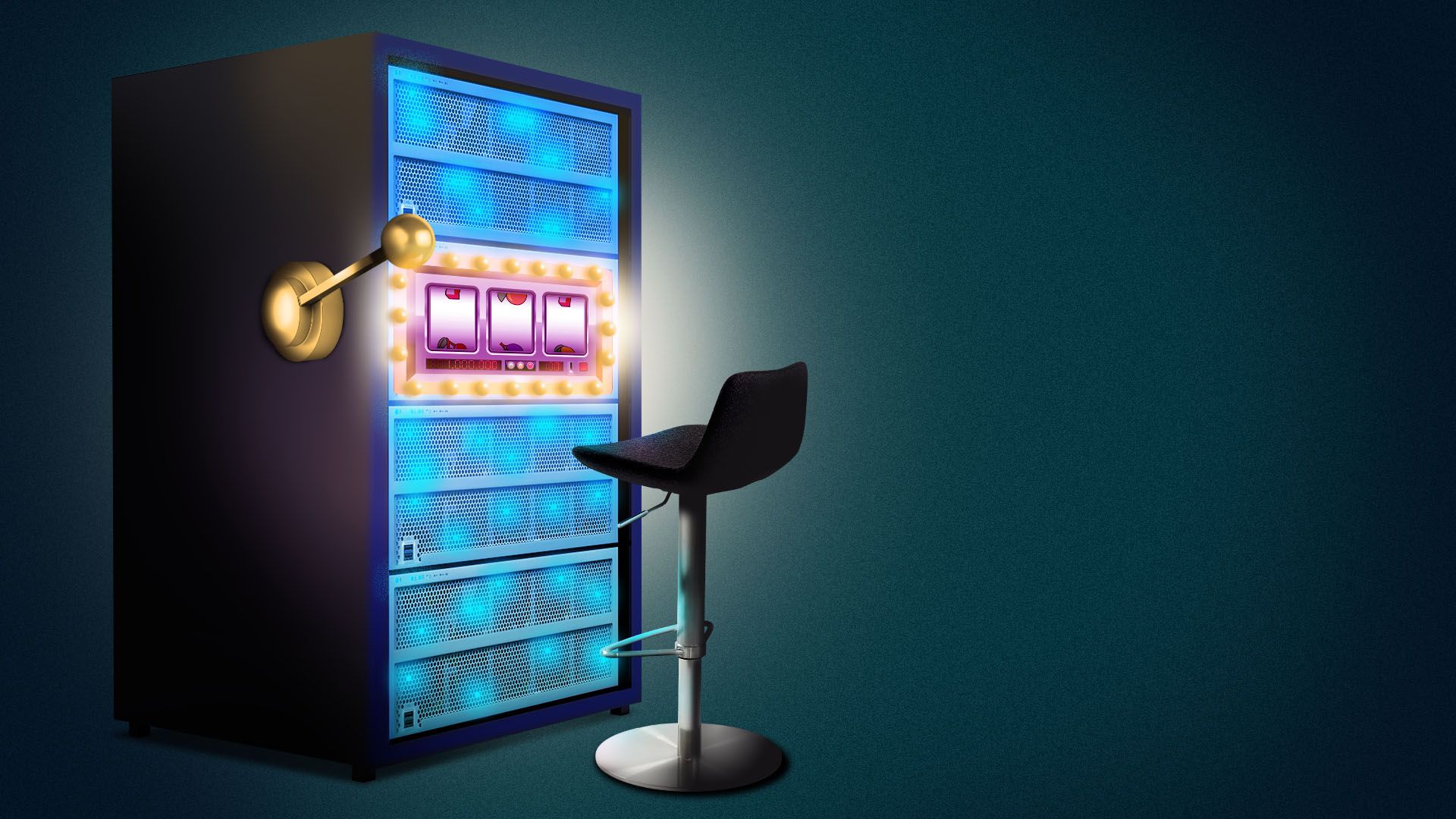
With their latest deals to fund the data center boom, AI firms are making history — in terms of dollar size, convention-busting structure, and astronomical risk.
Why it matters: The U.S. is betting its economic fortunes on the belief that OpenAI's Sam Altman, Nvidia's Jensen Huang and other AI leaders are wizardly innovators dreaming up novel financing vehicles to drive a golden future — rather than salesmen juggling billions and praying the music never stops.
Friction point: The trillion-dollar question neither Silicon Valley nor Wall Street can answer is whether the AI building spree will end up looking more like Google's epochal long-term value creation or Enron's catastrophically faulty financial engineering.
Driving the news: Nvidia announced Monday it would invest up to $100 billion in OpenAI in stages, with OpenAI using the money to "build and deploy at least 10 gigawatts of AI data centers with Nvidia systems."
- OpenAI also announced Tuesday additional commitments for its Stargate alliance with Oracle and SoftBank to build five new U.S. data centers. This brings the sum it has lined up for the effort $400 billion of the way toward a $500 billion goal.
- Google, Microsoft, Meta and Amazon have all projected a total of hundreds of billions more in capital expenditures on data centers for AI.
Yes, but: Some market observers are asking questions about the closed-loop appearance of the OpenAI-Nvidia deal.
- "Nvidia to pay openai so they can get paid by softbank so they can pay oracle to pay nvidia," CNBC's Steve Kovach joked on Bluesky.
- The deal's structure "will clearly fuel 'circular' concerns," one Wall Street analyst wrote.
Flashback: At the raging peak of the dotcom-era bubble in the late '90s and early 2000s, online ad giants like AOL Time Warner and high-flying telecoms like Qwest were accused of inflating revenue figures by essentially flooding customers with cash that the customers would then spend on ads or services.
- Such parallels haunt today's AI boom and reinforce the skeptical view that this investment bonanza might be a shell game and can't last forever.
The other side: The big bucks flowing into data centers are coming not from paper gains — the skyrocketing IPOs fueled by day-trading speculators that fueled the '90s boom and then evaporated — but from tech giants' profit-fed cash hoards.
- "These companies aren't mortgaging the future; they're spending current winnings," Semafor's Liz Hoffman notes.
- And in the case of Nvidia's OpenAI deal, the chipmaker is getting a stake in the ChatGPT maker — an investment opportunity many other companies are also taking right now (or wish they could).
Big Tech has a long history of cyclical overinvestment, most famously with the turn-of-the-millennium fiber buildout.
- As this wheel turns, fortunes are made and lost in a flash, depending on investors' timing.
But even if today's AI market goes south, data centers are durable goods — hardware and buildings.
- The companies that own them can still use them to bootstrap whatever technology wave comes next.
Our thought bubble: The real unknown in this gigantic equation is AI consumption.
- If OpenAI and Nvidia are right in forecasting a hockey-stick growth curve for AI demand in the short and medium term, then their outsize investment plans probably make sense. (That's putting aside AI's other grim worries — environmental costs, social harms and existential fears.)
- But at this point the industry's whole project is built on best-case assumptions.
- Tremors of doubt — slowdowns in chatbot adoption, evidence that AI isn't boosting productivity, a public rebellion against AI "slop" — could bring the game to a messy end.
2. Exclusive: Nansen's new crypto trading chatbot

Blockchain data firm Nansen today launched a chatbot trained on its database of top traders across more than two dozen public blockchains.
Why it matters: It's a new way to sort out profitable trades with a tool that sifts through an enormous trove of crypto data.
What we're watching: Nansen will eventually let users turn their money over to bots to let the AI trade for them. It's already testing trading agents internally.
- A trader could give a bot orders to trade on the volatility of a token, telling it to buy, for example, ether (ETH) every time it drops 2%. And then sell when it's up 4%. Then repeat.
- The agent could do this 24/7, and the owner would never even need to look.
- The company aims to release the product by year's end but is still testing for safety, such as making sure bots stick to guidelines and don't trade on hallucinated facts.
How it works: Blockchains are public, which allows a company like Nansen to keep an eye on the trading and success of different accounts. Since launching in 2020, Nansen has tracked the smartest money and the biggest wallets, allowing other traders to use the moves of the best informed investors to inform their own trades.
- "To some degree, you have to be very knowledgeable in the space itself already" to make sense of all that information, Logan Brinkley, head of product UX and design at Nansen, told Axios.
- The chatbot acts as an expert that can discuss trading ideas and also explain its reasoning.
It's also reading about crypto on X, so you don't have to.
We tried out the system, which the company is calling Nansen AI, live on a call to Brinkley, who told it he had some Solana (SOL) and we wanted to grow those holdings of the token over the next six months.
- The chatbot suggested devoting 50% to simply staking SOL, which essentially generates a guaranteed return in the asset of around 6%.
- Then it suggested setting aside 30% for trading the highest volume tokens (with some suggestions) and 20% for buying new tokens, which the chatbot can help identify over time.
- Finally, it suggested risk management strategies such as closing out trades at 5% to 10% in losses and taking profits between 20% to 30% in gains.
Yes, but: Like all chatbots, Nansen's can hallucinate. Brinkley cautions users to confirm what the bot tells them.
Zoom out: Nansen isn't the only company piping its data into an LLM.
- For example, the world's largest exchange, Binance, has a bot available on the chat app Telegram, and another data firm, Messari, has a bot called Copilot available to its paid users.
What's inside: Right now, Nansen's chatbot is running Anthropic's Claude under the hood, but the team continues to research which overall model works best.
- The bot continuously updates its information about the market based on Nansen's data and customizes responses based on the user's own portfolio.
- Brinkley compared it to building a brain just for your trading goals. "And the more knowledgeable and trustworthy that brain is," Brinkley said, "the better results you'll have."
3. Training data
- Intel has reportedly approached Apple to invest in its comeback efforts. Apple abandoned using Intel chips years ago. (Bloomberg)
- Mark Zuckerberg poached another star OpenAI researcher, Yang Song, to become research principal at Meta Superintelligence Labs. (Wired)
- Microsoft officially announced its support for Anthropic's models within Microsoft 365 Copilot. (The Verge)
4. + This
Back in 2006, 4-year old Jacob Wilson threw the ceremonial first pitch to his dad, Major League Baseball shortstop Jack Wilson. Last week, with Jacob now a major leaguer himself, the roles were reversed.
Thanks to Scott Rosenberg and Megan Morrone for editing this newsletter and Matt Piper for copy editing.
Sign up for Axios AI+
