Axios AI+

February 11, 2025

Hello again from Paris, after a busy Monday that saw me moderating at the AI Action Summit all day, talking to NPR from the banks of the Seine and then eating dinner made by an AI chef at the French Foreign Ministry. The amuse bouche? Elon Musk's bid to buy OpenAI (see below).
Also: Our hugest apologies for our delay in getting you this newsletter — caused by a technical lapse by the vendor that sends Axios newsletters. Thank you for reading and trusting Axios! Today's AI+ is 996 words, a 4-minute read.
1 big thing: Behind Musk's OpenAI bid


Elon Musk isn't likely to win his bid to buy OpenAI's key assets — a surprise maneuver that the planet's richest man launched while world leaders and AI CEOs were gathered for a Paris summit.
- But Musk's $97.4 billion offer will almost certainly throw sand in the complex gears of Sam Altman's ongoing efforts to raise tens of billions more for OpenAI and to transform its corporate structure.
The big picture: OpenAI operates as a nonprofit dedicated to developing advanced AI for humanity. Today it also controls a for-profit subsidiary that makes and runs ChatGPT.
- Altman and OpenAI's board want to reorganize OpenAI, spinning out its for-profit unit — but to do that, the nonprofit has to be fairly compensated.
- By putting a price tag on the for-profit's assets — one that appears to be higher than previous estimates of what that figure might look like — Musk could make it much harder for OpenAI's board to maneuver.
Driving the news: Early this morning, Altman told Axios on the sidelines of the AI Action Summit that "OpenAI is not for sale — OpenAI's mission is not for sale."
- "There's been like versions of Elon trying to, you know, somehow take control of OpenAI for a long time, so, it's like, OK, here's this week's episode," Altman said.
- Altman described Musk as "a competitor who is not able to beat us in the market and, you know, instead is just trying to say, like, 'I'm gonna buy this' with total disregard for the mission."
- Altman said the OpenAI board has not determined a valuation for OpenAI's assets yet and was still sorting that out.
Between the lines: Musk's move is partly trolling, partly about upstaging the Paris meeting, and partly about trying to slow down a strategic rival who has made recent inroads with President Trump.
The intrigue: Everyone in this situation has credibility problems or conflicts.
- Musk has been feuding with Altman for years and has a long record of overpromising and under-delivering in both financial maneuvering and product development.
- Altman himself — along with, to some extent, OpenAI's board — is in an ambiguous position in the negotiation to compensate the nonprofit for the for-profit's value: He has interests on both sides of the transaction.
But whatever the outcome of Musk's bid, it looks like Musk can claim a win.
- At a minimum, he makes life difficult for Altman — and if Musk or his AI firm, xAI, somehow do end up with OpenAI's assets, then he wouldn't kick them out of bed, either.
Catch up quick: Musk's offer, first reported in the Wall Street Journal, is backed by Musk and xAI and also by funds owned or run by several longtime investors in other Musk businesses, according to a press release announcing the move.
The bid also comes as Musk continues his controversial Department of Government Efficiency effort to cut U.S. government spending.
- One of the first things President Trump did when he took office was to announce Stargate, intended to funnel $500 billion in private sector investment to build infrastructure for OpenAI.
- Musk immediately bashed the project, one of Trump's early big wins, claiming none of the players had the necessary money.
- If Musk controlled OpenAI, it would further entangle his business interests with his new position in government.
The bottom line: This episode might well just become a footnote to the ongoing feud between the tech titans — but anything that influences OpenAI's long-contested evolution could also help determine the future direction of AI itself.
2. On the scene at the Paris summit
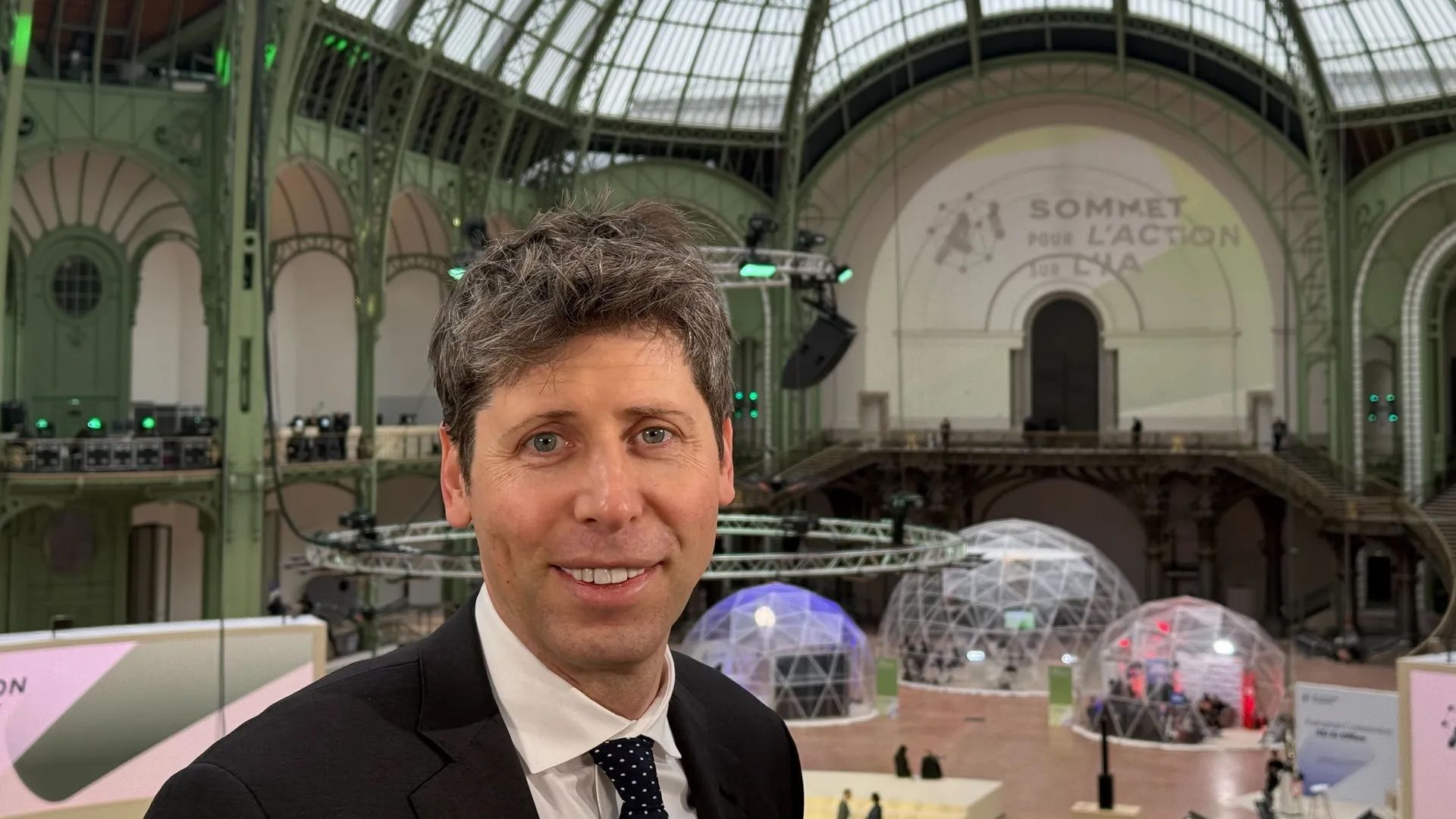
Altman was at a dinner in Paris when the news broke — having been seated near Vice President Vance — and tweeted: "no thank you but we will buy twitter for $9.74 billion if you want."
- Musk clapped back: "Swindler."
It was late enough Paris time that most of the AI summit's participants were also at dinners or parties, with the heads of state and CEOs at the Palais de l'Élysée, France's presidential palace.
- Tier 2 execs and officials were at a Foreign Ministry event featuring a cook-off between an AI chef and a Michelin star-awarded human being.
- The crowd was dancing to house music as texts bearing news of Musk's bid began buzzing around.
3. Scoop: DeepSeek banned on Senate devices

DeepSeek, the Chinese AI chatbot, has been blocked from all Senate devices, according to a notice obtained by Axios.
Why it matters: DeepSeek has put Washington on high alert as lawmakers worry Beijing is rapidly catching up to the U.S. in tech advancements.
What's inside: "To protect the Senate network and data, the CIO has blocked the use of DeepSeek, a generative Artificial Intelligence (AI) platform, on the Senate network and mobile devices," the bulletin states.
- "DeepSeek records, stores, and transmits user data, including passwords and dates of birth, on servers located outside of the United States. DeepSeek also retains the data of anyone who has ever used their product, even if you unsubscribe from the service."
- Senate chiefs of staff, staff directors, administrative managers, chief clerks, schedulers, system administrators and office emergency coordinators received the bulletin on Monday.
Catch up quick: The House restricted DeepSeek in January.
If you need smart, quick intel on federal tech policy for your job, get Axios Pro Policy.
4. Training data
- OpenAI is moving to reduce reliance on Nvidia by creating its own custom chips in-house. (Reuters)
- Google has rolled out a paid version of NotebookLM — its note-taking tool known for its AI-generated podcasts — with five times the usage as the free version. (TechCrunch)
- Lyft says it will release a fleet of self-driving taxis in Dallas as early as 2026. (The Verge)
5. + This
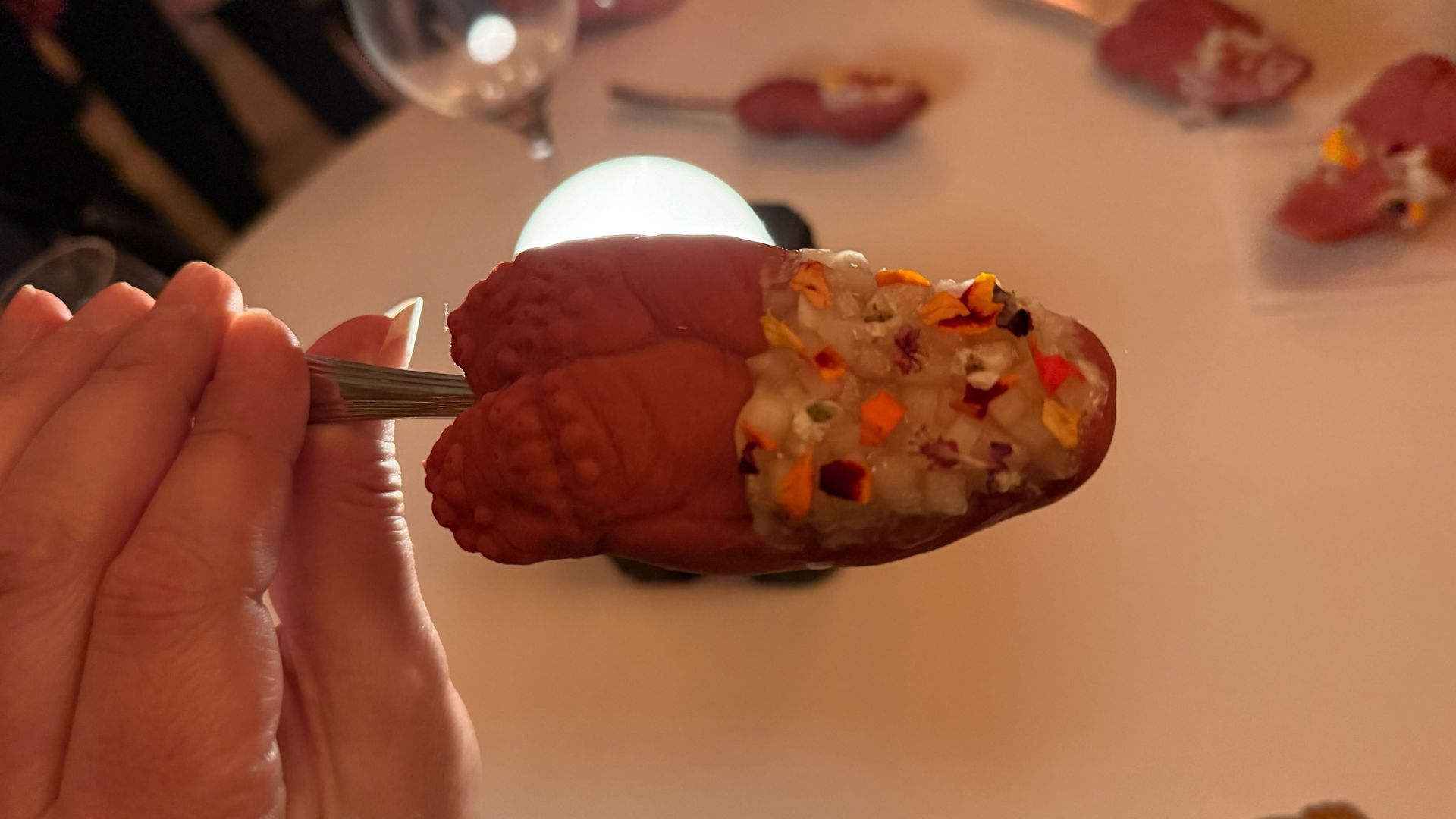
The talk of the Foreign Ministry dinner last night (at least until Musk started tweeting about his bid for OpenAI) was what to make of this tongue that was served as part of the AI chef vs. human chef dinner. The tongue itself proved inedible — with the consistency of hard rubber — prompting some to leave early to get something edible to eat.
Thanks to Scott Rosenberg and Megan Morrone for editing this newsletter and Matt Piper for copy editing it.
Sign up for Axios AI+
