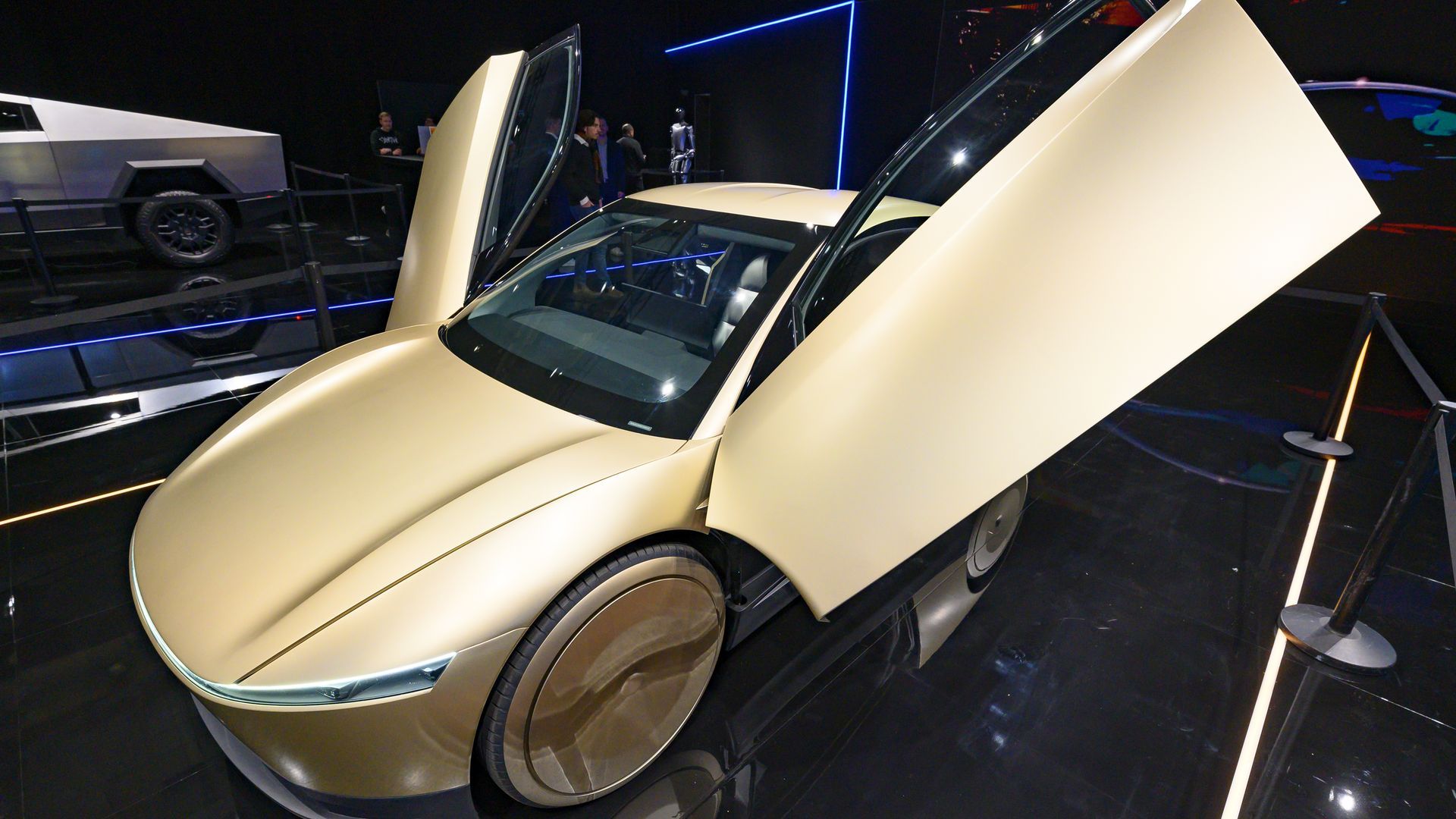
The Tesla Cybercab, a self-driving car prototype, on display at the AutoSalon on Jan. 10 in Brussels. Photo: Sjoerd van der Wal/Getty Images
Tesla plans to launch its robotaxi business in Austin in June and pilot production of its humanoid robot in 2025, the company says.
Why it matters: Tesla's Full-Service Driving (FSD) — a partially autonomous driving system requiring occasional driver intervention — "continues to rapidly improve with the aim of ultimately exceeding human levels of safety," the Elon Musk-led company said in its earnings report.
What they're saying: "Teslas will be in the wild with no one in them in Austin in June," Musk said during an earnings call.
Tesla said its Cybercab — a vehicle with no steering wheel built to serve as a robotaxi — will begin "volume production starting in 2026."
Reality check: Tesla's cars have had trouble driving themselves, and its Optimus robots, which wowed attendees at a 2024 event, still need help from human operators.
U.S. regulators are investigating the safety of Tesla's Autopilot system and its FSD software after a series of fatal collisions.
After reports that the Optimus robots interacting with attendees at an October event were actually remotely controlled by humans, Tesla sought redemption with a video showing Optimus doing various tasks in a factory.
The big picture: Tesla analysts are more focused on the company's future ambitions — including the development of its Optimus humanoid — than its past financial performance, according to Evercore ISI analyst Chris McNally.
Musk said the company will make at least several thousand Optimus robots in 2025, adding that their initial use will be for tasks inside Tesla factories.
What's next: Eventually, "Optimus will be able to play the piano and thread a needle," Musk said.
The bottom line: With Waymo having announced last year a robotaxi partnership with Uber in Austin, expect to see a lot more cabbie-less cabs roaming the streets.