Axios AI+

April 01, 2026


Ina here, reminding you that today is April Fools' Day, so be extra wary of whatever you read online. Today's AI+ is 1,061 prank-free words, a 4-minute read.
1 big thing: 500,000 lines of Anthropic code leaked

Source material powering Anthropic's Claude Code leaked for the second time in just over a year, publicly exposing the AI coding tool's full architecture, unreleased features and internal model performance data.
Why it matters: The leak hands competitors a detailed unreleased feature roadmap and deepens questions about operational security at a company that sells itself as the safety-first AI lab.
State of play: A file used internally for debugging was accidentally bundled into a routine update of Claude Code and pushed to the public registry developers use to download and update software packages.
- The file, which was quickly discovered by Chaofan Shou, pointed to a zip archive on Anthropic's own cloud storage containing the full source code, with nearly 2,000 files and 500,000 lines of code.
- Within hours, the codebase was mirrored and dissected across GitHub, quickly amassing thousands of stars.
What they're saying: "Earlier today, a Claude Code release included some internal source code. No sensitive customer data or credentials were involved or exposed," an Anthropic spokesperson told Axios.
- "This was a release packaging issue caused by human error, not a security breach. We're rolling out measures to prevent this from happening again."
Zoom in: The leaked code contained dozens of feature flags for capabilities that appear fully built but haven't shipped, according to an Anthropic spokesperson, including:
- The ability for Claude to review what was done in its latest session to study for improvements in the future while transferring learnings across conversations.
- A "persistent assistant" running in background mode that lets Claude Code keep working even when a user is idle.
- Remote capabilities, allowing users to control Claude from a phone or another browser, which was already rolled out for Claude Code.
Between the lines: Outside developers have already reverse-engineered Claude Code, prompting a takedown notice from Anthropic, according to TechCrunch.
- What's new is the roadmap: a clear picture of how Anthropic is building toward longer autonomous tasks, deeper memory and multi-agent collaboration.
- Those kinds of updates could be a boon for Anthropic's enterprise push, which is the core driver of its revenue strategy, as the AI lab prepares to go public.
Thought bubble: How AI companies lock down and secure their own systems is now just as important as how other organizations fend off hackers using these AI tools in their attacks, writes Sam Sabin, author of the weekly Future of Cybersecurity newsletter.
The bottom line: The leak won't sink Anthropic, but it gives every competitor a free engineering education on how to build a production-grade AI coding agent and what tools to focus on.
- And the company that markets itself as the safety-first AI lab just shipped its own source code to the public.
2. Will.i.am's AI on wheels
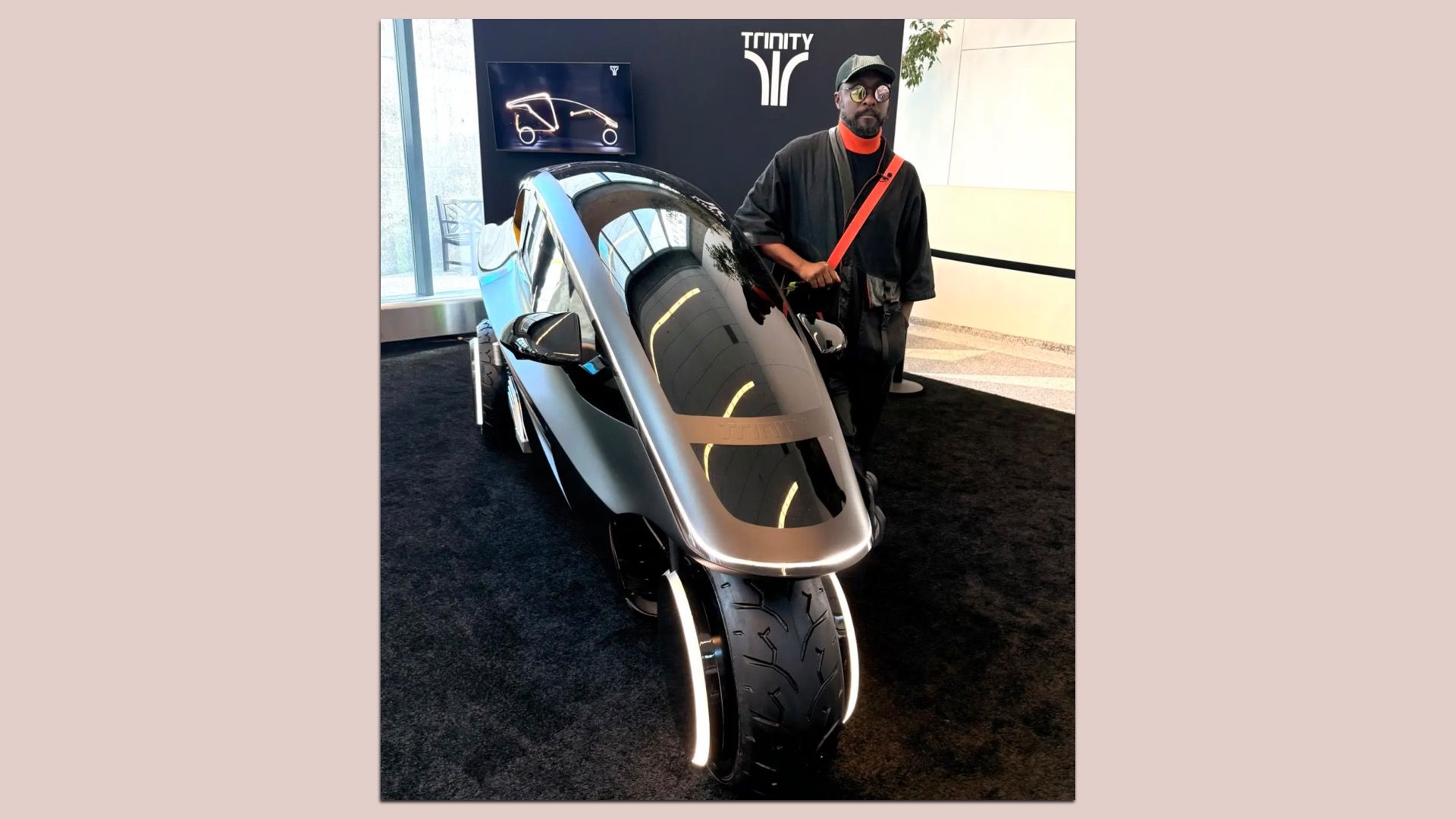
Pioneering a whole new class of car is hard enough, but musician will.i.am tells Axios he also wants his Trinity three-wheeled electric vehicle to be an AI agent, helping its driver plow through emails or plot out strategy.
Why it matters: Trinity is the epitome of the kind of ambition sweeping Silicon Valley: that AI can turn even a single-seat vehicle into a platform — and that building it can revive left-behind communities.
Catch-up quick: Unveiled at CES in January, Trinity's single-person vehicle looks a bit like something out of the movie "Tron."
- The vehicle is designed to be self-balancing, but not self-driving. It has an onboard computer that a driver can use via a conversational agent rather than a series of apps.
- Though tiny, will.i.am says Trinity should be able to go from zero to 60 miles per hour in under two seconds.
- He aims to get a plant up and running this year and churn out several hundred of the vehicles next year, with a price tag around $30,000.
Yes, but: History suggests that bold vision alone won't be enough: Building a new class of hardware and scaling manufacturing are hard enough, even before trying to make it affordable and integrate AI.
What they're saying: "It's not just taking me to work," the Black Eyed Peas frontman said in an interview at Nvidia's GTC conference last month. "It's a part of my workforce."
The big picture: Trinity may have been one of the most ambitious projects on display at Nvidia's GTC developer conference last week, but it's emblematic of how founders see the rise of AI helping revamp entrenched industries and usher in a new era of American prosperity.
- Will.i.am envisions Trinity helping revitalize inner cities. Manufacturing the vehicle in urban areas is just the start, he says, outlining a world in which nearby community colleges teach related robotics skills.
- He even imagines that residents could contribute their own ideas that get turned into skills that the onboard agent can perform.
- "How do we have our inner cities transform like Shenzhen was transformed during the mobile internet," he said in an interview last month, where his Trinity prototype was parked prominently at the entrance to the San Jose Convention Center. "In the agentic internet, how does Watts change forever? How does Oakland change forever?"
What we're watching: Whether Trinity makes it beyond the starting line.
3. Women are getting less praise for using AI

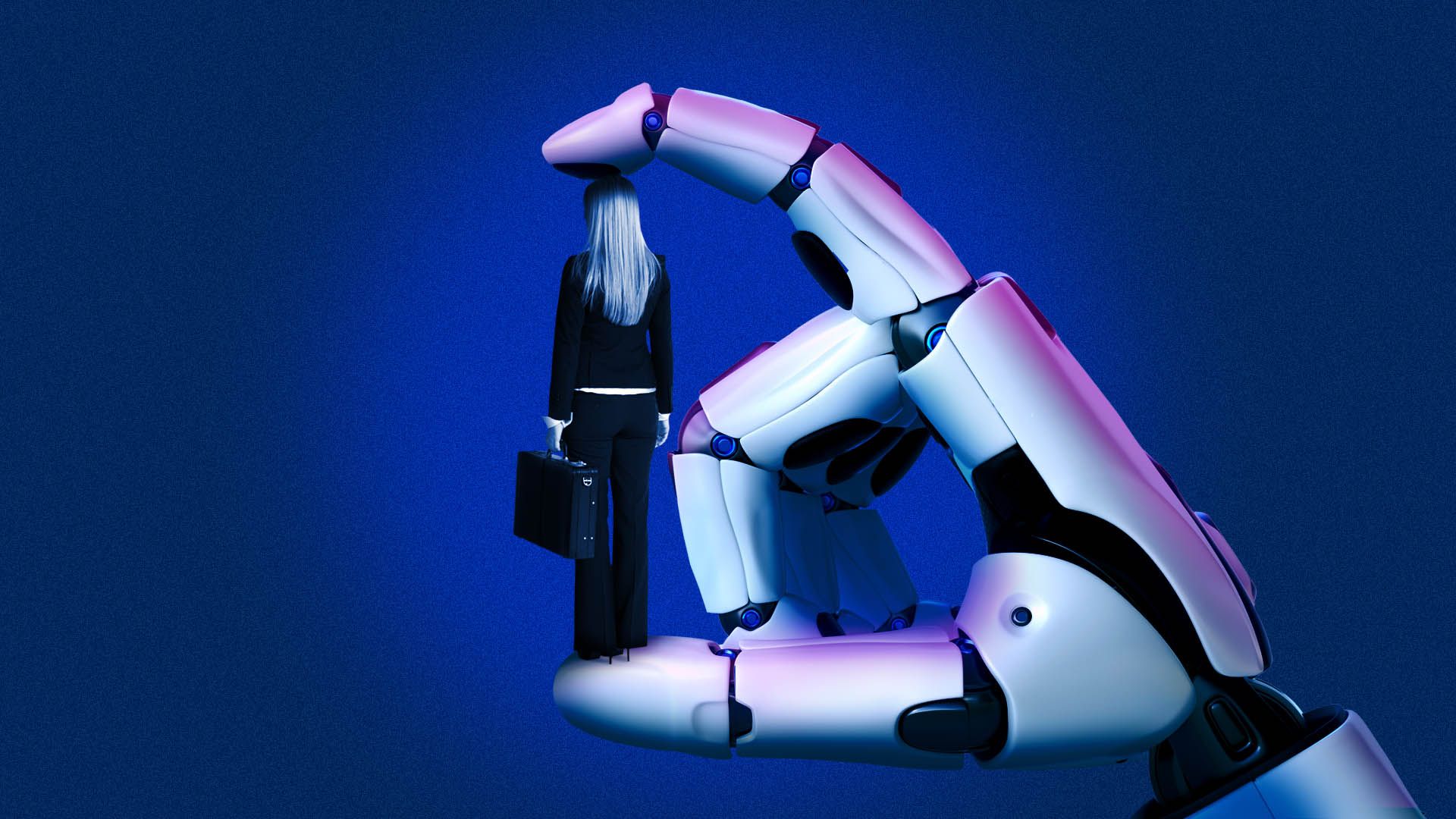
Women are less likely to use AI at work — and even when they do, they get less recognition for the effort, finds a new survey from LeanIn, the women's advocacy group.
Why it matters: Right now, AI ability is the skill many employers say they value most.
- Down the line, this recognition gap could exacerbate existing gender pay and promotion inequalities, LeanIn founder Sheryl Sandberg tells Axios.
Zoom in: 78% of men said they have used AI for work, compared with 73% of women, per a survey the group conducted in early March among 1,000 U.S. adults age 18 and over.
- Among those using AI, 18% of women said they've been praised for doing so, compared with 27% of men.
4. Training data
- OpenAI will make its shares available to retail investors months before it's expected to go public. (Axios)
- Microsoft's stock had its worst quarterly performance since 2008 as Wall Street questions its position in the AI race. (CNBC)
5. + This
Check out the stylings of Krish Shah, who managed to turn his MacBook into a trumpet.
Thanks to Megan Morrone for editing this newsletter and Matt Piper for copy editing.
Sign up for Axios AI+
