Axios AI+

July 01, 2026


Mady here after spending a day in Brooklyn meeting with sources as NYC hit 90 degrees. Speaking of long-distance travel, thanks to all of you who sent me Paris recs this week.
👀 Anthropic's Fable should be back online soon. More below.
Today's AI+ is 1,192 words, a 4.5-minute read.
1 big thing: New Anthropic model for everyday work

Anthropic is releasing Claude Sonnet 5, a lower-priced model designed to bring more agentic AI capabilities to everyday users without the same cyber-risk profile as its most powerful systems.
Why it matters: The company says Sonnet 5 can handle autonomous tasks — including browser use, planning, coding and knowledge work — while posing fewer dangerous cyber risks than its Opus and Mythos models.
Zoom in: Anthropic says Sonnet 5 approaches the performance of Opus 4.8, its most advanced widely available model, while Mythos and Fable are still restricted.
- Sonnet 5 was not deliberately trained on cybersecurity tasks and has a "much lower ability" to perform any dangerous cyber activities than Anthropic's current Opus models.
- Anthropic is in ongoing discussions with the Trump administration over its models and those talks include the release of Sonnet 5.
The intrigue: Anthropic's Mythos model is now available on a limited basis and Fable 5 is scheduled to return today (see below).
- This comes after the government abruptly asked Anthropic to take down these models over security concerns.
- The administration also asked OpenAI to stagger the release of its most powerful class of models, GPT-5.6.
Follow the money: Sonnet 5 becomes the default model for all Claude Free and Pro users and is also available to Max, Team and Enterprise customers.
- The company says the model gives developers a cheaper option for many coding and agentic workloads.
- This comes amid a renewed focus on AI usage costs that's led some companies and developers to pivot to cheaper Chinese models.
The bottom line: The AI labs are still releasing models as the administration figures out which to allow and which to limit.
2. Trump administration lifts Fable 5 restrictions



The Trump administration lifted export controls on Anthropic's Claude Fable 5 AI model last night, with access returning to customers today, Anthropic said.
Why it matters: The move, eagerly awaited by AI developers, restores public access to the company's powerful Mythos-class model that had been pulled for security reasons 18 days ago.
The big picture: The U.S. government's desired role in regulating and evaluating frontier AI models before release is still up in the air — creating an ad hoc regulatory environment for AI companies.
- It remains unclear what technical or policy changes Anthropic made to address Commerce Department concerns, particularly preventing access by foreign nationals.
What they're saying: Commerce Secretary Howard Lutnick said in a post on X that his office has "worked closely with Anthropic to analyze and approve Fable 5 to ensure alignment across the US Government and strengthen America's leadership in AI."
- "We're grateful to our users for their patience, and to everyone who worked with us on redeploying the models," Anthropic said on X.
- White House chief of staff Susie Wiles wrote on X that the government and private sector have "worked together in a way we have never seen before and this foundation of America First is unprecedented."
Threat level: U.S. officials, allies and leading AI companies have become increasingly concerned that frontier models could be misused to automate sophisticated cyberattacks or accelerate biological weapons development.
- At the same time, China is moving closer to producing its own Mythos competitor while continuing to release open-weight models that rival models like Anthropic's Claude Opus 4.8.
What's next: The Trump administration faces an August deadline under a recent executive order to create standardized benchmarks for evaluating the security risks of new AI models.
3. Exclusive: UN launches "AI for Good"


A new UN-backed commission will bring top tech executives and heads of state to the same table to forge global solutions for AI, per an announcement shared exclusively with Axios.
Why it matters: As global AI regulation grows more splintered, this initiative is an attempt to connect the executives building advanced AI with a group of global politicians.
Driving the news: The UN and its International Telecommunication Union are convening the AI for Good Global Commission, which will hold its first meeting on July 8 in Geneva, Switzerland.
- Salesforce CEO Marc Benioff and Rwandan President Paul Kagame will co-chair the commission.
- Other members include ITU Secretary-General Doreen Bogdan-Martin, Estonian President Alar Karis, and AI and tech policymakers from Kazakhstan, Namibia, Saudi Arabia, Singapore and Nigeria.
- Tech leaders include Amazon CEO Andy Jassy, Anthropic co-founder Jack Clark, Cohere co-founder Aidan Gomez, Microsoft president Brad Smith, and Nvidia founder and CEO Jensen Huang.
What they're saying: "AI is the most profound technological transition in history. And our values have to guide every step, because responsibility is the core of AI ethics," Benioff told Axios.
- The commission will bring together "the people who build AI, deploy it, shape policy, and represent communities," he said.
Between the lines: World governments are miles apart on how AI should be regulated, even as many countries agree that democratic values should govern the technology.
- The group's aim of "responsible AI solutions" may resonate in Geneva, but they could be harder to put into practice at individual companies and in different countries with diverging AI and tech regulation.
- The commission may have the most luck with its goal of bringing AI to people who lack internet access, which is 2.2 billion people worldwide, per the ITU's figures.
What we're watching: The group will hold its first meeting during the ITU's AI for Good Global Summit, just after the UN's Global Dialogue on AI Governance on July 6 and 7.
4. Google's AI boom increases emissions

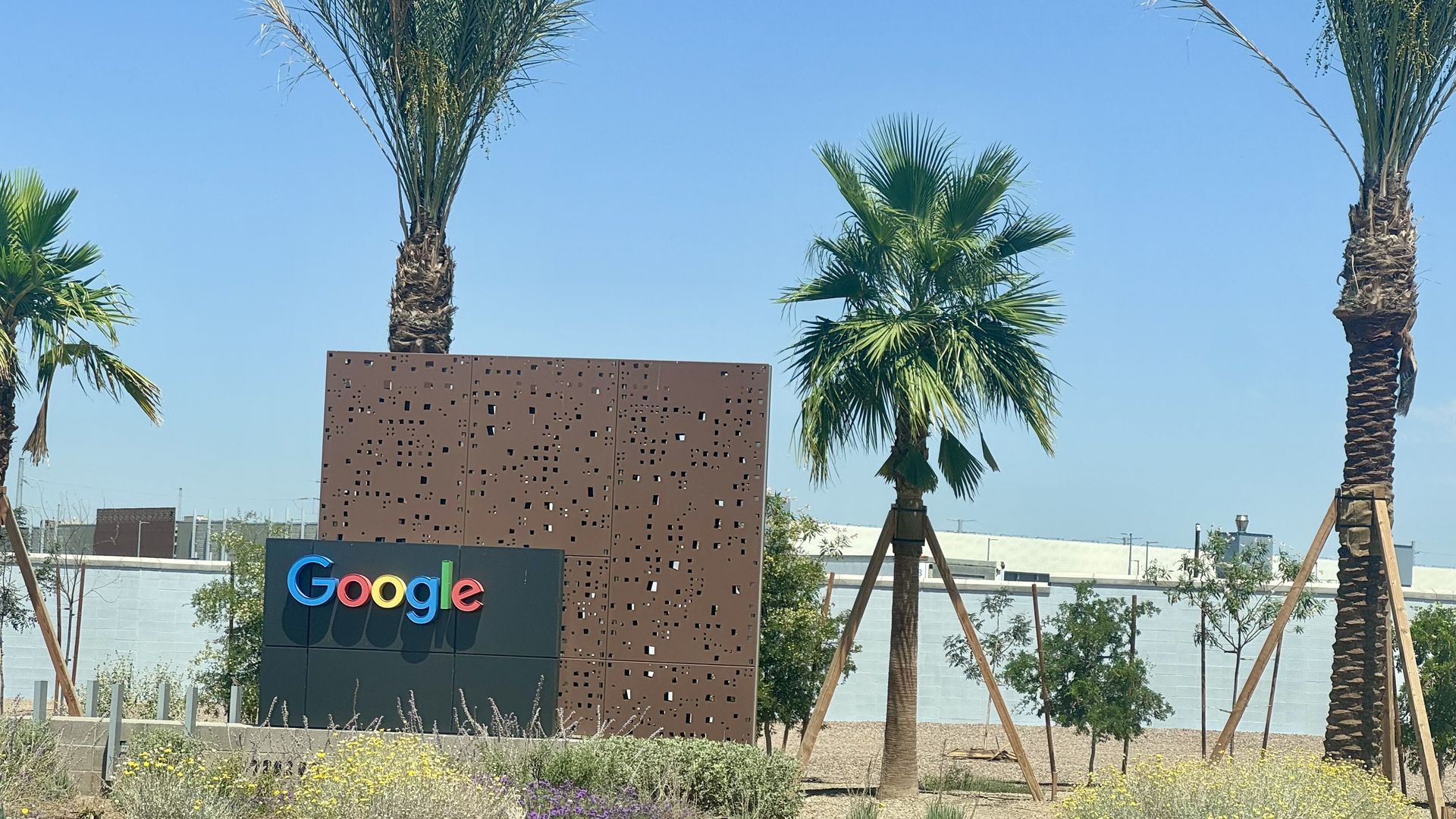
Google's electricity, water use and greenhouse gas emissions all climbed to record levels last year as the company raced to build more AI infrastructure.
Why it matters: Google has invested more aggressively than perhaps any other tech company in clean energy, yet its environmental report released yesterday shows how difficult it has become to keep climate goals on track amid the AI buildout.
Driving the news: Google's data centers are becoming more efficient, but the company's AI infrastructure is growing even faster.
- "This rapid expansion in energy demand is a reality we must manage actively, and we're committed to ensuring that the growth of AI doesn't become a rationale for lowering our environmental standards," the report states.
By the numbers: Most are going up.
5. Training data
- Heavy AI adopters are hiring faster than peers, per the latest Ramp data. (Financial Times)
- Anthropic yesterday announced Claude Science — software the company says can automate parts of the research process by pairing the company's models with various scientific tools and databases. (Bloomberg)
- Some OpenAI engineers have reportedly told co-workers about a new approach that could dramatically improve inference costs. (The Information)
- Google debuted a cheaper, faster version of its Nano Banana image generation engine. (TechCrunch)
6. + This
Mady here again after going on a deep dive about how people are getting access to Anthropic tokens at a massive discount via gray markets.
- If you're doing this, know someone who has, or just have a take on it, find me on Signal at Madymills.21
Thanks to Megan Morrone for editing this newsletter and Matt Piper for copy editing.
Sign up for Axios AI+
