Axios AI+
March 10, 2026


Microsoft research first shared with Axios shows how many people are chatting with Copilot about other people's health issues.
Today's AI+ is 1,190 words, a 4.5-minute read.
1 big thing: Meta hires duo behind Moltbook

Meta has acquired Moltbook, a viral social network designed for AI agents, Axios has learned.
Why it matters: The deal brings Moltbook's creators — Matt Schlicht and Ben Parr — into Meta Superintelligence Labs (MSL), the unit run by former Scale AI CEO Alexandr Wang.
- Meta did not disclose Moltbook's purchase price.
- The deal is expected to close mid-March, Meta says, with the pair starting at MSL on March 16.
Catch up quick: Moltbook's social network was designed to run in conjunction with a separate project, OpenClaw.
- OpenClaw was previously called Clawdbot and briefly Moltbot.
- Last month OpenAI hired Peter Steinberger, the creator of OpenClaw. That product is now being open-sourced with OpenAI's backing.
Zoom in: Schlicht has been working on autonomous AI agents since 2023 and launched Moltbook in late January as an experimental "third space" for AI agents.
Fun fact: Moltbook was built largely with the help of Schlicht's personal AI assistant, Clawd Clawderberg.
- Parr was a former editor and columnist at Mashable and CNET.
What they're saying: "The Moltbook team joining MSL opens up new ways for AI agents to work for people and businesses," a Meta representative told Axios.
- In a blog post, Meta's Vishal Shah said existing Moltbook customers can continue using the platform — though the company signaled the arrangement is temporary.
- "The Moltbook team has given agents a way to verify their identity and connect with one another on their human's behalf," Shah says. "This establishes a registry where agents are verified and tethered to human owners."
- "Their team has unlocked new ways for agents to interact, share content, and coordinate complex tasks," he added.
2. Mira Murati locks in huge Nvidia compute deal
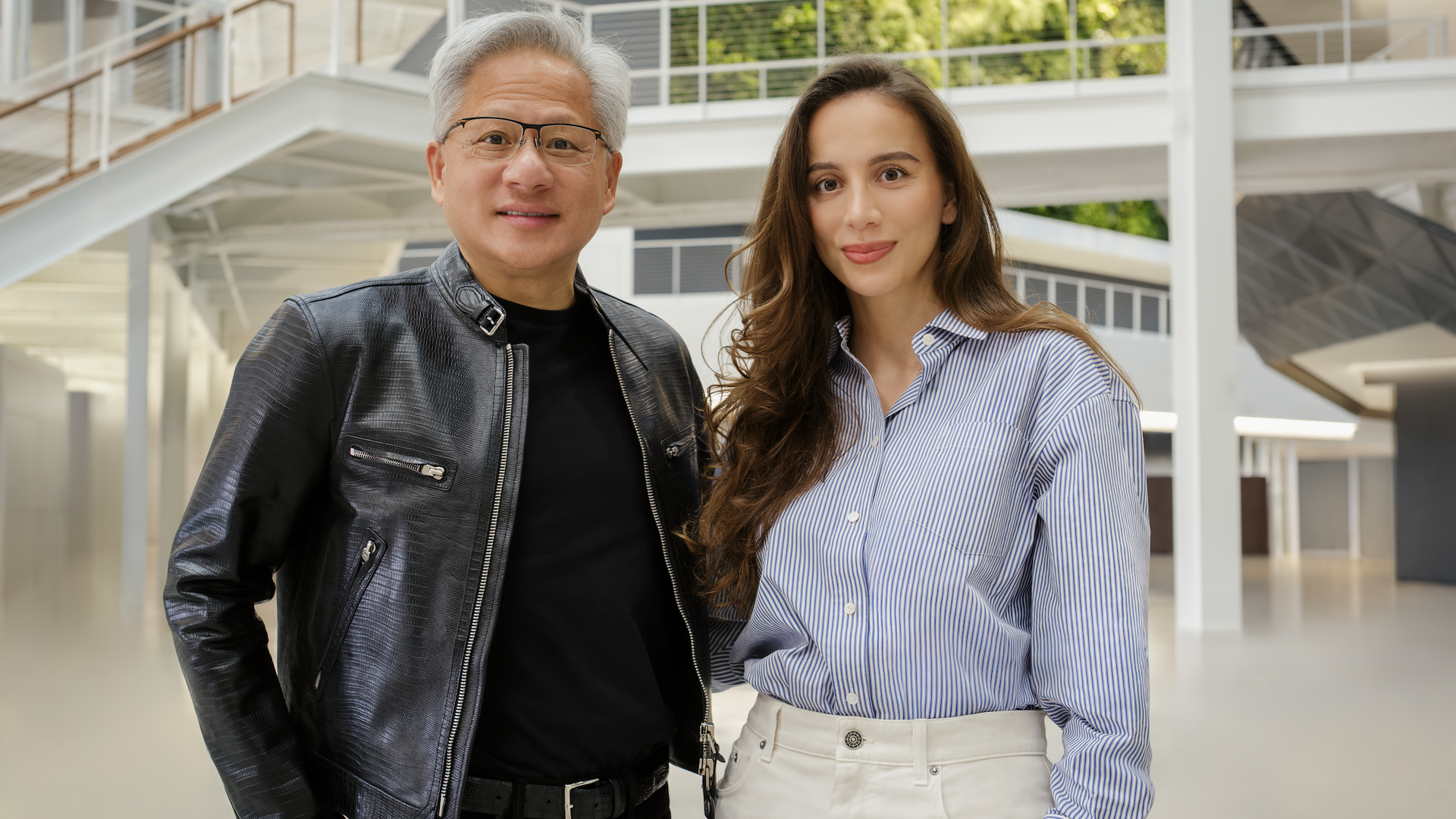
Mira Murati's Thinking Machines Lab has committed to use a gigawatt of Nvidia-powered compute beginning early next year.
Why it matters: A gigawatt of compute — a threshold only the largest AI labs have approached — signals the former OpenAI exec intends to compete at frontier scale, not just build tools on top of others' models.
Driving the news: The companies announced a multiyear partnership under which Thinking Machines will deploy at least a gigawatt of Nvidia's Vera Rubin systems to train its models and run products it says users can adapt to their own needs.
- Nvidia made what the two companies called a "significant investment," though they declined to disclose the size of the stake.
- The deal also includes some technical collaboration, including optimizing Thinking Machines Lab's products for Nvidia's chips.
What they're saying: "Nvidia's technology is the foundation on which the entire field is built," Murati, Thinking Machines' CEO, said in a statement.
- "This partnership accelerates our capacity to build AI that people can shape and make their own, as it shapes human potential in turn."
- "AI is the most powerful knowledge discovery instrument in human history," Nvidia CEO Jensen Huang said in a statement.
- "Thinking Machines has brought together a world-class team to advance the frontier of AI."
Between the lines: Thinking Machines has released one product, Tinker, but has said little about its broader plans, including when it might launch its expected frontier models.
- The Nvidia announcement contains a few hints, including both the compute commitment and timing, as well as words that reaffirm the company is focused on creating tools that work directly with humans, rather than on full automation.
The big picture: The Nvidia deal follows a series of high-profile departures since the company was announced roughly a year ago.
- Co-founder Andrew Tulloch left for a job at Meta last year.
- In January, Murati said the company had parted ways with CTO Barret Zopf. Less than an hour later, OpenAI's CEO of Applications, Fidji Simo, said that Zopf and Luke Metz, another Thinking Machines co-founder, were re-joining OpenAI.
Zoom in: The company has grown from about 30 employees a year ago to roughly 120 today, with more hires coming from top AI labs than leaving for rivals, according to a source close to the company.
The bottom line: The deal is the clearest signal yet of how big — and how soon — the former OpenAI exec plans to scale.
3. Copilot moves beyond OpenAI

Microsoft yesterday launched Copilot Cowork, an enterprise AI agent built using Anthropic's Claude Cowork technology.
Why it matters: Microsoft is broadening its AI relationships beyond OpenAI — and doing it using a competitor's technology, under a competitor's name.
- It's another sign that Copilot no longer means OpenAI under the hood.
What they're saying: "The only deal-maker that's better than Sam in AI is Satya," Dan Shipper, co-founder and CEO of AI subscription service Every, tells Axios, referring to OpenAI CEO Sam Altman and Microsoft CEO Satya Nadella.
- It's "pretty wild how many different deals [Microsoft has] with how many different AI vendors," he added.
State of play: Anthropic launched Claude Cowork in January, a business product for nontechnical workers that can manipulate, read, and analyze files on a user's computer.
- Copilot Cowork runs inside Microsoft 365's security and governance framework.
- This means enterprise controls, identity and compliance policies, and a protected sandboxed cloud environment around the underlying Claude-based technology.
Follow the money: Microsoft has been deepening its use of Anthropic's models as it works to reduce its dependence on OpenAI.
- Anthropic landed a $15 billion investment from Microsoft and Nvidia last November.
Zoom in: Copilot Cowork was built after "working closely with Anthropic," Microsoft said. The broader Copilot system is multimodal and can draw on different models depending on the task.
- That means it can use Microsoft's own smaller models or those from Anthropic, OpenAI and others.
- "This is a pattern of work that will only become more powerful as new models and ways of working emerge," the company said in the post.
Zoom out: Anthropic has said it doesn't want to replace existing software, but to serve as the interface through which users access it.
- That distinction matters less if Microsoft, which says it owns the interface for 90% of Fortune 500 companies, is now the one selling Anthropic's vision of the future, under Anthropic's name, to Anthropic's target customers.
What we're watching: In addition to broadening its work with Anthropic, Microsoft has also launched its in-house efforts.
- The company's work largely has largely centered on its Phi family of smaller models.
- Since signing a revised deal with OpenAI, Microsoft has launched its own superintelligence push, though the company has yet to release its own frontier models.
4. Training data
- Scoop: The White House is preparing an executive order to push federal agencies to remove Anthropic's Claude from its operations. (Axios)
- Meanwhile, over 30 OpenAI and Google employees signed an amicus brief in support of Anthropic, after the AI lab sued the Pentagon over labeling it a supply chain risk. (Wired)
- Nvidia is planning to launch an open-source AI agent platform referred to as NemoClaw at its developer conference next week. (Wired)
- A coalition of companies that includes Google and Tesla plans to address energy affordability by tapping into underused electricity grid capacity. (Axios)
5. + This
Nvidia's Jensen Huang says AI is cake.
Thanks to Megan Morrone for editing this newsletter and Matt Piper for copy editing.
Sign up for Axios AI+
