Axios AI+

January 20, 2026

Hello after a very busy day at Axios House in Davos. Today's AI+ is 1,109 words, a 4-minute read.
1 big thing: OpenAI to debut first device in late 2026

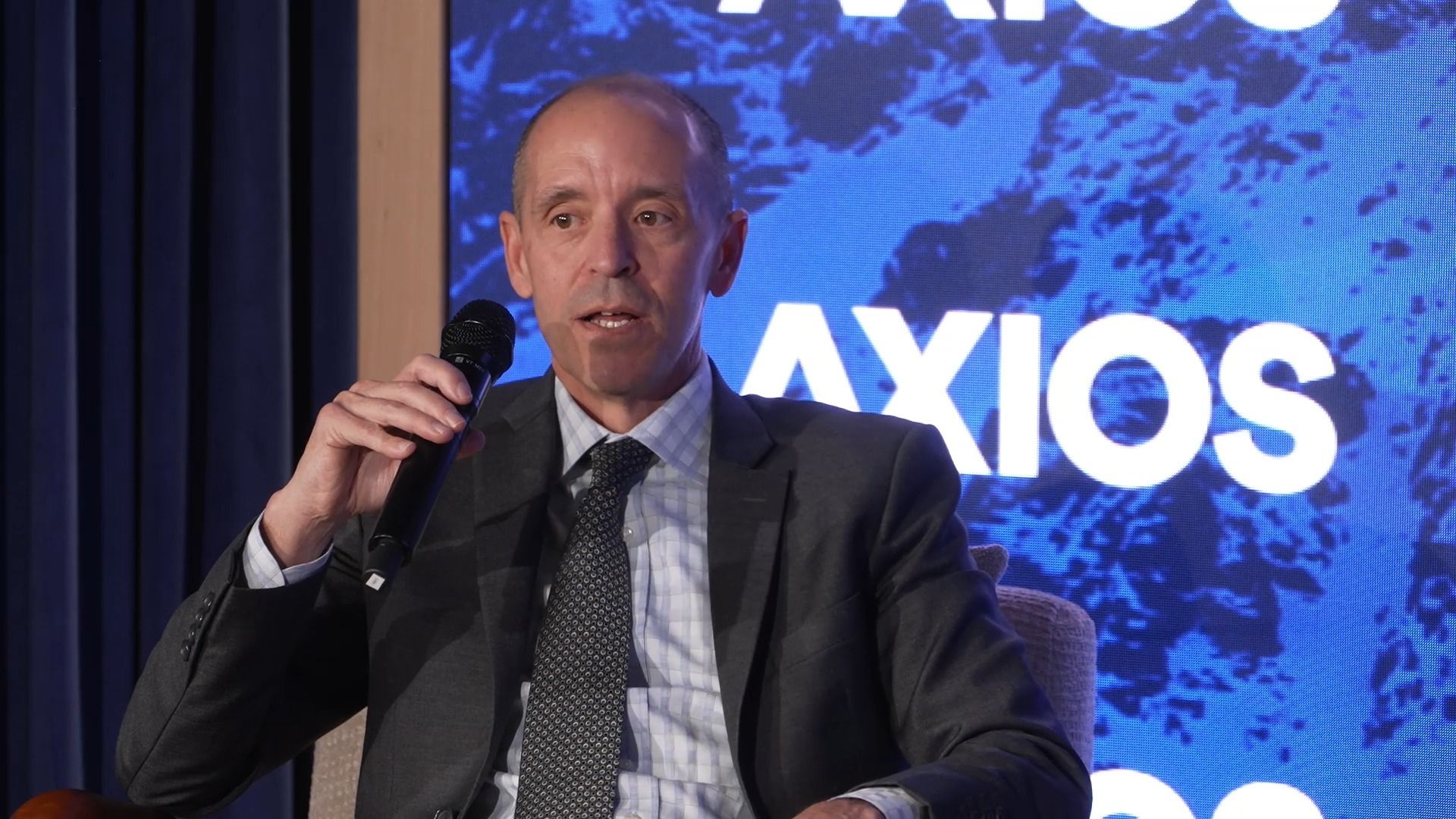
OpenAI is "on track" to unveil its first device in the second half of 2026, chief global affairs officer Chris Lehane told Ina yesterday during an interview at Axios House Davos.
Why it matters: CEO Sam Altman has teased a future AI device since acquiring former Apple design chief Jony Ive's company last May, but has offered only the vaguest hints at what the device will be and when it will arrive.
- Ive's company, then known as io, had also suggested a 2026 unveiling. "We look forward to sharing our work with you next year," according to text in a promotional video released at the time of the acquisition.
State of play: Various reports have said OpenAI was developing prototypes of small devices with no screen — possibly wearable — that will interact with users.
- Altman has said the device will be more "peaceful" than a smartphone and users will be shocked at how simple it is.
- Lehane declined to go into any specifics, including whether it would be a pin, an earpiece or something else entirely.
What he's saying: Lehane listed "devices" as one of the big coming attractions for OpenAI in 2026, telling Ina that the company would have news to share "much later in the year."
- Lehane didn't commit to the device actually going on sale this year but said OpenAI was "looking at something in the latter part [of 2026]."
- He added that while that was the "most likely" timeline, "we will see how things advance."
The big picture: While early AI gadgets such as Humane's AI Pin were largely flops, 2026 is expected to see the arrival of many fresh efforts at the concept.
- Already around 10 million AI-equipped glasses are shipping each year, with the rate likely to climb to 100 million by either this year or next, Qualcomm CEO Cristiano Amon told Ina in a separate on-stage interview at Axios House.
- He said AI devices will take many forms, including earbuds with cameras and jewelry — with Qualcomm chips powering the majority of these products — but that AI-enabled glasses are likely to be the largest category by volume.
2. The world is using AI more. The U.S. is still wary.


Global perceptions of AI are improving, but the U.S. remains skeptical, according to a new poll from Google and Ipsos.
Why it matters: AI is moving quickly into work, education and daily life, but Americans trail much of the world in usage, excitement and confidence — gaps that could shape who sets the rules and norms for AI's future.
The big picture: Google says the new poll shows three big shifts in AI usage in the last three years.
- AI has crossed from experimentation to everyday utility.
- Learning something new and understanding complex topics has overtaken entertainment as the top use case.
- Global optimism about AI's impact on people has improved, especially among those who actually use the tools.
The intrigue: Positive perceptions and usage rise together.
- Countries and individuals who use AI more are also more optimistic about its benefits.
By the numbers: Nearly 70% of people who've used AI say they're more excited about the possibilities than concerned with the risks.
- Of those who say they use AI "a lot," 86% are excited.
- Among those who say they know "a lot" about AI, 80% are excited and only 20% are concerned.
Reality check: In the most developed countries — especially English-speaking ones like the U.S., the U.K. and Canada — adoption of AI, enthusiasm for the tech and optimism about its economic impact all trail the global average, the report finds.
- People in the U.S., Canada and France are all less likely to say that students and educators will benefit from AI than those in the rest of Europe, Asia-Pacific and emerging markets.
- The survey also shows Americans are far less likely to say that the government is doing a good job using AI.
What they did: Google partnered with Ipsos to conduct 21,000 interviews across 21 countries to understand public attitudes toward AI.
The bottom line: Many Americans still don't trust or want AI in their lives, but public hesitation is unlikely to stop the tech giants, especially with the Trump administration's support.

3. Exclusive: Mastercard to set the shopping rules
Mastercard is moving to write the rules for agentic commerce, working closely with Google and Microsoft — two companies racing to define how AI reaches checkout.
Why it matters: As AI agents start shopping and paying on consumers' behalf, the power shift isn't about smarter models — it's about who controls trust, identity and payments when machines spend people's money.
Driving the news: Mastercard is expanding its agentic commerce push and deepening partnerships with Google and Microsoft around agent standards and AI-driven checkout, the company shared exclusively with Axios today.
- The payments giant is positioning itself as the infrastructure layer beneath AI shopping as agent-driven commerce begins moving from experimentation to real transactions.
Zoom in: Mastercard is working with Google and other shopping-standards groups to help AI agents and merchants work together safely at scale, while integrating its Agent Pay technology into Microsoft's Copilot Checkout and OpenAI's Instant Checkout program in ChatGPT with the goal of supporting secure, intent-verified payments within AI shopping flows.
- The company is also rebuilding its Start Path program to focus on startups developing AI-powered payment, identity and intent-verification tools.
What they're saying: "Agentic commerce will only scale at the speed of trust," Sherri Haymond, Mastercard's executive vice president of global digital commercialization, told Axios.
Yes, but: AI shopping is early and moving fast, and it's still unclear whether consumers are ready to let machines handle their purchases.
What we're watching: Whether AI agents gain real traction at checkout — and which retailers move fastest to accommodate them.
4. Training data
- ICYMI: All the ways the AI turf wars shifted last week. (Axios)
- Meta's new president and vice chairman, Dina Powell McCormick, says big tech needs to cooperate on AI safety. (Axios)
- OpenAI says most people only tap a fraction of ChatGPT's power. The company will release a plan to fix the "capability overhang" at Davos tomorrow. (Axios)
- Charted: More U.S. companies are signing up for paid subscriptions to ChatGPT and other models. (Axios)
- Ads are coming to ChatGPT's free and $8 per month Go tier. (Axios)
5. + This
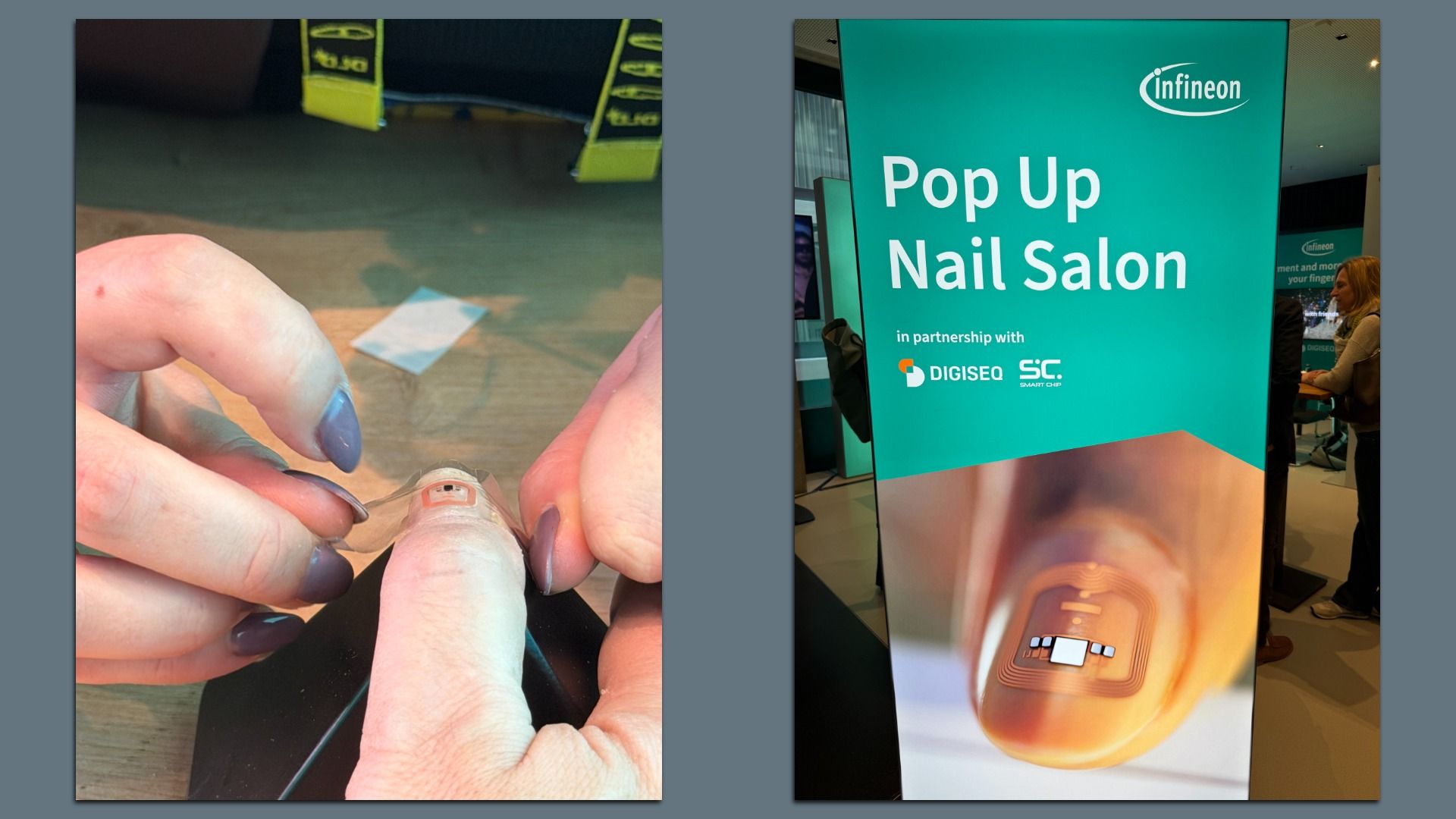
I took advantage of an Infineon booth at the DLD conference in Munich to have an NFC chip temporarily added to my fingernail, allowing me to pass along my contact information just by placing my nail next to any NFC-enabled phone.
- I'm told it should last a few weeks, depending on how fast my nails grow.
Thanks to Megan Morrone for editing this newsletter and Matt Piper for copy editing.
Sign up for Axios AI+