Axios AI+
May 07, 2026


Ina here after ping-ponging from OpenAI's GPT-5.5 launch party on Tuesday to Anthropic's developer conference yesterday.
Today's AI+ is 1,092 words, a 4-minute read.
1 big thing: How Elon grew to love Anthropic
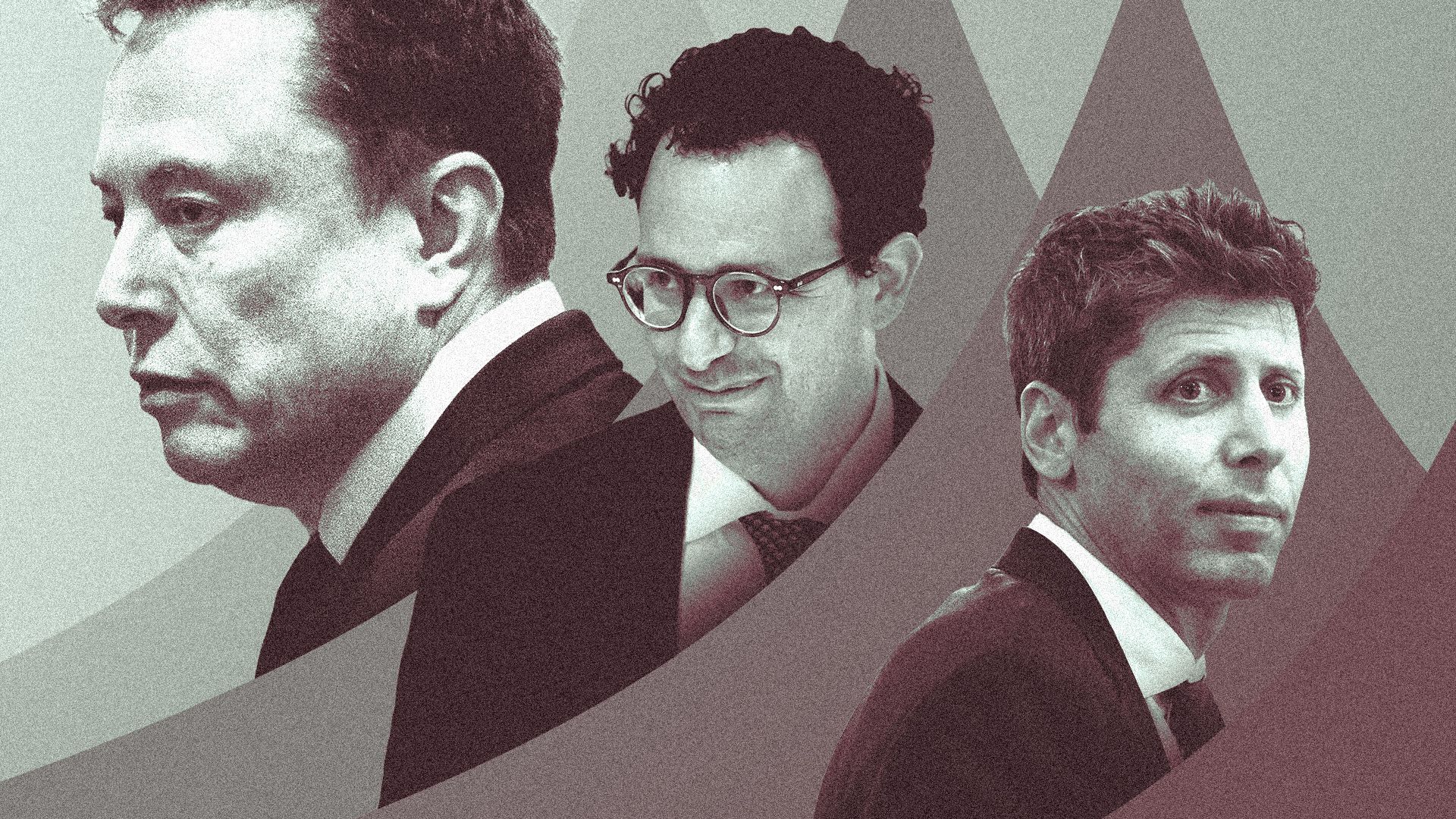
Elon Musk's surprise Anthropic deal allows him to accomplish two things at once: turn unused compute into revenue before an expected SpaceX IPO next month — and stick it to his archrival, Sam Altman.
Why it matters: Musk went from calling Anthropic "evil" to doing business with it in three months, showing how quickly competition can give way to strategic necessity in the AI race.
The big picture: The deal helps Anthropic address one of its most pressing problems — a severe compute deficit. The company saw "80x growth per year in revenue and usage" for the first quarter of 2026, CEO Dario Amodei said at a developer conference yesterday, when it only planned for 10x.
- That demand spike gave the AI lab "difficulties with compute," Amodei added, referencing recent usage limits that have frustrated customers.
- Enter SpaceX, which will provide the AI lab with the entire capacity of its Colossus 1 data center, amounting to more than 300 megawatts of new capacity (over 220,000 Nvidia GPUs) within the month.
- xAI, Musk's AI lab that SpaceX acquired, will continue to run off Colossus 2, a separate supercomputer.
- "As part of this agreement, Anthropic also expressed interest in partnering to develop multiple gigawatts of orbital AI compute capacity," SpaceX said in a blog post.
The intrigue: The deal comes as Musk is embroiled in a lawsuit against OpenAI, the AI lab he co-founded that also happens to be Anthropic's biggest competitor.
- "Elon's enemy is Sam. Dario's enemy is Sam. Enemy of my enemy is a compute partner," Ben Pouladian, who does tech market research, wrote on X.
- Musk publicly attacked Anthropic on X in February, calling it "misanthropic" in response to the AI lab announcing its $380 billion post-money valuation. (Anthropic is now expected to be valued closer to $900 billion.)
- Now, Musk says he "was impressed" after meeting with senior Anthropic leaders last week.
Follow the money: It's not just about personalities or competition. The deal makes financial sense for both parties, especially as Musk's xAI has a very different demand curve than Anthropic.
- Musk has a history of over-investing in infrastructure relative to product demand, PitchBook's Harrison Rolfes tells Axios via email. (In 2024, OpenAI scooped up capacity originally intended for Musk.)
- "xAI's Colossus 1 ended up with capacity that Grok's user base never grew into," Rolfes said.
- By leasing that capacity to Anthropic, Musk turns an idle, expensive asset into a high-margin revenue stream for SpaceX, just in time for its June S-1 filing. That will allow him to avoid a multibillion-dollar write-down on unused chip capacity before the company is expected to go public.
- Instead, SpaceX can go public with Anthropic as a customer.
Yes, but: Musk wouldn't have lent this spare capacity to a competing AI lab if he had the same demand problem Amodei describes having at Anthropic.
- The company is only utilizing 11% of the potential of its massive chips stash, per The Information, though it's unclear how much of that is driven by lack of demand, low utilization or a combination.
The bottom line: Anthropic has the cash Musk needs to shore up his company's balance sheet before it goes public, and Musk has the compute Anthropic needs to meet user demand and continue its exponential revenue growth.
2. AI vibe-coding apps leak sensitive data

The AI coding tools letting anyone "build" software without engineering skills are also letting medical records, financial data and Fortune 500 internal docs leak onto the open web, security researchers say.
Why it matters: AI coding tools are enabling employees without engineering or cybersecurity training to publish internal tools publicly, often without company oversight or basic access controls.
Driving the news: Israeli cybersecurity firm Red Access told Axios it found 380,000 publicly accessible assets built with tools from Lovable, Base44, Replit and Netlify, including about 5,000 containing sensitive corporate data.
- Red Access CEO Dor Zvi said his team found the apps while researching "shadow AI" — unauthorized employee use of AI tools — for customers.
- Researchers said privacy settings on some of the vibe-coding tools were set to make the apps publicly accessible unless users manually changed them to private.
- Many of these applications are also indexed by Google and similar search engines, making it possible for just about anyone to stumble upon them, Zvi added.
The big picture: As people quickly adopt AI coding tools, basic security mistakes are being replicated at unprecedented scale and speed.
- "The concept of people just creating something that simply, and using it in production ... on behalf of their company without getting any permission — there is no limit," Zvi told Axios.
- "I don't think it's feasible to educate the whole world around security," Zvi says. "My mother is [vibe coding] with Lovable, and no offense, but I don't think she will think about role-based access."
Case in point: Axios independently verified multiple exposed apps this week, including:
- An app for a shipping company detailing which vessels are expected at which ports.
- An internal application for a health company that details active clinical trials across the U.K.
- Full, unredacted customer service conversations for a cabinet supplier in the U.K.
- Internal financial information for a Brazilian bank.
Zoom in: Red Access also found exposed applications that leaked customer data and personally identifiable information, including:
- Conversations with patients at a long-term care facility for children.
- A security company that used one of these platforms to triage information about ongoing incidents that its customers were facing.
- A personal app someone created to help plan a couple's vacation in Belgium, including details about their hotel and dinner reservations.
- An app for a hospital that had doctor and patient conversation summaries, patient complaints and staff schedules.
- An app created for a school that includes recordings of lessons, as well as student-related data and the teacher's schedule.
3. Training data
- At the Musk v. Altman trial, former OpenAI CTO Mira Murati said Sam Altman lied to her about the company's safety standards. (Reuters)
- OpenAI launched an analytics tool to measure how businesses use its AI tools. (Street Insider)
- The U.S. and China are reportedly working together to establish AI guardrails ahead of an upcoming summit in Beijing. (Wall Street Journal)
4. + This
Enjoy the wild ride of Altman and Murati's texts that were admitted into evidence in the Musk v. Altman trial. And here's a refresher on the events of November 2023, in case you forgot.
Thanks to Megan Morrone for editing this newsletter and Matt Piper for copy editing.
Sign up for Axios AI+
