Axios AI+

March 29, 2024

Ina here, writing today's newsletter entirely on the Apple Vision Pro headset. Today's AI+ is 1,213 words, a 4.5-minute read.
1 big thing: Using Apple's Vision Pro in real life
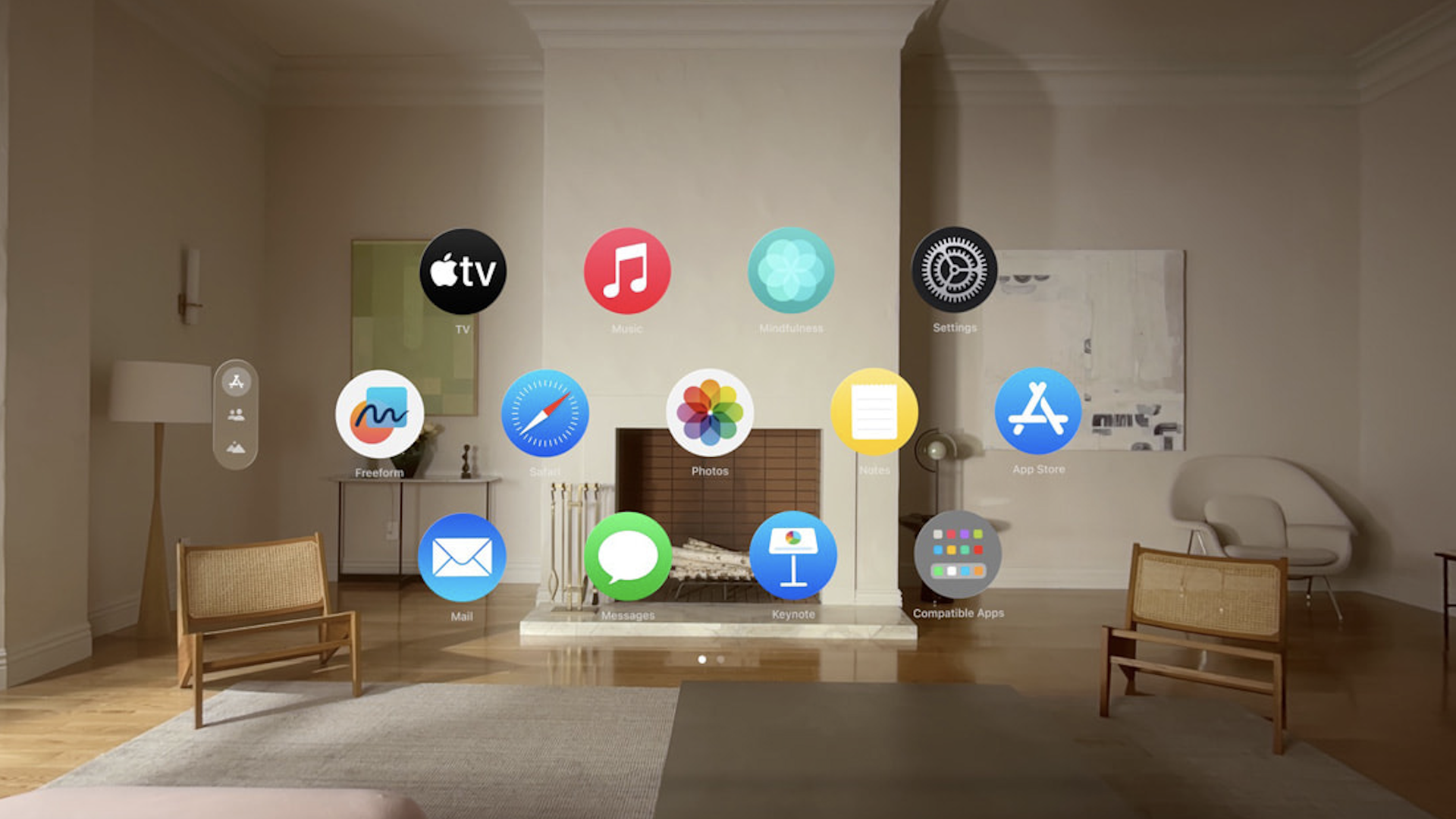
A view from the Vision Pro. Image: Apple
Apple's $3,500 Vision Pro headset, two months after its appearance in stores, is now something we can live with as well as marvel at.
The big picture: I spent two weeks wearing the Vision Pro while sitting in airplanes, watching movies in bed and writing articles from my living room couch.
Catch up quick: The experience confirms and strengthens my initial impressions of Apple's buzzy device.
- The Vision Pro represents a significant breakthrough, remains light-years ahead of the competition and offers a glimpse of an intriguing future.
- It's also still too quirky and pricey to recommend for most people.
Why it matters: A consensus has formed that Apple's headset represents a significant improvement in the state of the art for mixed reality — but there are also real questions as to just how useful it is.
Zoom in: I've been waiting for the right opportunity to put the Vision Pro through its paces, and a recent trip to Washington, D.C., seemed like a good chance to see how Apple's headset fares in everyday use.
- I packed the headset in its $200 case in my backpack, and threw in a keyboard and trackpad (all loaners from Apple). The device plus accessories made my carry-on a little bulkier, but it all fit.
- The one device I decided to leave at home was an iPad, which I usually bring for watching movies on the plane. But that's where the Vision Pro is supposed to excel.
On the way to D.C., I started watching "Inside Out" in one window while in another I began doing a little work.
- The tray table comfortably held the keyboard and mouse. The in-seat power outlet meant I also didn't have to deal with another of the Vision Pro's limitations — its short battery life.
I'm sure I looked ridiculous. But I managed to drink tomato juice and eat breakfast, with no spills. I also purchased in-flight Wi-Fi and started this article.
The best part of Vision Pro is being able to elegantly overlay the real world with a digital one. I am always multitasking, and it's cool to have several giant displays in my field of view.
- The eye-tracking is so good it feels magical. It allows you to handle simple tasks with just your gaze and the occasional pinch of fingers from your hand, which can be resting comfortably on your lap.
- A keyboard and trackpad or mouse are still essential to getting real work done, but Apple's Bluetooth devices worked flawlessly for me.
Reality check: Living in the future is fun for a while, but then it starts to weigh on you, physically and literally.
- The Vision Pro quickly feels heavy on your face, as others have noted.
- Using it is also cognitively more complex than just watching TV while doing some work on a phone or laptop.
The biggest impediment to regular use, I found, is that other people tend to not want you to use Vision Pro around them.
- My 11-year-old had no patience for me wearing it, and my partner agreed to watch TV with me wearing it only on the condition that this was the one and only time.
- Strangers and co-workers may be amused or intrigued, but loved ones want to see your face — not the disembodied digital eyes that the Vision Pro displays.
- And while you can click on something just by looking at it and pinching two fingers together, tasks like scrolling or resizing windows require bigger gestures that look silly to those around you.
That's the key asymmetry in play with the Vision Pro, which works much better for those using it than for the people around them.
- The pass-through video is good enough that it's easy for the wearer to blend digital and real life.
- But it's highly off-putting for anyone who has to interact with someone in a headset, whether it's a reluctant partner or a flight attendant.
Fun fact: One of my favorite "apps" is allowing other people to try the headset using guest mode. Their excitement, stumbles and giggles can be better entertainment even than doing the dinosaur-petting demos yourself.
- But the process is overly complicated. I understand the required setup for each person, including precise scanning that's needed to enable Apple's near-magical eye tracking.
- However, Apple doesn't let guests save their profile, meaning that setup is required each time. And that's a pity for Apple as well, as most people are going to want to try the device before shelling out several grand.
What's next: The key is where Apple goes from here, both in making the device cheaper and more comfortable, and in creating and attracting the kind of immersive content that best shows off the Vision Pro's strengths.
- As a huge sports fan, I love the idea of getting close to the action, and look forward to being able to watch a live match immersively on the Vision Pro. Right now we're largely limited to retrospectives, like the soccer highlights reel Apple released this week.
- Concerts, too, are a natural for this, as Apple's Alicia Keys immersive film helps demonstrate.
- Such productions are few and far between for now, given the specialized technology needed to capture such video and the relatively few devices capable of displaying it.
2. Meet your AI financial adviser
Illustration: Allie Carl/Axios
A new raft of AI-powered startups wants to disrupt the financial advice industry. The pitch: Pay a flat fee when you need advice, rather than a percentage of your assets every year, Axios' Felix Salmon reports.
Why it matters: Most Americans under 55 don't need or even particularly want regular hand-holding and check-ins with a financial adviser. A well-constructed financial plan can easily last years until circumstances arise that require a new one.
"The size of your portfolio has no bearing on the amount of work I'm going to do," says Daniel Alfi, who started Fifr, a flat-fee adviser. "AI will make it radically cheaper on a per-client basis to serve people."
The big picture: Most of us can benefit from having someone knowledgeable who can dispassionately walk us through our individual financial situation. The rise of flat-fee advisory companies — powered by AI — could make services broadly accessible for the first time.
- Historically, financial advisory services have been bundled with asset management services — they come "free" if you pay 1% of your assets every year to the person managing your money. (Minimum "relationship": $500,000 or much, much more.)
- Some see AI allowing much broader access to other services, including legal and medical advice, previously available only to the wealthy.
3. Training data
- Sam Bankman-Fried (no relation) was sentenced to 25 years in prison for his FTX-related misdealings. (Axios)
- Apple is suing a former engineer it says leaked confidential information about the Vision Pro and other products to reporters. (9to5Mac)
- Four Canadian school boards are suing TikTok, Meta and Snapchat for allegedly disrupting student learning and harming the education system. (Axios)
- Trading places: Kevin Weil said Thursday he is stepping down as president of satellite imagery firm Planet.
4. + This
I am not a car person, so I was excited to discover — and order — "Mechanic Shop Femme's Guide to Car Ownership." Like many people of all genders, I'm happy to learn a little more as long as I can do so without being treated like an idiot.
Thanks to Scott Rosenberg and Megan Morrone for editing this newsletter and to Caitlin Wolper for copy editing it.
Sign up for Axios AI+

Scoops on the AI revolution and transformative tech, from Ina Fried, Madison Mills, Ashley Gold and Maria Curi.