Medicare for All redistributes who pays for health care

Add Axios as your preferred source to
see more of our stories on Google.
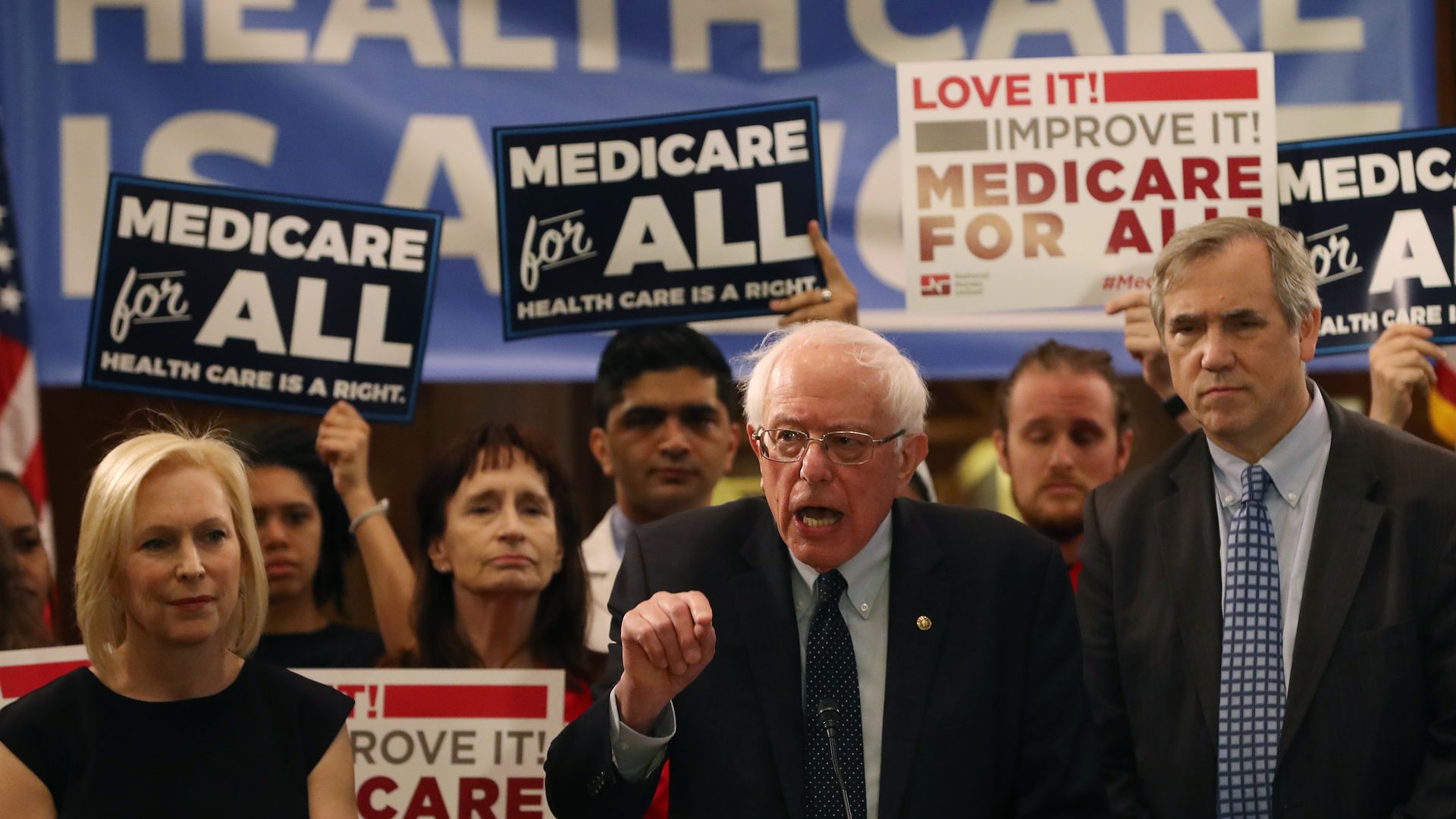
Sen. Bernie Sanders speaks on his Medicare for All bill. (Photo: Mark Wilson/Getty Images)
Sen. Bernie Sanders' Medicare for All plan would drastically change not only how health care is paid for, but who ultimately pays for it.
Between the lines: While the wealthy and the poor usually pay the same premium for today's employer-based insurance, Sanders' plan would beef up insurance coverage for everyone and pay for it by increasing taxes disproportionately on the wealthy.
Driving the news: As part of yesterday's rollout, Sanders released a white paper with several "options" on how to raise the additional revenue it would take for the government to pay for everyone's health care without any premiums or out-of-pocket costs.
- While most people's taxes would go up, the wealthy would end up paying for a much greater portion of the nation's health care system than they currently do.
- A 4% "income-based premium" for workers who make more than $29,000 and a 7.5% "income-based premium" on employers (exempting the first $2 million in payroll) are two of the financing options. Most economists assume that the employer tax would get passed onto employees through lost wages.
- Other options include increasing the individual tax rate on high earners, taxing "unearned" income at the same rate as earned, and establishing a wealth tax.
What they're saying: Even if all of these payment options were implemented, they still wouldn't cover the total cost of Sanders' plan, said the Committee for a Responsible Federal Budget's Marc Goldwein.
- There could also be unintended consequences of such high taxes on the wealthy, he said: “For some people, it would literally cost them money to make investments.”
The bottom line: "More progressive tax-based financing of health care is a feature, not a bug, of Medicare-for-all," the Kaiser Family Foundation's Larry Levitt said.
- "The idea of financing health care through taxes rather than premiums and out-of-pocket costs would be fairer in some people’s minds, but also disruptive," he said.
