The hottest bakery in D.C. might be your neighbor's kitchen


Add Axios as your preferred source to
see more of our stories on Google.
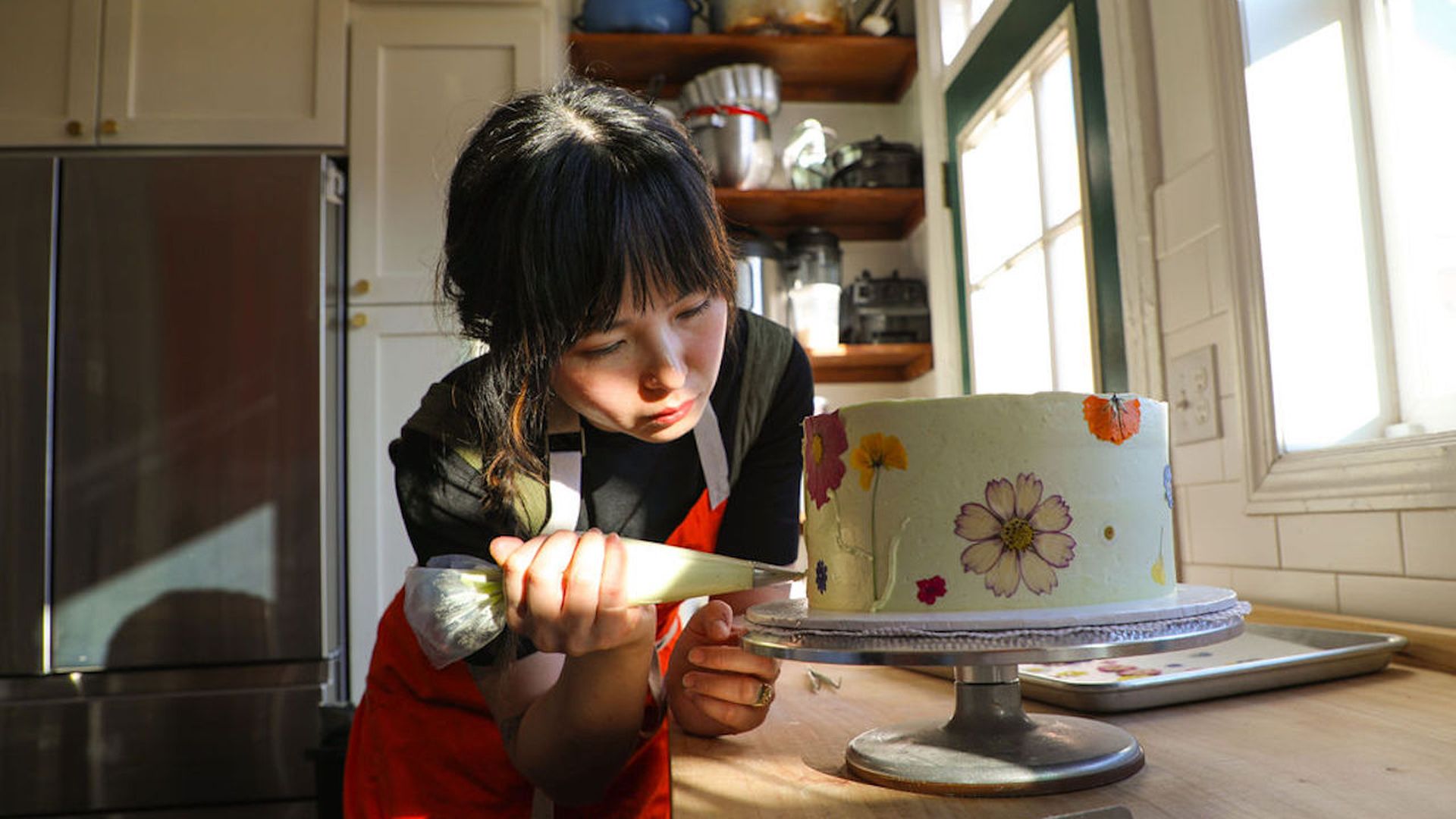
Jill Nguyen of Capitol Jill Baking crafts breads, pastries and special occasion cakes from her home kitchen. Photo: Courtesy Vina Sananikone
Your neighborhood's next viral bakery might be inside someone's house — and scoring a box of pastries can feel like winning the lottery.
Why it matters: More home cooks are turning their baking talents into businesses, keeping overhead low while serving up fresh bread, creative pastries and a side of community.
Driving the news: Capitol Hill's hottest clubs are its cottage bakeries.
- At the Pastry Pedaler, a new German-style microbakery, lines stretch around the block. Its last two online drops sold out in 30 seconds, and customers waited up to 90 minutes at a recent pop-up.
- "Why does buying a Franzbrötchen feel like fighting for a spot at D.C. summer camp?" the owner joked on Instagram.
Zoom in: Jill Nguyen of Capitol Jill Baking started by giving free sourdough to homebound neighbors during the pandemic. Six years later, her scallion focaccia and other treats have a devout following.
- Nguyen focuses on hard-to-find specialties like cardamom buns that Swedish Embassy staff seek out.
- Pre-orders, a necessity for many microbakeries, mean less food waste. Nguyen says she hasn't thrown away a baked good in four and a half years.
And pickups double as neighborhood gatherings. "It's not the easiest way to get the goods you want, but there's an element of joy — it's a third place where you can come in and run into people," Nguyen tells Axios.
The intrigue: Microbakeries work well in a down economy — for the sellers, and the buyers looking for an experience and a little treat.
- Nguyen says customers are buying fewer expensive cakes, but they're still splurging on cookies and bread. Her average order size jumped 2.5 times last weekend, with customers snapping up six to a dozen apple fritters at a time.
- "I think people just really want to find a way to gather, cheaper," she says.
The big picture: The home-baking boom is nationwide. Monthly seller signups on home-chef platform Hotplate doubled in July, its co-founders tell Axios.
- More than 1,000 sellers across 48 states joined Potluck, an "Airbnb for homemade food," within two months of its summer launch.
Closer to home: Cottage bakeries have been legal in D.C. since 2014, but the rules are evolving.
- A 2025 law allows registered home bakers to sell wholesale to licensed food establishments, opening new revenue streams beyond neighborhood pickups.
- And despite an earlier homeownership restriction, D.C.'s current permitting guidance allows renters to apply for home occupation permits, too.
- Still, cottage businesses are limited to approved, shelf-stable foods, and Nguyen says the registration process, food-safety certification and labeling requirements can be daunting.
Zoom out: Maryland doubled its annual cottage-food sales cap from $50,000 to $100,000 this month, while Virginia expanded online and phone sales of eligible homemade foods this year.
The bottom line: Forget the stock market. Nguyen gauges the national mood by requests for her free sourdough starter, which spike during stressful times like pre-midterms.
- "And I'm getting a lot right now," she says.