What Trump's Chesapeake Bay order means for the D.C. region

Add Axios as your preferred source to
see more of our stories on Google.
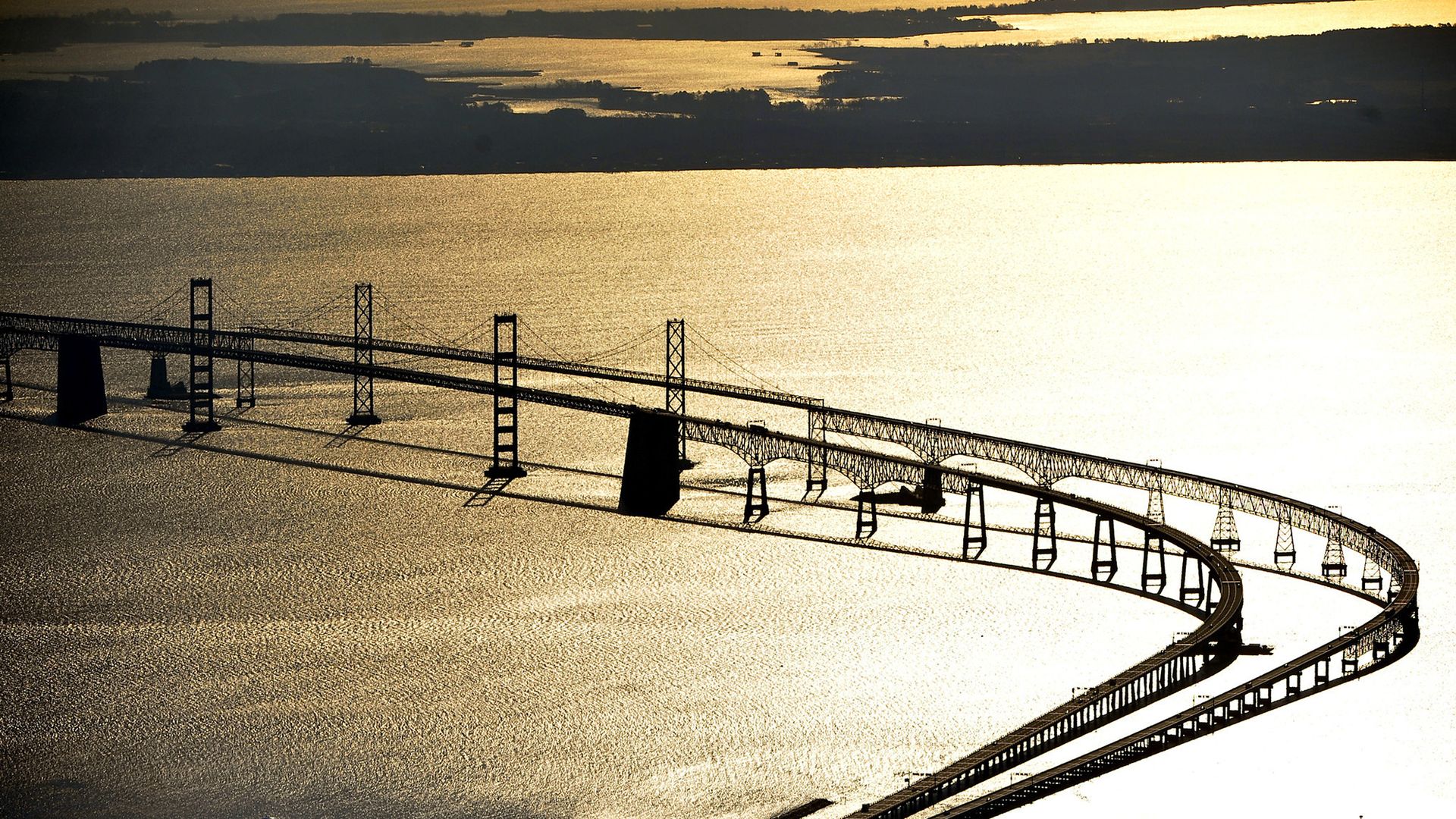
Trump seeks to rollback Chesapeake Bay protections. Photo: Kim Hairston/Baltimore Sun/Tribune News Service via Getty Images
President Trump is shaking up the federal government's role in cleaning the Chesapeake Bay — with potential consequences for the Potomac and waterways across the D.C. region.
Why it matters: The Potomac is the Bay's second-largest tributary, and governments have spent decades working together to curb pollution flowing into the nation's largest estuary.
- Now, Trump's order raises questions about the federal money, manpower and oversight behind that work.
Driving the news: Trump last week revoked a 2009 Obama-era order that expanded federal coordination around Chesapeake protection and restoration.
- His new order directs the EPA and other agencies to prioritize "on-the-ground" projects that cut pollution — think trees that keep fertilizer out of waterways.
- It also targets local stormwater fees — which Trump calls "rain taxes" — directing the EPA to assess their costs and encourage localities to repeal them.
The rationale: It fits Trump's broader push to scale back federal environmental regulations, which his administration says will lower costs and give states more control.
- The order says EPA has already cut nearly $1 million in annual Bay Program administrative spending while awarding $2.7 million more to watershed states and D.C. this fiscal year.
Reality check: The order doesn't end the Chesapeake cleanup, eliminate federal pollution limits or repeal local stormwater fees.
By the numbers: Pollution entering the Bay has declined — and critical grasses are rebounding — but there's work to do.
- For example, the watershed has hit 100% of its sediment-reduction goal, but just 57% for harmful nitrogen, per the Chesapeake Bay Program.
But environmental groups like the Chesapeake Bay Foundation say that federal coordination helped produce that progress — and that weakening it could jeopardize those gains.
- Potomac Riverkeeper Network pointed to this year's massive sewage spill as evidence the region needs more investment in aging water infrastructure.
Meanwhile, Maryland's entire congressional delegation — including Republican Rep. Andy Harris — opposed the move, saying the old order provided "vital federal resources" for state-led restoration.
What we're watching: What actually changes.
- Maryland Natural Resources Secretary Josh Kurtz told Maryland Matters that officials are in "wait-and-see" mode as federal agencies determine how they'll implement the order.
- That means tracking changes to federal funding, staffing and programs — and whether any D.C.-area jurisdictions ditch stormwater fees.