The Potomac sewage spill is a disaster for river activities this year


Add Axios as your preferred source to
see more of our stories on Google.
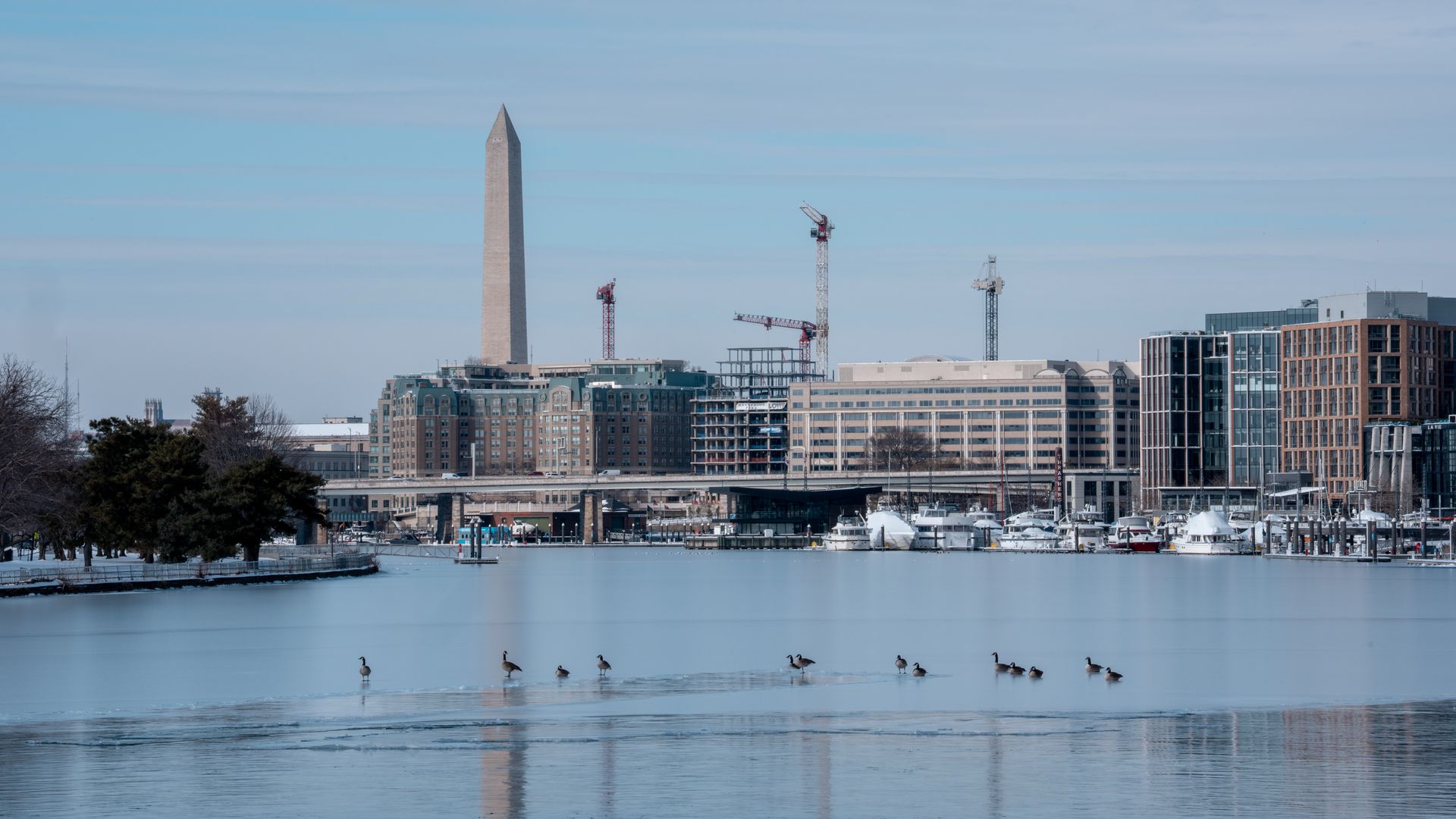
The Potomac River is a no-go due to the sewage spill. Photo: Andrew Leyden/Getty Images
Don't touch the Potomac. That's D.C.'s message nearly a month after a sewer pipe collapse sent millions of gallons of raw sewage into the river.
Why it matters: We've become so much more of a river town — and as of now, it's anyone's guess whether the Potomac will be usable at all this year.
The big picture: There's no sugarcoating it — the pooh deluge is among the worst raw sewage spills in history, and a disaster for recreation, wildlife and the cottage industry that surrounds the river.
Driving the news: D.C.'s Department of Energy and Environment is warning residents to avoid contact with the river — don't fish, don't boat, don't let your pets near it.
- Our drinking water is safe, officials say. That's because tap water is drawn upstream from the spill, and a down-river, smaller water intake isn't currently being used.
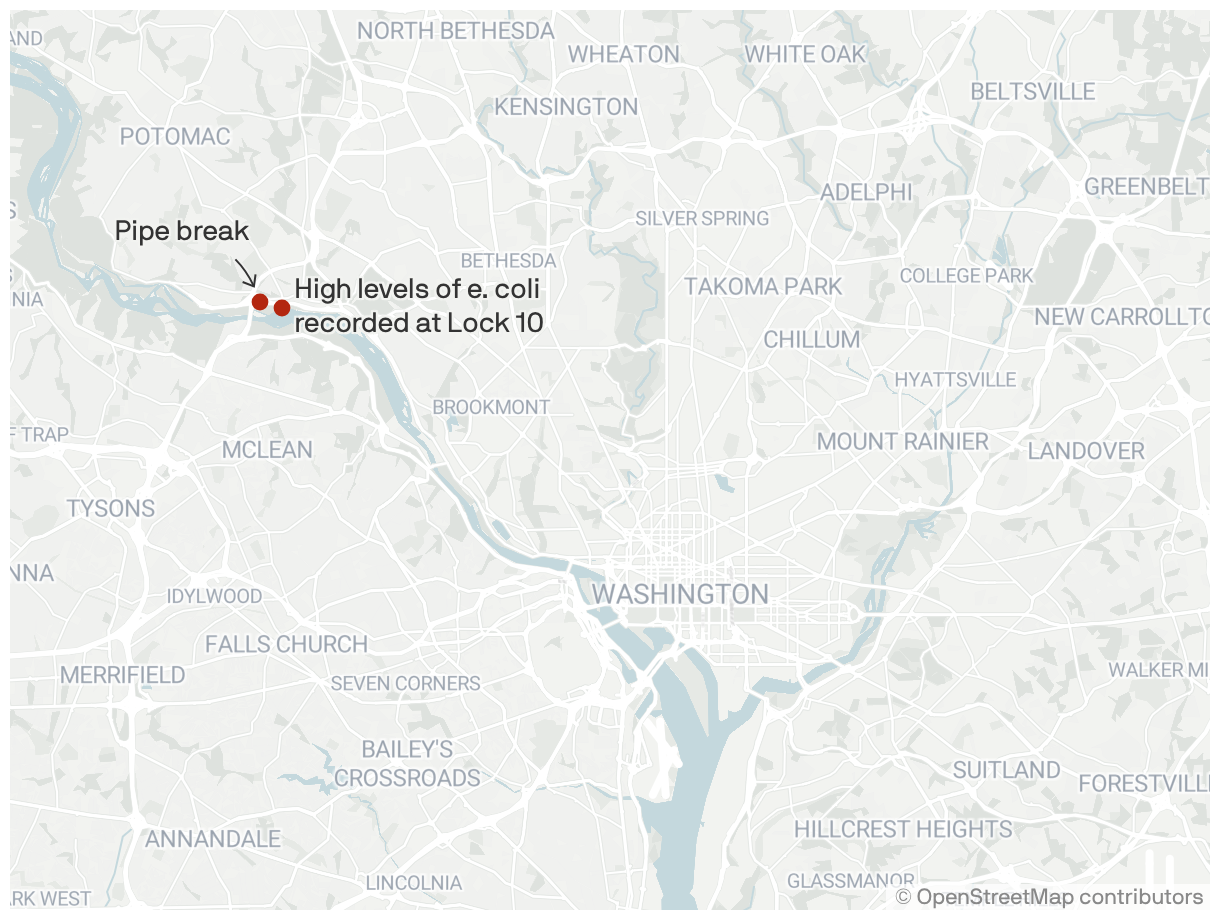
Catch up quick: The collapse happened on Jan. 19 near Cabin John, Maryland — about 7 miles north of Georgetown — and initially released about 40 million gallons of raw wastewater a day into the river.
- DC Water has since contained most of the flow using bypass pumps. To keep sewage moving while repairs continue, crews are using a segment of the C&O Canal as a temporary, open-air sewage conduit, diverting wastewater around the collapsed pipe and reconnecting it farther south.
- The stench is unbearable: "It lingers on you after you leave," says D.C. council member Charles Allen, who recently walked the site.
- Repairs are expected to take weeks longer than planned after crews hit a large rock blockage in the aging line.
Threat level: High.
- DC Water testing from Thursday shows E. coli levels near the site 26 times worse than the EPA limit for swimming. Downstream tests rated safe.
- That's an improvement from Feb 3., when samples collected by the Potomac Riverkeeper Network and the University of Maryland showed E. coli levels thousands of times above safety limits near and downstream of the spill.
- Researchers have also detected bacteria linked to staph infections and MRSA.
Friction point: Environmental advocates say public warnings came weeks too late — and worry officials are downplaying the spill's severity and long-term impact, including DC Water miscalculating data that showed lower levels of E. coli.
- It's "going to have a profound impact on the river beyond what I think anybody can imagine," Dean Naujoks, a veteran Riverkeeper, tells Axios.
- Without a lot of public health information at hand, Naujoks says he's been fielding calls for weeks — from firefighters running winter river dills, scuba divers conducting dock work, concerned boaters and fishermen — about whether the river is safe. "And it's not our job to say."
The other side: "We continue to do water quality sampling, and the results are updated daily" on a dedicated webpage," DC Water told us.
- "We encourage people to continue to adhere to signage posted along the affected areas of the river, and to follow any advisories which would be issued by state and local regulators who have that authority."
Our thought bubble: If the pipe blew in spring or summer, rather than 6 days before the wild storm that froze Washington, it's hard to not to see how it wouldn't feel like a full blown emergency.
How you're affected
Recreational impact: Swimming in the Potomac is already banned without a permit — but fishing, boating and school rowing are staples come spring.
Zoom in: Anglers are on edge. Shad and striped bass typically begin their spring run in March, drawing crowds to the river.
- Staff at District Angling tell Axios they're fielding calls from worried customers — and bracing for a hit to their usual spring bump in flies and gear sales.
- "This is the worst I've seen in 20 years," employee Ivan Sanchez tells Axios.
- He worries about long-term effects, too: Shad that spawn in the Potomac "don't like dirty water, period," he said — and may not return.
Georgetown University says there's "no official plan" yet for rowing season, given that the river is still frozen after January's storm.
What's next: The deep freeze may have trapped harmful bacteria under the ice while also limiting river flow, which can help flush it out.
- With warmer temperatures inbound, the melt could activate the bacteria, and send more downstream.
- Environmentalists also worry about more weak spots in the 1960s sewer line that runs from Dulles to Blue Plains.
What they're saying: It's not mixed wastewater — it's "potent, high-test sewage," according to Potomac Conservancy president Hedrick Belin, whose organization sent a letter to DC Water — signed by over 2,100 supporters — sharing concerns over accountability.
- Without a modern pipeline, "there could be additional releases."
What's ahead: Allen, the D.C. council member, wants more warnings posted — especially as the weather warms — to remind people not to fish or wade in the water.
- The amount of sewage is "going to have a lasting environmental impact definitely as we go into the spring and the summer."