IndyCar, not F1, is taking over D.C. Here's the difference.

Add Axios as your preferred source to
see more of our stories on Google.
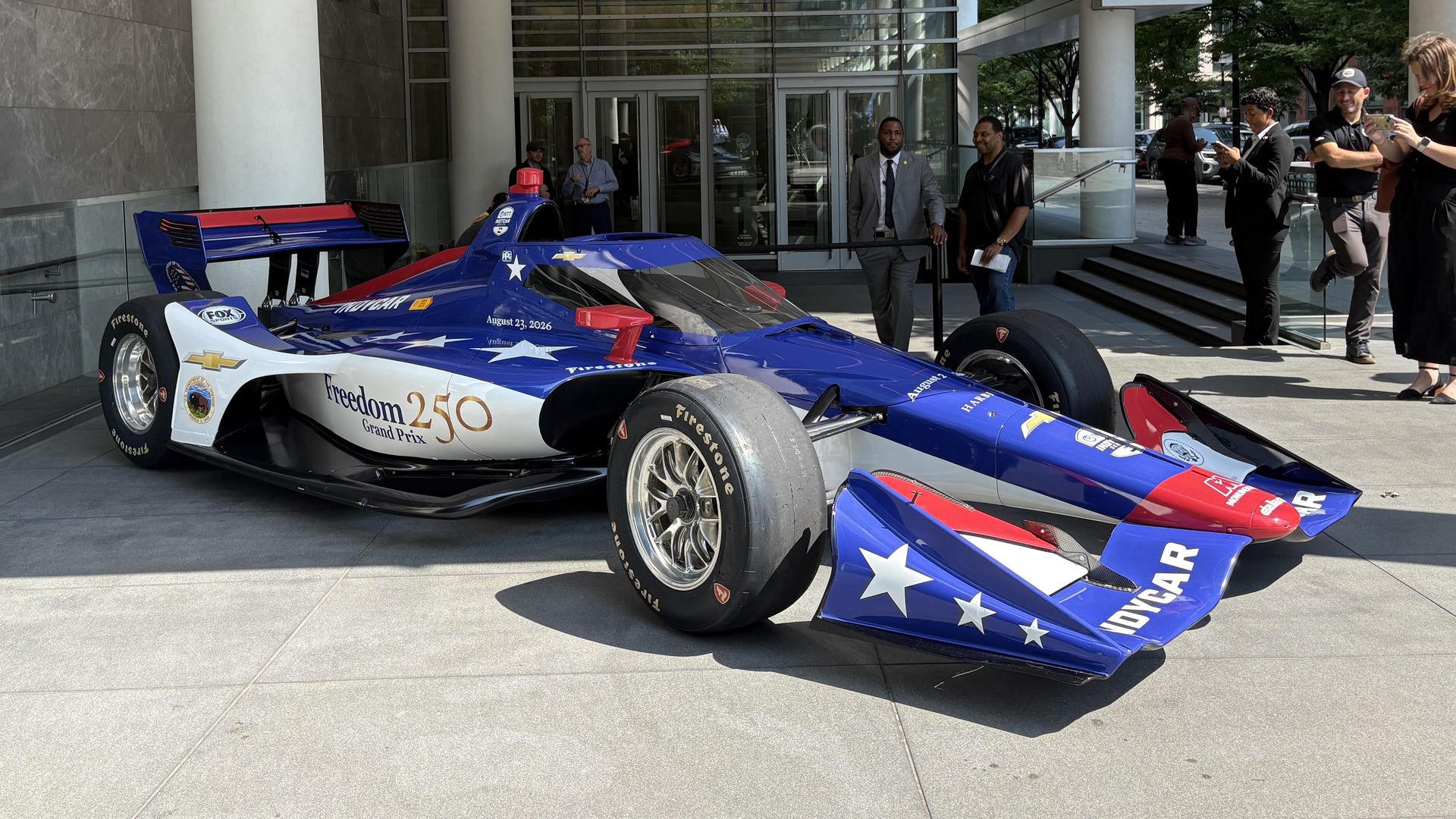
IndyCar race cars are less customizable than in Formula One. Photo: Gabe Hiatt/Axios
Raise your hand if you know the difference between Formula One and IndyCar.
Why it matters: One racing league is taking over D.C. this weekend — and it's not the one with a movie starring Brad Pitt.
Zoom out: IndyCar is growing fast and has shown a slight edge over Formula One in broadcast numbers.
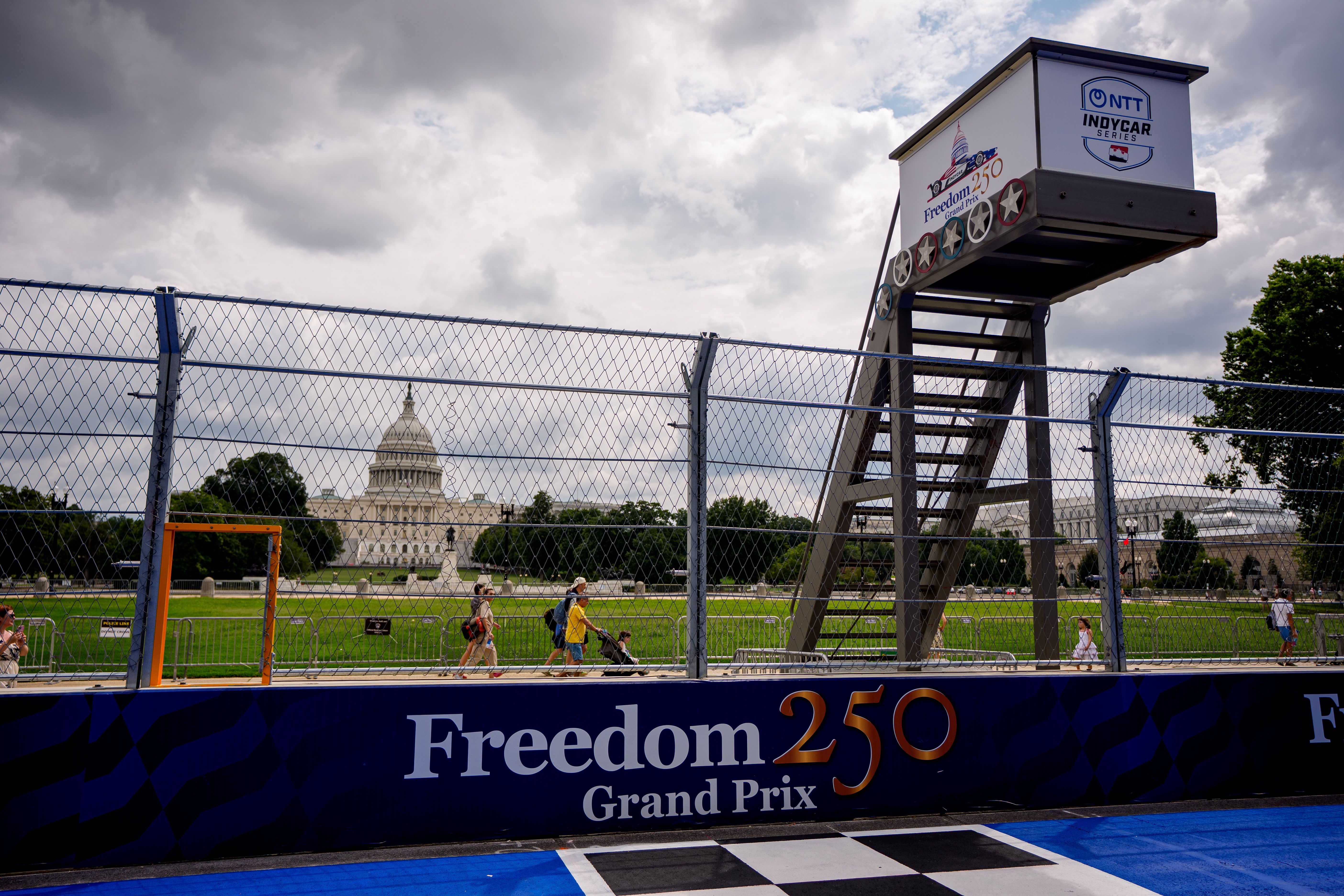
- A first-of-its-kind spectacle between the Washington Monument and the Capitol gives IndyCar an opening to leave F1 in the ratings rearview.
F1 has gotten more popular in the U.S. in recent years.
- Annual races landed in Austin (2012), Miami (2022) and Las Vegas (2023).
- The Netflix docuseries "Drive to Survive" took viewers behind the scenes.
- "F1: The Movie" grossed over $600 million at the box office last year.
Freedom 250 Grand Prix chairman Bud Denker tells Axios that F1 "captured lightning in a bottle" by attracting new fans during the coronavirus pandemic.
- "That’s helped all motorsports," he says.
🏁 Even if you don't know IndyCar, you know the Indy 500.
- During Memorial Day weekend, Indianapolis Motor Speedway holds a 500-mile race that attracts 300,000 people — the largest single-day spectacle in pro sports.
🏎️ Both series feature open-wheel cars with cockpit-like seating, but the differences from there are wide.
- IndyCar drivers race around America on superspeedways — high-speed ovals where cars go faster than 230 mph — as well as short ovals, road courses and street circuits.
- F1 drivers race around the world on permanent road courses and street circuits.
🔧 IndyCar race cars use the same chassis — the supporting frame — and an engine from either Honda or Chevrolet.
- F1 teams are often owned by luxury car companies, build their own chassis and partner with engine manufacturers.
- Think Ferrari, McLaren and Mercedes. Engineers are stars.
🤏 Racing is tighter in IndyCar, because there's less variance in the cars.
- "You're going to be fighting over a 100th of a second," veteran driver Scott Dixon tells Axios.
Plus: There's typically more passing, and winners are less predictable.
- Spaniard Álex Palou has been an exception this year, with six wins in 14 races.
By the numbers: NASCAR is king for U.S. TV viewers at more than 2 million viewers per race. IndyCar and F1 are neck and neck.
- ESPN reported an average of 1.3 million viewers across networks for the 2025 F1 season. Apple now owns the broadcast rights on a five-year deal that started this year.
- Fox reported an average of 1.36 million viewers for IndyCar in 2025, a 27% increase from the previous year.
- Through the first 11 IndyCar races this year, Fox averaged close to 2 million viewers — with a big boost from the Indy 500.
📹 Fox bought a one-third stake in IndyCar's parent company in a 2025 investment that cost between $125 million and $135 million, the Wall Street Journal reported.
- The deal included a multiyear extension for TV rights.
- Fox's D.C. connections helped Denker land the landmark race.
What's next: Festivities start Saturday with IndyCar practice and two races in the International Race of Champions (IROC), where all-star drivers from different disciplines compete in identical cars.