D.C.'s war on rats has a new tactic: rat walks

Add Axios as your preferred source to
see more of our stories on Google.

DC Rat Rangers are going after the city's rodents with plans instead of poison. Photo: Salwan Georges/The Washington Post via Getty Images
D.C.'s latest weapon in the war on rats? Learning to think like one.
Why it matters: After trying everything from hunting dogs to dashboards and birth control, a new coalition says D.C. won't solve its rat problem until residents understand what's helping them thrive.
- Dubbed DC Rat Rangers, the group is launching free nighttime "rat walks" across all eight wards to teach residents how rats behave — and why cleaner streets can do more than bait boxes.
The big picture: The coalition says D.C.'s rat problem is often a trash and access problem.
- "As long as food is there, rats will keep coming back," Max Broad, executive director of DC Voters for Animals, tells Axios.
- And to rats, food isn't just old produce — it's pet waste, compost and more.
What's driving it: The coalition's push isn't just about rats — it's also about rat poison.
- DC Responsible Rat Management, whose members include Humane Rescue Alliance, City Wildlife and DC Bird Alliance, wants the city to ditch poisons for prevention.
- The effort grew out of City Wildlife's finding that 85% of animals treated for blood-clotting issues at its rehabilitation center tested positive for rat poison, according to Broad.
- Members say those poisons can move up the food chain, harming pets, as well as hawks, owls, foxes and other wildlife.
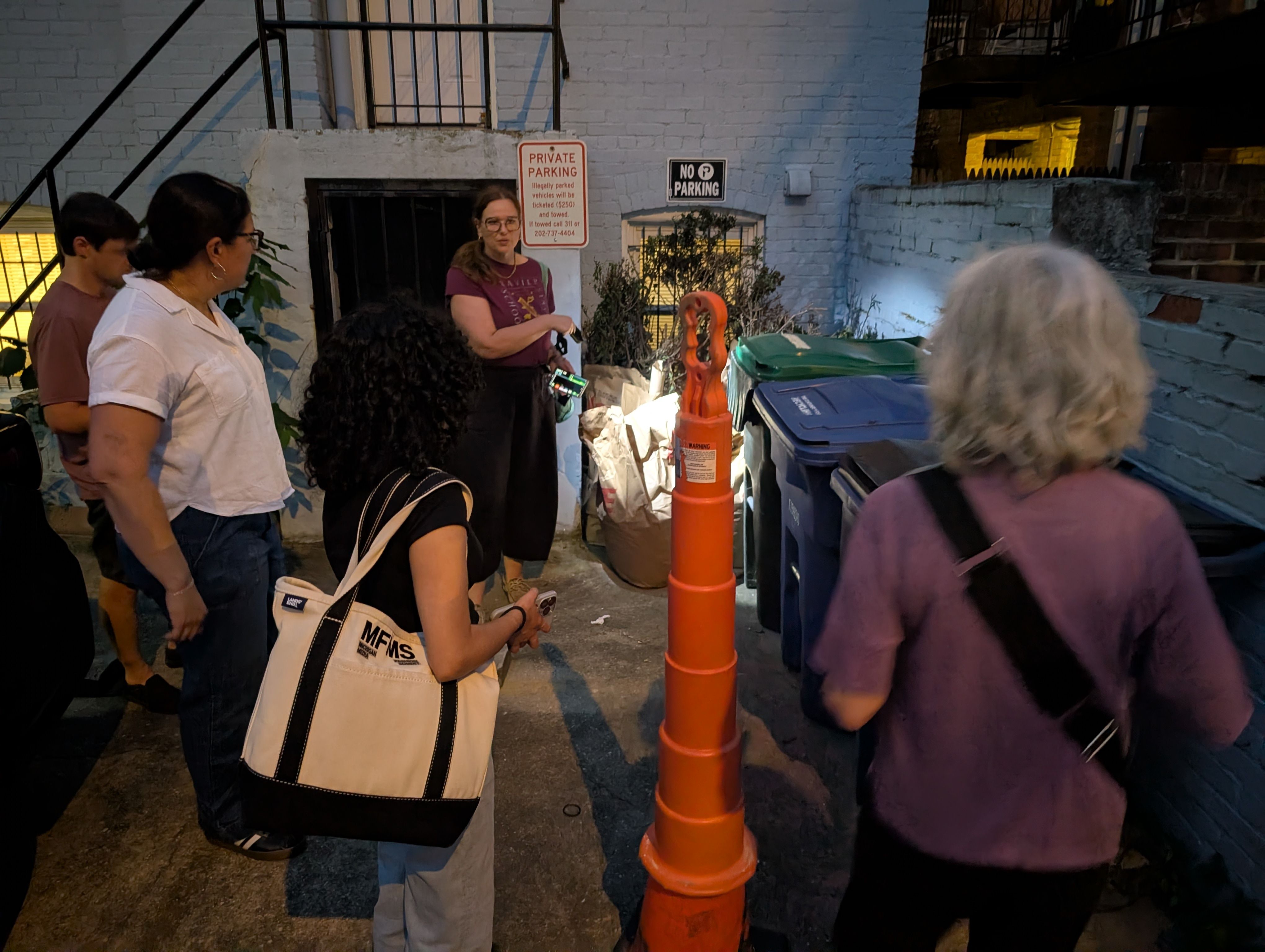
Zoom in: The Rat Rangers aren't exterminators. They're more neighborhood naturalists.
- Led by an anthrozoologist and an urban rodentologist, the hourlong evening walks teach residents how to spot rat habitats, how they breed and how to identify trash issues.
Yes, but: Nobody involved thinks education alone will solve the problem.
- The coalition also backs tougher sanitation policies, rat-resistant trash containers and continued research into poison alternatives.
The intrigue: Rats are becoming increasingly political.
- Likely next mayor Janeese Lewis George campaigned on tackling rats, while the coalition is backing the RAT Act promoting rat-resistant waste containers.
- Broad's wishlist also includes a citywide "rat czar" to coordinate agencies. (Not to be confused with a rat king.)
Friction point: Rat-resistant trash containers can be expensive — some are $1,000+ — making widespread adoption a pricey sell.
- Still, Broad argues investing in sanitation will help toward the "systemic shift" the city needs.
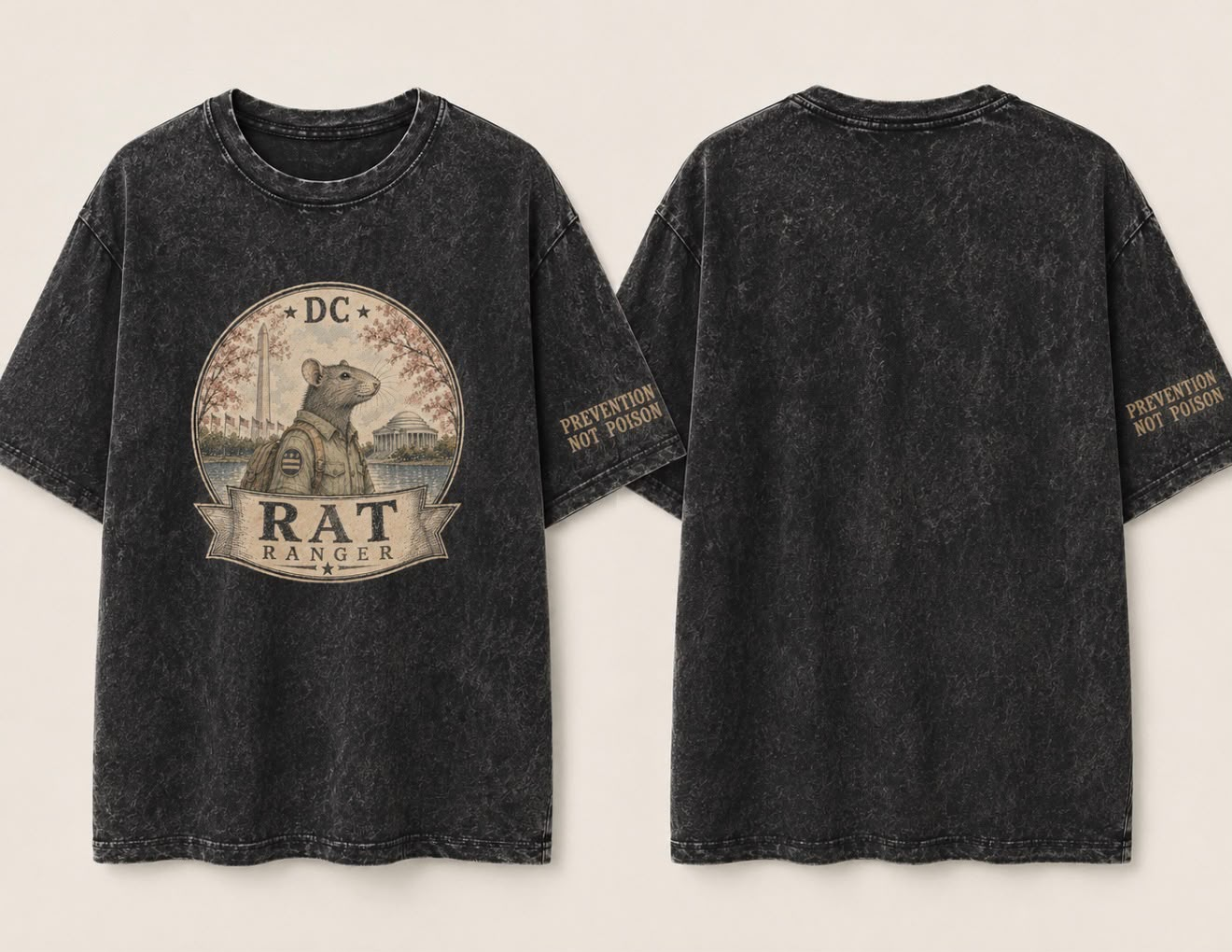
The bottom line: Whether you're rat-curious or get the alleyway scurries, the rangers are ready to give you a rat's-eye view of the problem. And a free t-shirt, featuring city icons: monuments, cherry blossoms and rats.
- "We really wanted to invoke pride in D.C.," Broad says.
If you go: Check out their site for the rat walk schedule and more resources.