D.C.'s war on rats is using poison, policy — and birth control

Add Axios as your preferred source to
see more of our stories on Google.
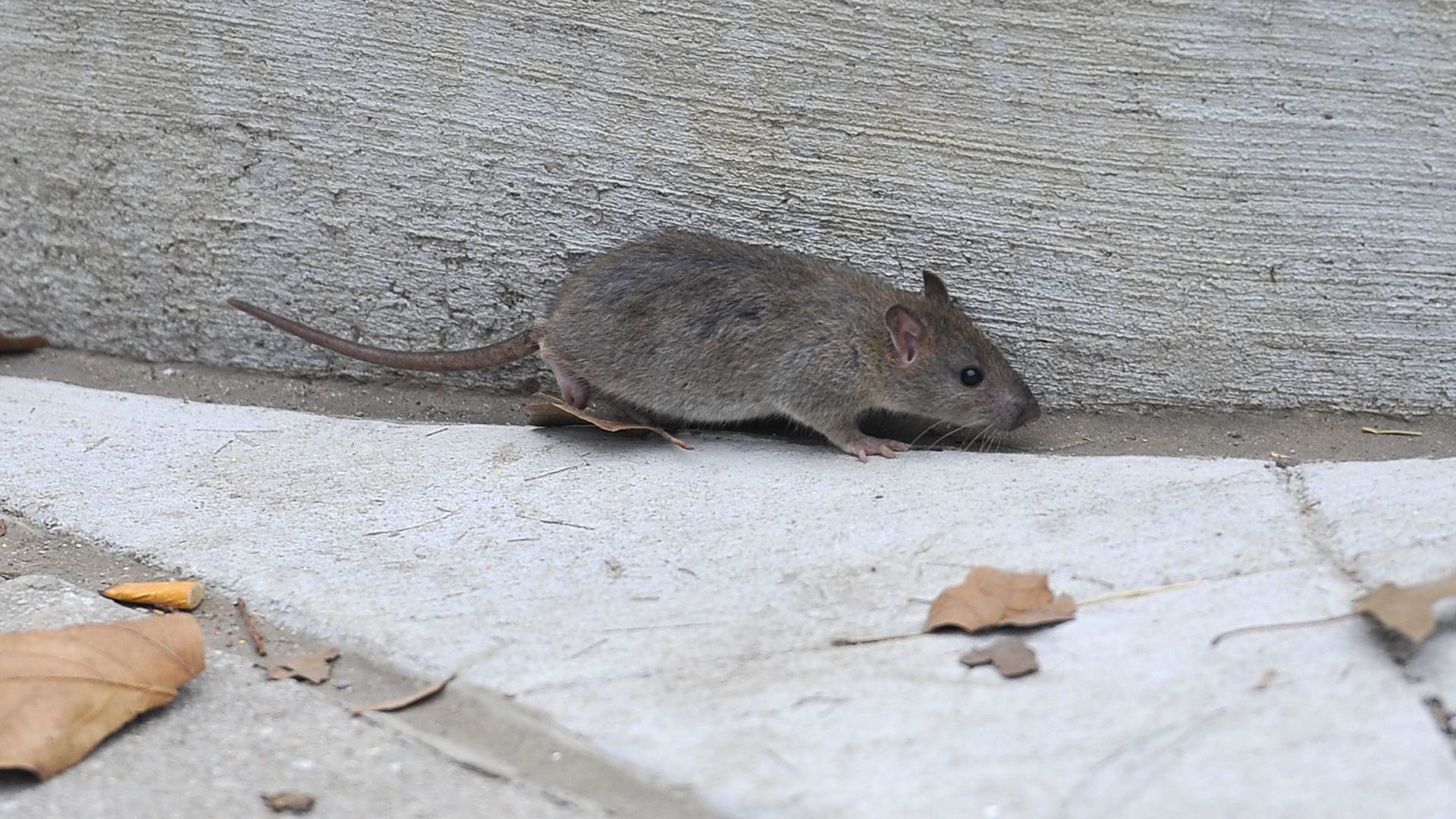
Fewer rats? D.C. is putting pests on birth control. Photo: Mark Gail/The Washington Post via Getty Images
Rats on birth control — not a joke. It's part of D.C.'s new spring pilot to curb a stubborn rodent problem.
Why it matters: D.C. is gearing up for a rodent reckoning. The city ranks among the most rat-infested in the U.S., and frustration is rising as officials test new ways to fight back.
Driving the news: DC Health announced a $30,000 "rodent control pilot" this month.
- The strategy mixes long-term fixes like trash management with a newer tool: "fertility suppression."
Zoom out: Putting pests on the pill — or a liquid equivalent — is an increasingly popular method in rat-tropolises like NYC and Chicago.
Zoom in: DC Health tells Axios the pilot will launch in Adams Morgan in late April or early May.
- If effective, they'll take the battle of the burrows to Barracks Row and Chinatown.
How it works: D.C. tracks roughly 3,000 rat burrows citywide. The typical approach: one-and-done poison.
- Now, they'll blitz nests with poisoned bait, liquid birth control and tracking powder over a three-week period — roughly the time it takes for rodents to replicate. And measure progress.
The catch: Rats are picky — and smart. They often prefer trash or nutrient-rich dog waste over bait.
- And like humans, birth control only works if taken consistently.
Zoom out: The city says residents are key to success: Report infestations, secure trash, and join cleanups (next one: April 25).
- DC Health tells Axios the pilot is about raising awareness vs. springing for rodent-resistant bins.
By the numbers: DC Health has received 6,600+ rat complaints so far this year, officials tell Axios.
- Complaints are slightly down from recent years — but still hovered over 16,500 last year.
What's next: New legislation could add muscle. One bill calls for funding rodent-resistant trash bins with covers — around $2,500 a pop.
- The proposed RAT Act would increase oversight and fine property owners for infestations.
🐀 The bottom line: D.C.'s war on rats now includes trash reform, policy-making, and a little reproductive prevention.