Why more of D.C.'s beloved streateries are disappearing

Add Axios as your preferred source to
see more of our stories on Google.
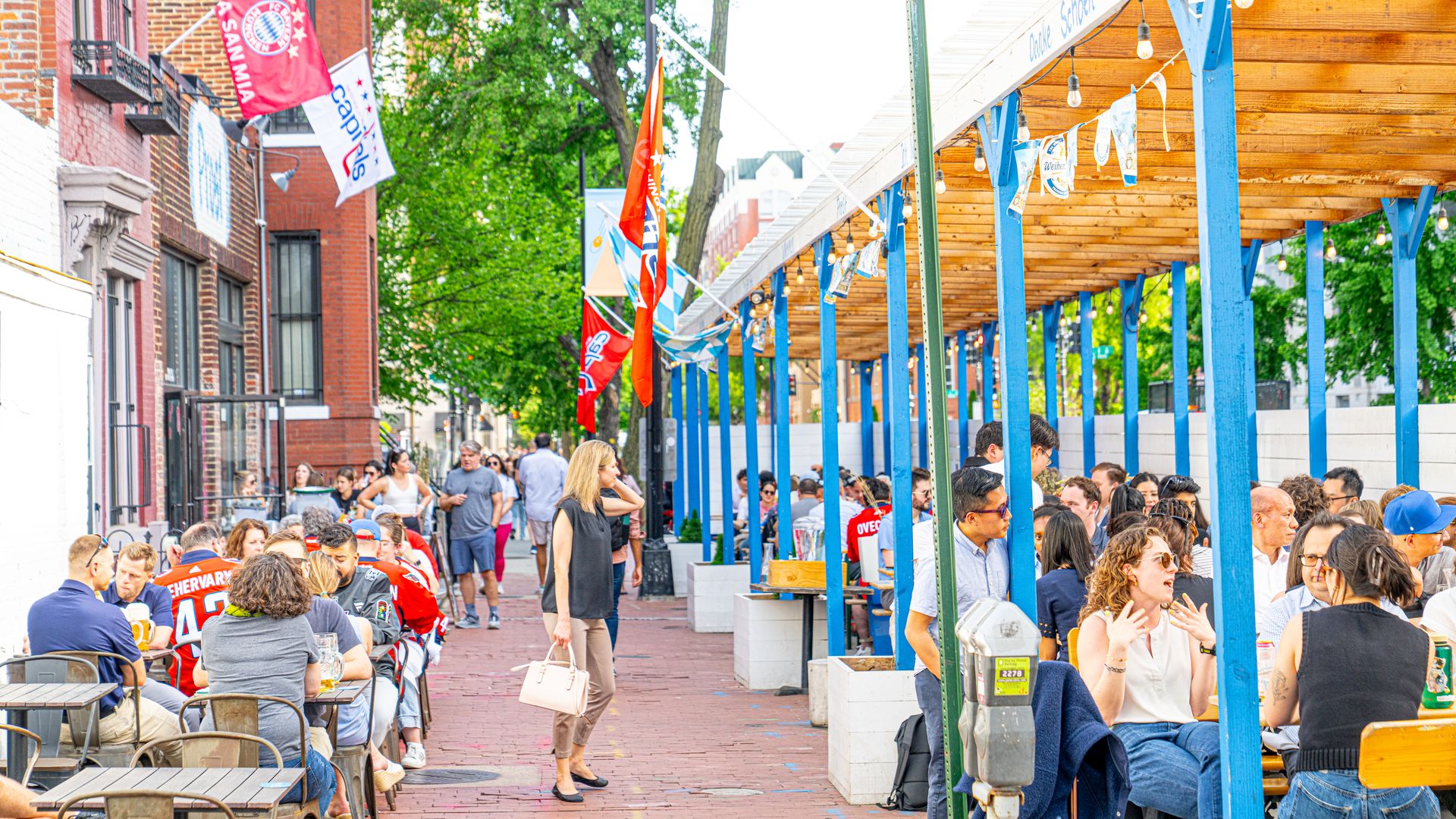
Say farewell to Prost's existing streatery, which must tear it down to rebuild under the city's new program. Photo: Courtesy Leading DC
More D.C. restaurants are being ordered to dismantle their streateries as the city enforces its new outdoor dining rules — now including some still awaiting permits.
Why it matters: Go-to neighborhood streateries are vanishing faster than they're being replaced — meaning fewer outdoor seats at some of D.C.'s most popular hangouts this summer.
State of play: Over the past few weeks, several high-profile streateries have come down — or been ordered to.
- Wonderland Ballroom removed its streatery ahead of the Columbia Heights bar's 22nd anniversary.
- Purple Patch held a neighborhood sendoff before dismantling its Mount Pleasant structure.
- Cuba Libre's downtown streatery remains roped off while it awaits permits.
- Prost says it's been ordered to remove its large Mount Vernon Triangle streatery after Sunday's World Cup final.
What they're saying: "There are some places that become so much more than wood, lights, tables and chairs," Purple Patch owner Patrice Cleary wrote on Instagram. "It wasn't built simply to add more seats. It became a symbol of hope."
Zoom in: For months, restaurants applying for D.C.'s permanent streatery program could continue operating their existing structures while permits worked through the system, according to D.C.'s Department of Transportation.
- That changed in recent weeks. After extending temporary permits through May, DDOT began enforcement activity, including against applicants, in late June.
- DDOT warned restaurants that temporary streateries had to come down or face $500 fines, according to emails obtained by Axios. The city warned that structures would be removed at "three times the cost" to owners.
- "We cannot make exceptions for restaurants to continue operating non-compliant streateries," one notice states.
Friction point: Prost's owners say they submitted their application last fall, and have spent months navigating reviews by multiple city agencies.
- Even after recently receiving DDOT approval to move to the next permitting stage, they're now required to dismantle their existing streatery while waiting on the final green lights.
- "We're not trying to make this like we're mad at them," co-owner Eric Heidenberger tells Axios. "Everybody is just figuring out this process for the first time."
- The bigger challenge, he says, is uncertainty: "As a restaurant, you've got to plan. Is it going to be ready for Oktoberfest?"
Follow the money: Prost says its outdoor dining space generates roughly half the beer hall's revenue, helped double its staff and has become "a key part of Mount Vernon Triangle."
- The restaurant has already spent about $17,000 on architects and permit specialists and expects to pay another $10,000-plus in permit fees before construction begins. The permanent streatery could ultimately cost nearly $100,000.
- "Every month of not having it is a lot of money out the door," co-owner Frank Wilson says.
Yes, but: DDOT says it repeatedly extended deadlines, hosted weekly office hours and kept restaurants informed throughout the process.
- The Department of Buildings recently launched a fast-track review to help speed approvals.
- Officials say the stricter rules are intended to create safer, more durable outdoor dining spaces while keeping streets accessible.
By the numbers: More than 140 streateries operated around D.C. last year.
- DDOT says 40 permanent streatery applications have been approved.
- 38 remain under review.
Between the lines: Some businesses are getting creative in the transition.
- Mount Pleasant's Martha Dear launched a neighborhood vendor market to help fund its project, while Purple Patch, La Tejana, Joia Burger and Elle are working toward a shared communal streatery.
- Royal has already opened one of the city's first permanent streateries, using modular, removable infrastructure similar to designs now common in New York City.
What's ahead: The debate is likely to continue under the city's next administration.
- Janeese Lewis George, the Democratic nominee for mayor, says she wants to lower fees and cut red tape. She tells Axios this latest wave of closures is "moving in the wrong direction."
What we're watching: Whether those promised changes come soon enough to revive D.C.'s shrinking streatery scene.