How D.C. restaurants and farmers are responding to the parasite outbreak

Add Axios as your preferred source to
see more of our stories on Google.
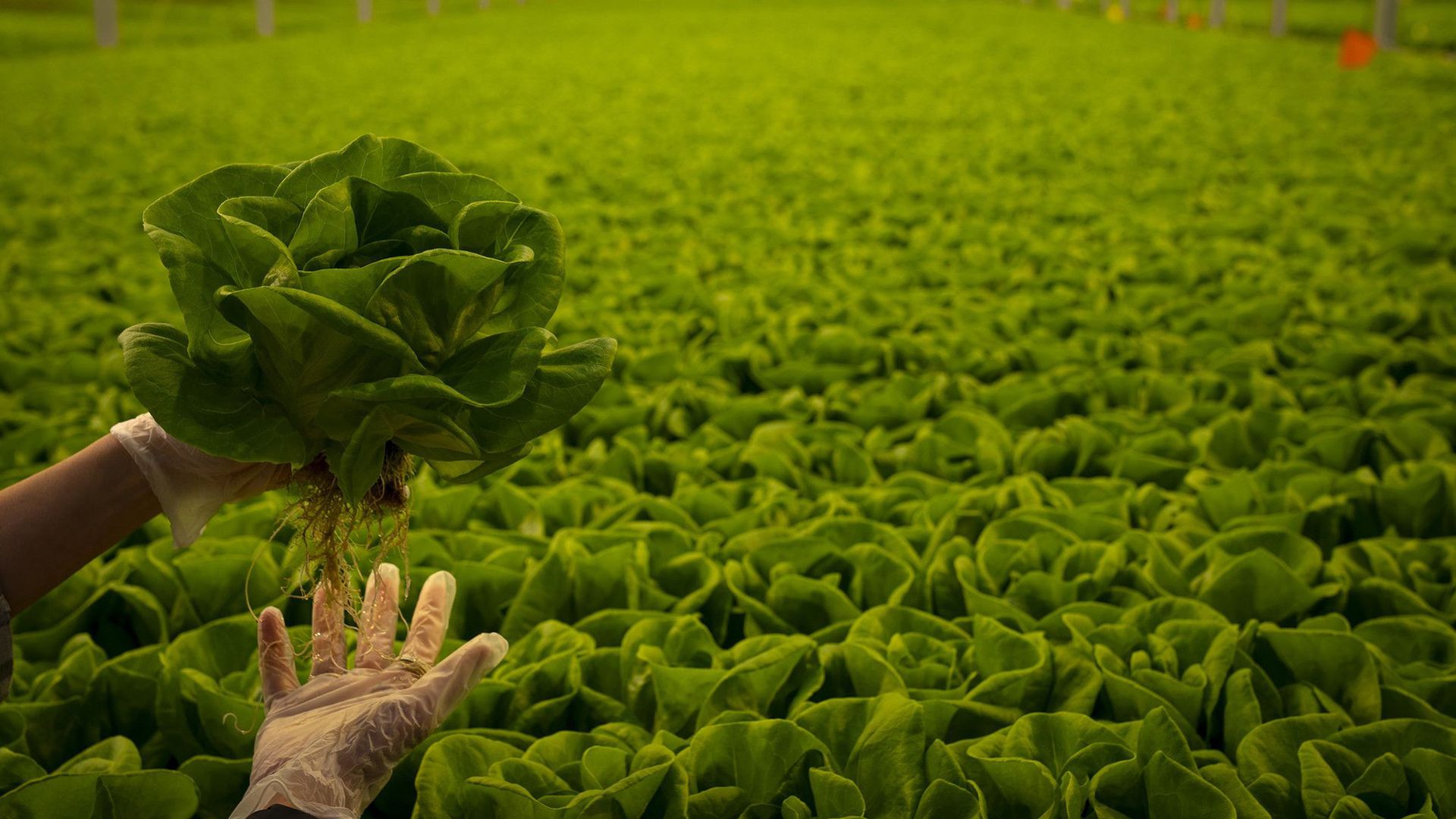
Gotham Greens, which grows its lettuces and herbs in controlled greenhouses, says it's not impacted by cyclospora. Photo: E. Jason Wambsgans/Chicago Tribune/Tribune News Service via Getty Images
D.C. chefs and farmers aren't giving up on summer produce amid the growing cyclosporiasis outbreak.
Why it matters: With thousands sickened nationwide and investigators still searching for the source, consumers are wondering whether it's safe to eat possible culprits like lettuces, berries and fresh herbs.
By the numbers: Maryland cases more than doubled in the past week, according to health officials, who tell Axios they've confirmed 69 cases through July 14.
- Virginia reported 37 confirmed cases, nearly triple the five-year average for this point in the year (13 cases).
- DC Health has confirmed 6 cases, but tells Axios most are "associated with international travel" and not abnormally high.
What they're saying: "We're monitoring, but we're not panicking," says celeb D.C. pastry chef Paola Velez, whose food safety explainers have seen thousands of views on TikTok and Instagram.
- She says her small H Street restaurant, Providencia, is like many in the city — it hasn't changed its menu because it trusts local sourcing and food safety practices.
- The restaurant prepares produce from scratch and would pivot only if the CDC or FDA identifies affected products.
- "We go through the tests and have food safety licenses for a reason," she says. "We're well-equipped to prepare foods for the public."
Meanwhile, FreshFarm executive director Cat Oakar, behind the region's largest network of farmers' markets, tells Axios they haven't seen droves of shoppers abandon produce, though customers are asking more questions.
- "Local food systems offer something increasingly valuable: transparency," Oakar says.
- Shorter supply chains mean shoppers can ask farmers directly about growing practices, irrigation water and food safety protocols.
- "Know your farmers, know your food," Oakar says.
Between the lines: The outbreak comes during peak farmers' market season, when local growers are already juggling unpredictable weather and rising costs.
- Farmers are worried consumers could stop buying fresh produce before investigators even identify the source.
- "Most small farms don't have the financial cushion to absorb significant swings in consumer demand," Oakar says.
Zoom in: Health officials warn against certain types of produce (e.g. cilantro, raspberries) and advise thoroughly washing and cooking specific items.
- Velez recommends cooking berries into jams, pies or compotes, or gently poaching thicker-skinned fruit like cherries in 160°F water, and plumping them up in a cold fridge after.
- Lightly cook leafy greens, or swap them for blanched vegetables like broccoli in salads.
The intrigue: With lettuce under scrutiny, some greenhouse growers are emphasizing their controlled growing environments.
- Gotham Greens, which operates Baltimore greenhouses and whose products are sold throughout the D.C. region, says its lettuce, herbs and salad kits are not affected.
- The company says its greens are grown indoors using monitored irrigation water and harvested and packed in the same facility, reducing opportunities for contamination.
What we're watching: Federal investigators are still trying to identify the contaminated ingredient.
- Until then, local restaurants are largely sticking with their menus, and farmers say they hope shoppers continue supporting local produce while staying informed.
Mimi Montgomery contributed to reporting.
Editor's note: This story has been updated to include new data from DC Health.