Why more D.C. deliveries are moving to bikes

Add Axios as your preferred source to
see more of our stories on Google.
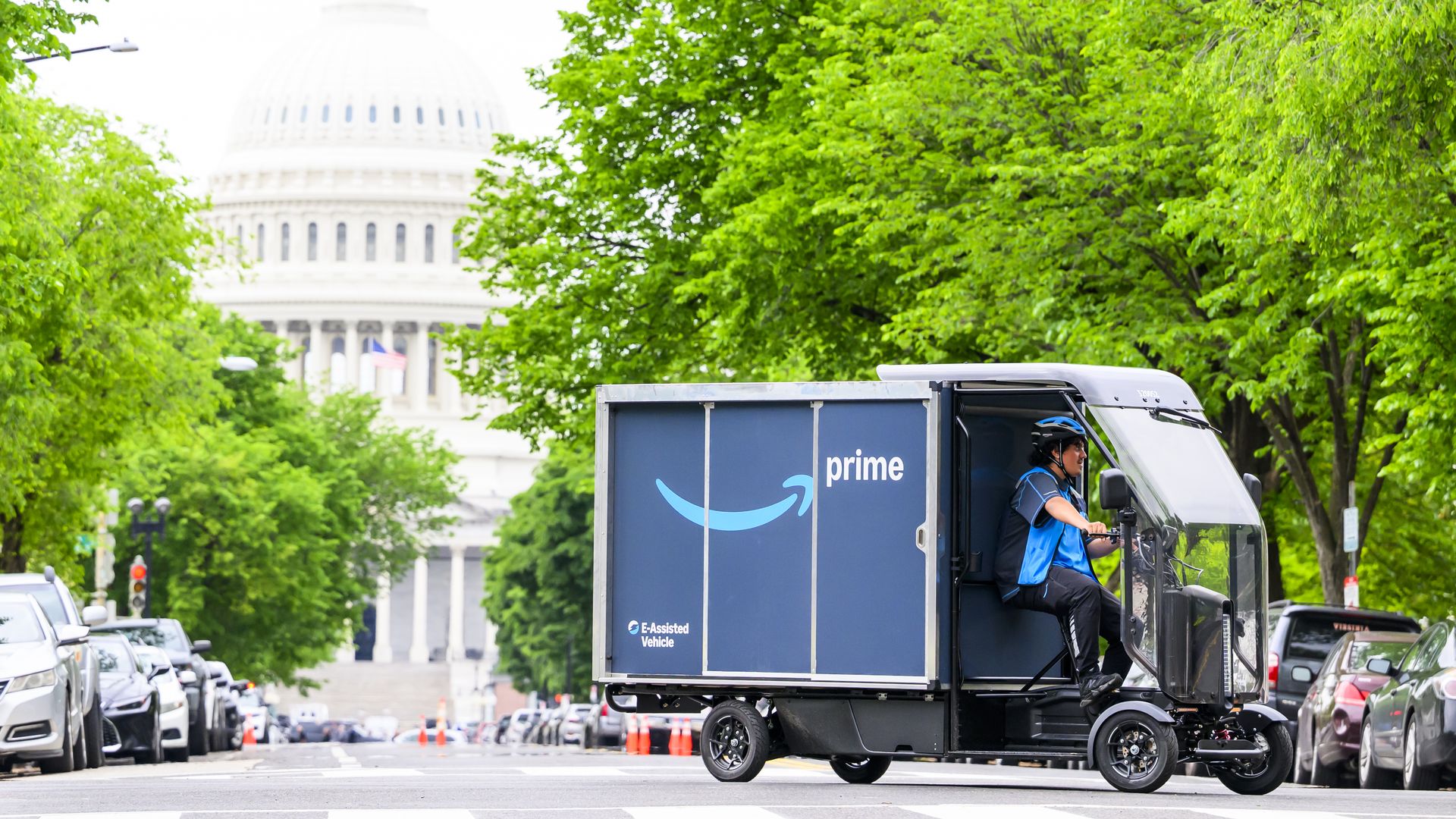
An Amazon e-cargo bike, which just hit D.C. streets. Photo: Courtesy of Amazon
More D.C. delivery drivers are living every day like it's Bike to Work Day, thanks to companies like DoorDash and Amazon expanding their pedal-powered fleets.
Why it matters: The benefits for workers and roadways are real — greener, quieter, zippier, less traffic, you name it.
Driving the news: Amazon is teaming up with D.C. on a new pilot program using battery-powered e-cargo bikes to deliver packages.
- The sturdy four-wheelers — think mini Amazon vans — are weather-protected and built for tight urban spaces.
- During the 10-month pilot, Amazon will deploy up to 15 cargo bikes from a "microhub" in Southwest to nearby neighborhoods.
Zoom in: DDOT says the pilot is meant to test how alternative delivery vehicles fit into a city growing more crowded from both congestion and e-commerce demand.
- The cargo bikes can use bike lanes and bus lanes, but not sidewalks. Speeds are capped at 15 mph.
- DDOT can revoke permits if operators break the rules, including stopping in bike lanes.
The big picture: Cities around the world are increasingly turning to cargo bikes for "last mile" deliveries — the final stretch between warehouses and customers' doors.
Between the lines: The pilot is also a regulatory test run.
- DDOT plans to track route distances and package totals to shape future rules around cargo bikes.
- A final report is expected next spring — and you may see more on the road soon.
By the numbers: D.C. is already one of the country's biggest hubs for bike deliveries, according to a recent DoorDash report.
- A little more than half of DoorDash deliveries in D.C. were completed on bikes or scooters.
What we're watching: More delivery bikes could create new friction over crowded bike lanes, curb access and enforcement as companies scale up — echoing the great moped war of 2024.